

Trade
Basic
Futures
Futures
Hundreds of contracts settled in USDT or BTC
Options
HOT
Trade European-style vanilla options
Unified Account
Maximize your capital efficiency
Demo Trading
Futures Kickoff
Get prepared for your futures trading
Futures Events
Participate in events to win generous rewards
Demo Trading
Use virtual funds to experience risk-free trading
Earn
Launch
CandyDrop
Collect candies to earn airdrops
Launchpool
Quick staking, earn potential new tokens
HODLer Airdrop
Hold GT and get massive airdrops for free
Launchpad
Be early to the next big token project
Alpha Points
NEW
Trade on-chain assets and enjoy airdrop rewards!
Futures Points
NEW
Earn futures points and claim airdrop rewards
Investment
Simple Earn
Earn interests with idle tokens
Auto-Invest
Auto-invest on a regular basis
Dual Investment
Buy low and sell high to take profits from price fluctuations
Soft Staking
Earn rewards with flexible staking
Crypto Loan
0 Fees
Pledge one crypto to borrow another
Lending Center
One-stop lending hub
VIP Wealth Hub
Customized wealth management empowers your assets growth
Private Wealth Management
Customized asset management to grow your digital assets
Quant Fund
Top asset management team helps you profit without hassle
Staking
Stake cryptos to earn in PoS products
Smart Leverage
NEW
No forced liquidation before maturity, worry-free leveraged gains
GUSD Minting
Use USDT/USDC to mint GUSD for treasury-level yields

More
Promotions
Activity Center
Join activities and win big cash prizes and exclusive merch
Referral
20 USDT
Earn 40% commission or up to 500 USDT rewards
Announcements
Announcements of new listings, activities, upgrades, etc
Gate Blog
Crypto industry articles
VIP Services
Huge fee discounts
Proof of Reserves
Gate promises 100% proof of reserves



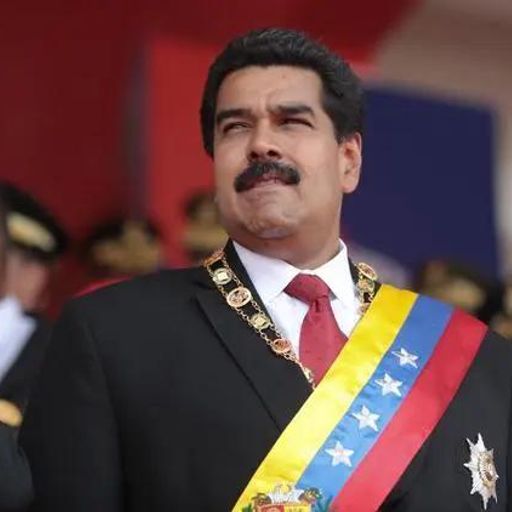

When Traditional Energy Giants Meet the Crypto Revolution: The Dual Narrative of Venezuela's Energy Reconstruction
Behind Trump's oil ambitions, a silent crypto revolution is rewriting the rules of the game
Recently, Trump's statements about encouraging U.S. companies to heavily enter Venezuela's energy sector have caused waves in global markets. Billions of dollars in infrastructure investments, technological support from top U.S. energy service companies, and expectations of a long-awaited recovery in crude oil capacity—all point to a classic script of a traditional energy giant returning to the center stage. However, while international capital focuses on oil rigs and refineries, few notice that on this land plagued by hyperinflation, currency collapse, and comprehensive sanctions, a survival-driven crypto economy revolution has already permeated every capillary of the economic bloodstream.
The overlooked truth: Venezuela is one of the countries with the highest crypto adoption rates globally
According to Chainalysis 2024 Global Cryptocurrency Adoption Index, Venezuela ranks 13th, with an annual growth rate of 110%. This is not a speculative bubble frenzy but a survival choice in an extreme environment with 229% annual inflation and the local currency depreciating over 70%. From small family shops in Caracas to oil workers by Lake Maracaibo, USDT has replaced the Bolivar as the de facto medium of exchange—by July 2025, only in the private sector, stablecoin trading volume reached $119 million, accounting for 9% of the total remittances nationwide.
More notably, even Venezuela's state oil company, PDVSA, quietly expanded USDT usage in oil transactions by 2025, attempting to circumvent U.S. sanctions. This ironic reality reveals a core contradiction: while the Trump administration pushes for traditional infrastructure rebuilding, sanctioned entities are already using crypto technology to bypass traditional financial channels. The event last year when Tether froze $5.2 million related to PDVSA demonstrates the fragility of centralized stablecoins in geopolitical power plays.
Crypto Genes in Energy Reconstruction: From Petro Failure to Energy Tokenization Rise
Venezuela's 2018 launch of the "Petro" (Oil-backed cryptocurrency) failed in 2023 due to lack of market trust, but the experiment left an important legacy—raising awareness among policymakers and the public about the potential of combining energy assets with digital technology. Now, as U.S. companies return to Venezuela with billions of dollars and advanced management systems, they face not just infrastructure projects but a business environment deeply embedded with a crypto ecosystem.
This integration could spawn three new models:
1. "Dual Mining" of Energy Infrastructure
Drawing on the mature experience of U.S. mining companies like MARA Holdings, newly built natural gas power plants could support both Bitcoin mining and AI computing simultaneously. Venezuela's abundant natural gas resources (a byproduct of oil extraction) have long been flared; converting this into electricity for mining can generate immediate cash flow and, through tokenization, package future electricity revenue into tradable crypto assets. The case of Cango acquiring a 50 MW plant in Georgia and expanding to 50 EH/s provides a replicable business blueprint for this model.
2. Tokenization Financing of Oil Assets
Supported by a16z, DayFi protocol is experimenting with tokenizing distributed power assets, issuing GRID stablecoins and sGRID yield tokens. Similarly, U.S. energy companies could bypass traditional syndicate loans by putting future production shares of Venezuelan oil fields on-chain, issuing tokenized oil-backed tokens (Tokenized Oil-Backed Tokens) to raise funds directly from global crypto investors. This model reduces financing costs and automates profit distribution via smart contracts, while avoiding the fragile judicial enforcement risks in the local environment.
3. Cross-Border Payment Settlement System with Stablecoins
As companies like Chevron are permitted to resume some oil exports, instead of relying on potentially sanctioned banking channels, establishing on-chain settlement systems based on USDC or EURC makes sense. In 2023, $4.61 billion of Venezuela's $5.4 billion in remittances were completed via crypto channels, demonstrating the maturity and efficiency of this system. Energy service companies can require local suppliers to accept stablecoin payments, building a closed-loop economy independent of traditional SWIFT channels.
Investment Logic Reconstructed: Geopolitical Risk Premium and Crypto Hedging Strategies
For international energy investors, the risk-return profile of Venezuela projects is fundamentally changing due to crypto factors.
Bullish catalysts:
• Inflation Hedge: USDT has become the local pricing benchmark; investment contracts can be denominated in stablecoins, eliminating Bolivar devaluation risk
• Liquidity Premium: Energy tokenization provides secondary market liquidity for heavy assets, making exit strategies more flexible
• Technical Arbitrage: Local miners face higher costs due to unstable power and network disruptions; stable power grids built by U.S. firms can create price advantages
Bearish risks:
• Regulatory Uncertainty: Will the Trump administration allow U.S. companies to use crypto under sanctions? OFAC compliance could become extremely complex
• Sovereign Conflict: The Venezuelan government may demand access to local crypto payment systems, but PDVSA's use of USDT has proven to carry frozen risk
• Infrastructure Paradox: Crypto economies depend on stable power and networks, which are precisely the core weaknesses needing reconstruction—creating a "chicken or egg" dilemma
Market Impact: New Paradigm Linkage Between Energy Stocks and Crypto Assets
After Trump's statement, traditional energy service companies' stocks rose accordingly, but the real alpha may lie in the energy-crypto crossover sector:
4. Dual Benefits for Bitcoin Mining Stocks: If U.S. companies build energy facilities and conduct mining in Venezuela, miners like MARA and RIOT with overseas experience could find cooperation opportunities, shifting valuation logic from pure BTC beta to a "Energy + Crypto" hybrid model
5. Infrastructure for Energy Tokenization: Oracle projects like Chainlink and underlying public chains like Ethereum, if capable of supporting on-chain oil assets, will gain enterprise-level application scenarios
6. Stablecoin Issuers: If Circle and Tether collaborate with energy project developers to launch commodity-backed stablecoins, their reserve asset diversity will significantly increase, though stricter regulatory scrutiny will follow
It is worth noting that despite recent warnings of a "winter 2026" in the crypto market (Cantor Fitzgerald view), the tokenization of real-world assets (RWA) is growing against the trend. The Venezuela case may become a litmus test for RWA from narrative to implementation.
Conclusion: The Convergence of Old Orders and New Revolutions
Trump's oil ambitions and Venezuela's crypto revolution fundamentally represent a collision of two development paradigms: top-down traditional capital export vs bottom-up distributed financial innovation. Historical experience shows that when both find a point of synergy rather than confrontation, the greatest opportunities emerge—just as the U.S. shale revolution reshaped the global energy landscape.
For investors, the key question is no longer "Should I invest in Venezuela's energy," but "How to design an investment structure that can access traditional energy cash flows while leveraging crypto to hedge sovereignty risks." This requires multidisciplinary talent familiar with both well pressure parameters and smart contract coding, as well as policy courage to explore in regulatory gray areas.
Interactive Topic: Do you think traditional energy giants will embrace tokenized financing? If Chevron issues a crypto token backed by oil, would you invest? Feel free to share your views in the comments. If you find this analysis insightful, don’t forget to like and share—perhaps the next energy crypto unicorn is born from these discussions.
(This article does not constitute investment advice. The cryptocurrency market carries high risks; please decide prudently.)
Follow me for weekly in-depth analysis of how crypto economics are reshaping traditional industries and discover the next paradigm shift investment opportunities.