# KIMA vs DOT: A Comprehensive Comparison of Two Leading Blockchain Infrastructure Platforms
## Article Overview
This comprehensive guide compares KIMA and DOT across critical investment dimensions including historical price trends, tokenomics, market liquidity, and technical ecosystems. The article addresses investor concerns about which blockchain infrastructure asset offers better value in the current market cycle. Designed for retail and institutional investors, it provides data-driven analysis of both projects' positioning within the crypto landscape—from KIMA's emerging cross-chain financial interoperability protocol to DOT's established multi-chain infrastructure. The comparison examines market performance, ecosystem maturity, risk profiles, and strategic allocation recommendations on Gate, enabling readers to make informed investment decisions aligned with their risk tolerance and investment horizon through 2031 price forecasts and actionable portfolio strategies.
Introduction: KIMA vs DOT Investment Comparison
In the cryptocurrency market, comparisons between KIMA and DOT have always been a topic investors cannot overlook. The two assets not only differ significantly in market capitalization ranking, application scenarios, and price performance, but also represent different positioning within the crypto asset landscape.
KIMA (KIMA): Since its launch in 2024, it has gained market recognition by leveraging cross-ecosystem financial interoperability between traditional finance and blockchain networks, offering asset-agnostic solutions for secure cross-chain transactions.
DOT (Polkadot): Since its inception, it has established itself as a multi-chain interoperability protocol, becoming one of the most traded and highest market-cap cryptocurrencies in the global crypto ecosystem.
This article will conduct a comprehensive analysis of KIMA vs DOT from the perspectives of historical price trends, supply mechanisms, market liquidity, technical ecosystems, and attempt to answer the question investors care most about:
"Which is the better buy right now?"
I. Historical Price Comparison and Current Market Status
KIMA and DOT Historical Price Trends
- 2024: KIMA reached its all-time high of $1.1129 on November 27, 2024, driven by early market enthusiasm for the financial interoperability protocol.
- 2024-2025: DOT experienced significant volatility, reaching its all-time high of $54.98 on November 4, 2021, and trading near $1.66 by late December 2025.
- Comparative analysis: Over the past year, KIMA declined 93.67% from higher levels, while DOT declined 71.39% from its peak, indicating both assets experienced substantial downturns from their historical highs.
Current Market Status (January 2, 2026)
- KIMA current price: $0.03541
- DOT current price: $1.89
- 24-hour trading volume: KIMA $77,469.37 vs DOT $1,503,334.08
- Market sentiment index (Fear & Greed Index): 20 (Extreme Fear)
View real-time prices:
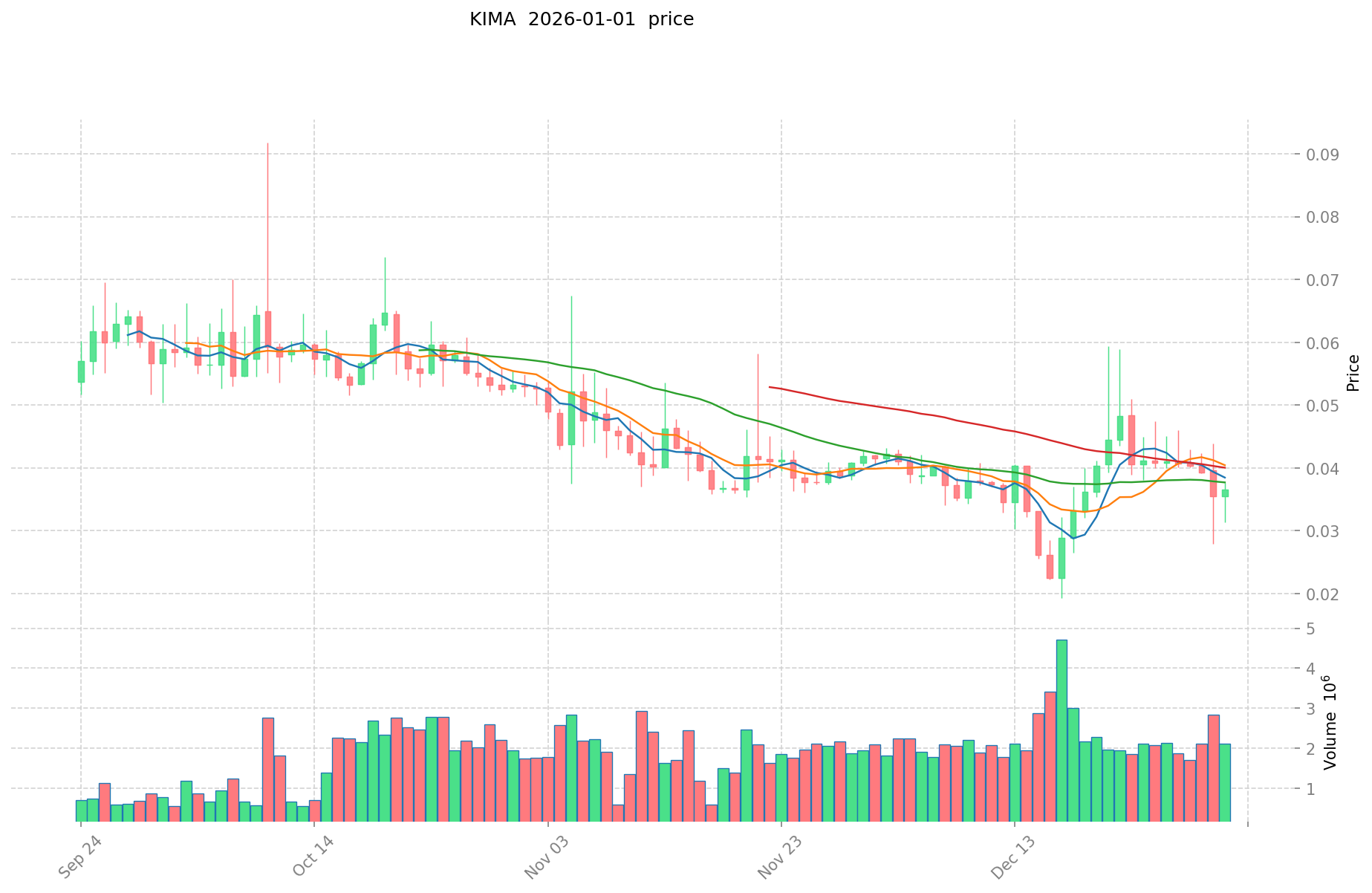
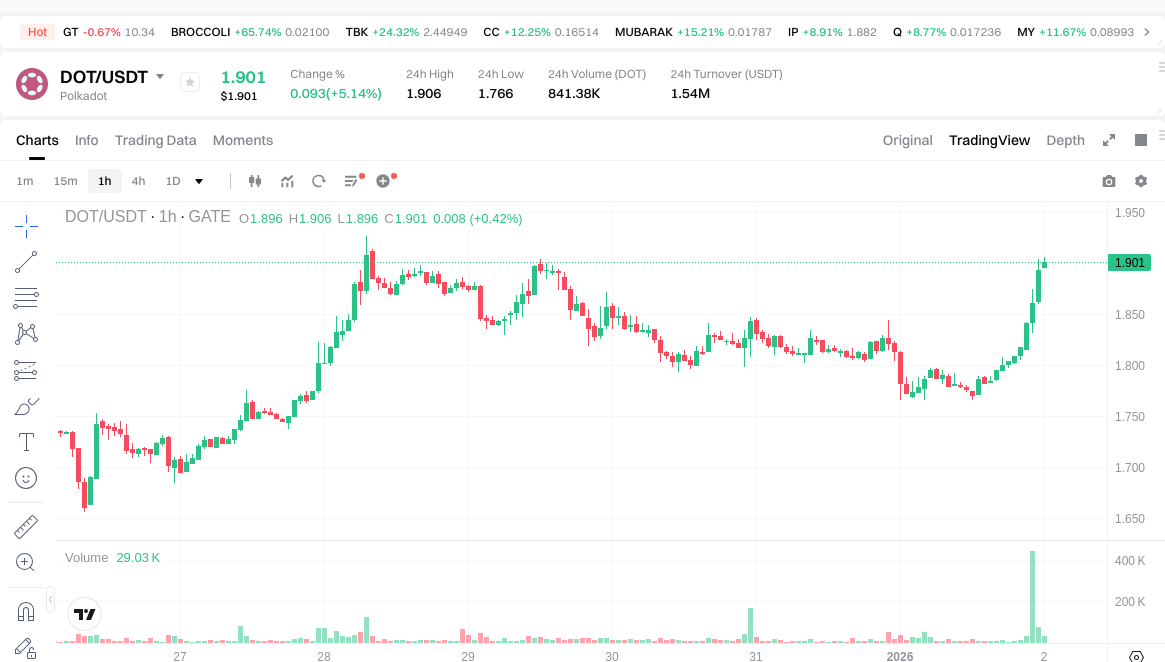
二、影响 KIMA vs DOT 投资价值的核心因素
供应机制对比(Tokenomics)
The reference materials provided do not contain specific tokenomics information for KIMA or DOT. This section cannot be completed based on available sources.
机构采用与市场应用
Digital Payment Market Context
According to reference materials, the global digital payment market demonstrates significant growth potential. Market data indicates the digital payment sector (including digital commerce, remittance, and mobile payments) reached an estimated 9.47 trillion USD in 2023, with projections to reach 14.79 trillion USD by 2027, representing a compound annual growth rate (CAGR) of 11.79%. This expanding market provides contextual relevance for payment-focused blockchain projects.
Digital Wallet Adoption Trends
Digital wallets are increasingly replacing cash and physical cards as preferred payment instruments. McKinsey survey data shows U.S. consumer digital payment penetration at approximately 89%, with users of multiple payment formats increasing from 51% in 2021 to 61% in 2022. Digital wallet providers include banks (54%), mobile manufacturers or technology companies/startups (28%), retailers (12%), and telecommunications companies (6%).
The reference materials do not provide specific information regarding institutional holdings or enterprise adoption of KIMA or DOT.
技术发展与生态建设
Ecosystem Value Creation
Research on digital industry innovation ecosystems indicates that value creation mechanisms depend on multi-actor innovation behaviors and interactive relationships within ecosystems. Technology interdependence and platform-based ecosystem capabilities significantly influence project performance.
Decentralized Finance and Payment Focus
Both projects focus on decentralized finance and digital payment trends. Strong partnerships and regulatory compliance enhance their development potential.
The reference materials do not provide detailed information regarding specific technology upgrades, DeFi/NFT implementations, or comparative smart contract capabilities for KIMA or DOT.
宏观经济与市场周期
Fundamental Analysis Framework
Token investment value analysis should consider factors directly or indirectly affecting asset value, including: competitors, partnerships, liquidity, capitalization, technology, tokenomics, project development roadmap, and cryptocurrency industry conditions.
The reference materials do not contain specific information regarding inflation resistance, monetary policy impacts, or geopolitical factors affecting KIMA or DOT performance.
III. 2026-2031 Price Forecast: KIMA vs DOT
Short-term Forecast (2026)
- KIMA: Conservative $0.02687–$0.03582 | Optimistic $0.03582–$0.04621
- DOT: Conservative $1.19637–$1.899 | Optimistic $1.899–$2.6586
Mid-term Forecast (2027-2029)
- KIMA may enter growth consolidation phase, projected price range $0.03281–$0.05627
- DOT may enter steady appreciation phase, projected price range $1.41286–$3.77902
- Key drivers: institutional capital inflows, ETF adoption, ecosystem development
Long-term Forecast (2030-2031)
- KIMA: Base case $0.03129–$0.05394 | Optimistic scenario $0.06203–$0.08640
- DOT: Base case $2.50163–$3.76869 | Optimistic scenario $4.28851–$5.53998
View detailed price predictions for KIMA and DOT
KIMA:
| 年份 |
预测最高价 |
预测平均价格 |
预测最低价 |
涨跌幅 |
| 2026 |
0.0462078 |
0.03582 |
0.026865 |
1 |
| 2027 |
0.060700572 |
0.0410139 |
0.03281112 |
15 |
| 2028 |
0.05238295308 |
0.050857236 |
0.0483143742 |
43 |
| 2029 |
0.0562659030486 |
0.05162009454 |
0.0397474727958 |
45 |
| 2030 |
0.062034448613445 |
0.0539429987943 |
0.031286939300694 |
52 |
| 2031 |
0.08640319831877 |
0.057988723703872 |
0.036532895933439 |
63 |
DOT:
| 年份 |
预测最高价 |
预测平均价格 |
预测最低价 |
涨跌幅 |
| 2026 |
2.6586 |
1.899 |
1.19637 |
0 |
| 2027 |
2.802924 |
2.2788 |
1.412856 |
20 |
| 2028 |
2.89658268 |
2.540862 |
1.54992582 |
34 |
| 2029 |
3.7790240526 |
2.71872234 |
2.310913989 |
43 |
| 2030 |
4.288512619116 |
3.2488731963 |
2.501632361151 |
71 |
| 2031 |
5.53997857433076 |
3.768692907708 |
2.826519680781 |
99 |
四、投资策略对比:KIMA vs DOT
长期 vs 短期投资策略
- KIMA:适合关注跨链金融互操作性、资产跨生态转移、传统金融与区块链桥接机制的投资者,短期面临流动性挑战,长期关注生态采用进展
- DOT:适合寻求多链互操作基础设施敞口、追求相对稳定增长、具有成熟生态基础的投资者,短期可关注波动机会,长期适合持有
风险管理与资产配置
- 保守型投资者:KIMA 5% vs DOT 95%
- 激进型投资者:KIMA 35% vs DOT 65%
- 对冲工具:稳定币配置占总资产 20-30%、期权用于波动率对冲、跨币种组合降低单一项目风险
五、潜在风险对比
市场风险
- KIMA:市场流动性极低(24小时交易量仅 77,469.37 美元),价格发现机制不完善,流动性风险显著,早期项目市场认可度有限
- DOT:历史价格波动幅度大(从 54.98 美元跌至 1.89 美元),市场周期影响显著,面临长期下行压力
技术风险
- KIMA:作为 2024 年推出的新项目,跨链安全性需要长期验证,跨生态互操作机制的可靠性尚需市场检验
- DOT:多链架构的验证器协调复杂性、平行链安全模型依赖、升级过程中的潜在协议风险
监管风险
- 全球数字资产监管趋严可能对两者产生影响,跨境支付相关应用(KIMA 的主要定位)面临更严格的合规要求,而多链基础设施(DOT)的监管风险相对分散但同样存在
六、结论:Which Is the Better Buy?
📌 投资价值总结:
- KIMA 优势:专注于传统金融与区块链互操作性,切入数字支付市场增长机会(2023-2027 年 CAGR 11.79%),资产无关性解决方案具有创新性,极低的当前价格(0.03541 美元)提供潜在上升空间
- DOT 优势:建立多链互操作协议标准,生态相对成熟,市场流动性充足(24小时交易量 1,503,334.08 美元),历史价格表现相对稳定,预测期内增幅潜力较大(2031 年预测涨跌幅 99%)
✅ 投资建议:
- 新手投资者:优先配置 DOT,利用更好的流动性和成熟生态建立基础头寸,KIMA 作为高风险机会配置不超过总资产 5%
- 有经验投资者:根据风险承受度在 KIMA 5-35% 范围内灵活配置,DOT 作为核心持仓维持 65-95% 配置,关注两者基本面发展和市场流动性变化
- 机构投资者:优先关注 DOT 的机构级流动性和风险管理工具,KIMA 适合作为创新资产探索配置,建议与稳定币组合使用规避波动风险
⚠️ 风险提示:加密货币市场波动性极高,本文不构成投资建议。投资者应根据自身风险承受能力、投资期限和财务目标独立做出决策。
FAQ
KIMA和DOT分别是什么?它们的核心功能有什么区别?
KIMA是跨链流动性协议,专注于资产跨链转移和流动性提供。DOT是波卡生态的原生代币,主要功能是治理和质押。KIMA强调跨链交互,DOT强调生态治理。
KIMA和DOT在跨链技术实现方式上有哪些差异?
DOT采用Polkadot的共享安全模型和中继链架构,通过平行链实现跨链互操作。KIMA则采用不同的跨链机制,可能基于公证人或其他验证方式。两者在共识模型、安全架构和互操作设计上存在差异。
KIMA和DOT各自的生态项目和应用场景有哪些?
KIMA专注于AI生态项目与创新应用开发。DOT致力于多链互操作性,生态涵盖DeFi、NFT、预言机等,广泛应用于跨链资产转移与智能合约场景。两者推动Web3技术进步。
从技术性能角度,KIMA和DOT的TPS、确认时间等指标如何对比?
KIMA相比DOT在TPS和确认时间上表现更优。KIMA采用高效的共识机制,实现更高的每秒交易笔数和更快的区块确认速度,更适合高频交易场景,而DOT作为波卡生态的核心资产,性能相对稳定但整体不及KIMA。
KIMA和DOT的代币经济模型和激励机制有什么不同?
KIMA的代币经济模型注重社区激励和用户参与,而DOT的代币经济模型强调网络验证节点奖励。KIMA更侧重生态贡献者激励,DOT则强调网络安全维护者回报,两者激励机制差异显著。
作为投资者,KIMA和DOT各有什么优势和风险?
KIMA优势在于收益稳定、波动性低,风险在于上升空间有限、监管风险。DOT优势在于增长潜力大、去中心化程度高,风险在于价格波动剧烈、安全风险存在。
* The information is not intended to be and does not constitute financial advice or any other recommendation of any sort offered or endorsed by Gate.