Top 10 Cryptocurrencies Primed for Significant Growth in 2025 | Insights from Industry Experts

2025-12-23 09:49:00
Altcoins
Bitcoin
Crypto Insights
DeFi
Ethereum
Article Rating : 4.5
half-star
98 ratings
This article explores the top 10 cryptocurrencies expected for significant growth, highlighting their technological advancements and market positions. Focusing on Bitcoin, Ethereum, and other major cryptocurrencies, it addresses issues such as scalability, interoperability, and institutional adoption. Targeting investors and enthusiasts, it provides insights from industry experts, emphasizing the potential of each project. The structure guides readers through each cryptocurrency's unique proposition, promising value in store-of-value assets and infrastructure solutions. Keywords like "growth," "cryptocurrency," and "blockchain" enhance readability for quick scanning.
Top 10 Cryptocurrencies Primed for Significant Growth in 2025 | Insights from Industry Experts

Top 10 Cryptocurrencies Poised for Major Growth in 2025

Bitcoin (BTC)

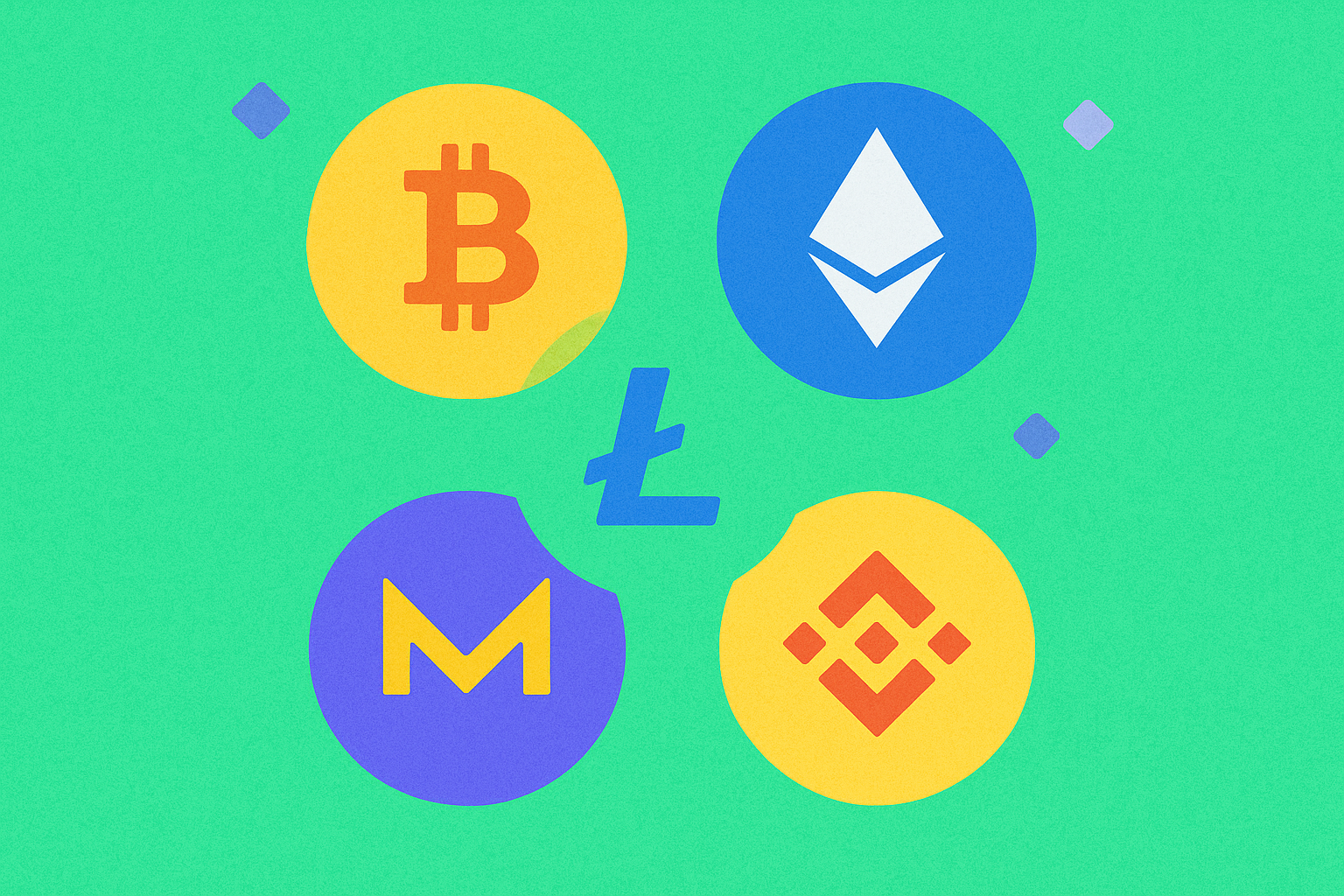
Bitcoin remains the pioneering cryptocurrency and continues to establish itself as the primary digital store of value in the cryptocurrency ecosystem. Since its inception in 2009, Bitcoin has evolved beyond a mere digital currency to become recognized as "digital gold" by institutional investors worldwide. The network demonstrates increasing institutional adoption, with major corporations and investment funds integrating Bitcoin into their portfolios. This trend indicates growing mainstream acceptance and confidence in Bitcoin's long-term value proposition. The cryptocurrency's fixed supply cap of 21 million coins ensures scarcity, a fundamental characteristic that supports its role as a hedge against inflation and currency devaluation.

Ethereum (ETH)

Ethereum represents the leading smart contract platform and continues to evolve with significant technological improvements. The complete rollout of Ethereum 2.0 represents a pivotal moment for the network, introducing a transition from proof-of-work to proof-of-stake consensus mechanisms. This upgrade directly addresses one of Ethereum's primary limitations: high transaction fees, commonly known as gas fees. By drastically reducing these fees, Ethereum enhances its utility for decentralized applications (dApps) and complex smart contracts. These improvements make Ethereum more accessible for developers and users alike, potentially increasing adoption rates across DeFi protocols, NFT platforms, and enterprise applications.

Major Exchange Native Token (BNB)

The native token of leading cryptocurrency exchange platforms functions as a utility asset within its ecosystem. As major trading venues continue their global expansion strategy, establishing new financial services across multiple jurisdictions, such tokens' utility and demand increase correspondingly. These tokens serve multiple purposes within their ecosystems: transaction fee discounts, participation in token sales and launchpad programs, and governance functions. The broader adoption of major exchange services worldwide directly translates to increased usage and value accrual for token holders.

Cardano (ADA)

Cardano distinguishes itself through its commitment to peer-reviewed research and scientific methodology in blockchain development. Unlike many projects that prioritize rapid deployment, Cardano takes a methodical approach to ensuring technological soundness and security. The project's ongoing scalability upgrades promise significant improvements to transaction throughput and network capacity. These enhancements could substantially boost Cardano's adoption among institutions and developers seeking a secure, research-backed blockchain platform. The cryptocurrency's focus on interoperability and sustainability positions it favorably for enterprise adoption.

Solana (SOL)

Solana has gained significant recognition for its exceptional transaction processing capabilities, achieving throughputs that rival traditional payment systems. The network's ability to process transactions at incredible speeds while maintaining low costs makes it particularly attractive for developers building decentralized applications that require high performance. Solana's growing ecosystem includes numerous DeFi protocols, NFT platforms, and enterprise solutions. The network's proven ability to handle substantial transaction volumes without network congestion demonstrates its scalability advantages over competing platforms.

Ripple (XRP)

Ripple's XRP token has long positioned itself as a solution for international banking and payment settlement. The project's regulatory developments represent important considerations for the token's future trajectory. XRP continues to maintain relevance as a technology for enabling fast, low-cost cross-border payments for financial institutions seeking to modernize their infrastructure. The ongoing evolution of regulatory frameworks could unlock substantial opportunities in the global remittance and banking sectors.

Polkadot (DOT)

Polkadot emerges as a key infrastructure layer for cross-chain interoperability in the blockchain ecosystem. The protocol enables different blockchain networks to communicate and share data seamlessly, addressing a critical need as the crypto landscape becomes increasingly fragmented. Polkadot's architecture supports multiple specialized blockchains (parachains) that can process transactions in parallel, dramatically increasing overall network capacity. The platform's growing adoption across various sectors, from DeFi to enterprise applications, reflects increasing recognition of cross-chain functionality's importance in blockchain development.

Avalanche (AVAX)

Avalanche has established itself as a robust platform for decentralized finance applications, with a rapidly expanding ecosystem of DeFi protocols, lending platforms, and trading venues. The network's three-pronged architecture—consisting of the Exchange Chain, Contract Chain, and Platform Chain—enables diverse use cases and high throughput. As the DeFi ecosystem on Avalanche continues to mature and attract transaction volume, the utility and value of the AVAX token increase accordingly. The platform's compatibility with Ethereum standards facilitates developer migration and application porting.

Chainlink operates as the leading decentralized oracle network, solving a fundamental problem in blockchain technology: securely bridging on-chain smart contracts with real-world data. Oracles are critical infrastructure enabling smart contracts to access price feeds, weather data, sports results, and other external information necessary for complex applications. Chainlink's distributed oracle network eliminates single points of failure and potential data manipulation. As the cryptocurrency and blockchain industries mature, the demand for reliable oracle services grows exponentially, supporting Chainlink's expansion and token value appreciation.

Litecoin (LTC)

Litecoin, often called "the silver to Bitcoin's gold," continues to evolve as a faster and more efficient alternative to Bitcoin. Recent implementations of enhanced privacy features strengthen Litecoin's appeal for users prioritizing transaction confidentiality. The network's faster block generation time and lower transaction fees make it particularly suitable for retail transactions and everyday payments. These improvements position Litecoin competitively in the market of alternative payment solutions, particularly for users seeking Bitcoin-like security with improved transaction efficiency.

Conclusion

The cryptocurrency market continues to present diverse opportunities across multiple blockchain platforms and use cases. The ten cryptocurrencies examined in this analysis represent the leading projects addressing critical challenges in blockchain technology, from scalability and interoperability to institutional adoption and real-world utility. Each token brings distinct technological innovations and market positioning, whether as store-of-value assets, smart contract platforms, or infrastructure solutions. As the blockchain industry continues its maturation trajectory, these cryptocurrencies stand at the forefront of technological advancement and market development, offering investors exposure to both established networks and evolving digital ecosystems. Successful investment decisions require ongoing research, market monitoring, and assessment of technological developments specific to each project.

FAQ

Which cryptocurrency is the cheapest?

In the crypto market, coins like Shiba Inu, Dogecoin, and various meme tokens trade at fractions of a cent, making them among the cheapest options. However, price alone doesn't determine value. Lower-priced coins often have larger circulating supplies. Consider market cap and utility rather than unit price when evaluating cryptocurrencies.

Who created cryptocurrency?

Bitcoin was created by Satoshi Nakamoto in 2009, though the true identity remains unknown. Other cryptocurrencies were developed by different teams and individuals. Bitcoin remains the first and most recognized digital currency in the crypto space.

Which cryptocurrencies should I invest in?

Evaluate technology, team, and roadmap of projects. Consider long-term fundamentals, trading volume, liquidity depth, and network fees. Bitcoin and Ethereum remain established choices, while emerging projects require thorough research before investment decisions.

* The information is not intended to be and does not constitute financial advice or any other recommendation of any sort offered or endorsed by Gate.
Related Articles
# How Much SOL Are Institutions Currently Holding: 2025 Holdings & Fund Flow Analysis

# How Much SOL Are Institutions Currently Holding: 2025 Holdings & Fund Flow Analysis

The article examines Solana's institutional landscape in 2025, highlighting its $1.6 billion holdings with 13 major entities controlling 827.7M SOL tokens. It explores the low concentration ratio, indicating diversified institutional strategies, while analyzing the SOL ETF's $500M asset attraction with sustained net inflows over 14 days. Additionally, institutional participation in staking activity is detailed, emphasizing Solana's infrastructure maturity and DeFi integration. Solana's resilience amid market volatility and capital rotation from Bitcoin and Ethereum is underscored, portraying it as a preferred layer-1 solution in dynamic crypto environments.
2025-12-22 08:37:22
PTB vs GRT: A Comprehensive Comparison of Penn Treebank and Google's Recurrent Transformer Models

PTB vs GRT: A Comprehensive Comparison of Penn Treebank and Google's Recurrent Transformer Models
This article provides a comprehensive comparison of Portal To Bitcoin (PTB) and The Graph (GRT), focusing on their investment potential in the crypto market. It contrasts PTB's Bitcoin scaling solution with GRT's blockchain data indexing protocol, analyzing both historical price trends and market positioning. The article tackles common investor queries about volatility, risk assessment, and market sentiment, offering insights suitable for both beginner and experienced investors. With detailed analysis, it guides readers on investment strategies for these distinct digital assets. Visit real-time prices at Gate for further insights.
2025-12-23 04:22:04
2025 Cryptocurrency Forecasts: Surprising Numbers to Watch
2025 Cryptocurrency Forecasts: Surprising Numbers to Watch

The article "2025 Cryptocurrency Forecasts: Surprising Numbers to Watch" delivers an in-depth analysis of the potential growth trajectories and challenges within the crypto market throughout 2025. It covers major cryptocurrencies like Bitcoin, Ethereum, and Solana, evaluating each for investment prognoses. By highlighting usage cases, technological innovations, and regulatory impacts, the article serves investors seeking informed decisions in an evolving market. The logical flow starts with Bitcoin's dominance, followed by the roles of smart contract platforms and trade ecosystems, contrasting with speculative memecoins. Overall, it guides readers in identifying strong investment opportunities amid the transformative developments in digital assets.
2025-12-20 09:08:41
What is the difference between top crypto competitors by market cap and performance metrics in 2025?
What is the difference between top crypto competitors by market cap and performance metrics in 2025?

# Article Overview: Top Crypto Competitors by Market Cap and Performance Metrics in 2025 This comprehensive guide analyzes how Bitcoin, Ethereum, and emerging blockchain leaders compete across market capitalization and performance indicators. Readers gain insight into market share distribution, trading volume dynamics, price volatility patterns, and ROI comparisons that distinguish crypto assets in 2025's competitive landscape. The article addresses investor needs for data-driven asset evaluation beyond simple market cap rankings, comparing Bitcoin's stability against emerging protocols like Kyber and KNC through multi-timeframe metrics. Structured progressively, it progresses from market cap fundamentals to performance metrics analysis, then explores market share dynamics and technological differentiation on Gate. Whether you're evaluating investment opportunities, assessing ecosystem positioning, or understanding crypto competition, this guide provides actionable metrics for informed decision-making across
2025-12-28 10:37:14
How Do Cryptocurrency Competitors Compare: Market Cap, Performance, and User Base Analysis in 2026?
How Do Cryptocurrency Competitors Compare: Market Cap, Performance, and User Base Analysis in 2026?

# Article Overview: Cryptocurrency Market Competitors Analysis 2026 This comprehensive guide examines how Bitcoin, Ethereum, BNB, and emerging cryptocurrencies compete across market cap, performance metrics, and user adoption. Readers gain actionable insights into market dominance shifts, transaction speed comparisons, and security features differentiating top blockchain platforms. The article addresses critical investor questions: Which cryptocurrencies lead in 2026? How do performance metrics influence adoption? What distinguishes emerging competitors? Through data-driven analysis of market capitalization hierarchy, technical innovation, and geographic user distribution, this resource equips traders, institutional investors, and blockchain enthusiasts with essential competitive intelligence. Discover why Layer 2 solutions and AI coins gain traction, how stablecoins reshape payment infrastructure on Gate, and why market cap alone doesn't determine real-world adoption success. Perfect for decision-makers nav
2026-01-01 08:30:13
What is WLFI price volatility: Support at $0.13 and resistance at $0.23 explained
What is WLFI price volatility: Support at $0.13 and resistance at $0.23 explained

The article explores the price volatility of WLFI by analyzing its support at $0.13 and resistance at $0.23. It highlights trading dynamics, where $0.13 acts as a stabilization zone amid confluence technical indicators, and $0.23 is identified as a breakout point. The piece examines technical indicators like RSI and MACD, which indicate market tension, and the potential for price reversals. With a focus on market correlation and growth potential, it suggests a 330% upside projected against Bitcoin and Ethereum movements. Ideal for traders, the article provides an insightful overview of WLFI's strategic market positioning.
2025-12-19 01:49:25
Recommended for You
Why China is Banning Crypto?

Why China is Banning Crypto?

# Article Introduction This comprehensive guide examines China's cryptocurrency regulatory framework and its profound impact on global markets, investors, and traders. The article explores the evolution of China's stringent policies from 2017 through the 2021 comprehensive ban, including the strategic introduction of the Digital Yuan as a central bank digital currency. Key sections analyze how China's ban reshaped global mining operations, with the United States and other nations capturing market share previously dominated by Chinese miners. The guide addresses critical concerns for cryptocurrency investors on Gate and financial professionals navigating policy-driven market volatility. Through real-world examples, statistical data, and practical FAQ responses, readers gain essential insights into regulatory compliance, risk management strategies, and the interconnected dynamics between national digital currencies and decentralized crypto ecosystems shaping the future of global finance.
2026-01-04 15:25:11
Personal Life and Hobbies: Behind the Scenes with Vitalik Buterin—Founder of Ethereum

Personal Life and Hobbies: Behind the Scenes with Vitalik Buterin—Founder of Ethereum

Explore Vitalik Buterin’s life and accomplishments—the visionary behind Ethereum. Learn about his background, personal journey, pivotal contributions to blockchain innovation, and his lasting influence on the Web3 ecosystem. This is the story of a genius who revolutionized the cryptocurrency landscape.
2026-01-04 15:19:28
Proxy Contract

Proxy Contract

# Understanding Proxy Contracts in Blockchain Technology Proxy Contracts are essential smart contract mechanisms that enable blockchain applications to upgrade seamlessly while maintaining consistent addresses and data integrity. This article explores how proxy contracts separate logic from storage through delegatecall, allowing developers to modify contract behavior without redeployment. Designed for developers, investors, and blockchain platform operators including Gate, this guide covers core architecture, practical DeFi and NFT applications, security considerations, and implementation patterns like Transparent Proxy and UUPS. By examining real-world use cases and addressing critical concerns around gas costs and access control, this resource helps stakeholders understand why proxy contracts are vital for scalable, adaptable blockchain ecosystems.
2026-01-04 15:14:07
Is Web3 Dead?

Is Web3 Dead?

# Article Overview: The Future of Decentralized Technology: Is Web3 Still Relevant? This comprehensive guide explores Web3's transformative potential and current market trajectory, addressing whether decentralized technology remains viable and valuable. The article examines core Web3 components—DeFi, NFTs, DAOs, and blockchain advancement—demonstrating substantial growth through increased investment and user adoption on platforms like Gate. Designed for investors, traders, and users, it clarifies Web3's distinction from Web2, debunks "Web3 is dead" claims with real adoption data, and identifies critical challenges including regulatory uncertainty and scalability. Through successful real-world applications and expert insights, this resource provides actionable takeaways for navigating the evolving decentralized ecosystem while managing investment risks effectively.
2026-01-04 15:09:58
Cryptoscreener

Cryptoscreener

Top Cryptocurrency Analysis Tools: An Overview. Discover how to leverage the leading cryptocurrency screener featuring technical analysis and advanced price and volume filters. Access a free screener for Web3 traders and investors on the Gate platform.
2026-01-04 15:01:56
What is a cryptocurrency airdrop?

What is a cryptocurrency airdrop?

Explore the concept of airdrops in crypto and find out how to claim free tokens. Understand the various distribution methods, get essential security advice, and learn the differences between airdrops and ICOs. Begin your Web3 journey on Gate without any upfront investment.
2026-01-04 14:43:15