Gate TradFi Enhances Multi-Asset Trading Experience with a New Leverage Mechanism

Last Updated 2026-03-24 12:57:15
Reading Time: 1m
Gate TradFi has launched a new multi-asset trading mechanism, expanding support to include multiple asset types and sliding leverage. This upgrade optimizes the user trading experience and enables more flexible strategy deployment and capital management.

Gate TradFi Rolls Out Comprehensive Upgrade

Gate TradFi has consistently provided users with a seamless cross-asset, cross-market trading experience. Now, the platform has completed a full upgrade of its products and mechanisms. This update not only expands the range of tradable assets but also debuts the industry’s first four-tier sliding leverage system, further enhancing trading flexibility and risk management.

Expanded Asset Diversity, Broader Trading Opportunities
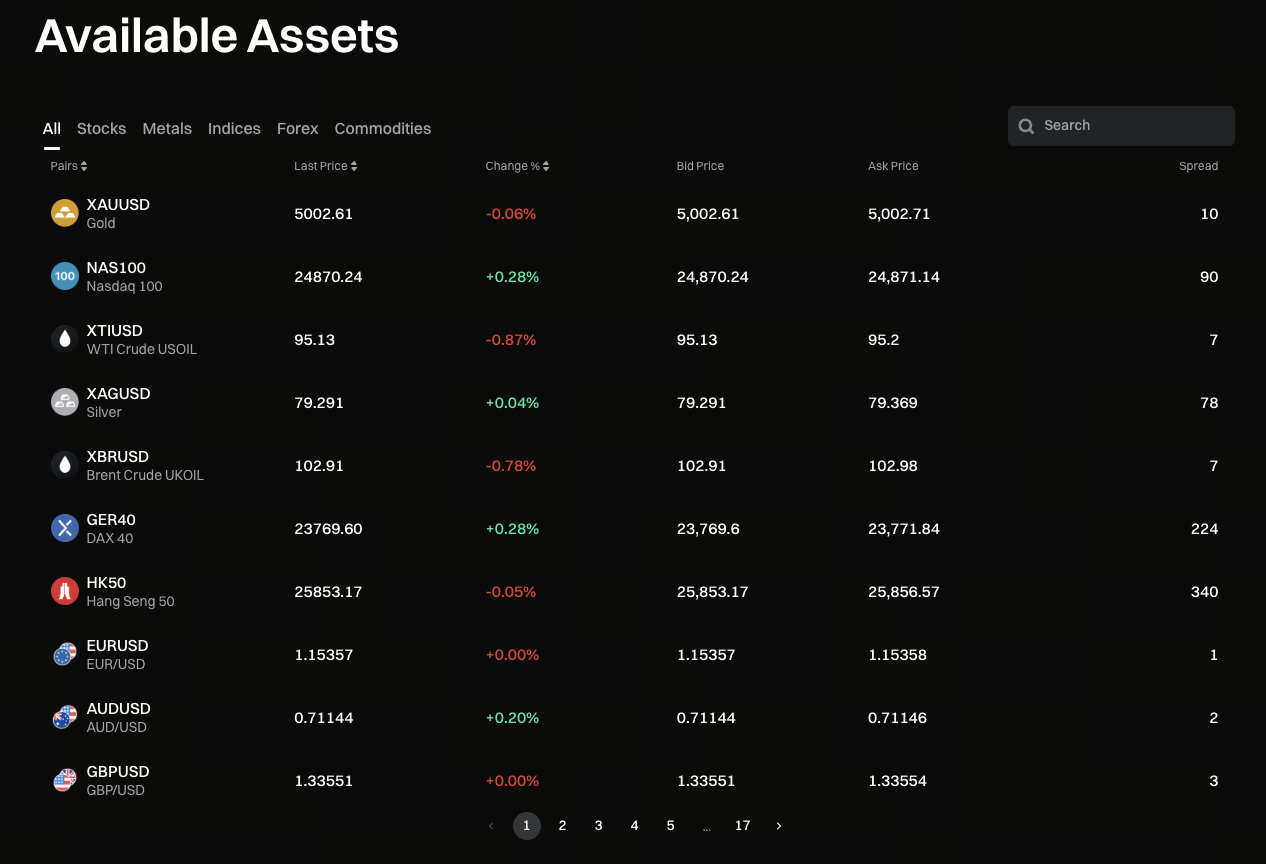
Expanded Asset Diversity, Broader Trading Opportunities Image source: Gate TradFi page

The standout feature of this upgrade is the addition of multiple traditional financial asset pairs, broadening market coverage on Gate TradFi. Whether trading metals, forex, stock indices, or commodities, users can manage all assets within a single account for a more comprehensive investment strategy. Newly added assets include:

  • Metals: Gold, silver, and other options for robust risk management
  • Forex: Mainstream currency pairs, empowering users to trade global forex markets with flexibility
  • Stock Indices: A range of global indices, ideal for investors seeking diversified portfolios
  • Commodities: Including crude oil and Brent oil, addressing demand for commodity market exposure

Four-Tier Sliding Leverage: Flexible Control

To meet the distinct trading requirements of various asset classes, Gate TradFi has introduced a four-tier sliding leverage mechanism. Users can adjust leverage from 20x to 500x based on market conditions and individual risk preferences, streamlining risk and return management. This system delivers efficient capital utilization and greater flexibility for different trading strategies:

  • Metals: Gold supports up to 500x leverage; silver up to 100x
  • Stock Indices: Major indices like NAS100, US30, and US500 support up to 500x leverage
  • Forex: Pairs such as EUR/USD and USD/JPY support up to 500x leverage
  • Commodities: USOIL and UKOIL support up to 500x leverage

Boosted Strategy Execution, Optimized Capital Allocation

By integrating the new leverage system with a diversified asset portfolio, Gate TradFi increases users’ strategy execution efficiency. Whether deploying high-frequency trading, macro multi-asset hedging, or trend and swing strategies, users benefit from precise position management and capital allocation.

  • Efficient Capital Utilization: The new system enables granular position adjustments, maximizing capital efficiency.
  • Multi-Strategy Capability: Users can implement multiple strategies concurrently for flexible asset allocation.

Maximizing Trading Strategies with the New Mechanism

With multi-asset trading and the four-tier sliding leverage system, Gate TradFi users can adapt to market fluctuations and individual trading objectives with agility. Investors can seize market opportunities and enhance returns. For instance, stock index traders may leverage higher ratios to amplify gains, while metals or forex traders might opt for conservative strategies and adjust leverage levels as needed.

Risk Advisory: Prudent Position Management and Cautious Trading

While the new leverage system offers greater flexibility, it also increases exposure to risk. Leveraged trading carries heightened risk, and market volatility can lead to substantial losses. We advise users to manage positions carefully according to their risk tolerance and avoid excessive leverage.

Author:  Max
Disclaimer
* The information is not intended to be and does not constitute financial advice or any other recommendation of any sort offered or endorsed by Gate.
* This article may not be reproduced, transmitted or copied without referencing Gate. Contravention is an infringement of Copyright Act and may be subject to legal action.

Related Articles

What is Fartcoin? All You Need to Know About FARTCOIN
Intermediate

What is Fartcoin? All You Need to Know About FARTCOIN

Fartcoin (FARTCOIN) is a representative meme coin within the Solana ecosystem based on an AI-driven narrative. Its core concept originated from an experiment aimed at exploring the "boundaries between AI Agents and humor." More than just a digital asset with social attributes, the project deeply couples absurd humor culture with on-chain financial logic by integrating autonomous AI interaction models.
2026-04-04 22:01:19
Gold Price Forecast for the Next Five Years: 2026–2030 Trend Outlook and Investment Implications, Could It Reach $6,000?
Beginner

Gold Price Forecast for the Next Five Years: 2026–2030 Trend Outlook and Investment Implications, Could It Reach $6,000?

Analyze current gold price trends alongside authoritative five-year forecasts, integrating an evaluation of market risks and opportunities. This gives investors insight into the potential trajectory of gold prices and the main drivers expected to shape the market over the next five years.
2026-03-25 18:13:30
AI-Native Settlement Layers: How United Stables Is Building the Next Financial Rail
Beginner

AI-Native Settlement Layers: How United Stables Is Building the Next Financial Rail

Stablecoins were originally designed as dollar substitutes within exchanges, primarily used for asset pricing and trade settlement. As on-chain financial ecosystems have matured, their role has expanded beyond simple payments to include collateral assets, cross-chain liquidity mediums, and unified settlement units. In particular, as AI systems and automated agents begin to participate directly in economic activity, demand has risen sharply for programmable value units capable of instant settlement. This shift is pushing stablecoins toward the role of foundational financial infrastructure.
2026-03-25 03:16:17
Aster vs Hyperliquid: Which Perp DEX Will Prevail?
Beginner

Aster vs Hyperliquid: Which Perp DEX Will Prevail?

Aster and Hyperliquid are the two representative protocols of the "purpose-built L1 path" within the current decentralized perpetual exchange (Perp DEX) sector. As a pioneer in the field, Hyperliquid has built a deep liquidity moat through its highly mature order book architecture and strong community consensus. Conversely, Aster, as a rising challenger, seeks to leapfrog the competition in high-performance trading through more aggressive multi-chain aggregation logic, private transaction modules, and an underlying execution environment optimized for 2026 market demands.
2026-03-24 11:58:33
How Does Kite Work? An In-Depth Look at Kite's Identity and Programmable Permission Architecture
Beginner

How Does Kite Work? An In-Depth Look at Kite's Identity and Programmable Permission Architecture

Kite is an EVM compatible Layer 1 blockchain network that runs on proof of stake. It is designed to give AI agents verifiable identity, programmable permissions, and real time settlement in an on-chain execution environment. In Kite's design, AI is no longer only a tool that follows instructions. It becomes an economic participant with independent on-chain identity and direct control over assets. Within secure and auditable infrastructure, an AI agent can complete payments, call services, and coordinate tasks autonomously, making Kite a foundational layer for the emerging agent economy.
2026-03-25 06:02:34
DePIN Identity Network and Real World Applications: How Humanity Protocol Brings on-chain Identity Into the Physical World
Beginner

DePIN Identity Network and Real World Applications: How Humanity Protocol Brings on-chain Identity Into the Physical World

Most Web3 identity systems remain confined to on-chain environments and struggle to achieve meaningful adoption in real world settings. Through a DePIN architecture and physical verification hardware, Humanity Protocol aims to bring decentralized identity into access control systems, hospitality, public services, and offline events, allowing on-chain identity to function not just as a digital credential, but as foundational infrastructure for real world access.
2026-03-25 07:40:53