What Is Merged Mining?
Merged mining refers to a process where miners use the same computational work to simultaneously generate blocks and earn rewards on two compatible proof-of-work blockchains. It is similar to taking one exam whose score qualifies you for passing two different courses.
In blockchain, "mining" is the process where participants compete using computational power to gain the right to record new transactions in a public ledger. "Proof of Work" is a mechanism that requires participants to solve cryptographic puzzles, demonstrating that sufficient computational effort has been expended. Merged mining allows a single solution that meets the main chain’s requirements to be submitted—via additional proof—to an auxiliary chain, enabling “one computation, multiple rewards.”
Why Did Merged Mining Emerge?
Merged mining was developed to address the issues faced by smaller blockchains, such as insufficient hash power and vulnerability to attacks, while also reducing wasted computational resources by miners. It enables auxiliary chains to leverage the high security and stability of a stronger parent chain.
Initially, many new blockchains struggled to attract enough miners, resulting in low attack costs and unstable block generation. Merged mining allows miners to earn extra rewards on auxiliary chains without increasing electricity or hardware usage. For auxiliary chains, it’s like being “linked” to a secure parent chain, reducing their exposure to hash rate attacks.
How Does Merged Mining Work?
The core principle of merged mining is: miners first generate a computational result that meets the difficulty target of the parent chain. Then, using "auxiliary proofs," they submit this result to the auxiliary chain, which recognizes it as valid. Both chains have separate blocks and rewards, enabling miners to claim both in one mining operation.
Key elements include:
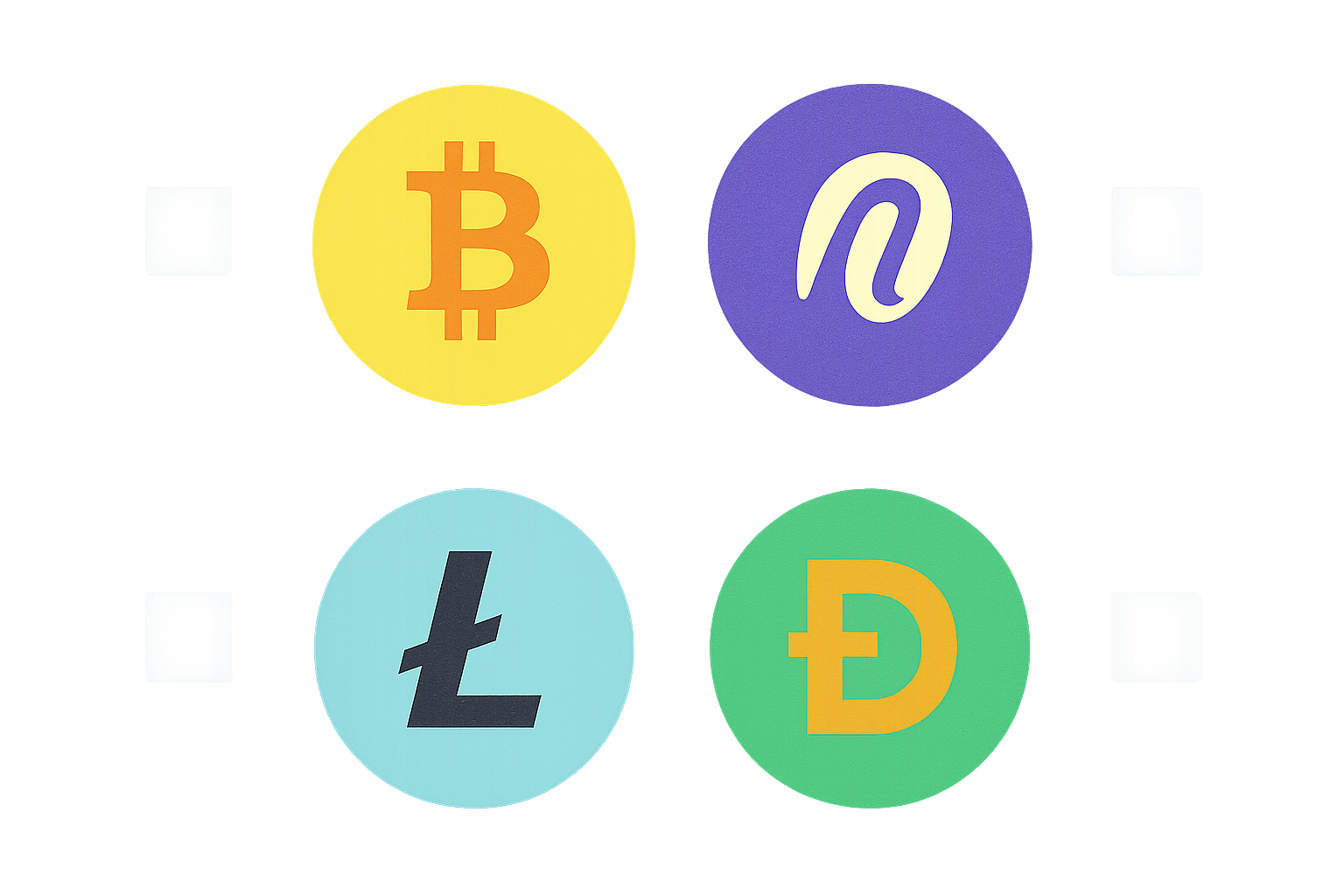
- Parent Chain & Auxiliary Chain: The parent chain is typically the one with stronger hash power (e.g., Bitcoin or Litecoin), while the auxiliary chain supports a compatible mining algorithm and merged mining rules (e.g., Namecoin, RSK, or Dogecoin).
- Difficulty & Target Value: Proof of Work requires hash results below a certain target value. In merged mining, the result must first satisfy the parent chain’s requirements; then, additional data allows the auxiliary chain to verify the computation originated from a valid parent chain solution.
- Mining Pools & Submission: Mining pools aggregate miners’ computational power and distribute rewards. Pools supporting merged mining package and submit the same “solution” separately to each chain.
You can think of it as: A miner solves a difficult puzzle and gets recognition from the parent chain. They then present proof to the auxiliary chain—“I truly solved this problem”—and if verified, receive rewards from both chains.
What Are the Benefits and Costs of Merged Mining?
For miners, merged mining enables them to earn multiple rewards using the same electricity and equipment, maximizing hash rate efficiency. For auxiliary chains, benefits include enhanced security, more stable block production, and greater ecosystem appeal.
Costs mainly involve:
- Configuration Complexity: Setting up mining pools or nodes for merged mining requires more advanced configuration and maintenance.
- Reward Distribution Rules: Mining pool distribution methods and fee structures affect actual earnings; careful evaluation is needed.
- Network Congestion & Delays: Submitting results to two chains may cause network delays affecting confirmation times.
Overall, electricity and hardware costs remain largely unchanged, but operational and strategic costs increase, requiring careful consideration.
How to Participate in Merged Mining?
Steps for participating in merged mining include:
Step 1: Confirm Hardware & Electricity. Choose mining equipment compatible with the parent chain’s algorithm (e.g., SHA-256 ASICs for Bitcoin, Scrypt miners for Litecoin), ensuring stable power supply and cooling.
Step 2: Select a Merged Mining Pool. Review pool documentation for supported chain combinations (such as Bitcoin + Namecoin or Litecoin + Dogecoin), and understand fee structures and reward distribution.
Step 3: Configure Miner Parameters. Enter pool address, account details, wallet address, and enable merged mining settings. For first-time setup, test in a low-power or sandbox environment.
Step 4: Monitor & Validate. Track submitted hash rate, shares (segments of proof-of-work submitted by miners), and auxiliary chain rewards received. Calculate net profit considering electricity costs and hardware depreciation.
Step 5: Risk Management. Maintain equipment, set up network redundancy, plan for pool switching, and promptly check logs and pool announcements if earnings are abnormal.
If you are not directly mining but are interested in related assets or ecosystems, you can view relevant blockchain markets and project information on Gate and assess risks before participating.
Which Projects Support Merged Mining?
Common merged mining pairs include Bitcoin + Namecoin, Bitcoin + RSK, and Litecoin + Dogecoin. As of 2024, mainstream practice involves using the higher-hash-rate chain as the parent chain while auxiliary chains accept merged mining results via compatible protocols.
For example, Dogecoin shifted historically to merged mining with Litecoin, which greatly improved Dogecoin’s block stability and network security. Namecoin and RSK also utilize Bitcoin's hash power through merged mining to strengthen their respective ecosystems.
What Is the Difference Between Merged Mining and Multi-Mining?
Merged mining means “simultaneously mining two compatible chains using a single computation recognized by both.” Multi-mining (or profit-switching mining) refers to “switching between different chains over time to pursue the highest current returns.” The strategies are fundamentally different.
Merged mining focuses on earning multi-chain rewards in parallel with a single hash rate setup—typically stable. Multi-mining emphasizes frequent strategy adjustments based on profitability, resulting in fluctuating returns and higher switching costs. Beginners should distinguish between these methods and choose based on their technical capacity and risk tolerance.
What Are the Risks and Considerations of Merged Mining?
Main risks of merged mining include:
- Auxiliary Chain Dependency: Overreliance on parent chain hash power can destabilize block production if major miners exit.
- Centralization Risk: If a few pools dominate merged mining, hash power concentration may pose governance and security threats.
- Reward & Price Volatility: Fluctuations in auxiliary token prices affect real earnings; withdrawals and conversions may incur fees or slippage.
- Pool & Custody Risks: Pool fee rates, reward distribution models, operational stability, and account security all require careful review; robust risk management is essential for funds safety.
Before investing in equipment or electricity, estimate potential returns and conduct stress tests; stay updated with project announcements and technical upgrade plans.
What Does Merged Mining Mean for Network Security?
Merged mining generally boosts an auxiliary chain’s resistance to attacks since an attacker must contend with hash power equivalent to that of the parent chain—significantly raising attack costs. Auxiliary chains benefit from more stable block production and higher finality (making transaction rollbacks difficult).
However, there are trade-offs: Hash power and miner participation become tightly linked to the parent chain’s ecosystem, potentially undermining the auxiliary chain’s independence and autonomy. Governance design must account for long-term hash rate sources and incentive structures to avoid single-point dependencies.
How Can Beginners Track Merged Mining Ecosystems on Gate?
Beginners can follow merged mining assets and news on Gate to learn which projects use merged mining, track recent upgrades and risk warnings, and decide whether to participate or allocate funds accordingly.
In practice:
- Use Gate’s asset pages for merged mining chains to monitor price fluctuations, announcements, and research articles.
- Assess token liquidity and risk exposure; set clear take-profit/stop-loss strategies for position management.
- If not actively mining, follow indices or spot/derivatives markets for feedback on merged mining projects—avoid impulsive speculation.
Always keep in mind that any financial activity involves price volatility and changing platform rules; make cautious decisions and diversify risk.
Key Points Summary
Merged mining utilizes a single set of proof-of-work hash power to mine blocks and claim rewards on two compatible chains simultaneously. Common pairs include Bitcoin + Namecoin, Bitcoin + RSK, Litecoin + Dogecoin. It increases auxiliary chain security and hash rate utilization but introduces complexity, centralization risks, and volatile returns. Beginners should first understand the basics of mining and proof-of-work mechanisms, then evaluate hardware, electricity requirements, pool selection, and reward distribution procedures. If uncertain, simply follow relevant assets and news on Gate for gradual involvement or observation of this ecosystem.
FAQ
Which Is More Stable: Merged Mining or Solo Mining?
Merged mining delivers more stable returns because mining pools aggregate hash power from many miners, ensuring consistent daily reward distribution. Solo mining relies entirely on luck—you might go months without finding a block—leading to highly volatile earnings. For individual miners, joining a pool is like replacing lottery odds with regular dividends.
Why Has My Mining Revenue Dropped Recently?
Three main reasons may cause declining mining revenue: First, increased network hash rate raises difficulty levels, reducing each miner’s share; second, coin price fluctuations impact actual profit value; third, changes in pool fees or your hardware performance affect returns. Check your pool statistics and hardware status for diagnosis.
What Hardware Is Required for Merged Mining?
Hardware requirements vary by cryptocurrency. Bitcoin needs professional ASIC miners; Ethereum requires GPUs; other coins may run on CPUs. Beginners should research each project’s hardware specifications on Gate before investing.
How Long Does It Take to Break Even From Mining?
Break-even period depends on hardware cost, electricity expenses, coin price trends, and network difficulty. Generally speaking, mainstream miners can expect 3–12 months to recover their investment if coin prices remain stable and electricity costs are low. However, falling prices or rising difficulty can significantly extend this period—or even result in losses.
How Can I Convert Mined Coins Into Cash?
Coins mined can be sold directly on exchanges like Gate for stablecoins or fiat currency. Most mining pools support direct withdrawals to exchange accounts—eliminating intermediaries. Regularly monitor price trends and aim to sell during market peaks for optimal returns.