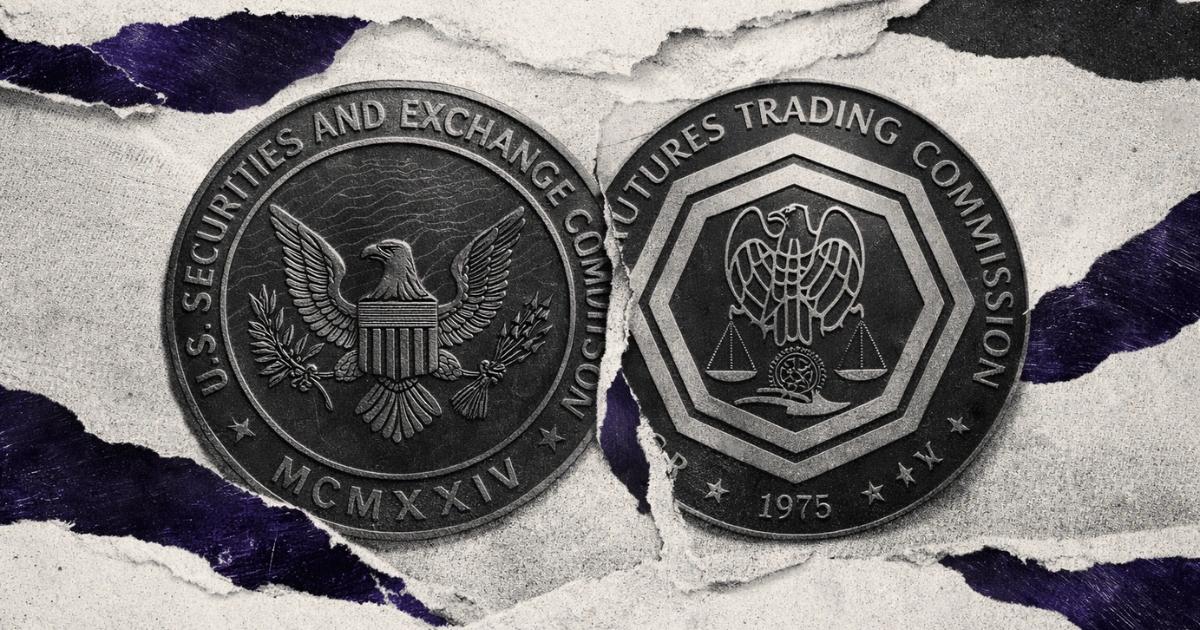
SEC and CFTC Sign Historic MOU to End Jurisdictional Battles in Digital Assets, Launch Joint Harmonization Initiative, and Shift Toward Transparent Rules and Minimal Effective Regulation.
Say Goodbye to Enforcement-Only Regulation: Historic Partnership Agreement Signed
The US financial regulatory system has taken a major turn. The Securities and Exchange Commission (SEC) and the Commodity Futures Trading Commission (CFTC) officially signed a historic Memorandum of Understanding (MOU) on March 11, marking the end of years-long jurisdictional disputes between the two agencies.
This agreement establishes a coordinated framework for digital assets, covering core areas such as regulation development, market oversight, information sharing, and joint enforcement. During the Biden administration, the SEC insisted that most tokens besides Bitcoin ($BTC) are securities, while the CFTC argued that many digital assets have commodity characteristics. These differing views led to overlapping enforcement actions and regulatory uncertainty.
Since the launch of “Project Crypto” in January 2026, both agencies have demonstrated unprecedented cooperation. SEC Chair Paul S. Atkins stated that the era of defining rules solely through enforcement is over, and future regulation will focus on dialogue and transparent rules. This legally binding cross-agency agreement signifies a formal shift from confrontation to collaboration.
Atkins emphasized that regulatory fragmentation has severely undermined US competitiveness, even forcing innovative companies to move overseas. The signed memorandum will serve as a roadmap, providing market participants with much-needed clarity.
Implementing the Principle of Minimum Effective Regulation
To translate the memorandum into concrete actions, the SEC and CFTC announced the formation of the “Joint Harmonization Initiative,” led jointly by SEC’s Robert Teply and CFTC’s Meghan Tente. This initiative embeds cross-agency coordination into daily operations, representing a significant structural step.
Both agencies plan to adopt the pharmacological principle of “Minimum Effective Dose” in their regulatory strategies, meaning they aim to maintain market integrity with the simplest, most effective approach that does not hinder innovation. The harmonization initiative will prioritize six key industries to establish a new order amid complex market environments.
These six industries include:
- Clarifying product definitions and classifications for digital assets
- Modernizing clearing and margin frameworks
- Reducing administrative burdens of dual registration
- Establishing dedicated regulatory frameworks for crypto assets and emerging technologies
- Simplifying trade reporting processes
- Coordinating cross-market risk monitoring and enforcement actions
For companies currently required to report to both agencies, this means a future with more consistent and predictable regulation, significantly reducing compliance costs. CFTC Chair Michael S. Selig noted that as trading models and digital infrastructure evolve, regulatory frameworks must modernize accordingly to meet market needs.
Building a Super-App for Regulation with Seamless Coordination and Joint Review Mechanisms
Atkins proposed an innovative concept: regulation should emulate the “super-app” model popular in tech industries. In this vision, regulatory agencies would integrate multiple services into a single, seamless interface, eliminating the need for industry participants to switch between different systems and bureaucratic procedures.
In practice, SEC and CFTC have begun discussions about sharing office space in Washington, D.C., and are working toward establishing a unified data platform. In the future, if a financial product involves both securities and derivatives attributes, companies will receive joint guidance from both agencies rather than navigating separate bureaucracies.
Both agencies will establish a joint review mechanism, allowing companies to request coordinated discussions through a new Harmonization Initiative website for product applications or regulatory clarifications. Additionally, they have agreed to avoid duplicate penalties for the same conduct and to coordinate charges, litigation strategies, and external communications in potential enforcement cases. This “back-end integration, front-end seamless” approach aims to resolve past issues where overlapping regulation led to repeated reviews of the same entities.
This collaborative model will not only improve administrative efficiency but also ensure consistency in legal opinions, providing a more solid legal foundation for companies pushing innovative products.
Advancing Regulation Without Waiting for Legislation
The timing of this memorandum signals a proactive stance by the regulators. Although Congress is working on the “CLARITY Act,” which seeks to legally define jurisdiction over digital assets, progress has stalled in the Senate over issues like stablecoin interest distribution and DeFi regulation.
The actions of SEC and CFTC send a clear message: they will build operational foundations first, rather than passively waiting for legislation. Atkins admitted that a comprehensive, permanent change still requires congressional legislation, but the current memorandum can serve as a solid “bridge,” providing much-needed stability to the market before laws are enacted.
As the second term of the Trump administration progresses, the leadership of both agencies shows strong alignment in their goal to position the US as the “global crypto capital.” The joint effort by SEC and CFTC marks a shift from “adversarial enforcement” to “coordinated supervision.” This transformation aims to balance investor protection with technological innovation amid the digital economy wave, ensuring the US financial markets remain competitive globally.
In the coming months, both agencies will further disclose details and roles related to the memorandum, and market participants generally hold positive expectations for this agreement, which could finally end jurisdictional conflicts.
Further Reading
Regulation no longer fragmented! SEC and CFTC team up to promote Project Crypto and jointly establish asset classification
Disclaimer: The information on this page may come from third parties and does not represent the views or opinions of Gate. The content displayed on this page is for reference only and does not constitute any financial, investment, or legal advice. Gate does not guarantee the accuracy or completeness of the information and shall not be liable for any losses arising from the use of this information. Virtual asset investments carry high risks and are subject to significant price volatility. You may lose all of your invested principal. Please fully understand the relevant risks and make prudent decisions based on your own financial situation and risk tolerance. For details, please refer to
Disclaimer.


