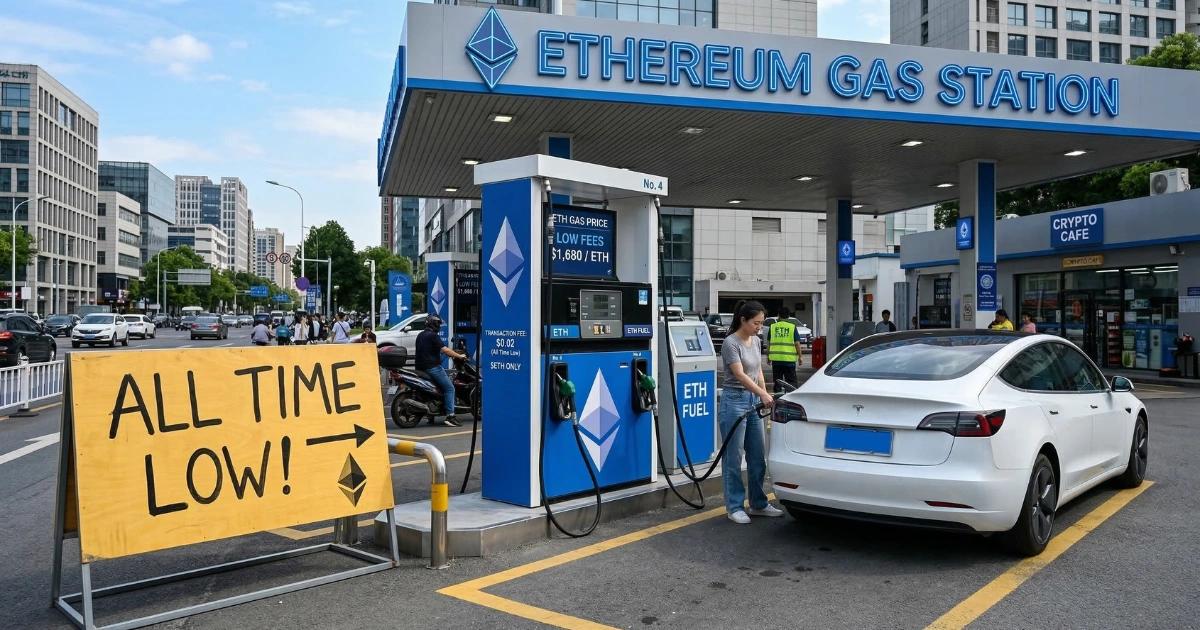
Ethereum Gas fees drop to 0.045 Gwei, reaching a new low, bringing on-chain transaction costs down to the $0.01 level. Layer 2 solutions and upgrades are driving the mainnet transformation into a settlement layer.
Ethereum Gas fees hit a new low, on-chain operation costs reduced to “pennies”
For a long time, Ethereum network transaction fees have been a topic of discussion due to their high costs, but recent developments show a clear change. According to on-chain data platform Etherscan, as of this writing, the average Gas price on Ethereum is about 0.045 Gwei, hitting a low not seen in recent years.
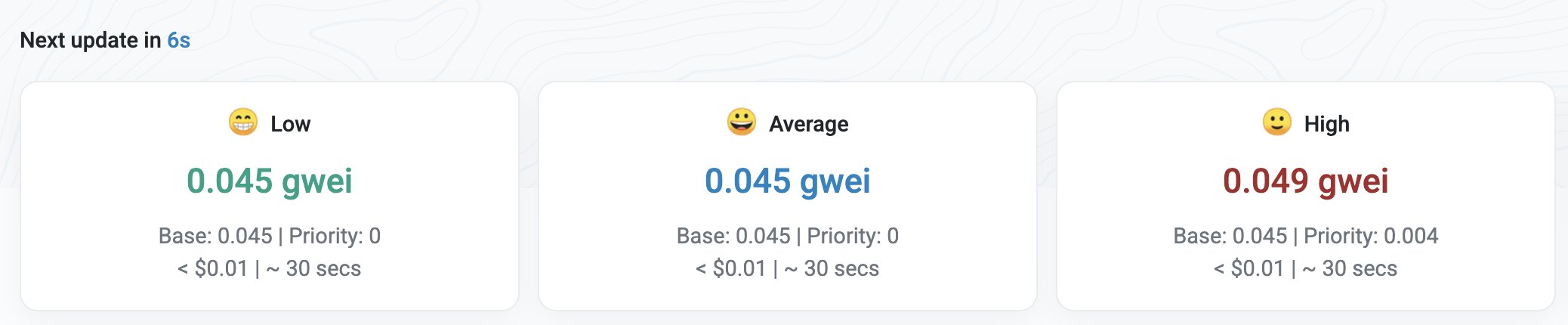
Image source: Etherscan Average Gas Price on Ethereum is about 0.045 Gwei
At this rate, most on-chain operation costs have become extremely low. In practice, “Crypto City” tested on Uniswap that typical ERC-20 token swaps cost about $0.01; transfer fees are even less than $0.01. Even for more complex operations like cross-chain transfers or DeFi lending, costs generally stay below approximately $0.12.
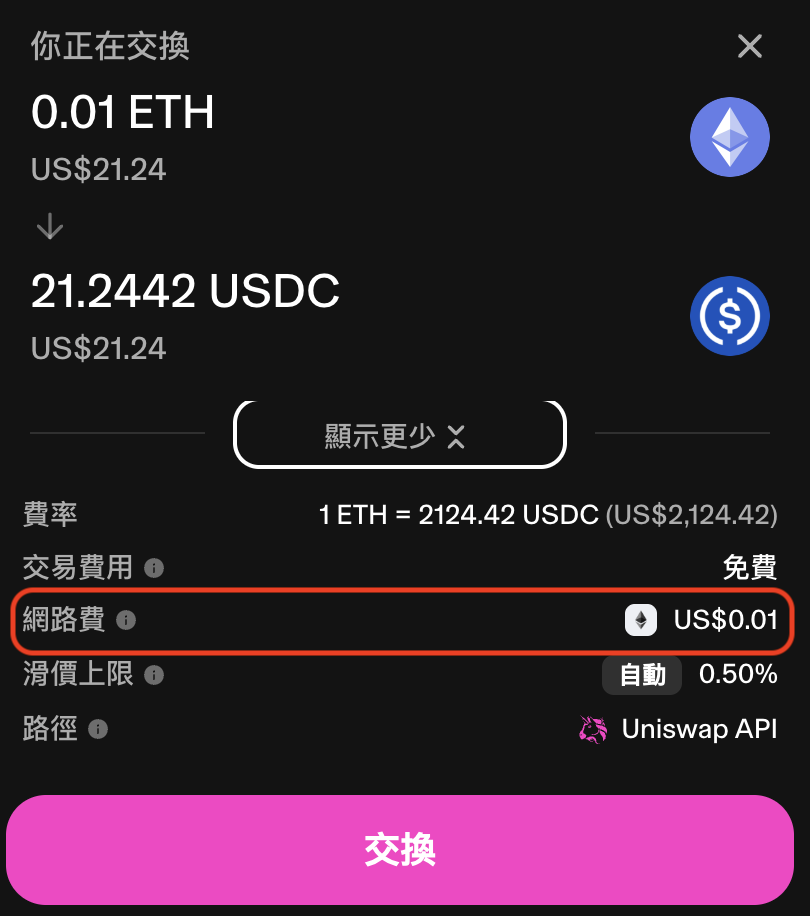
Image source: Uniswap “Crypto City” tested on Uniswap, typical ERC-20 token swap fees are about $0.01
Looking at the long-term trend, the decline in Gas fees is even more significant. Over the past week, average fees ranged from 0.5 to 0.6 Gwei, whereas the same period in 2025 saw average fees close to 6 Gwei, indicating a reduction of over 90% within a year. For Ethereum transactions that once cost over $200 during peak bull markets, current fee levels are almost at historic lows.
Layer 2 and upgrades drive Ethereum’s evolving role
Analysis indicates that the drop in Ethereum transaction fees is closely related to recent network architecture adjustments. As Layer 2 scaling solutions rapidly grow, many daily transactions have shifted to second-layer networks like Arbitrum, Base, and Optimism. Meanwhile, the Dencun upgrade completed in 2024 introduced EIP-4844 (Proto-Danksharding), significantly reducing the cost for Rollups to publish data on the mainnet. The upcoming Fusaka upgrade in 2025 will further increase data throughput by adding Blob capacity through PeerDAS technology.
Further reading
Ethereum transaction fees hit new lows! Average below $0.10, entering ultra-low fee era with Layer 2 scaling
These technological changes enable high-frequency trading, stablecoin transfers, and DeFi operations to be completed on Layer 2, while the mainnet gradually shifts to a secure settlement layer. Currently, Ethereum mainnet block utilization is about 46%, showing a relatively stable state compared to previous frequent congestion. For developers, lower Gas fees also make testing smart contracts, deploying applications, and minting NFTs much easier.
Lower fees, but market still focuses on demand and price performance
Despite transaction costs dropping to lows, the Ethereum market still faces other variables. The price of ETH recently hovers around $2,075, still significantly below the 2025 high. Market analysis suggests that macroeconomic conditions and ETF capital outflows exert downward pressure on the overall crypto market. However, on-chain data shows that activity within the Ethereum ecosystem remains strong.
Recent transaction counts remain high, partly because Layer 2 network transaction volume continues to grow. Additionally, stablecoin settlements and smart contract calls remain active. These data points indicate that demand for Ethereum ecosystem usage persists, even as activity gradually shifts from the mainnet to scaling layers.
Comparison of transaction and cross-border remittance costs, stablecoins still have situational advantages
Recently, MegaBank conducted a cross-border remittance test, noting that stablecoin transactions typically incur a fixed fee of about 1 to 2 USDT, plus approximately 0.2% of the transfer amount. According to this experiment, remittances exceeding about $7,000 (roughly NT$200,000) could be cheaper via bank transfer than stablecoin transfer.
However, actual on-chain transaction fees currently tell a different story, sparking discussion within the crypto community. After Ethereum Gas fees dropped to historic lows, a single ERC-20 transfer typically costs only about $0.01 to $0.02, and average DeFi swap fees are around $0.11 to $0.14. In other words, even multiple on-chain operations still cost far less than a fixed $1 USDT fee. Using Layer 2 solutions, some transactions can cost as little as $0.01 or less.
Therefore, some believe that the cost model used in MegaBank’s experiment may not fully reflect the rapid decline in current on-chain fees. As Ethereum scaling continues and Gas prices decrease, the cost structure for crypto payments and cross-border transfers is rewriting the market’s previous perceptions of blockchain transaction fees.
Further reading
MegaBank’s stablecoin test: large cross-border remittances still favor banks! NT dollar stablecoin use cases need clarification
MegaBank’s stablecoin test sparks debate! Industry insiders comment: Nobel-level analysis, responses from Yu Zhe-an and crypto editors
Disclaimer: The information on this page may come from third parties and does not represent the views or opinions of Gate. The content displayed on this page is for reference only and does not constitute any financial, investment, or legal advice. Gate does not guarantee the accuracy or completeness of the information and shall not be liable for any losses arising from the use of this information. Virtual asset investments carry high risks and are subject to significant price volatility. You may lose all of your invested principal. Please fully understand the relevant risks and make prudent decisions based on your own financial situation and risk tolerance. For details, please refer to
Disclaimer.


