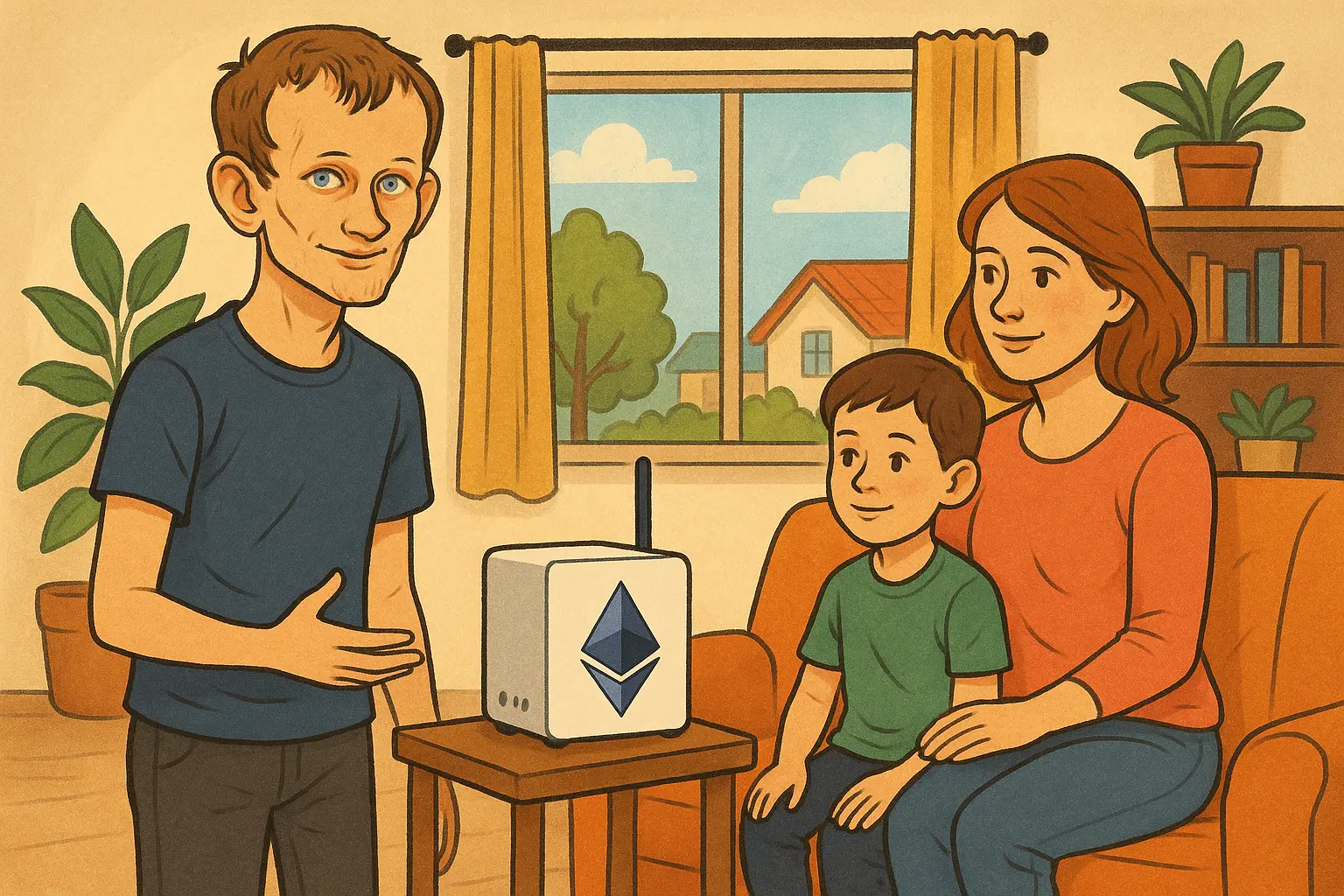
Ethereum co-founder Vitalik Buterin submitted a pull request to the Ethereum developer community on Saturday, proposing to merge the backend processes of the Ethereum beacon chain (responsible for consensus and staking) with the protocol’s execution layer into a unified codebase. This proposal aims to fundamentally reduce the technical complexity of running an Ethereum node, enabling ordinary users and households to operate their own Ethereum infrastructure without relying on third-party service providers.
Technical Core of the Layer 2 Proposal: Why “Two Programs into One” Matters So Much
(Source: Ethereum Research)
Currently, Ethereum node operators (validators) must maintain two separate programs: one handling the consensus layer (the PoS validation logic of the beacon chain), and another handling the execution layer (the EVM environment for smart contracts and transactions). These two programs require independent configuration, synchronization, and ongoing communication to keep the node functioning properly.
Technically, this dual-program architecture leads to two main issues: first, doubled setup complexity—users need to download, configure, update, and monitor two systems; second, increased risk of errors and desynchronization—any problem on one side can cause the entire node to fail.
In his post, Buterin openly admits that the Ethereum community has unconsciously made a default assumption: “Running a node is an extremely daunting DevOps task, best left to professionals.” He explicitly opposes this status quo: “That’s not how it should be. We need to change this. Even with high hardware requirements, it should not be an excuse for demanding advanced DevOps skills and time—nodes should be easy to set up.”
Decentralization Risks: RPC Monopoly and Censorship Threats
Behind this technical improvement is a deeper awareness of decentralization risks. Due to the high barrier to running nodes independently, most Ethereum users—including DApp developers and ordinary users—rely on RPC (Remote Procedure Call) providers like Infura and Alchemy to interact with the Ethereum network.
Buterin clearly points out the potential dangers of this market structure: “A market dominated by a few RPC providers will face strong pressure to block or censor users. Many RPC providers have already excluded entire countries.”
If RPC providers decide to restrict access from certain regions or users, those users will lose the ability to interact with Ethereum entirely, directly contradicting the core promise of blockchain technology—“permissionless and censorship-resistant.”
Partially Stateless Nodes: Another Path to Lower Barriers
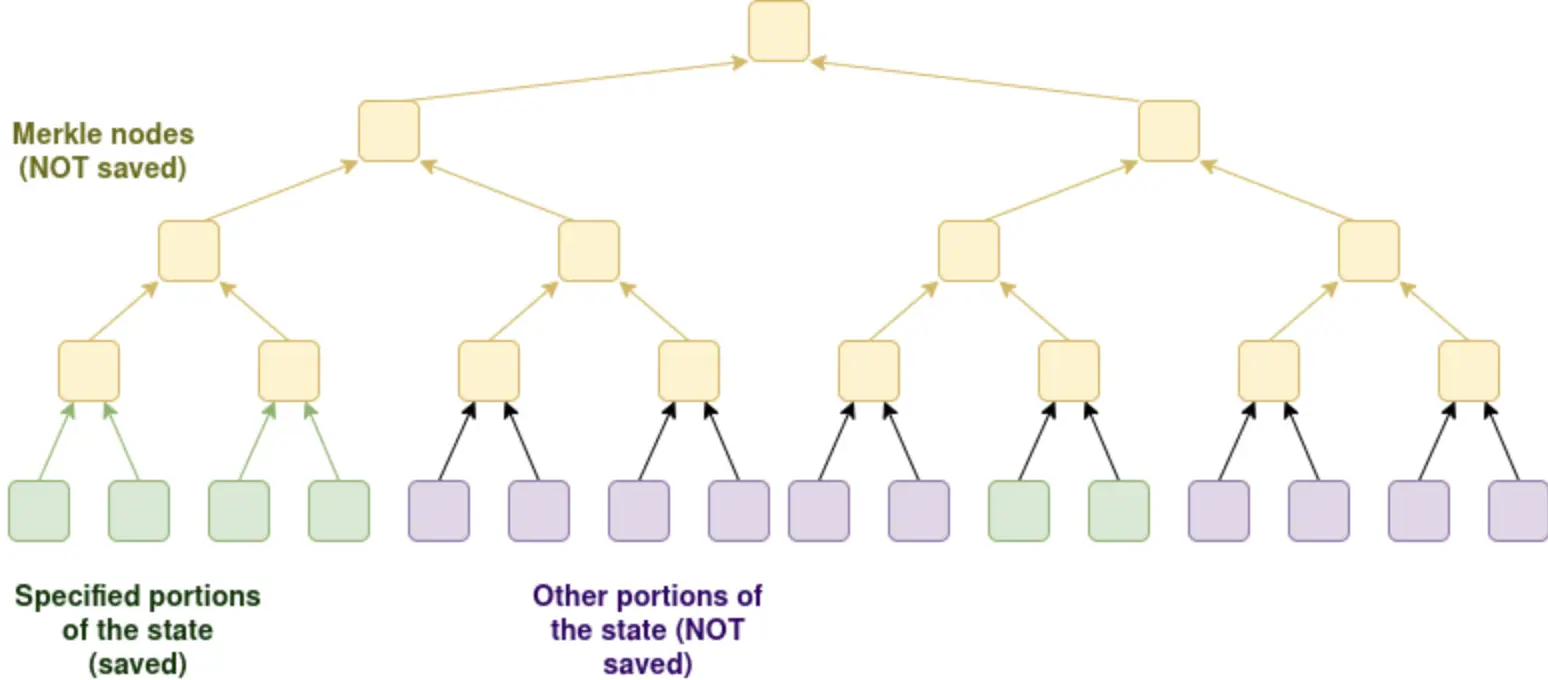
This layer-2 proposal is not Buterin’s first move to lower the barriers to running nodes. In May 2025, he introduced the concept of “partially stateless nodes”—nodes that no longer maintain the full blockchain history, only the data necessary for node operation.
This design is tailored for “personal use nodes”: if users only need to send transactions and verify the blockchain without providing full historical data, the amount of data they need to store can be greatly reduced. According to Go-Ethereum (Geth), disk space is a major bottleneck for node operators—blockchains like Ethereum generate massive amounts of data that require ever-increasing storage. Partially stateless nodes directly address this “unlimited data accumulation” problem.
Both approaches work together: layer design reduces DevOps complexity, and partially stateless nodes lower hardware costs—providing dual technical support for Buterin’s vision of “every household being able to run a node independently.”
FAQs
Q: How long will it take for Vitalik’s layer-2 proposal to be implemented?
The proposal is still in the pull request stage and needs to undergo technical review and broad discussion within the Ethereum developer community. Ethereum protocol upgrades typically take several months to over a year for development, testing, and community consensus. The specific timeline depends on implementation complexity, feedback during review, and whether it can be included in upcoming Ethereum upgrades (such as post-Fusée).
Q: Before the proposal is implemented, what options do ordinary users have to run Ethereum nodes more easily?
Currently, tools like DAppNode and Stereum enable one-click node deployment, greatly lowering technical barriers. Hardware-wise, low-power devices like Raspberry Pi can run basic Ethereum nodes (with external SSDs). Lightweight clients (like Helios) allow users to verify data without syncing the full blockchain. Additionally, ongoing efforts to diversify Ethereum clients aim to standardize and automate deployment processes.
Q: Some RPC providers have already blocked certain countries—what does this mean for users?
Some RPC providers (e.g., Infura) have implemented regional access restrictions for compliance reasons. This means users in restricted regions, if unable to switch to other RPC providers or run their own nodes, may lose access to Ethereum applications altogether. This underscores Buterin’s emphasis on node decentralization—only when enough ordinary users can run their own nodes can Ethereum truly uphold its “censorship resistance” promise.
Disclaimer: The information on this page may come from third parties and does not represent the views or opinions of Gate. The content displayed on this page is for reference only and does not constitute any financial, investment, or legal advice. Gate does not guarantee the accuracy or completeness of the information and shall not be liable for any losses arising from the use of this information. Virtual asset investments carry high risks and are subject to significant price volatility. You may lose all of your invested principal. Please fully understand the relevant risks and make prudent decisions based on your own financial situation and risk tolerance. For details, please refer to
Disclaimer.


