
Ethereum Foundation Releases 38-Page Charter, Positioning as “Sanctuary Technology,” Establishing Decentralization and Privacy-First Principles, and Proposing Subtractive Governance and Layer 2 Guidelines.
Ethereum Foundation Publishes Sanctuary Technology Vision and 38-Page Charter
Last Friday (3/13), the Ethereum Foundation (EF) officially released a 38-page “EF Mandate.” Signed by the Foundation’s Board of Directors, this document is regarded internally as a significant white paper that functions as a constitution, declaration, and guiding document.
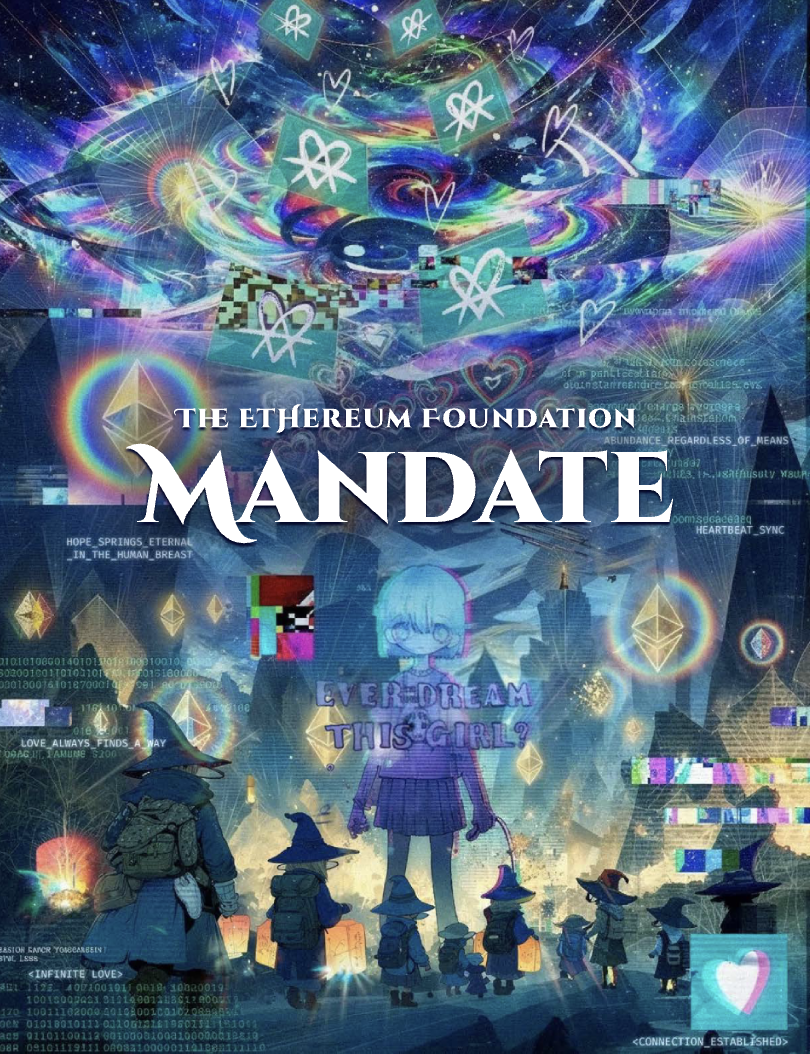
Image source: Ethereum Foundation Ethereum Foundation officially published a 38-page “EF Mandate” last Friday (3/13).
Ethereum co-founder Vitalik Buterin defines Ethereum as a “Sanctuary Technology,” positioning the network’s function as providing decentralized infrastructure, ensuring technological independence, and offering reliable backup in case centralized systems fail. This strategic shift occurred after internal turmoil, including the departure of former co-CEO Tomasz Stańczak and major adjustments to the technical roadmap.
The purpose of this charter is to defend individuals’ technical autonomy, making Ethereum a unique platform where users worldwide can collaborate, communicate, and manage assets without relying on centralized intermediaries.
While the content may not be surprising to long-term followers, its formal articulation marks an important milestone. According to Buterin’s explanation on X (formerly Twitter), the charter clarifies the Foundation’s recent thinking and emphasizes that Ethereum’s mission extends beyond mere financial applications or development. The Foundation now acts as a “trustee,” responsible for safeguarding core principles rather than directly steering the entire ecosystem. This shift signifies Ethereum’s move into a more mature and institutionalized phase, with formal authorization and responsibility divisions to ensure long-term development aligns with its original decentralization commitments.
CROPS Core Values and Protocol Resilience Priority
Regarding technical development guidelines, the charter introduces a value system called “CROPS,” comprising: Censorship Resistance, Open Source, Privacy, and Security. These five attributes are viewed as inseparable and form the foundation of all Ethereum development priorities.
Buterin believes that upgrades to the underlying protocol should prioritize decentralization, verifiability, inclusiveness, and stability. The development teams are actively working on tools like FOCIL (a censorship-resistant fork choice with inclusion lists), privacy protection teams (PSE), and post-quantum cryptography research to address future threats. The goal is to make Ethereum resilient enough to serve as a global settlement layer while preventing it from becoming a tool for large-scale financial surveillance.
In terms of application strategies, the Foundation will focus investments on tools that maximize user autonomy and security, avoiding the re-concentration of power. This includes improving privacy applications, strengthening security interfaces, and reducing user errors while maintaining personal control. Scalability improvements and account abstraction are valued mainly for their ability to enhance decentralization.
The Foundation explicitly states that protocol-level changes will prioritize protecting user sovereignty over chasing specific market metrics or new use cases. This value-driven development approach ensures Ethereum remains a neutral platform, providing consistent trust for users worldwide.
The Foundation’s Subtractive Philosophy and the Ultimate Goal of Dissolution
The Ethereum Foundation has redefined its role within the ecosystem and introduced a unique “Subtraction” management philosophy. The charter states that the Foundation was initially a trustee but is now one among many trustees. Its long-term success depends on how “unnecessary” it becomes.
Currently, the Foundation focuses on long-term tasks that other ecosystem participants find difficult to handle, such as protocol research and public goods security. The ultimate goal is to reduce influence, allowing the ecosystem to mature and evolve independently. This is called the “Walkaway Test,” meaning that even if the Foundation and core developers disappear in the future, Ethereum’s protocols and applications should continue to operate and evolve reliably.
Foundation President Aya Miyaguchi notes that, although these values have long been part of Ethereum’s culture, they were often implicit. By formalizing them now, the shared understanding becomes clearer, boosting confidence among developers and investors.

Image source: ETH Denver Ethereum Foundation President Aya Miyaguchi
To demonstrate sustainability, the charter has been recorded on the Ethereum blockchain via transaction notarization for permanent preservation. This decentralization process reflects the Foundation’s commitment to decentralized governance. The Foundation sees itself as a node within the ecosystem, collaborating with independent teams, companies, and communities to uphold core values. This transformation not only enhances transparency but also provides a model for the long-term operation of blockchain organizations.
Signals and Developer Guidelines on Layer 2 Development
The charter offers clear observations and guidelines regarding the current state of Layer 2 scaling solutions. Recently, Buterin criticized many Layer 2 projects for over-reliance on centralized controllers or multi-sig cross-chain bridges, noting that such designs are not truly decentralized scaling solutions. He argues that if Layer 2 solutions focus solely on high throughput without preserving decentralization, they will hinder the healthy development of the Ethereum ecosystem.
Further reading
Unable to withstand community pressure? Vitalik calls for Layer 2: Promote ETH as a primary asset
The charter sends a clear signal to global regulators and developers: Ethereum refuses to include backdoors or KYC mechanisms in its base layer to accommodate global surveillance demands. Instead, the Foundation advocates maintaining neutrality at the protocol level and providing compliance plugins or optional disclosure tools at the application layer.
For builders, this is a clear value guideline. The Foundation’s support will prioritize projects that pursue trustlessness, privacy, and open source. Projects with centralized bottlenecks or black-box operations will find it difficult to gain Foundation approval and resources. This stance positions Ethereum as part of an “infinite garden,” dedicated to safeguarding digital rights and free association through open-source technology. The Foundation aims to lead the ecosystem toward a more resilient future, positioning Ethereum as a reliable, neutral, and tamper-proof public infrastructure in the digital world. Through this official charter, Ethereum not only establishes development priorities but also solidifies its philosophical foundation in the global digital economy.
Disclaimer: The information on this page may come from third parties and does not represent the views or opinions of Gate. The content displayed on this page is for reference only and does not constitute any financial, investment, or legal advice. Gate does not guarantee the accuracy or completeness of the information and shall not be liable for any losses arising from the use of this information. Virtual asset investments carry high risks and are subject to significant price volatility. You may lose all of your invested principal. Please fully understand the relevant risks and make prudent decisions based on your own financial situation and risk tolerance. For details, please refer to
Disclaimer.


