Chicago-based cryptocurrency trading and lending company BlockFills’ operating entity, Reliz Ltd., filed for voluntary Chapter 11 bankruptcy protection in the Delaware District Bankruptcy Court on Sunday, with three related entities simultaneously filing. According to the filings, the company estimates assets between $50 million and $100 million, while liabilities are estimated to be between $100 million and $500 million, clearly highlighting the severity of its financial distress.
The Evolution of the Crisis: From Withdrawal Suspensions to Bankruptcy Filing
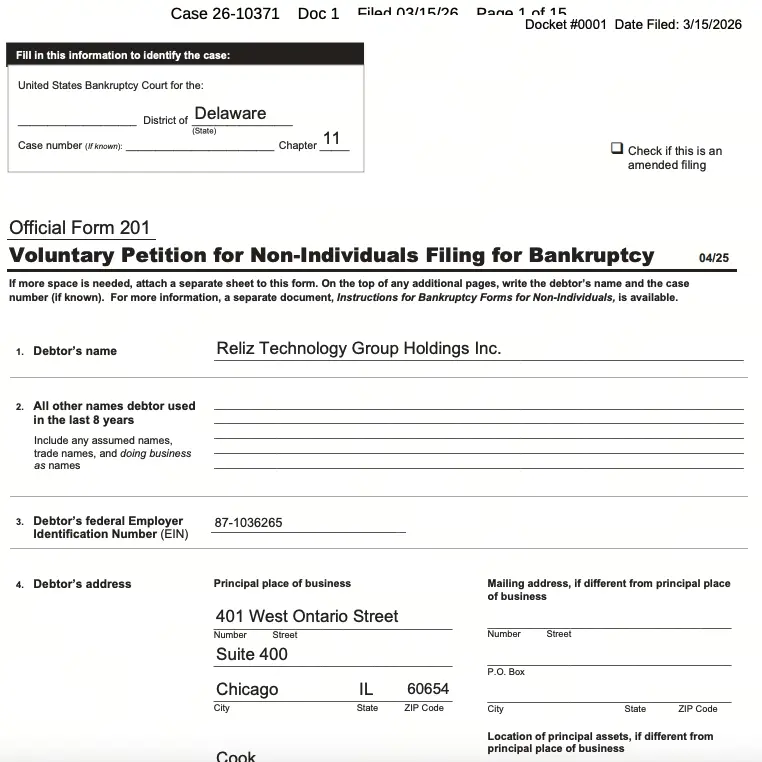
(Source: Verita)
BlockFills’ bankruptcy did not happen suddenly but is the result of weeks of ongoing financial pressure. Its crisis progression can be traced through several key milestones:
February 2026: BlockFills announced a suspension of customer deposits and withdrawals citing “recent market and financial conditions,” with the real reasons being liquidity shortages and ongoing stakeholder negotiations.
February 27, 2026: Court documents reveal that crypto investment firm Dominion Capital filed a lawsuit, accusing BlockFills of misappropriating customer assets and refusing to return millions of dollars worth of crypto assets stored on the platform.
Early March 2026: A federal judge issued a temporary restraining order (TRO) against BlockFills in Dominion Capital’s lawsuit, temporarily freezing certain assets related to the dispute, further limiting the company’s financial flexibility.
Sunday, March 15, 2026: Reliz Ltd. officially filed for Chapter 11 bankruptcy, entering a court-supervised reorganization process.
BlockFills stated that this move aims to “stabilize operations, seek additional liquidity and recovery avenues, and explore potential strategic transactions,” while maintaining transparency and accountability under court supervision.
Background of BlockFills and Industry Significance of the Bankruptcy
BlockFills is not a startup without support from well-known institutions. According to the company’s official statements, its institutional investors include the private equity arm of renowned quantitative trading firm Susquehanna and the venture capital division of CME Group. The company claims that in 2025, its trading volume will exceed $61 billion, providing core services such as liquidity provision, trade execution, and crypto asset lending.
The backing of prominent institutions did not prevent the liquidity crisis, indicating structural vulnerabilities in the crypto lending market amid ongoing market volatility and regulatory pressures. If the allegations of asset misappropriation by Dominion Capital are confirmed during the bankruptcy proceedings, it could trigger broader discussions about client asset segregation mechanisms on crypto lending platforms.
Frequently Asked Questions
What does Chapter 11 bankruptcy protection mean for BlockFills’ customers?
U.S. Bankruptcy Code Chapter 11 allows a company to continue operating under court supervision while reorganizing its debts and business, rather than immediately liquidating. For customers, this means asset withdrawals may still be restricted, but the company’s assets are not instantly being liquidated or distributed. BlockFills states that protecting customer interests is a priority, but ultimate repayment capability and timelines will depend on the progress of the bankruptcy reorganization and court rulings.
How are Dominion Capital’s misappropriation allegations related to this bankruptcy?
Dominion Capital filed suit in late February, accusing BlockFills of misappropriating customer assets and refusing to return hundreds of thousands of dollars in crypto assets. The subsequent court-issued asset freeze further weakened BlockFills’ liquidity and operational capacity. This legal pressure is seen as a significant factor accelerating the bankruptcy filing, and the final determination of these allegations will be clarified during creditor hearings in the bankruptcy process.
Why do crypto lending platforms frequently face liquidity crises like this?
Core risks faced by crypto lending platforms include: mismatched asset and liability maturities (short-term borrowings, long-term loans), lack of traditional bank deposit insurance, large-scale customer withdrawals during market volatility (bank run effects), and issues with asset segregation between customer funds and company assets. The case of BlockFills shares similar features with previous bankruptcies of Celsius, Voyager, and others, reflecting systemic vulnerabilities in this business model under an underdeveloped regulatory framework.
Disclaimer: The information on this page may come from third parties and does not represent the views or opinions of Gate. The content displayed on this page is for reference only and does not constitute any financial, investment, or legal advice. Gate does not guarantee the accuracy or completeness of the information and shall not be liable for any losses arising from the use of this information. Virtual asset investments carry high risks and are subject to significant price volatility. You may lose all of your invested principal. Please fully understand the relevant risks and make prudent decisions based on your own financial situation and risk tolerance. For details, please refer to
Disclaimer.


