Two Canadian brothers promised to make everyone landlords with $50 tokens each, building a tokenized real estate empire with over 500 properties in Detroit, but due to mismanagement, water leaks, fires, and collapses, they faced lawsuits. Wired magazine reporters visited the site to reveal the collapse of the “on-chain perfect, off-chain rotten” crypto real estate myth. This article is based on Joel Khalili’s piece “The $50 Dream: How RealT’s Crypto Real Estate Empire Crumbled in Detroit,” edited and translated by Foresight News.
(Background: Nvidia GTC keynote “DLSS 5, NemoClaw ignites AI coins: FET surges 20%, NEAR, Worldcoin hit recent highs”)
(Additional context: Nvidia unveils AI Agent platform NemoClaw: one click to put a safety barrier around OpenClaw crayfish)
I walk up a wooden staircase into the basement of a duplex in eastern Detroit, built in the 1920s. A smell hits me—damp brick walls, standing water, mold, and bleach. In front of me is Cornell Dorris, who has lived here for nearly ten years. Dorris, in his early 40s, has two daughters who visit on weekends. He makes a living from smoked meats and event catering.
As my eyes adjust to the darkness, I see mouse droppings on the floor and a black puddle of water spreading across the basement. “When it rains, water just comes in,” Dorris says. The air is unusually heavy, and I feel a strong urge to leave immediately.
Dorris’s landlord is no ordinary person. About four years ago, this building was acquired by a startup called RealToken, or RealT. The company had an ambitious plan: to democratize real estate investment using cryptocurrency technology. The idea was to split a property into thousands of crypto tokens, each costing about $50. Token holders could earn a share of the rent, with annual returns up to 12%, and profit from property appreciation.
Investors flocked to this concept, and RealT expanded rapidly in Detroit, buying about 500 buildings. They also purchased around 200 properties in over 40 other U.S. cities, with a total asset value of about $150 million. Due to regulations, U.S. residents couldn’t invest, but at least 16,000 people from 150 countries had bought RealT tokens. Despite limited reliable data, RealT claimed to be “the world’s largest real estate tokenization platform” based on various metrics.
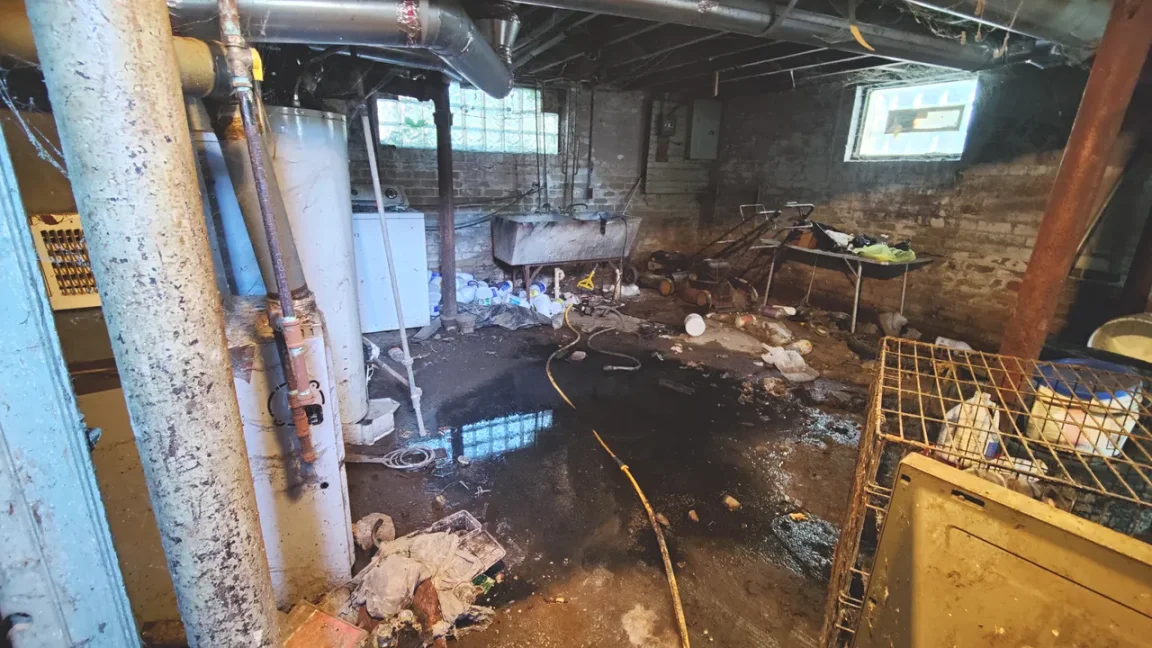
Cornell Dorris’s apartment basement flooded
However, despite success in the crypto world, RealT faced constant trouble in reality. Last summer, Detroit sued RealT and its founders for “hundreds of violations of environmental health regulations.” Dorris’s residence was among many deemed uninhabitable by city inspectors. He told me that, although previous landlords sometimes let him handle repairs himself, since RealT took over, conditions worsened. Inspectors found missing smoke detectors and no hot water in the bathtub. “Now I can only shower by the sink,” Dorris says. “There are rats downstairs, squirrels upstairs.”
According to Zillow, the U.S. real estate market is worth $55 trillion, with tokenized real estate making up a tiny fraction. But Deutsche Bank data shows that within a few years, the concept of buying asset fragments with crypto has grown into a $30 billion industry. Yet in Detroit, the vision of becoming a landlord with little capital conflicts with the actual inconveniences of the properties and their residents.
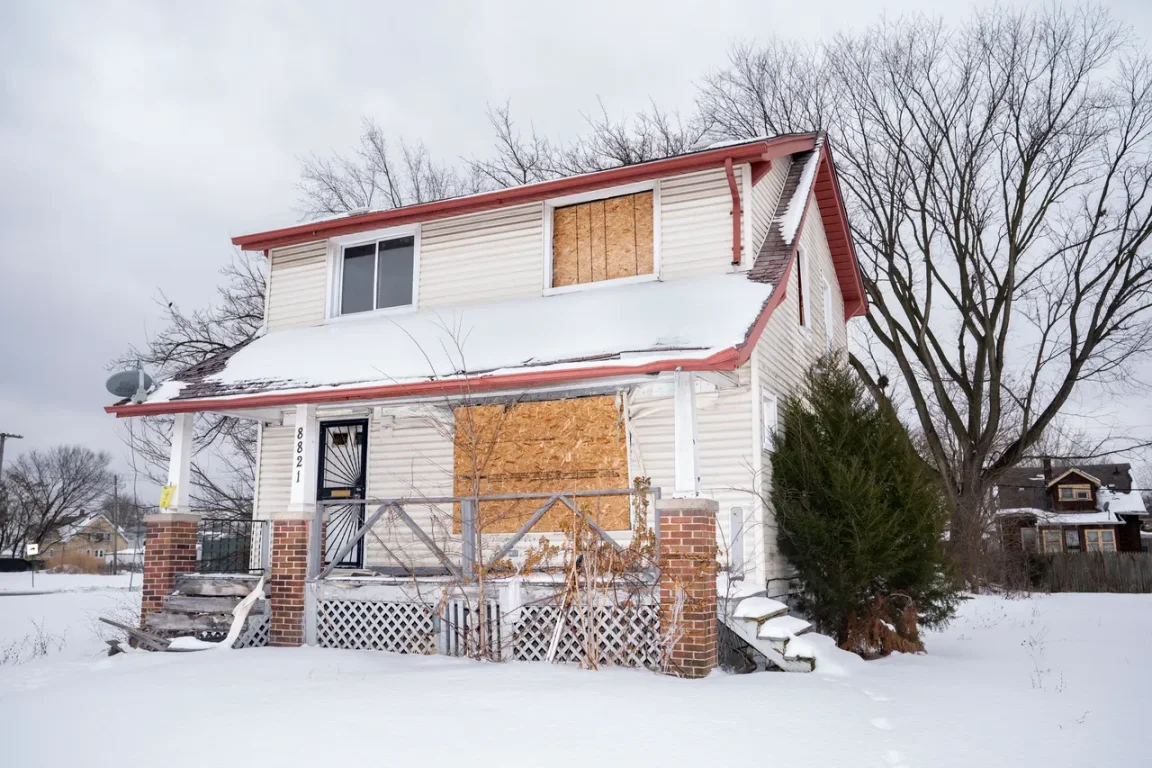
A house at 8821 Prairie Street has no front or side windows, the porch steps have collapsed, and the siding is deformed
Rémy and Jean-Marc Jacobson, the Canadian brothers who founded RealT, are not twins but look alike—glasses, slicked-back hair, white beards. They call themselves staunch libertarians, supporting free markets and minimal government intervention. When I met Jean-Marc on Zoom, he was enthusiastic but sometimes sharp. I tried to ask a delicate question indirectly, but he told me, “Just ask directly.”
The brothers grew up in Canada and Europe, in a family with a colorful, litigious history. Their sister’s divorce turned into a fierce battle over millions, with the property previously seized in the Bahamas, which she ultimately won. Their brother-in-law was sentenced for connections to an illegal arms dealer in Angola. Their father was a financier who, when asked about family wealth in 2003, replied, “Don’t ask, I won’t hide it.”
Rémy and Jean-Marc say their real estate careers started with renovations and resales in Quebec and parts of the U.S. In the early 2010s, they encountered Bitcoin. Almost immediately, they launched a Bitcoin mining business, then founded several other companies and a nonprofit. They also got involved in crypto-related trouble, including a Ponzi scheme and settling with a client who claimed they held millions of dollars in crypto.
According to Jean-Marc, as early as 2013, they began thinking about combining their real estate and crypto expertise. In traditional finance, one can invest in REITs to earn rental income from a portfolio of properties, but usually with thousands of dollars minimum. They sought a way to create similar products with crypto, allowing much lower investments. Five years later, Rémy received a lawyer’s call, and they found their breakthrough.
Usually, you can’t sell a house to a thousand people. But if the Jacobson brothers transfer ownership to an LLC, they can create and sell tokens representing shares of that LLC.
They looked for locations to test their tokenization idea. Detroit, with its low property prices and ambitious renewal plans, was ideal. “Detroit is a city recovering from bankruptcy,” Jean-Marc said. “It’s naturally becoming a potential growth point. Most importantly, it’s suitable for beautification and community improvement.”
They bought their first property—a modest single-family home at 9943 Marlowe Street in West Detroit. In April 2019, they tokenized it, issuing 1,000 tokens, selling them to cover costs, repairs, and giving themselves a 10% cut. They also planned to take 2% of future rent, with the rest used for maintenance, taxes, and expenses, distributing the remaining rent to token holders.
Jean-Marc told me that on the first day, RealT sold fewer than five tokens. The brothers asked friends and family to buy, and promoted on X, Medium, and media interviews. “At first, people were very skeptical,” Jean-Marc said. “We sold very, very, very little.” About five months later, they considered selling the property and refunding token buyers, then stopping.
But the tokens for 9943 Marlowe Street gradually sold out. By December 13, all were sold. At that time, 107 investors from 33 countries held an average of 0.93% each, sharing $25.22 in daily rent income.
The brothers created a chat group on Telegram for French-speaking investors, and demand for RealT tokens surged. In 2020, RealT expanded rapidly in Detroit: tokenizing an apartment on Appoline Street, a four-plex on Schaefer, and a single-family home on Mansfield. Nearly 50 properties were tokenized that year.
As they planned further expansion, they partnered with real estate professional Shawn Reed. Court records show Reed began sourcing properties for RealT, sometimes helping with renovations for tokenization. The brothers were unaware of Reed’s troubled past: he had served time for bank fraud and was called a “slum landlord.” His deals helped RealT meet soaring token demand.
I spoke with a Telegram user named TokNist, who said he understood the model immediately when he first heard of RealT. Living in Asia, he wanted to buy real estate but couldn’t get a loan. RealT offered a way to invest small amounts without banks. “Many people like me,” TokNist said. “They’re not rich speculators. They’re ordinary folks wanting a piece of real estate and steady income.”
In 2022, TokNist started buying large amounts of RealT tokens. It wasn’t smooth. Every time RealT listed a new property, he watched the countdown. The website often crashed, screens went blank, or tokens disappeared from carts. “Tokens sell out instantly. Sometimes six or seven properties go online in a day, and within minutes, all tokens are gone,” he told me. “That shows demand is huge.”
Behind the scenes, the Jacobson brothers faced management issues as their property portfolio ballooned. In 2023, a bank canceled their redemption rights on a commercial property in Miami due to missed payments and a $10.4 million judgment. Miami’s city government also declared the property unsafe. (They described this as a COVID-19 strategic decision, an exception in their Florida record.) The same year, Chicago fined several LLCs under RealT for dilapidated buildings, violations, and unpaid debts—early signs of Detroit trouble.
Decay, Fires, and Abandoned Tenants: The Empire Begins to Collapse
Summer 2024, Aaron Mondry, a reporter for nonprofit local news Outlier Media, was looking for new leads. He was writing a series called “Detroit Speculators,” focusing on the city’s real estate market. A tip led him to review property records in Wayne County, Michigan.
He found many Detroit properties owned by LLCs with “RealToken” in their names. By then, RealT had bought and tokenized hundreds of properties in Detroit, becoming one of the city’s largest landlords. Many were single-family homes bought in bulk, sometimes without inspecting the properties. The properties were concentrated in low-income, predominantly Black neighborhoods east and west of Detroit.
Mondry compiled a list of RealT properties and knocked on doors. He quickly noticed a disturbing pattern: many homes were in terrible shape, many appeared vacant, and records showed long unpaid property taxes.
In February 2025, Mondry published a series based on public records and tenant interviews. The reports accused RealT of widespread mismanagement, corner-cutting, and neglect. Tenants described living in filthy, unsafe conditions. Around the same time, city inspectors warned RealT that a building on Cadieux Street lacked working smoke alarms, emergency lighting, and fire doors. In March, a fire ravaged that building.
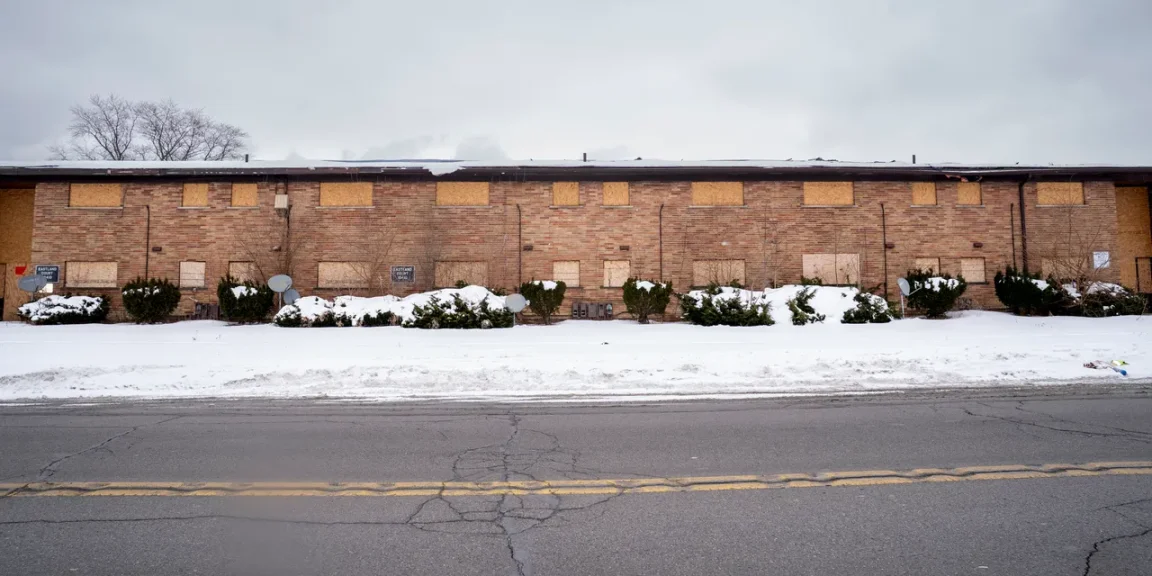
After the fire at 10410 Cadieux Street in March 2025, the building has been vacant, charred remains boarded up
By early September 2025, I visited again and heard similar stories. Driving past basketball hoops buried in cinders, I smelled barbecue and heard music—everyday joys contrasting sharply with the grim state of RealT’s properties.
I parked in front of a burned-out apartment building on Cadieux, boarded up. In the northwest neighborhood of Grand River-St. Marys, a gang claimed control of 14881 Greenfield Street, a two-story brick apartment with a red awning, in a YouTube video claiming to rent it out as a landlord. “For an addict, this is like a five-star hotel,” one interviewee said. Two other RealT homes I visited were riddled with bullet holes. Several tenants told me they were withholding rent to pressure landlords to fix things.
At a Tim Hortons in Detroit’s west side, I met Maya, a tenant living in a nearby red-brick house. When she gets home, she parks her car and sometimes sits in it for an hour before going inside. One bedroom’s ceiling leaks, leaving a big hole exposing the wo


