

Trade
Basic
Futures
Futures
Hundreds of contracts settled in USDT or BTC
Options
HOT
Trade European-style vanilla options
Unified Account
Maximize your capital efficiency
Demo Trading
Futures Kickoff
Get prepared for your futures trading
Futures Events
Participate in events to win generous rewards
Demo Trading
Use virtual funds to experience risk-free trading
Earn
Launch
CandyDrop
Collect candies to earn airdrops
Launchpool
Quick staking, earn potential new tokens
HODLer Airdrop
Hold GT and get massive airdrops for free
Launchpad
Be early to the next big token project
Alpha Points
NEW
Trade on-chain assets and enjoy airdrop rewards!
Futures Points
NEW
Earn futures points and claim airdrop rewards
Investment
Simple Earn
Earn interests with idle tokens
Auto-Invest
Auto-invest on a regular basis
Dual Investment
Buy low and sell high to take profits from price fluctuations
Soft Staking
Earn rewards with flexible staking
Crypto Loan
0 Fees
Pledge one crypto to borrow another
Lending Center
One-stop lending hub
VIP Wealth Hub
Customized wealth management empowers your assets growth
Private Wealth Management
Customized asset management to grow your digital assets
Quant Fund
Top asset management team helps you profit without hassle
Staking
Stake cryptos to earn in PoS products
Smart Leverage
NEW
No forced liquidation before maturity, worry-free leveraged gains
GUSD Minting
Use USDT/USDC to mint GUSD for treasury-level yields

More



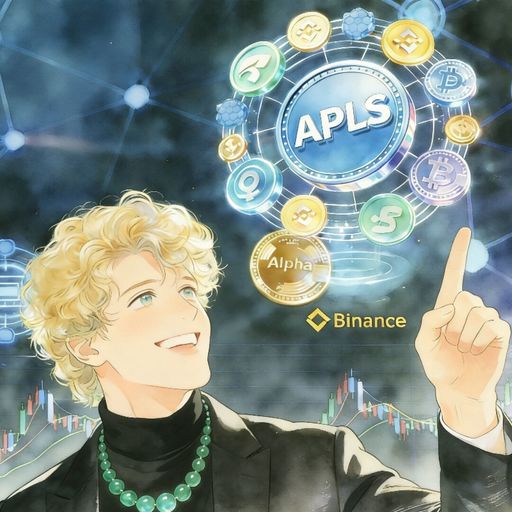


Enter the Digital Financial Revolution: A Complete Bulgarian Language Guide to the Digital Asset Ecosystem
Why is it now crucial to understand криптовалути?
Remember the news about Bitcoin rising from a few cents to tens of thousands of dollars? This financial revolution is not just a investor’s frenzy; it marks the beginning of humanity rethinking the nature of money. криптовалути is quietly rewriting the rules of the global economy. This guide will thoroughly unravel this seemingly mysterious digital world — no advanced math needed, just curiosity.
Fundamental understanding: What exactly are digital assets?
Imagine a piggy bank that doesn’t need a bank. That’s the core concept of криптовалути.
Traditional currency is printed and managed by central banks, giving it value. криптовалути are a completely different species — they live on a distributed ledger called блокчейн. No government backing, no bank intermediaries, purely maintained by mathematics and consensus mechanisms.
This idea first appeared after the 2008 global financial crisis. A mysterious figure calling themselves “Satoshi Nakamoto” released the Bitcoin white paper, posing a revolutionary question: How to exchange value without a trusted third party?
In January 2009, the first Bitcoins were mined, officially starting a financial experiment.
Unveiling the mystery: How does криптовалути work?
Three layers of magic: cryptography, blockchain, network consensus
The wonder of криптовалути lies in innovations across three layers:
Layer One: Cryptography protection
Imagine everyone has two keys — a public one (your account address) and a private one (your secret key). When you initiate a transaction, you sign it with your private key, and the network can verify “it’s really you,” but cannot impersonate you. This system is much more secure than bank passwords.
Layer Two: Immutability of блокчейн
Each transaction is packaged into a data block. This block contains: timestamp, transaction info, and the cryptographic fingerprint of the previous block (creating a “chain”). Once a new block is added, altering any historical data requires recalculating all subsequent blocks — nearly impossible in a distributed network.
Layer Three: Network consensus mechanisms
The complete journey of a transaction
When you buy cryptocurrency on exchanges like MEXC and send it to a friend, what happens:
This process usually completes within minutes — whereas bank transfers can take 2-3 business days.
The ecosystem of cryptocurrencies: a blooming garden
The leading star: Bitcoin (BTC)
Bitcoin is the first and most famous криптовалути. Born in 2009, each coin was less than a penny; now it’s over $30,000 — early investors’ crazy profits attract global attention.
Its unique features:
Many see Bitcoin as an asset hedge against inflation. In hyperinflation-hit Venezuela and Argentina, Bitcoin has become a lifeline.
The programmable revolution: Ethereum (ETH)
If Bitcoin is digital cash, Ethereum is a digital computer.
Ethereum allows developers to build decentralized applications (dApps) and smart contracts — self-executing code. Its native token is Ether (ETH).
Ethereum has spawned an entire ecosystem:
Stablecoins: a safe harbor
Though stablecoins like Tether (USDT) and USDC seem mundane in price, they solve a key issue in crypto — extreme volatility.
These coins are pegged to the dollar, maintaining a price around $1. Their uses include:
Other major players
Litecoin (LTC): Bitcoin’s “little brother,” faster transfers but less innovation
Cardano (ADA): Emphasizes academic rigor and sustainability
Solana (SOL): Extremely fast transactions, near-zero fees
Dogecoin (DOGE): Started as a meme, gained value through community enthusiasm
XRP: Designed for international bank transfers
Utility tokens: BAT (ad rewards in browsers), LINK (blockchain data oracle), etc., each serving specific applications
Why does cryptocurrency attract you (and why also cause concern)?
Five reasons to love it
1. Financial freedom
No one can freeze your account. Your private key is your passport — whoever owns it owns the funds. For those in unstable financial regions or lacking banking services (1.7 billion people), this is empowerment.
2. Speed and low cost
International remittances cost $25-50 and take days. Using crypto? Maybe $1 and minutes. This impacts low-income countries relying on remittances.
3. Hedge against inflation
Limited supply means Bitcoin cannot be devalued by over-issuance. In Venezuela with 3000% inflation, many turn to Bitcoin to preserve wealth.
4. Profit potential
Bitcoin’s rise from cents to tens of thousands created wealth legends. Of course, risk and reward go hand in hand.
5. Transparency
All transactions on the blockchain are publicly visible. No hidden ledgers, no “disappearing” funds — you can verify yourself.
Three pitfalls to watch out for
1. Wild price swings
20% drops within 24 hours are common. Crypto is suitable for speculation but not stable daily transactions. Extreme volatility can also be psychologically taxing.
2. Technical learning curve
Questions like “What is a private key?” “How does a wallet work?” “How to avoid scams?” — unfamiliar to newcomers. A small mistake (sending coins to the wrong address) can be permanent.
3. Regulatory uncertainty
Legal today, restricted tomorrow. Countries vary widely — El Salvador adopted Bitcoin as legal tender, while others ban it outright. This uncertainty deters institutional investors.
4. Environmental concerns
Bitcoin mining consumes as much electricity as some small countries. While newer cryptos are greener, this remains a moral issue.
5. Market manipulation
Crypto markets are still small compared to traditional stocks, prone to “pump and dump” by whales — artificially inflating and then crashing prices. Small coins are especially vulnerable.
Wallets, keys, and vital security lessons
Wallet truth: It’s not a place to store your coins
Crypto wallets aren’t like real wallets holding your cash. They are private key managers — the keys that unlock your wealth on the blockchain.
Losing your private key = permanent loss of funds. No “forgot password” reset.
Four wallet options
Hot wallets (online) — convenient but risky
Cold wallets (offline) — secure but less convenient
Twelve unbreakable security rules
Buying cryptocurrencies: MEXC practical guide
Step one: open an account
Visit MEXC’s official website or download the app, register with email. Complete KYC — upload ID photos and selfie.
Step two: choose purchase method
Method 1: Credit card direct purchase
Easiest — buy with Visa/Mastercard. MEXC partners with Simplex and others, funds arrive in minutes.
Method 2: Fiat transfer
Bank transfer to deposit USD or EUR, then buy crypto with that money. Suitable for large amounts.
Method 3: Peer-to-peer (P2P)
Buy from other users, with MEXC escrow protection. Fast but verify the counterpart carefully.
Method 4: Third-party payment gateways
Use Banxa, Mercuryo, and others for local payment options.
Step three: start trading
MEXC offers four order types:
Limit order: Set your desired price; execute when market reaches it.
Suitable for: patient traders wanting precise control
Market order: Buy or sell immediately at current market price.
Suitable for: quick entry
Stop-limit order: Set trigger price; once hit, place a limit order automatically.
Suitable for: automatic risk management
OCO (One Cancels Other): Set both a take-profit and stop-loss; when one triggers, the other cancels.
Suitable for: “set and forget” traders
Global regulatory landscape: legal status of cryptocurrencies
Countries’ attitudes vary widely
Embracing: El Salvador makes Bitcoin legal tender, Binance plans to do so.
Cautious trial: US, EU gradually develop regulations — neither outright ban nor full encouragement.
Skeptical: China bans all crypto trading and mining.
Undecided: India shifts from bans to possible allowances.
Tax realities
Most countries treat crypto as an “asset,” not “currency”:
Future horizons: where is the crypto world headed?
Five game-changing trends
1. Institutional money influx
Hedge funds like Blackstone, Fidelity launching crypto products — legitimacy and liquidity greatly increase.
2. Central Bank Digital Currencies (CBDCs)
Many countries are developing their own digital currencies. Though centralized (not decentralized), they will accelerate societal digitization.
3. Layer 2 scaling solutions like Lightning Network
Bitcoin processes only 7 transactions per second, Visa handles thousands. New tech can vastly improve speed.
4. DeFi democratization
Lending, trading, insurance functions traditionally monopolized by banks are being rewritten via smart contracts, giving ordinary people access to previously exclusive financial tools.
5. Real-world application expansion
From pure investment to supply chain, identity verification, in-game assets, and more — real use cases grow.
Common questions answered
Q: Is investing in crypto worth it?
A: Depends on your risk appetite. Treat it as gambling, not retirement fund. Only invest what you can afford to lose.
Q: How do I get started?
A: Register on MEXC → complete verification → choose purchase method → buy a small amount (e.g., $50) → transfer to a secure wallet → learn and observe → gradually increase.
Q: Will governments ban Bitcoin?
A: A ban in one country can’t fully kill a decentralized network, but it creates risks and restrictions. Regulation rather than outright ban is more likely.
Q: What is the future of crypto?
A: Likely coexist with traditional finance. Some uses will be disrupted by DeFi, others replaced by CBDCs, but underlying technology will keep evolving.
Q: What if I lose my coins?
A: Unfortunately — no “customer service” can recover them. That’s the cost. This is why security education is vital.
Summary: from novice to informed participant
криптовалути is not a get-rich-quick secret nor exclusive to tech geeks. It’s a fundamental rethink of what money is and how value flows.
If you now understand:
then you’ve already surpassed 90% of crypto holders.
Final advice: Continuous learning is essential. The field evolves every month. Follow best security practices, invest only what you can afford, and remember — in crypto, you are your own bank. This freedom comes with equal responsibility.
Wishing you safe travels in the world of digital finance!