

Trade
Basic
Futures
Futures
Hundreds of contracts settled in USDT or BTC
Options
HOT
Trade European-style vanilla options
Unified Account
Maximize your capital efficiency
Demo Trading
Futures Kickoff
Get prepared for your futures trading
Futures Events
Participate in events to win generous rewards
Demo Trading
Use virtual funds to experience risk-free trading
Earn
Launch
CandyDrop
Collect candies to earn airdrops
Launchpool
Quick staking, earn potential new tokens
HODLer Airdrop
Hold GT and get massive airdrops for free
Launchpad
Be early to the next big token project
Alpha Points
NEW
Trade on-chain assets and enjoy airdrop rewards!
Futures Points
NEW
Earn futures points and claim airdrop rewards
Investment
Simple Earn
Earn interests with idle tokens
Auto-Invest
Auto-invest on a regular basis
Dual Investment
Buy low and sell high to take profits from price fluctuations
Soft Staking
Earn rewards with flexible staking
Crypto Loan
0 Fees
Pledge one crypto to borrow another
Lending Center
One-stop lending hub
VIP Wealth Hub
Customized wealth management empowers your assets growth
Private Wealth Management
Customized asset management to grow your digital assets
Quant Fund
Top asset management team helps you profit without hassle
Staking
Stake cryptos to earn in PoS products
Smart Leverage
NEW
No forced liquidation before maturity, worry-free leveraged gains
GUSD Minting
Use USDT/USDC to mint GUSD for treasury-level yields

More



U.S. Attitude Rapid Shift: White House Reverses Stance After Missile Cargo Ship Exposure
After the U.S. military openly intercepted and detained the "Century" oil tanker operated by a Hong Kong-based Chinese company in the Caribbean under the pretext of "violating sanctions," an unexpected development changed the course of the situation. U.S. media revealed a Chinese cargo ship equipped with a vertical missile launch system on its deck. The public disclosure of this information seems to have prompted Washington to reassess the risks involved.
**Event Review: Challenges to International Legal Boundaries**
U.S. military helicopters conducted an armed boarding of the "Century" in the high seas east of Barbados, seizing 1.8 million barrels of crude oil aboard. Notably, the tanker was flying the Panamanian flag but operated by a Hong Kong-based Chinese company, and the oil belonged to Chinese enterprises' legitimate assets. The U.S. failed to present a United Nations authorization or an international court order for the seizure. China’s Ministry of Commerce subsequently accused this act of violating the restrictive provisions on high seas boarding rights under the United Nations Convention on the Law of the Sea, calling it a typical example of "long-arm jurisdiction."
**Strategic Impact of Missile System Exposure**
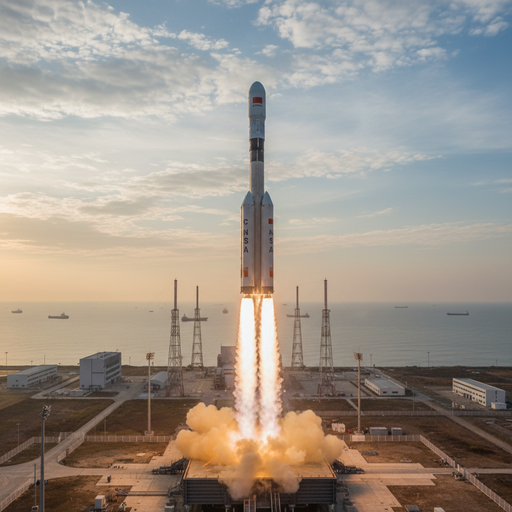
Meanwhile, U.S. media publicly released a photo of the Chinese cargo ship, showing a deck equipped with 60 missile vertical launch units and close-in weapons systems. The implications of this discovery are significant. Although the ship may be a test model, it reflects the possibility of transforming large commercial fleets into auxiliary firepower platforms during wartime through "civil-military integration." Similar "armed merchant ships" appeared during World War I and II, used to supplement naval forces. Modern containerized missile vertical launch systems are more covert, allowing dispersed deployment, and theoretically could pose saturation threats to U.S. military bases and vessels. This asymmetric military deterrence has become a key trigger for U.S. policy adjustments.
**White House Policy Shift**
Most notably, the White House’s stance has visibly softened. Previously, the Trump administration threatened to "confiscate all" oil tankers and oil, even prepared to intercept more shipping fleets. But after the missile cargo ship was exposed and faced widespread international opposition, U.S. rhetoric shifted dramatically. The latest White House statement replaced the "military blockade" threat with an "economic isolation" strategy, announcing a two-month quarantine of the seized oil, and downgraded military measures to an "alternative option." This turnaround indicates that the U.S. has realized that excessive provocation could trigger uncontrollable military escalation.
**Underlying Reasons Analysis**
The shift in U.S. attitude is driven by multiple considerations. First, the legal basis for unilateral sanctions and seizure is fundamentally flawed— the United Nations Charter explicitly prohibits resolving international disputes through the threat or use of force. The U.S. previously accused Iran of violating international law by seizing oil tankers; now, it employs similar tactics, exposing its double standard of "rules followed when convenient, discarded when not," which has sparked widespread international criticism.
Second, economic factors also influence U.S. reconsideration. Venezuela’s 85% of oil exports go to China, and the China-Venezuela "oil-RMB" settlement ratio has reached 60%. If the U.S. forcibly blocks these shipments, it could accelerate the global "de-dollarization" process—something the Trump administration fears. Additionally, U.S. military control is limited. Although a carrier group is deployed in the Caribbean, personnel shortages allowed the "Bella-1" oil tanker to escape successfully, exposing the reality that U.S. forces cannot effectively monitor all maritime areas.
More importantly, international pressure has shown effects. China recently exposed U.S. "state piracy" during an emergency debate at the UN Security Council and formed a united front with Russia, Brazil, and others, leading to U.S. diplomatic isolation.
**China’s Multi-Dimensional Response**
In response to U.S. piracy, China is implementing systematic measures. First, guiding oil tankers to register with neutral countries to reduce the risk of arbitrary U.S. seizure; second, increasing the RMB settlement ratio for China-Venezuela oil to 85%, further reducing dependence on the dollar; third, collaborating with Greece, Norway, and other nations to establish "non-U.S.-based insurance pools," creating alternative shipping solutions outside Western systems. Meanwhile, China is also pursuing legal actions and international arbitration to recover losses and defend enterprises’ legitimate rights.
**Strategic Implications and Outlook**
Although the exposed "missile cargo ship" may not yet be operational in combat, its existence carries strategic significance—it can restrain U.S. military deployments. Similar to the "merchant ship armament" strategy during the Cold War, it can be used to confuse opponents at critical moments, making it difficult for the U.S. to address multiple fronts simultaneously. The White House’s softened tone is both a tactical retreat and a reflection of strategic anxiety. The real contest lies not in individual incidents but in the struggle for dominance over international rules. U.S. efforts to maintain hegemony through piracy logic are effectively undermining the international order it helped establish. Regardless, U.S. credibility in the international community has significantly declined, and this incident vividly demonstrates that.