

Trade
Basic
Futures
Futures
Hundreds of contracts settled in USDT or BTC
Options
HOT
Trade European-style vanilla options
Unified Account
Maximize your capital efficiency
Demo Trading
Futures Kickoff
Get prepared for your futures trading
Futures Events
Participate in events to win generous rewards
Demo Trading
Use virtual funds to experience risk-free trading
Earn
Launch
CandyDrop
Collect candies to earn airdrops
Launchpool
Quick staking, earn potential new tokens
HODLer Airdrop
Hold GT and get massive airdrops for free
Launchpad
Be early to the next big token project
Alpha Points
NEW
Trade on-chain assets and enjoy airdrop rewards!
Futures Points
NEW
Earn futures points and claim airdrop rewards
Investment
Simple Earn
Earn interests with idle tokens
Auto-Invest
Auto-invest on a regular basis
Dual Investment
Buy low and sell high to take profits from price fluctuations
Soft Staking
Earn rewards with flexible staking
Crypto Loan
0 Fees
Pledge one crypto to borrow another
Lending Center
One-stop lending hub
VIP Wealth Hub
Customized wealth management empowers your assets growth
Private Wealth Management
Customized asset management to grow your digital assets
Quant Fund
Top asset management team helps you profit without hassle
Staking
Stake cryptos to earn in PoS products
Smart Leverage
NEW
No forced liquidation before maturity, worry-free leveraged gains
GUSD Minting
Use USDT/USDC to mint GUSD for treasury-level yields

More





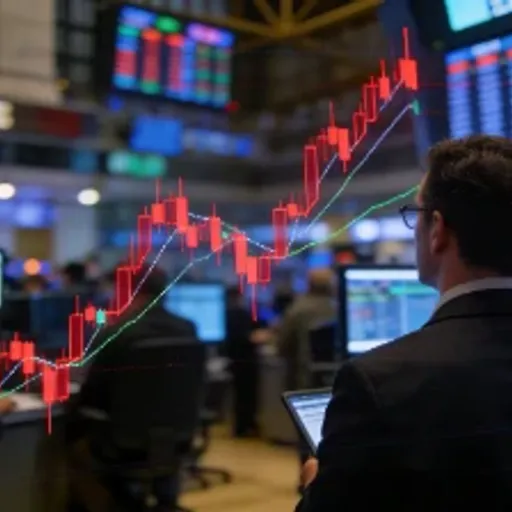
Is the Selic Rate Rising or Falling? Understand How This Rate Affects Your Earnings
The Brazilian basic interest rate is a thermometer that every investor should monitor closely. Many people invest without truly understanding how decisions made by the Central Bank directly impact their portfolio returns. The Copom (Monetary Policy Committee) meets every 45 days to set the Selic rate, and this simple decision can completely transform the strategy of those with money invested in the market.
Currently, the Selic is set at 10.75% per year, and any movement up or down triggers waves of reaction across different investment segments. But what is the real impact of this on your life? How should you adjust your investments when the rate rises or falls?
How the Selic Affects Your Earnings in the Market
The Selic rate functions as a gear that drives the entire financial machine. When the Central Bank adjusts it, the effects are seen in almost all types of applications you can make.
In high Selic scenarios, fixed income investments become extremely attractive. Public bonds like Treasury Direct start to yield more, CDBs (Bank Deposit Certificates) offer more generous rates, and mortgage credit letters (LCI/LCA) improve your returns. This happens because the government and financial institutions need to offer higher compensations to attract money.
When the Selic falls, the scenario reverses. Fixed income titles lose appeal, their yields decrease, and the stock market tends to gain strength. Companies can raise funds more easily and at lower costs, improving corporate profit prospects.
Fixed Income: The Safe Play When Interest Rates Rise
Investments in fixed income have a direct relationship with the Selic. Many of these products track the CDI (Interbank Deposit Certificate), which closely follows the interest rate set by the Central Bank.
When the Selic rate rises, those with money invested in Treasury Selic, CDB, or LCI see their returns increase progressively. For conservative investors who value safety and predictability, this is the best scenario. The Treasury Selic, for example, directly follows rate changes, functioning as a natural hedge against interest rate fluctuations.
On the other hand, in a low Selic phase, gains decrease. Investors seeking higher returns need to migrate to higher-risk assets, such as multi-market funds, stocks, or even cryptocurrencies, in an attempt to compensate for reduced yields.
Stock Market: Benefited When Interest Rates Fall
The relationship between the Selic and the stock market works inversely to what many think. A high Selic pressures stock performance, while a low Selic tends to boost it.
When interest rates are high, companies face higher costs to finance themselves, which harms their profits and, naturally, the value of their shares. Investors also tend to prefer the safety of fixed income over more volatile stocks.
Conversely, in environments of reduced Selic, corporate financing becomes cheaper, companies grow more, and profit prospects expand. In this context, stocks become much more attractive to investors seeking to maximize returns.
Real Estate Funds: Sensitive to Credit Costs
Real Estate Funds (FIIs) represent a class of assets highly sensitive to interest rate variations. These investments are in real estate properties or related securities.
With the Selic high, real estate financing becomes significantly more expensive, reducing buyer interest in new developments and negatively impacting FIIs. The sector slows down, and funds suffer from decreased demand.
In an inverse situation, with the Selic falling, real estate credit becomes more accessible, demand for properties increases, and real estate funds gain strength. This is the ideal moment for those wanting to expose themselves to this segment.
What You Need to Do as an Investor
Understanding the influence of the Selic rate on investments is essential to avoid impulsive decisions or misalignment with your goals. The rate is not just a number — it shapes the behavior of absolutely all assets you can invest in.
Before reallocating your portfolio in response to Selic movements, ask yourself: do your new investments truly match your time horizon? Do they align with your risk tolerance? Are they consistent with your long-term financial objectives?
A common mistake is seeking maximum profitability at any cost. An investment expert often warns that it is strictly necessary to respect deadlines, return expectations, and personal risk limits. It’s not worth sacrificing stability for a few percentage points of extra gain.
If you receive an investment suggestion that seems too risky or uncomfortable, trust your instinct. Research more, seek other opinions, but do not force an investment you do not feel secure about. The market offers many opportunities — there’s no reason to take a dangerous shortcut.
Monitoring the Next Selic Decisions
The Copom continues with its schedule of meetings every 45 days to deliberate on the new level of the Selic rate. To stay informed:
Upcoming meetings: The Central Bank releases its decisions in official statements on the same day the deliberations occur.
Historical series: It is possible to follow the entire historical evolution of the Selic rate to understand trends and patterns over time.
Pay attention to these movements. Active and well-informed management, with an eye on macroeconomic changes, can make all the difference between earning and losing money significantly over the years. The Selic rate is not just an abstract number — it is the pulse of the Brazilian economy reflected directly in your investments.