

Trade
Basic
Futures
Futures
Hundreds of contracts settled in USDT or BTC
Options
HOT
Trade European-style vanilla options
Unified Account
Maximize your capital efficiency
Demo Trading
Futures Kickoff
Get prepared for your futures trading
Futures Events
Participate in events to win generous rewards
Demo Trading
Use virtual funds to experience risk-free trading
Earn
Launch
CandyDrop
Collect candies to earn airdrops
Launchpool
Quick staking, earn potential new tokens
HODLer Airdrop
Hold GT and get massive airdrops for free
Launchpad
Be early to the next big token project
Alpha Points
NEW
Trade on-chain assets and enjoy airdrop rewards!
Futures Points
NEW
Earn futures points and claim airdrop rewards
Investment
Simple Earn
Earn interests with idle tokens
Auto-Invest
Auto-invest on a regular basis
Dual Investment
Buy low and sell high to take profits from price fluctuations
Soft Staking
Earn rewards with flexible staking
Crypto Loan
0 Fees
Pledge one crypto to borrow another
Lending Center
One-stop lending hub
VIP Wealth Hub
Customized wealth management empowers your assets growth
Private Wealth Management
Customized asset management to grow your digital assets
Quant Fund
Top asset management team helps you profit without hassle
Staking
Stake cryptos to earn in PoS products
Smart Leverage
NEW
No forced liquidation before maturity, worry-free leveraged gains
GUSD Minting
Use USDT/USDC to mint GUSD for treasury-level yields

More



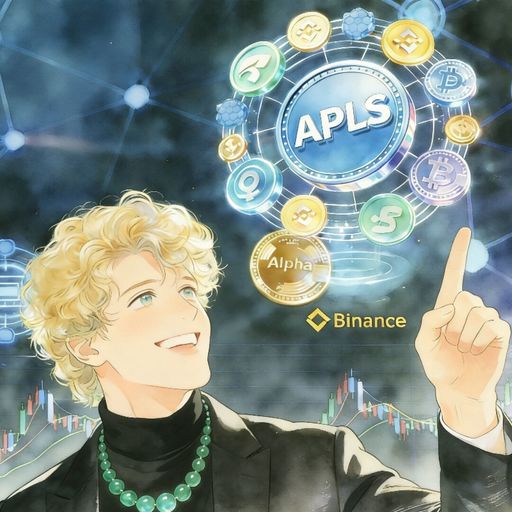


Alternative cryptocurrencies in focus: A comprehensive overview of the altcoin market
Understanding the Altcoin Landscape
When you deal with cryptocurrencies, you will inevitably come across the term “Altcoin”. This designation encompasses all digital currencies that are not Bitcoin – a quite broad categorization that now covers over 10,000 different projects. Each of these projects pursues its own goals and offers different functionalities.
The core of the Altcoin concept lies in the idea of improvement. While Bitcoin was designed as a digital payment method, Altcoins emerged to overcome existing limitations or enable entirely new use cases. Faster transaction processing, reduced fee structures, and enhanced privacy mechanisms are just some of the innovative approaches that alternative cryptocurrencies bring.
Within this diverse ecosystem, there are specialized subgroups: Memecoins like Dogecoin (DOGE) emerged humorously but gained significant market presence through community engagement. Non-Fungible Tokens (NFTs) represent unique digital assets and document ownership rights on the blockchain.
Technical Differences from Bitcoin
The difference between Bitcoin and the broad Altcoin spectrum manifests on several levels. Bitcoin primarily anchors its design in the function as a medium of exchange. In contrast, many alternative cryptocurrencies focus on technological evolution or functional specialization.
Ethereum (ETH) exemplifies this approach through the introduction of Smart Contracts – self-executing agreements that enable decentralized applications (dApps). This opened up a completely new application area for blockchain technology.
Another key difference lies in consensus mechanisms. Bitcoin relies on Proof of Work (PoW), requiring miners to solve complex mathematical problems. Many Altcoins instead implement Proof of Stake (PoS), a more energy-efficient process where network validation is proportional to the held assets.
Volatility is another major difference. Altcoins typically experience stronger price fluctuations than Bitcoin – a phenomenon that presents both opportunities and significant risks.
Origins and Evolutionary Milestones
The history of Altcoins begins in 2011 with Namecoin (NMC), which aimed to establish a decentralized Domain Name System (DNS). This project sought to break up the central control of domain names by organizations like ICANN and instead enable users to register “.bit” domains in a decentralized manner.
In the same year, Litecoin (LTC) followed, designed as a “lighter” Bitcoin variant with faster transactions and a modified mining algorithm (Scrypt) that allowed broader participation.
Development accelerated through several key projects:
2012: Peercoin (PPC) – Introduced Proof of Stake as an energy-efficient alternative to Bitcoin, a milestone for sustainable blockchain design.
2015: Ethereum – Revolutionized the field with Smart Contracts and laid the foundation for decentralized financial applications.
2017: ICO Era – Project teams raised massive amounts of capital through Initial Coin Offerings, leading to a massive expansion of the Altcoin market.
2020–2021: DeFi and NFT Boom – This period demonstrated the versatility of Altcoins beyond mere transactions.
Prominent Altcoins and Their Features
Ethereum (ETH): The platform has established itself as indispensable for Smart Contract development. Developers use the Ethereum blockchain to create self-executing contracts that eliminate intermediaries.
Solana (SOL): This project addresses scalability issues through extremely high transaction speeds – up to thousands of transactions per second. This makes it attractive for time-critical applications like gaming or decentralized exchanges.
Cardano (ADA): Pursues a scientifically grounded development approach emphasizing sustainability and energy efficiency. The project uses Proof of Stake as its consensus mechanism.
Polygon (MATIC): Acts as a “scaling solution for Ethereum” and enables faster, cheaper transactions within the Ethereum ecosystem.
XRP: Positions itself as a reliable network for international money transfers and has recently overcome significant regulatory challenges.
Other notable projects like Polkadot and Apecoin show that the market continuously produces new solutions.
Investment Potential: Opportunities and Critical Risks
Evaluation Criteria
When selecting suitable Altcoins, investors should evaluate several factors:
Technological Innovation: Look for projects that offer genuine improvements – whether through faster transactions, more robust security, or entirely new features.
Team Quality: An experienced, proven development team significantly increases the likelihood of success.
Community Strength: Engaged users contribute substantially to development and adoption.
Risk Factors
Investing in Altcoins involves significant challenges:
Volatility: Price movements can be dramatic – sometimes within a single day. This can lead to quick gains but also rapid total losses.
Fraud Schemes: “Rug Pulls” – where project creators withdraw investor funds and disappear – pose a real danger. Careful research is essential.
Hype-Driven Bubbles: Many Altcoins experience explosive price increases due to trends but fall just as rapidly when attention wanes.
Risk Mitigation Strategies
Time Horizon Planning: Bitcoin investors holding long-term positions generally achieved positive returns. Conversely, investors who sold during market downturns suffered significant losses. However, some Altcoins never returned to previous levels after initial surges. This contrast underscores the importance of well-thought-out time horizons.
Portfolio Diversification: Spreading capital across multiple Altcoins reduces the impact of individual underperformers. Comparing this to international currencies: while about 200 countries exist, there are over 10,000 Altcoins. Diversification allows benefiting from various growth opportunities while buffering against individual failures.
However, this strategy requires comprehensive knowledge of different projects, current market dynamics, and underlying technologies. Portfolio management becomes more complex and may incur higher transaction costs.
Practical Investment Methods
Direct Purchase via Crypto Exchanges
The straightforward method involves direct acquisition through specialized trading platforms. These act as marketplaces for digital currencies. Important: Not every exchange offers every available alternative. Fee structures vary considerably and may include transaction fees, deposit, and withdrawal costs.
A significant advantage: investors can store acquired assets in private wallets – a higher security standard since these are not online and thus protected from hacking. This self-management grants full control over sale timing and prices.
CFD Trading (Contracts for Difference)
CFDs allow speculation on price movements without actually owning Altcoins. Trading is increasingly popular due to several advantages:
Leverage: With a leverage of 50:1, traders can control positions worth 50,000 euros with just 1,000 euros. This amplifies potential gains but also significantly increases loss risks. If the market moves unfavorably, losses can exceed the initial investment.
This underscores the critical importance of risk management tools like stop-loss orders in leveraged trading.
Technological Innovations in the Altcoin Sector
Privacy and Security: Altcoins enhance digital security through blockchain technology – essentially an tamper-proof digital ledger. This protects information from hackers during online money management.
Scalability: Projects like Solana enable high-speed processing for real-time applications (Gaming, DeFi-Trading) without network overload. Polygon functions as an Ethereum scaling solution for higher throughput at lower costs.
Blockchain Interoperability: Polkadot and Cosmos work on seamless communication between different blockchain systems – similar to currency exchange in the real world. This could enable a unified blockchain ecosystem.
Open-Source Ethos: Many Altcoins are based on open-source projects, where anyone can contribute to code improvements. This participatory approach promotes continuous security and optimization.
Real-World Use Cases
Decentralized Finance (DeFi): Altcoins enable lending models with interest income similar to savings accounts – often with better yields. Staking allows users to lock assets, secure the network, and earn additional coins.
Smart Contracts: Ethereum and Cardano enable automatic contract execution – for example, automatic weekly allowance payments without parental reminders.
Gaming and Virtual Worlds: Players can earn Altcoins while playing and exchange them for real money. Virtual worlds (Metaverses) accept specific tokens for land, avatar clothing, or virtual concert tickets.
Other Applications: Educational platforms reward course graduates with tokens, artists sell digital art, and voting systems utilize blockchain technology.
Adoption Barriers
Regulatory uncertainty remains a major brake – many governments are still working on regulations for this new form of money.
Community and Developer Significance
Altcoin communities act as digital neighborhoods where enthusiasts come together to support their preferred digital currencies. These communities propagate information, foster knowledge exchange, and generate enthusiasm for cryptography innovation.
The development team acts as the “engine”: competent developers build trust through continuous technological improvements, quick problem-solving, and security guarantees.
Successful examples like Ethereum and Dogecoin demonstrate the power of this combination – engaged communities plus talented technical teams enable innovative currencies that inspire imagination.
Future Outlook for Altcoins
Altcoins are not mere copies of Bitcoin but bring their own strengths. They enrich the cryptocurrency world through diversified investment opportunities and innovative solutions in finance, gaming, and art. Digital art transactions and gaming earnings exemplify this diversity.
With increasing cryptocurrency adoption, Altcoins seem to have a promising future. The continuous development of new projects and technologies indicates that alternative cryptocurrencies will occupy a more central role in the financial ecosystem.
Investors should maintain an informed, strategic approach – assess risk appetite, deepen market knowledge, and establish a clear investment perspective to succeed in this dynamic landscape.