

Trade
Basic
Futures
Futures
Hundreds of contracts settled in USDT or BTC
Options
HOT
Trade European-style vanilla options
Unified Account
Maximize your capital efficiency
Demo Trading
Futures Kickoff
Get prepared for your futures trading
Futures Events
Participate in events to win generous rewards
Demo Trading
Use virtual funds to experience risk-free trading
Earn
Launch
CandyDrop
Collect candies to earn airdrops
Launchpool
Quick staking, earn potential new tokens
HODLer Airdrop
Hold GT and get massive airdrops for free
Launchpad
Be early to the next big token project
Alpha Points
NEW
Trade on-chain assets and enjoy airdrop rewards!
Futures Points
NEW
Earn futures points and claim airdrop rewards
Investment
Simple Earn
Earn interests with idle tokens
Auto-Invest
Auto-invest on a regular basis
Dual Investment
Buy low and sell high to take profits from price fluctuations
Soft Staking
Earn rewards with flexible staking
Crypto Loan
0 Fees
Pledge one crypto to borrow another
Lending Center
One-stop lending hub
VIP Wealth Hub
Customized wealth management empowers your assets growth
Private Wealth Management
Customized asset management to grow your digital assets
Quant Fund
Top asset management team helps you profit without hassle
Staking
Stake cryptos to earn in PoS products
Smart Leverage
NEW
No forced liquidation before maturity, worry-free leveraged gains
GUSD Minting
Use USDT/USDC to mint GUSD for treasury-level yields

More




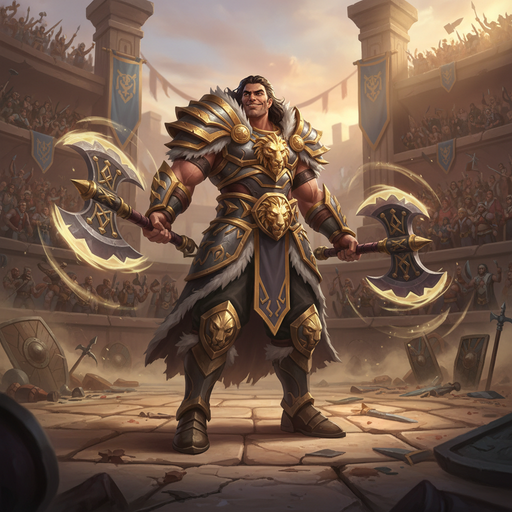
Quai Network revolutionizes blockchain with multi-chain architecture: how this project could redefine crypto scalability
The Disruptive Proposal of Quai Network
The cryptocurrency universe faces a classic dilemma: impossible to reconcile speed, security, and decentralization. Quai Network presents itself as a radical solution to this trilemma through sophisticated technical mechanisms that allow processing of over 50,000 transactions per second – a figure that positions this Layer-1 protocol clearly competitive against its rivals.
Unlike traditional blockchains, which operate as single-lane highways, Quai Network implements a system of multiple parallel lanes, where various execution shards operate simultaneously, maintaining coherence among themselves. This innovative design, combined with the “Proof of Minimum Entropy” (PoEM) consensus mechanism, simultaneously solves network congestion and excessive energy consumption issues.
Origin and Development Trajectory
The history of Quai Network begins unexpectedly: it was not born from a DAO or a startup vision, but from academic research on fused mining in hierarchical PoW structures.
In 2018, Karl Kreder, then involved with GridPlus, conceptualized a new protection model for blockchain. The project gained traction when it received funding from the US National Science Foundation in 2019. The partnership between Kreder and Sriram Vishwanath, a professor of engineering at the University of Texas, solidified a research team that would include Alan Orwick as co-founder.
Progressive network tests (“Stone Age”, “Bronze Age”, and “Golden Age”) demonstrated technical feasibility, with the Bronze testnet generating over 1.5 million blocks and 100,000 transactions distributed across 1,700 global nodes. Institutional recognition came in 2022: $8 millions of Polychain Capital and $2 millions of Alumni Ventures validated the proposal. In 2024, it secured $5 millions in additional strategic funding, reinforcing its commitment to ongoing development.
Technical Pillars: Much More Than Scalability
Fused Mining and Decentralization
Mining on Quai Network works radically differently. Miners can contribute simultaneously to multiple chains without duplicated resource investment – a mechanism that rewards small-scale participation. This reduces entry barriers and distributes mining power, preventing the excessive concentration characteristic of other PoW protocols.
Full EVM Compatibility
Quai Network fully supports the Ethereum Virtual Machine, enabling direct migration of smart contracts and decentralized applications. This architectural decision reduces friction for developers and accelerates ecosystem adoption.
The PoEM Mechanism: Fast Confirmation with PoW Security
The Proof of Minimum Entropy guarantees quick confirmations while maintaining the security guarantees of Proof of Work, avoiding the typical centralization of mining power seen in mature PoW networks. It is a sophisticated technical balance between efficiency and robustness.
Tokenomics: Building a Decentralized Monetary System
Quai Network implements a dual-token model that fulfills the three classic functions of money: store of value, unit of account, and medium of exchange.
QUAI: The Deflationary Network Token
QUAI functions as a store of value instrument and governance tool. Its price fluctuates according to supply and demand, influenced by platform growth and overall crypto market conditions. The protocol incorporates token burn mechanisms and a limited supply (similar to Bitcoin), ensuring scarcity and long-term value protection.
Current QUAI Data:
Qi: The Energy-Indexed Stablecoin
Unlike QUAI, Qi functions as a stablecoin indexed to energy costs, not fiat currencies. It incorporates privacy features and reduced volatility, making it suitable for daily transactions and DeFi applications. While QUAI fuels network operations and governance, Qi serves as a stable medium of exchange for the real economy.
This dual architecture solves a fundamental problem: native tokens tend to appreciate speculatively, impairing their transactional function. By separating the store of value from the medium of exchange, Quai Network creates genuine economic stability.
Distinctive Ecosystem Features
Quai Network aggregates eight attributes that position it as a competitive alternative in the Layer-1 landscape:
1. Massive Parallel Processing – Multiple chains operating simultaneously process transaction volumes that monolithic blockchains simply cannot support.
2. Accessible Mining – The shared work system eliminates the need for expensive hardware, democratizing participation in security.
3. Ethereum Compatibility – EVM support reduces development time and eases migration of existing projects.
4. Complete Monetary System – Dual tokens satisfy simultaneously the needs for speculation, governance, and stable transactions.
5. Automatic Scalability – As user base grows, the network distributes load across additional chains without performance degradation.
6. Enhanced Security – Decentralized mining combined with the PoEM mechanism prevents double spending and systemic risks.
7. True Decentralization – Anyone can participate in governance and mining, with no centralized control or censorship resistance.
8. Developer-First Ecosystem – Complete development tools, extensive documentation, and active testnets fuel a community of programmers through token distribution initiatives.
Future Perspectives: Real Potential or Hype?
Quai Network has solid foundations: genuine technical innovation, well-thought-out tokenomics, demonstrable development trajectory, and institutional backing. However, like any blockchain protocol, its success depends on three critical variables:
If it manages to overcome these challenges, Quai Network presents genuine potential to occupy a significant position in blockchain infrastructure in the coming decade.
Summary: Why Quai Network Matters
Quai Network is not just another blockchain clone. It represents a fundamentally different approach to the scalability trilemma through:
From 2018 to 2024, it evolved from an academic concept to a funded and tested protocol. The operational mainnet marks a turning point: from theory to real proof of concept. For investors and developers interested in genuinely innovative blockchain infrastructure, Quai Network deserves close monitoring.