

Trade
Basic
Futures
Futures
Hundreds of contracts settled in USDT or BTC
Options
HOT
Trade European-style vanilla options
Unified Account
Maximize your capital efficiency
Demo Trading
Futures Kickoff
Get prepared for your futures trading
Futures Events
Participate in events to win generous rewards
Demo Trading
Use virtual funds to experience risk-free trading
Earn
Launch
CandyDrop
Collect candies to earn airdrops
Launchpool
Quick staking, earn potential new tokens
HODLer Airdrop
Hold GT and get massive airdrops for free
Launchpad
Be early to the next big token project
Alpha Points
NEW
Trade on-chain assets and enjoy airdrop rewards!
Futures Points
NEW
Earn futures points and claim airdrop rewards
Investment
Simple Earn
Earn interests with idle tokens
Auto-Invest
Auto-invest on a regular basis
Dual Investment
Buy low and sell high to take profits from price fluctuations
Soft Staking
Earn rewards with flexible staking
Crypto Loan
0 Fees
Pledge one crypto to borrow another
Lending Center
One-stop lending hub
VIP Wealth Hub
Customized wealth management empowers your assets growth
Private Wealth Management
Customized asset management to grow your digital assets
Quant Fund
Top asset management team helps you profit without hassle
Staking
Stake cryptos to earn in PoS products
Smart Leverage
NEW
No forced liquidation before maturity, worry-free leveraged gains
GUSD Minting
Use USDT/USDC to mint GUSD for treasury-level yields

More



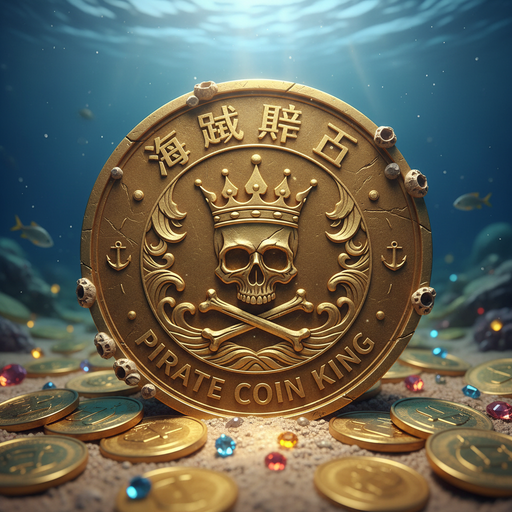



Meme Coins and Faith-Based Investing: Questioning the Shariah Compliance of Trending Meme Assets
Introduction: Why Islamic Investors Should Be Cautious of Trending Meme Coins
Trending meme coins, born from internet culture, are unique digital assets that rely more on community enthusiasm and speculative booms than on technological fundamentals. Inspired by elements like frogs and dogs, they gain value through social media buzz and influencer support but lack real-world applications and intrinsic usefulness.
A key question for devout Muslim investors is: do these trending meme coins align with Sharia principles that emphasize ethics, risk sharing, and prohibition of gambling? In an era where digital asset markets tempt with rapid profits, this question is of utmost importance.
Surging Meme Coin Market: Evaluation Based on Islamic Financial Standards
Sharia principles, based on the Quran and Sunnah, establish strict criteria for asset legitimacy:
Required Standards:
Scholars from accounting and auditing bodies serving Islamic financial institutions evaluate digital assets against these standards, rejecting those akin to Maysir (gambling) or Gharar (excessive uncertainty).
Critical Flaws of Meme Coins:
Trending meme coins fail significantly here. Their value depends almost entirely on price fluctuations, lacking genuine utility, and are heavily speculative, reflecting casino-like mechanisms where profits come at others’ losses.
Excessive volatility, with daily swings exceeding 100%, contradicts the caution and risk management emphasized in Islamic finance, promoting reckless behavior and emotional trading. Many projects include unethical memes that mock sacred values or promote consumerism.
Evaluation of Popular Trending Meme Coins for Islamic Compliance
PEPE Token: A Symbol of Speculation
Inspired by the Pepe the Frog meme, PEPE token functions solely as a trading medium on Ethereum-compatible chains, lacking practical applications, smart contract features, or economic productivity. Its whitepaper emphasizes community hype over substance, failing the Sharia test for intrinsic value.
Dogecoin: From Parody to Speculation
Started in 2013 as a parody of Bitcoin featuring the Shiba Inu meme, Dogecoin developed without a fundamental purpose, emphasizing sporadic charitable donations. Its core mechanism remains inflationary and speculative. Infinite supply and viral price surges give it gambling-like characteristics.
WAWA Coin: Community-Driven Speculation
Positioned as community-led, WAWA Coin reflects the same pattern. It prioritizes social engagement over real-world functionalities like payments or DeFi integration, serving as a volatility play without utility.
Compliance Assessment: All Non-Compliant
These three coins do not meet Islamic standards. PEPE’s pure speculation induces Gharar, Dogecoin’s parody origin raises questions about purity, and WAWA’s exaggerated hype lacks clear ownership rights.
Common Misconceptions and Truths for Muslim Investors
Misconception 1: All Pepe-branded tokens are Halal-certified
Unfounded. Only projects that undergo rigorous third-party Sharia audits verifying usefulness, asset backing, and ethical compliance can be certified. Standard Pepe variants remain speculative memes without such validation.
Misconception 2: Charitable history grants Halal status
No. Sporadic donations cannot offset gambling-like dynamics. Sharia compliance depends on structural usefulness and transparency.
Misconception 3: Trending Meme Coins might be Sharia-compliant
Very rarely. Community-driven hype rarely aligns with risk-sharing obligations. The genre of Meme assets is inherently incompatible with Islamic principles.
Practical Due Diligence: Checklist for Investors
Essential steps for Muslim investors verifying digital assets:
These processes are vital to maintaining faith and financial integrity in volatile markets.
Final Verdict: Trending Meme Coins Should Be Excluded from Halal Investment
PEPE, Dogecoin, and WAWA Coin, exemplifying meme coins, are clearly disqualified as Halal investments for the following reasons:
Sharia scholars, including fatwas from organizations like the Fiqh Council of North America, classify such assets as Haram when they lack utility and are dominated by volatility.
Recommended Approach: Investment Strategies Based on Islamic Ethics
Muslim investors should prioritize:
Adhering to these principles helps investors respect their faith, protect assets, and foster sustainable growth within an environment aligned with Islamic ethics.
The reckless pursuit of quick riches in meme coins undermines core Islamic values of Taqwa (God-consciousness) and fair risk sharing. Muslim traders bear the responsibility to resist the lure of rapid profits and uphold long-term faith-based integrity.