Binance-Linked Tokens Plunge: “Binance Life” Market Cap Falls Below $100 Million

Beginner
Quick Reads
Last Updated 2026-03-27 12:27:53
Reading Time: 1m
Significant drops have occurred in assets within the Binance Smart Chain ecosystem. The market cap of Binance Life briefly fell below $100 million. Other tokens, such as $4 and GIGGLE, experienced downward pressure. It is recommended that investors proceed with caution.

Binance Ecosystem Volatility Overview
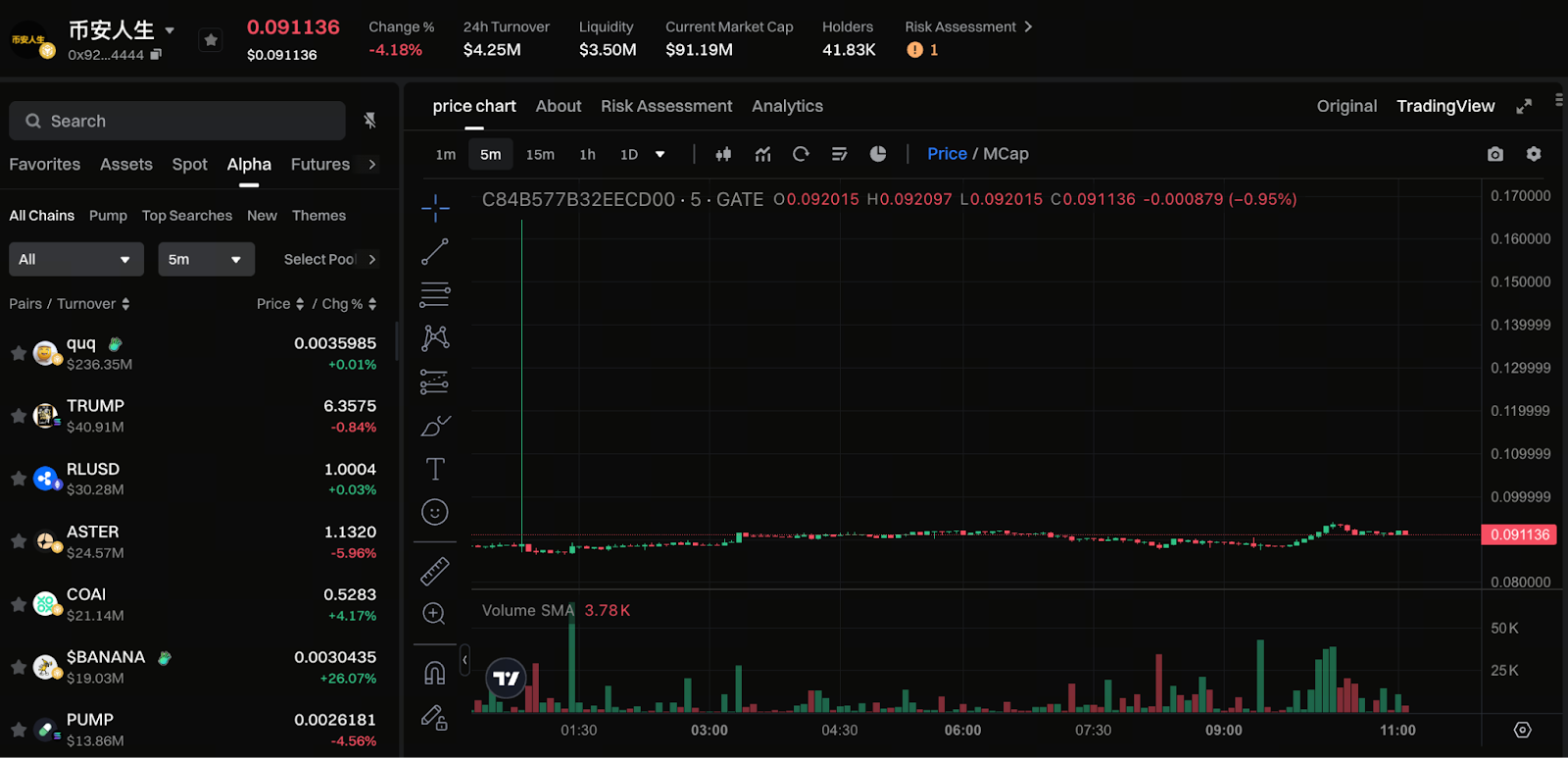

Chart: https://www.gate.com/alpha/bsc-0x924fa68a0fc644485b8df8abfa0a41c2e7744444

As one of the world’s largest digital asset platforms, Binance operates not only as an exchange but also as an issuer, incubator, and supporter of diverse on-chain assets. When market sentiment weakens, projects within its ecosystem often bear the brunt of these shifts. Currently, we observe the following:

  • Binance Coin (BNB) has declined recently, with a 7-day loss of roughly 7.4%.
  • Peripheral ecosystem projects—such as Binance Life and GIGGLE—have also retreated, facing intensified selling pressure.

Overall, assets connected to the Binance ecosystem are experiencing downward inertia, and confidence risks are emerging.

Reasons Behind Binance Life’s Market Cap Dropping Below $100 Million

While “Binance Life” is less mainstream than BNB, it remains a focus within the Binance Chain ecosystem. Its market capitalization falling below $100 million reflects several contributing factors:

  • Liquidity withdrawal: Amid broad market selloffs, investors tend to exit high-risk affiliated tokens.
  • Weak ecosystem connection: Projects lacking strong ties to Binance’s core platform or mainnet support can see market trust erode rapidly.
  • Accumulating macro risks: Tightening conditions across the crypto market—driven by regulatory pressure, interest rate changes, and shifting sentiment—accelerate declines in peripheral assets.
  • Limited technical support: When there’s no strong upward momentum or active ecosystem engagement, token prices are prone to slip.

Thus, the sharp drop in Binance Life’s market cap is not an isolated incident but a typical example of ecosystem-driven chain reactions.

Other Related Tokens: $4 and GIGGLE’s Downward Movement

This round of declines has affected not only Binance Life but also other assets tied to the Binance ecosystem or its on-chain projects. For instance, GIGGLE:

  • GIGGLE currently holds a market cap of approximately $108 million.
  • It has dropped nearly 18.7% over the past 7 days.

Despite a minor rebound recently, the overarching trend remains weak. The token “4” is also on a downward trajectory. The consensus in the market is that “when core tokens like BNB fall and ecosystem confidence wanes, non-core assets are first to be repriced.”

Impact of Sentiment, Technicals, and Macro Factors

This downturn is not occurring in isolation—it’s driven by multiple overlapping factors:

  • Weakened sentiment: Liquidity is tightening across the crypto market, leading to lower risk appetite.
  • Technical breakdown: BNB has breached key support levels, including $950.
  • Macroeconomic pressures: Regulatory uncertainty, inflation, and a stronger US dollar are weighing on crypto valuations.
  • Ecosystem trust risks: Volatility in core platforms or ecosystem projects makes peripheral tokens especially vulnerable.

Investors who ignore these underlying factors and enter positions simply because a project is “Binance-branded” face extremely high risks.

Investor Strategies

Given current conditions, consider the following approaches (for reference only, not financial advice):

  • Select entry points with caution: Prioritize mainstream tokens with robust ecosystems, trusted capital, and high liquidity.
  • Maintain risk controls: Use stop-loss orders, diversify holdings, and avoid concentrated positions in peripheral assets.
  • Monitor ecosystem activity and announcements: Tokens with weak support, infrequent updates, or low trading volume should be treated as high risk.
  • Stay attuned to sentiment: During periods of market fear or steep declines, exercise added caution and avoid chasing rallies.
  • Adopt a long-term perspective: If volatility is short-term and fundamentals are strong, consider accumulating on dips; if fundamentals deteriorate, exit promptly.

In sum, the sharp drop in Binance-related assets serves as a reminder that ecosystem affiliation is no guarantee—peripheral projects are especially susceptible to market elimination. Sound investment decisions depend on understanding both project fundamentals and market dynamics, not simply relying on brand association. Prudent investors can better manage risk and respond calmly to market shifts.

Author: Max
Disclaimer
* The information is not intended to be and does not constitute financial advice or any other recommendation of any sort offered or endorsed by Gate.
* This article may not be reproduced, transmitted or copied without referencing Gate. Contravention is an infringement of Copyright Act and may be subject to legal action.

Related Articles

AI-Native Settlement Layers: How United Stables Is Building the Next Financial Rail
Beginner

AI-Native Settlement Layers: How United Stables Is Building the Next Financial Rail

Stablecoins were originally designed as dollar substitutes within exchanges, primarily used for asset pricing and trade settlement. As on-chain financial ecosystems have matured, their role has expanded beyond simple payments to include collateral assets, cross-chain liquidity mediums, and unified settlement units. In particular, as AI systems and automated agents begin to participate directly in economic activity, demand has risen sharply for programmable value units capable of instant settlement. This shift is pushing stablecoins toward the role of foundational financial infrastructure.
2026-03-25 03:16:17
DePIN Identity Network and Real World Applications: How Humanity Protocol Brings on-chain Identity Into the Physical World
Beginner

DePIN Identity Network and Real World Applications: How Humanity Protocol Brings on-chain Identity Into the Physical World

Most Web3 identity systems remain confined to on-chain environments and struggle to achieve meaningful adoption in real world settings. Through a DePIN architecture and physical verification hardware, Humanity Protocol aims to bring decentralized identity into access control systems, hospitality, public services, and offline events, allowing on-chain identity to function not just as a digital credential, but as foundational infrastructure for real world access.
2026-03-25 07:40:53
The ve(3,3) Flywheel Explained: How AERO Tokenomics Powers Aerodrome’s DeFi Economy
Beginner

The ve(3,3) Flywheel Explained: How AERO Tokenomics Powers Aerodrome’s DeFi Economy

In the competition for DeFi liquidity, high-inflation mining alone is no longer enough to build lasting advantages. Aerodrome applies the ve(3,3) economic model to redesign token emissions, voting mechanisms, and revenue distribution, creating a liquidity flywheel centered on governance and cash flow. This article examines AERO tokenomics, the veAERO locking mechanism, and protocol revenue models to explain how Aerodrome builds a sustainable DeFi economic system.
2026-03-25 06:41:58
Aerodrome Tokenomics: How ve(3,3) Powers Base's Most Profitable DEX
Beginner

Aerodrome Tokenomics: How ve(3,3) Powers Base's Most Profitable DEX

AERO is the native token of Aerodrome Finance, a core decentralized exchange and liquidity protocol in the Base ecosystem. It is primarily used for liquidity incentives and ecosystem operations. veAERO is a governance NFT that users receive by locking AERO, representing both voting power and the right to share protocol revenue. Through a dual track structure of AERO as a utility token and veAERO as a governance credential, Aerodrome separates liquidity usage value from long term governance power, allowing participants to act as liquidity providers, governance decision makers, and revenue sharers within the same system.
2026-03-25 06:40:31
Aster vs Hyperliquid: Which Perp DEX Will Prevail?
Beginner

Aster vs Hyperliquid: Which Perp DEX Will Prevail?

Aster and Hyperliquid are the two representative protocols of the "purpose-built L1 path" within the current decentralized perpetual exchange (Perp DEX) sector. As a pioneer in the field, Hyperliquid has built a deep liquidity moat through its highly mature order book architecture and strong community consensus. Conversely, Aster, as a rising challenger, seeks to leapfrog the competition in high-performance trading through more aggressive multi-chain aggregation logic, private transaction modules, and an underlying execution environment optimized for 2026 market demands.
2026-03-24 11:58:33
Gold Price Forecast for the Next Five Years: 2026–2030 Trend Outlook and Investment Implications, Could It Reach $6,000?
Beginner

Gold Price Forecast for the Next Five Years: 2026–2030 Trend Outlook and Investment Implications, Could It Reach $6,000?

Analyze current gold price trends alongside authoritative five-year forecasts, integrating an evaluation of market risks and opportunities. This gives investors insight into the potential trajectory of gold prices and the main drivers expected to shape the market over the next five years.
2026-03-25 18:13:30





