As blockchain applications gradually expand from simple transfers into payments, DeFi, and cross-border finance, network security and transaction confirmation efficiency are becoming increasingly important. Traditional proof-of-work (PoW) networks are highly decentralized, but they still have certain limitations in transaction confirmation speed and resistance to block reorganization attacks. For this reason, more blockchain projects are introducing multi-layer network structures to strengthen transaction finality and system stability.
Beyond its privacy protocols, Firo has also built network infrastructure supported by masternodes. Masternodes are responsible not only for network service functions, but also for improving transaction confirmation efficiency and on-chain security through ChainLocks and InstantSend. In Firo’s architecture, masternodes and FiroPoW together form a hybrid network model, allowing private transactions, fast confirmation, and attack resistance to work in coordination.
What Is a Firo Masternode?
A Firo Masternode is an advanced node in the Firo network that requires a certain amount of FIRO to be locked as collateral before it can operate. Compared with ordinary nodes, masternodes take on additional network responsibilities, including support for fast confirmation, security locking, and some governance functions.
A masternode is not simply a “server node.” It is more like a long-term participant in the network. Because running a node requires collateral, masternode operators are generally more concerned with network stability and long-term operational security.
How Is a Masternode Different from an Ordinary Node?
Ordinary nodes are mainly responsible for synchronizing blockchain data and verifying transactions. Masternodes perform these basic functions as well, but they also participate in ChainLocks, InstantSend, and network service mechanisms.
Ordinary nodes do not need to lock assets as collateral, while masternodes must lock a certain amount of FIRO as a condition for operation.
Why Does Firo Use a Masternode Architecture?
One of Firo’s design goals is to strengthen network security and transaction efficiency while maintaining decentralization. Masternodes can provide an additional security layer for the private transaction network and support a faster transaction confirmation experience.
Why Is FIRO Collateral Required?
Running a Firo Masternode requires a certain amount of FIRO to be locked. This mechanism is commonly referred to as collateral.
What Is the Purpose of the Collateral Mechanism?
The collateral mechanism encourages node operators to participate over the long term. Since operators need to lock assets, the cost of attacking the network maliciously also increases.
This structure helps strengthen network stability and security.
Is the Collateral Consumed?
The collateralized FIRO is usually not directly consumed, but it must remain locked. If the node stops running or the collateral conditions are no longer met, it can no longer participate in the network as a masternode.
Why Use a Fixed Collateral Amount?
A fixed collateral mechanism can reduce instability caused by frequent node fluctuations and help the network maintain a relatively stable number of masternodes.
How Do ChainLocks Work?
ChainLocks is a security mechanism used by Firo to strengthen block finality. Its goal is to reduce the risk of block reorganizations and 51% attacks.
What Is a 51% Attack?
In a traditional PoW network, if an attacker controls more than half of the network’s hash power, they could theoretically reorganize blockchain history and reverse transactions.
This risk is commonly known as a 51% attack.
How Do ChainLocks Lock Blocks?
After a new block is generated, a group of masternodes signs that block. Once the required number of signatures is reached, the block is “locked.”
A locked block is generally difficult to replace through a later chain reorganization.
Why Do ChainLocks Improve Security?
ChainLocks adds an extra confirmation layer on top of the traditional PoW mechanism. Even if an attacker controls a large amount of hash power, they would still need to influence the masternode network at the same time, which significantly increases the cost of an attack.
How Does InstantSend Enable Fast Confirmation?
InstantSend is Firo’s fast transaction confirmation mechanism. It is designed to shorten the waiting time for users.
What Problems Exist with Traditional Block Confirmations?
In ordinary PoW networks, users usually need to wait for several block confirmations to reduce the risk of double spending. This waiting time can affect the payment experience.
How InstantSend Works
After a user initiates a transaction, the masternode network quickly locks and confirms it. Even before a block is fully generated, the transaction can receive a higher level of credibility.
How Is InstantSend Different from Ordinary Confirmation?
Ordinary confirmation depends on block generation, while InstantSend adds a fast verification mechanism at the masternode layer. As a result, confirmation is usually faster.
How Do Masternodes Strengthen Network Privacy?
Although masternodes do not directly provide anonymity, they can support the stable operation of privacy protocols.
What Is the Relationship Between Masternodes and the Spark Protocol?
Firo’s Lelantus Spark privacy protocol requires a stable network environment and transaction propagation mechanism. Masternodes help improve network availability and node coordination.
Can Masternodes View User Privacy Data?
No. Masternodes are responsible for network service functions, but they do not directly access users’ plaintext transaction information.
How Do FiroPoW and Masternodes Work Together?
Firo uses a hybrid network architecture maintained jointly by FiroPoW and masternodes.
What Is the Role of FiroPoW?
FiroPoW is the proof-of-work algorithm used by Firo. Its goal is to increase GPU mining participation and reduce the risk of ASIC dominance.
Why Is a Hybrid Architecture Needed?
Relying only on PoW or only on masternodes can each create limitations. A hybrid architecture can balance decentralization, security, and transaction efficiency at the same time.
What Are the Advantages of a Hybrid Model?
A hybrid model can improve attack resistance and reduce risks caused by relying on a single network structure.
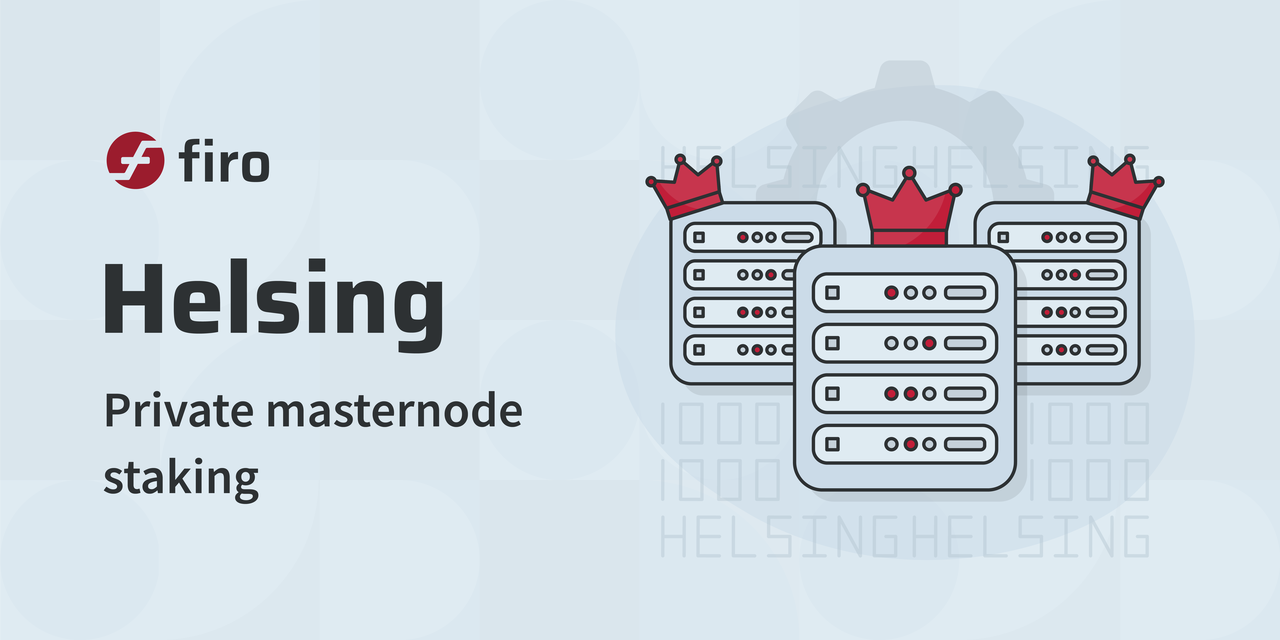
What Is Helsing?
Helsing is a privacy-focused masternode deployment solution launched by Firo. It is designed to improve privacy for node operation.
Why Is Helsing Needed?
When ordinary masternodes operate, they may expose server IP addresses. Helsing aims to reduce the risk of node operators being tracked.
How Does Helsing Improve Privacy?
Helsing further anonymizes the masternode communication structure, reducing network-layer exposure issues.
How Are Firo Masternodes Different from Other Blockchain Nodes?
Advanced node structures vary across different blockchains.
| Comparison Dimension |
Firo Masternode |
Ordinary PoW Node |
Some PoS Validator Nodes |
| Requires Collateral |
Yes |
No |
Usually yes |
| Supports Fast Confirmation |
Yes |
No |
Partially supported |
| Supports Security Locking |
Yes |
No |
Partially supported |
| Network Service Functions |
More extensive |
Basic synchronization |
Depends on the protocol |
| Privacy Network Support |
Relatively strong |
Relatively weak |
Depends on the protocol |
Compared with ordinary nodes, Firo Masternodes place greater emphasis on security locking, fast confirmation, and support for the privacy network.
Conclusion
Firo Masternodes are an important part of Firo’s network infrastructure. Through the collateral mechanism, they support ChainLocks, InstantSend, and network security services. Compared with traditional PoW networks that rely only on hash power confirmation, Firo’s masternode architecture adds an extra security layer, reducing the risk of 51% attacks and improving transaction confirmation efficiency.
As blockchain moves further into payment and financial use cases, transaction finality and network stability are becoming increasingly important. The masternode and hybrid network structure used by Firo has also become one of the important technical paths for privacy blockchains to improve security and user experience.
FAQs
Why Is FIRO Collateral Required?
The collateral mechanism gives node operators a stronger incentive to participate in the network over the long term and increases the cost of malicious attacks.
What Does ChainLocks Do?
ChainLocks is used to lock blocks, reducing the risk of block reorganizations and 51% attacks.
How Does InstantSend Enable Fast Confirmation?
InstantSend uses the masternode network to lock transactions in advance, shortening the waiting time for users.
Do Masternodes Participate in Private Transactions?
Masternodes do not directly provide anonymity, but they can support the stable operation of privacy protocols.
What Is the Relationship Between FiroPoW and Masternodes?
FiroPoW is responsible for PoW mining security, while masternodes handle fast confirmation and an additional network security layer. Together, they maintain the network.







