As competition in the Layer1 public blockchain space intensifies, more blockchain projects are boosting their long-term competitiveness through ecosystem integration and resource synergy. The emergence of Kaia is the direct result of the merger between Klaytn and Finschia, two leading Asian Web3 public blockchains. This integration covers not only technical architecture and governance frameworks but also the migration and unification of native tokens KLAY and FNSA into KAIA.
In the blockchain sector, token migration is more than a brand refresh—it signals a realignment of network governance, developer resources, and ecosystem direction. The Kaia case also illustrates how Web3 infrastructure is shifting from “single-chain competition” to “ecosystem collaboration.” Rather than focusing solely on on-chain performance, Kaia is leveraging LINE, stablecoin payments, and a super app ecosystem to drive Web3 user growth across Asia.
What Are KLAY, FNSA, and KAIA?
KLAY is the native token of the Klaytn network, originally used for Gas Fee payments, governance, and validator node incentives. Developed by Kakao, a major Korean internet company, Klaytn is focused on enterprise blockchain, NFT, and DeFi applications.
FNSA is the native token of the Finschia network. Finschia is part of LINE’s Web3 strategy, with its ecosystem focused on social, payment, and digital content services.
KAIA is the unified native token of the merged Kaia network. After Klaytn and Finschia completed their integration, KAIA gradually replaced KLAY and FNSA as the core asset of the new network.
Beyond its continued role in Gas payments and governance, KAIA is now also used for stablecoin payments, Mini DApps, and new on-chain financial applications.
Why Did Klaytn and Finschia Merge?
The merger between Klaytn and Finschia is closely tied to the evolving competitive landscape of the Layer1 market.
In recent years, the blockchain industry has seen an explosion of public chain networks, but many projects struggle with ecosystem fragmentation, a shortage of developers, and slowing user growth. Meanwhile, major ecosystems like Ethereum, Solana, and TON continue to expand their influence.
Against this backdrop, Klaytn and Finschia sought to strengthen their position through resource integration.
Klaytn brings an edge in Korea’s internet ecosystem and enterprise partnerships, while Finschia leverages LINE’s social platform to expand Web3 applications. The merger allows both networks to share development tools, user access points, and ecosystem resources—laying the groundwork for a more robust Asian Web3 infrastructure.
How Was the Kaia Network Merger Carried Out?
The Kaia merger unfolded in multiple phases, including governance proposals, community voting, network upgrades, and token integration.
Significant upgrades in blockchain networks typically require approval via governance mechanisms. Governance participants from both Klaytn and Finschia discussed and voted on the merger proposal to determine whether to proceed with network integration.
Once the proposal was approved, development teams initiated technical upgrades, including validator node structure, governance mechanisms, and on-chain system integration.
Simultaneously, the original token systems began to unify. With the gradual launch of the Kaia mainnet, KAIA became the new native token, while KLAY and FNSA entered the migration phase.
This process involved not only technical upgrades but also the unification of ecosystem branding and long-term strategic direction.
How Is KLAY Converted to KAIA?
After the Kaia network launch, KLAY holders can convert their tokens to KAIA in accordance with official migration guidelines.
For most users, if their assets are held on an exchange or custodial wallet that supports the upgrade, migration may be completed automatically—no additional action required.
On-chain users may need to use official swap tools or follow network upgrade procedures to map their assets.
Once KLAY is converted to KAIA, its primary functions—Gas Fee payments, governance participation, and validator node staking—remain intact. However, KAIA’s role is broader, and future use cases will expand to include stablecoin payments, Mini DApps, and the super app ecosystem.
How Is FNSA Migrated to KAIA?
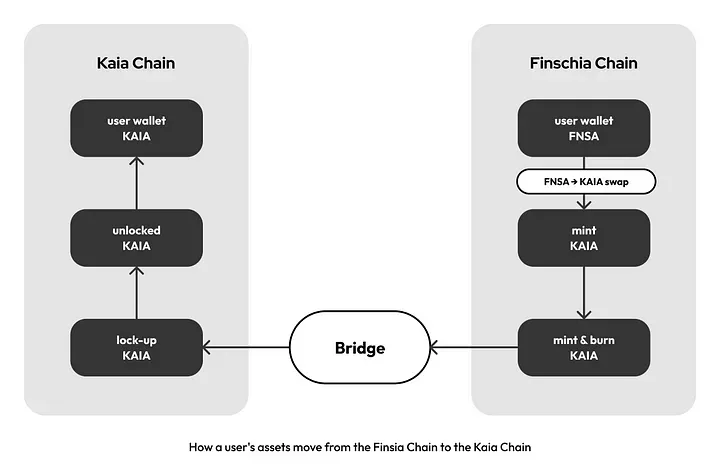
FNSA migration follows a similar logic to KLAY, but since it originated on the Finschia network, cross-ecosystem integration is required.
During migration, the official team typically provides network upgrade instructions, swap tools, and wallet compatibility solutions to assist users with asset conversion.
Upon completion, FNSA will be phased out as the mainnet’s native token, and KAIA will become the unified core asset.
What Does the Kaia Token Merger Signify?
The conversion of KLAY and FNSA to KAIA is more than a simple token rebranding—it marks the unification of the entire network ecosystem.
First, governance structures are consolidated. The previously separate governance systems of the two chains are integrated into the Kaia network, reducing resource fragmentation.
Second, developers can now deploy applications on a unified network, eliminating the need to adapt to multiple ecosystems. This reduces development costs and enhances scalability.
For users, a unified token system minimizes confusion about assets and network functions. Going forward, more payment, stablecoin, and Mini DApp services will be centered around KAIA.
From a branding perspective, KAIA embodies a new identity for the Asian Web3 network, moving beyond a single ecosystem origin.
What Are Kaia’s New Ecosystem Priorities Post-Merger?
Post-merger, Kaia’s focus is on stablecoin payments, Mini DApps, and the super app ecosystem.
Unlike traditional public chains that emphasize on-chain finance and developer tools, Kaia prioritizes the integration of internet platforms and Web3 services.
LINE serves as a key user gateway. Kaia aims to make blockchain applications more accessible to mainstream internet users through messaging apps, digital payments, and lightweight Web3 services. The project is also exploring RWA, on-chain finance, and cross-border payments—expanding stablecoin infrastructure to real-world use cases.
Summary
KAIA is the unified native token of the merged Kaia network, resulting from the integration of KLAY and FNSA.
This transition encompasses not only token migration but also the consolidation of governance structures, validator node systems, and ecosystem resources. Kaia’s goal is to drive Asian Web3 user growth through LINE, stablecoin payments, and the Mini DApp ecosystem—not just to build another Layer1 public chain.
From an industry perspective, the Kaia merger exemplifies the shift in Web3 infrastructure from “single-chain competition” to “ecosystem collaboration.” Its long-term success will depend on developer engagement, user activity, and real-world adoption.
FAQs
What Is the Relationship Between KLAY and KAIA?
KLAY is the native token of Klaytn and is gradually being converted to KAIA after the launch of the Kaia network.
Why Is FNSA Migrating to KAIA?
Following the merger of Finschia and Klaytn, unifying the network and token systems is necessary, so FNSA is being migrated to KAIA.
Why Did Kaia Merge Klaytn and Finschia?
The merger aims to consolidate Asian market resources, developer ecosystems, and user entry points to enhance Layer1 network competitiveness.
Can KLAY Still Be Used for Gas Fees After Converting to KAIA?
After conversion, KAIA will be used as the Gas Fee payment token on the Kaia network.
What Is the Relationship Between Kaia and LINE?
Kaia is deeply integrated with the LINE Web3 ecosystem, and its Mini DApps and select on-chain services are accessible through LINE.
What Should Users Be Aware of During Token Migration?
Users should verify official migration rules, check supported platforms and wallet compatibility, and remain vigilant against phishing websites and fake swap links.







