Structurally, Bedrock is built around BTC, ETH, and multi-chain assets to create a liquidity return network, connecting Restaking, DeFi, and governance systems through assets like uniBTC, brBTC, and uniETH. The design centers on integrating liquid staking, return aggregation, and the veToken governance mechanism within a unified ecosystem.
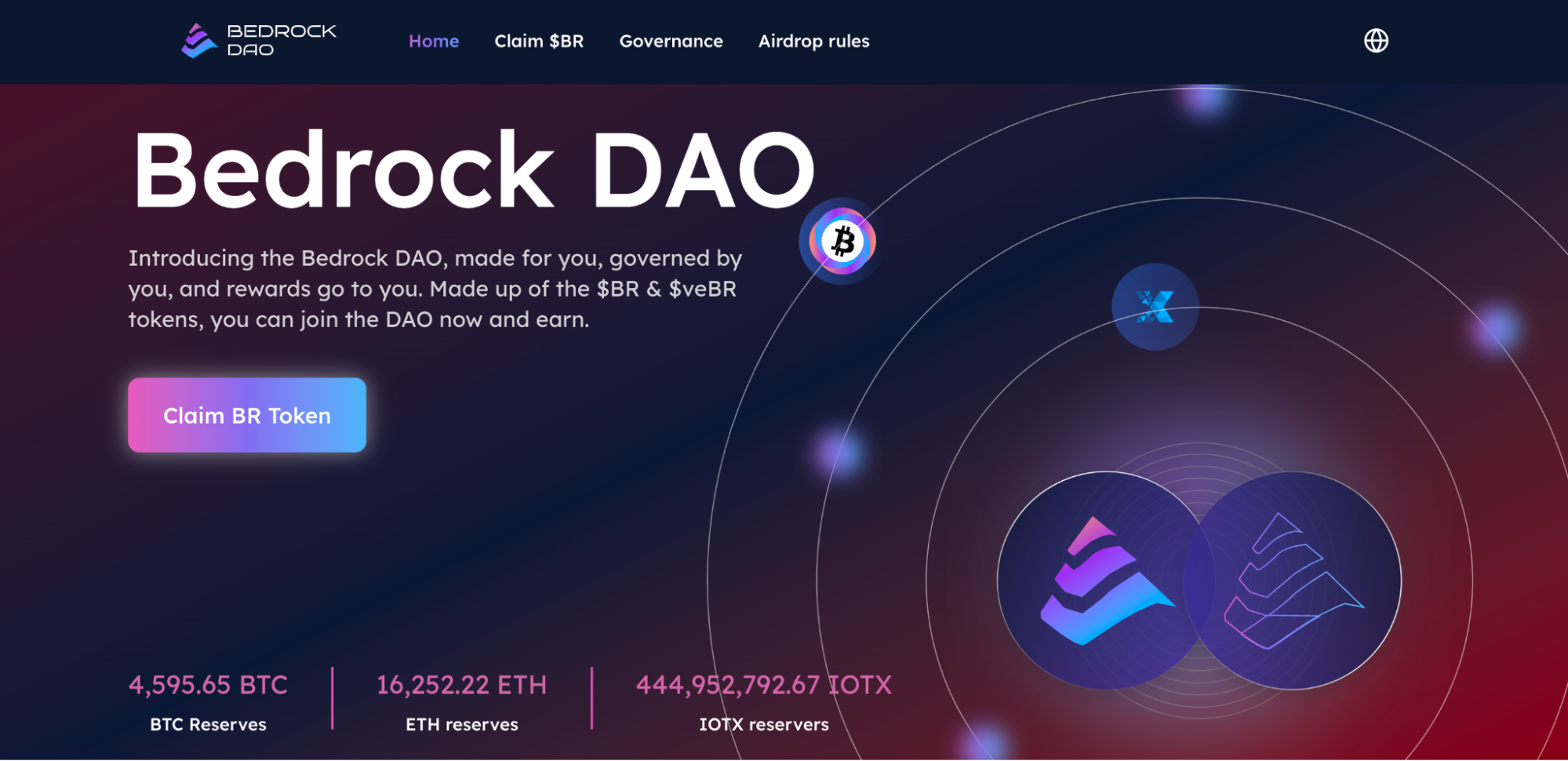
What Is Bedrock (BR)
Bedrock is a protocol focused on “asset yield generation and liquidity expansion,” leveraging a multi-chain structure to enable BTC and ETH to access a broader on-chain return ecosystem. Unlike traditional staking protocols, Bedrock emphasizes not only the returns from asset locking but also the seamless movement of assets across various protocols.
Bedrock operates as a multi-chain protocol that combines BTCFi, Restaking, and governance incentives. Official documentation notes that assets like uniBTC, brBTC, and uniETH allow users to convert BTC or ETH into liquid assets that can participate in diverse DeFi scenarios.
This mechanism enables users to earn returns while still engaging in on-chain trading, lending, and liquidity activities. The system is built around return aggregation, liquidity expansion, and governance synergy, with BR playing a critical role in ecosystem governance and incentive alignment.
How Bedrock’s BTCFi and Restaking Structures Operate
Since Bitcoin does not natively generate yield, BTCFi’s core purpose is to bring BTC into a sustainable yield framework. Bedrock’s structure is designed to transform BTC into on-chain assets eligible for return aggregation by connecting with Restaking and multiple protocols.
After users deposit BTC, they receive corresponding liquidity assets, maintaining participation in DeFi or Restaking networks. Bedrock expands return sources through integration with external protocols, validation networks, and return pools—moving beyond reliance on a single staking reward.
The structure includes:
- Liquid staking assets
- Multi-chain return networks
- Restaking protocol integration
- Governance incentive systems
Unlike traditional BTC holding, Bedrock prioritizes the composability of BTC within the on-chain financial ecosystem. Its design aims to maximize BTC’s capital utilization while preserving liquidity.
Roles of uniBTC, brBTC, and uniETH
Bedrock’s asset system is not limited to a single token; it comprises multiple functional assets tailored to BTCFi, Restaking, and liquidity expansion.
- uniBTC: The core BTC liquidity asset. After depositing BTC, users receive uniBTC, enabling ongoing participation in DeFi and return networks. uniBTC balances yield potential with on-chain liquidity.
- brBTC: Focused on return aggregation, brBTC connects diverse BTC return sources—including Restaking, on-chain protocol returns, and external validation rewards. brBTC emphasizes yield expansion over uniBTC.
- uniETH: Serves the ETH Restaking segment, operating within the ETH yield network and sharing structural similarities with certain LRT protocols.
| Asset |
Core Function |
Primary Side |
| uniBTC |
BTC liquidity asset |
BTCFi |
| brBTC |
BTC return aggregator |
Restaking |
| uniETH |
ETH return expansion |
ETH Restaking |
Together, these assets form Bedrock’s multi-asset return system and enhance protocol liquidity across multi-chain environments.
Bedrock’s veBR Governance Mechanism
Bedrock forgoes the traditional governance token model in favor of a veToken structure to strengthen long-term governance. Through a locking mechanism, governance rights are tied to long-term participation.
After locking BR, users receive non-transferable veBR. The longer the lock-up, the more veBR is accrued, increasing influence over governance and incentive distribution.
Key implications:
- Greater weight for long-term participants
- Governance and liquidity are interlinked
- Incentives favor long-term users
The governance system operates on Epoch cycles, with fixed-period voting, reward distribution, and governance adjustments, as disclosed officially.
Bedrock’s veBR model closely resembles those of Curve and Convex, focusing on reducing short-term supply pressure and enhancing governance stability.
BR Token Utility in the Bedrock Ecosystem
BR serves as both a governance tool and a core incentive asset within Bedrock. The entire ecosystem’s return and governance mechanisms revolve around BR and veBR.
Key functions of BR include:
- Governance voting
- Incentive allocation
- Locked governance
- Ecosystem coordination
Unlike standard governance tokens, BR’s design integrates governance, liquidity, and yield potential into a single framework. Locking BR to obtain veBR enables participation in protocol parameter adjustments and reward distribution.
This approach reinforces BR’s long-term value within the protocol—not just for trading, but as the connective layer for the Bedrock return system and governance network.
Expanding Liquidity Through Bedrock’s Multi-Chain Architecture
A hallmark of Bedrock is its multi-chain architecture. The protocol is not confined to a single ecosystem, but instead expands asset liquidity across Ethereum, BNB Chain, Berachain, and other networks.
Multi-chain deployment allows BTC and ETH to access more use cases in various DeFi environments. Bedrock extends return networks to more protocols through cross-chain structures and liquidity assets.
Key design priorities:
- Expanding asset applications
- Enhancing liquidity efficiency
- Connecting diverse return networks
This makes Bedrock a multi-chain yield coordination layer, rather than a conventional single-chain staking protocol. Its BTCFi structure is particularly compatible with ecosystems like Berachain, which prioritize liquidity proof.
Differences Between Bedrock, EigenLayer, and Babylon
Restaking and BTCFi have evolved along multiple paths. Bedrock, EigenLayer, and Babylon all focus on yield networks, but each has a distinct positioning.
| Protocol |
Core Focus |
Key Mechanism |
Main Assets |
| Bedrock |
BTCFi & multi-chain yield |
Liquidity return aggregation |
BTC, ETH |
| EigenLayer |
ETH Restaking |
Security reuse |
ETH |
| Babylon |
BTC Staking |
BTC security expansion |
BTC |
EigenLayer prioritizes reusing Ethereum security, while Babylon is centered on BTC’s native staking model. Bedrock, by contrast, focuses on yield generation and on-chain liquidity expansion for BTC.
Overall, Bedrock stands out for connecting BTCFi, Restaking, and multi-chain liquidity, positioning it as a comprehensive yield protocol.
Bedrock’s Return Model and Risk Sources
Bedrock’s returns are sourced from multiple protocols and on-chain networks—not a single channel. Its core logic is to boost asset utilization through yield aggregation.
Typical return sources include:
- Restaking returns
- DeFi protocol yields
- Liquidity incentives
- External validation rewards
This structure increases the on-chain yield potential for BTC and ETH, but also introduces additional risks.
According to official disclosures, major risks include Smart Contract vulnerabilities, Bridge risks, third-party protocol dependencies, yield volatility, and governance risks. Because Bedrock’s yield structure depends on external protocols, its stability is subject to market conditions and on-chain liquidity.
Core Applications in the Bedrock Ecosystem
Bedrock’s ecosystem is not limited to a single yield protocol; it encompasses a broader application structure around BTCFi and multi-chain yield networks.
Key protocol applications include:
- BTC liquid staking
- ETH Restaking
- Multi-chain DeFi yields
- Governance incentive systems
uniBTC has become a primary entry asset within Bedrock. Through uniBTC, users can access lending, liquidity pools, and yield aggregation scenarios.
The system is centered on “asset liquidity + yield potential,” making it easier for BTC and ETH to enter the on-chain financial system and enhancing capital efficiency in a multi-chain environment.
Summary
Bedrock (BR) is a protocol built around BTCFi, Restaking, and multi-chain yield structures. Its core function is to use assets like uniBTC, brBTC, and uniETH to convert BTC and ETH into liquid assets eligible for on-chain yield networks.
The ecosystem forms a coordinated system through the veBR governance mechanism, BR incentive structure, and multi-chain deployment—connecting DeFi, Restaking, and governance networks. Compared to traditional staking protocols, Bedrock places greater emphasis on balancing asset yield and liquidity.
FAQ
What Problem Does Bedrock (BR) Primarily Solve?
Bedrock addresses the limited on-chain yield potential of BTC and ETH, increasing asset utilization through BTCFi and Restaking structures.
How Is uniBTC Different From Regular BTC?
uniBTC is a BTC liquidity asset issued by Bedrock, designed to provide BTC with both yield potential and on-chain liquidity.
What Is veBR’s Role in Bedrock?
veBR is a governance credential obtained by locking BR, enabling participation in protocol governance and incentive allocation.
Is Bedrock a Restaking Protocol?
Bedrock incorporates Restaking, but its overall positioning is as a BTCFi and multi-chain yield aggregation protocol.
How Does Bedrock Differ From Babylon?
Babylon focuses on BTC’s native staking, while Bedrock is oriented toward expanding BTC’s yield and liquidity applications.