


Futures
Access hundreds of perpetual contracts
TradFi
Gold
One platform for global traditional assets
Options
Hot
Trade European-style vanilla options
Unified Account
Maximize your capital efficiency
Demo Trading
Introduction to Futures Trading
Learn the basics of futures trading
Futures Events
Join events to earn rewards
Demo Trading
Use virtual funds to practice risk-free trading
Launch
CandyDrop
Collect candies to earn airdrops
Launchpool
Quick staking, earn potential new tokens
HODLer Airdrop
Hold GT and get massive airdrops for free
Launchpad
Be early to the next big token project
Alpha Points
Trade on-chain assets and earn airdrops
Futures Points
Earn futures points and claim airdrop rewards


More



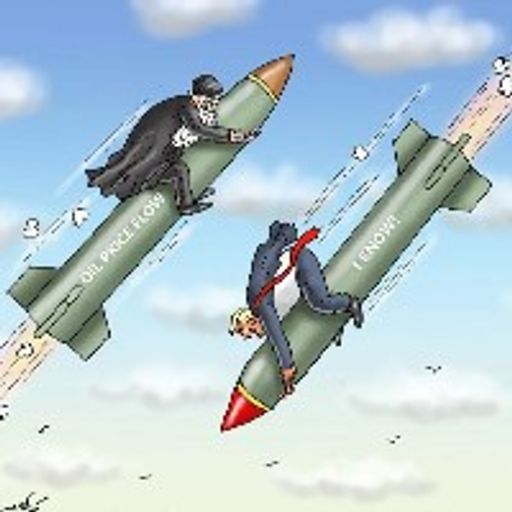


[Market Brief] Middle East Situation Out of Control: Four Key Turning Points After Oil Prices Break $100!
What we want you to know:
As the US-Iran war enters its second week, the conflict shows no signs of easing and continues to escalate. Brent and WTI futures prices have both risen to triple digits, fueling market concerns about inflation. Global stock markets are also under pressure. Therefore, after releasing a quick analysis report on the Middle East conflict last week, we are further updating the latest developments in the US-Iran clash this week. We compare it with the 2022 Russia-Ukraine conflict to assess potential future inflation and interest rate trends, and organize four major directions to watch moving forward.
Given the ongoing expansion of the US-Iran war, we will consolidate related content here: Blog - US-Iran War!
1. US-Iran Gradually Entering “Survival Mode,” Oil Prices Break $100 for the First Time in Four Years!
Hormuz Strait: You Shall Not Pass!
The most critical energy chokepoint in the market—Hormuz Strait, which handles over 20% of global oil shipping trade—normally sees over 100 ships passing daily. However, Bloomberg data shows that last week only 6 oil tankers and 1 LNG vessel left the Persian Gulf. As mentioned in our recent quick report, shipping in the region has effectively halted due to factors like shipping companies suspending operations, tanker charter costs soaring (> $500,000/day), Lloyd’s / London P&I clubs canceling war risk insurance, and GNSS signal interference/deception. This has led to actual disruption of shipping in the area, aligning with the pessimistic scenario we discussed in the previous report.
Because exports through Hormuz are nearly blocked, Middle Eastern oil-producing countries are facing a critical point of “being forced to cut production” due to storage capacity limits. According to energy consultancy Kpler, the buffer days for oil storage are extremely tight: Iraq has less than 5 days, while Saudi Arabia and the UAE have about 20 days remaining. We are also beginning to see signs of production cut pressures, such as Iraq’s Rumaila field (1.5 million barrels/day) and Kuwait (2.5 million barrels/day) announcing reductions. Although Saudi Arabia and the UAE have alternative pipelines, ADNOC (Abu Dhabi National Oil Company) has indicated it is starting to “manage” offshore field capacity to cope with storage needs, showing reserves are also depleting. The Yanbu port on Saudi Arabia’s west coast near the Red Sea has a processing capacity of only about 5.5 million barrels per day. Overall, the daily flow of Middle Eastern crude oil—up to 8.1 million barrels (about 8% of global supply)—may face supply loss risks.
Middle Eastern Neighbors Are Not Safe Either; Energy Infrastructure Still Targeted
Unlike the June 2025 Iran-Israel conflict, this time even energy infrastructure is not spared. The table below summarizes Iran’s recent week of attacks, including over 5 international oil tankers, Saudi Ras Tanura refinery, Qatar Ras Laffan LNG export facilities, and commercial ports in the UAE/Oman. The US-Israel coalition also carried out weekend airstrikes on multiple energy infrastructure sites in Tehran, including large oil depots and military refineries in Shahram, Shahr Ray, and Noubarnia. Axios reports that the Trump administration is considering controlling Halek Island, which accounts for 90% of Iran’s oil exports. Disruption there could further impact approximately 1.5 million barrels per day, primarily affecting Chinese refineries.
Timeline of Key Events: Oil Price Milestones
2. Market Analysis: 2026 US-Iran War vs. 2022 Russia-Ukraine War
The current US-Israel-Iran conflict has triggered a full-scale Middle East war, naturally reminding markets of the 2022 Russia-Ukraine war, which rapidly reignited inflation fears. We compare the current situation with the previous Ukraine conflict, summarizing similarities and differences.
Oil Supply Shock, Hormuz Strait Impact More Severe Than Russia-Ukraine!
In 2022, Russia was a major global energy supplier, accounting for over 10% of oil and 15% of natural gas global supplies. The Russia-Ukraine war caused energy prices to surge sharply. From February 2022 to the peak that year, Brent crude and Dutch TTF natural gas futures rose over 40% and 330%, respectively.
Are you already a subscriber? If so, please log in here.
Become a subscriber to enjoy full access to M Square services.
Unlimited macro chart browsing
Stay on top of key global investment indices
Exclusive Focus Reports
Approximately 6-8 in-depth reports per month on major events/data analysis
Research Toolbox
Custom key charts, backtesting performance
Most Professional Macro Community
User secret indicators, opinion sharing
Subscribe now
Click questions to have MM AI answer you
What is the background and current situation of the US-Iran war?
💡 As the US-Iran war enters its second week, the conflict continues to escalate. Brent and WTI futures prices have both risen into triple digits, market inflation fears are intensifying, and global stocks are under pressure. The conflict is increasingly entering a “survival mode” pessimistic scenario, with energy infrastructure targeted and the Hormuz Strait nearly shut down.
What impact does the Hormuz Strait disruption have on oil supply?
💡 The Hormuz Strait previously handled over 20% of global oil shipping. Shipping has now effectively halted, pushing Middle Eastern oil producers to the brink of forced production cuts. Up to 8.1 million barrels per day (about 8% of global supply) of Middle Eastern crude oil flow may face supply loss risks.
How does this US-Iran war differ from the 2022 Russia-Ukraine conflict?
💡 Both involve supply shocks, but the Hormuz Strait impact is more severe than the Russia-Ukraine conflict. The key difference is that in 2025, the global oil market was oversupplied, monetary policy remained restrictive, and large capital expenditures on AI infrastructure provided some buffer for this impact.
Will rising oil prices delay Fed rate cuts?
💡 As long as oil prices stay above $70 per barrel, the Fed’s rate cut timeline will be pushed back to after September. In the March meeting, the Fed is likely to focus on inflation risks and adjust rate expectations accordingly, with global central banks also following suit.
Is Iran’s military capability nearing exhaustion?
💡 According to US Central Command, Iran’s missile launches have decreased by over 90% from their peak. With missile capabilities limited, drone attacks are becoming sporadic counterattacks. Iran still has the ability to conduct long-term attrition warfare with low-cost drones, and the conflict may shift toward medium- to low-intensity standoffs.
Will Middle Eastern countries openly oppose and demand an end to the conflict?
💡 About 90% of water in the Middle East depends on desalination, and 80-90% of food relies on imports. If the conflict worsens food security and water resources, Middle Eastern countries may pressure Washington to reduce military strikes and return to diplomatic negotiations for self-preservation.
【Market Quick Report】Volatility is intense—must-see five key QA for AI layout! (2026-03-11)
【Market Quick Report】US and Israel bombardment, oil and gas surge—Full analysis of Middle East war! (2026-03-03)
【MM Podcast】 After Meeting EP. 189|US-Iran War Erupts, Oil Price Now a Key Variable
Listen Now>>