


Futures
Access hundreds of perpetual contracts
TradFi
Gold
One platform for global traditional assets
Options
Hot
Trade European-style vanilla options
Unified Account
Maximize your capital efficiency
Demo Trading
Introduction to Futures Trading
Learn the basics of futures trading
Futures Events
Join events to earn rewards
Demo Trading
Use virtual funds to practice risk-free trading
Launch
CandyDrop
Collect candies to earn airdrops
Launchpool
Quick staking, earn potential new tokens
HODLer Airdrop
Hold GT and get massive airdrops for free
Launchpad
Be early to the next big token project
Alpha Points
Trade on-chain assets and earn airdrops
Futures Points
Earn futures points and claim airdrop rewards


More

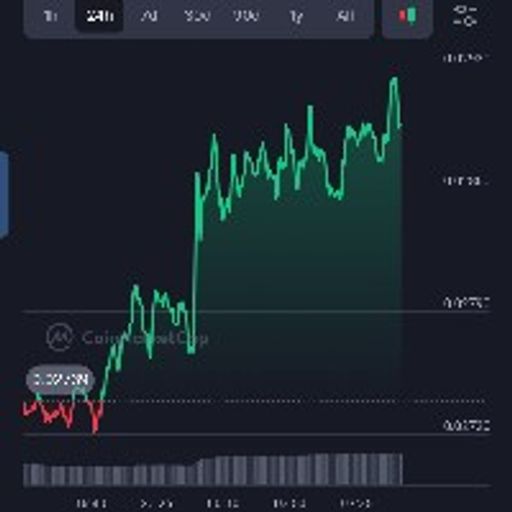



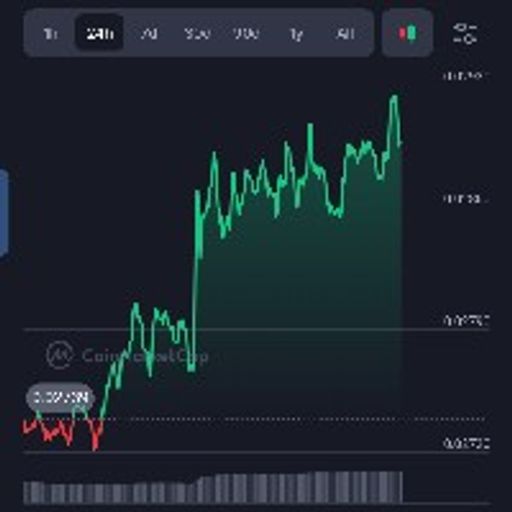
Master ICT's accumulation, manipulation, distribution Framework: The Smart Money Blueprint
If you’ve ever wondered why your trades fail right after you enter, or why the market suddenly reverses when you finally commit capital, you might be observing the work of institutional traders. The accumulation, manipulation, distribution strategy—popularized by Inner Circle Trader (ICT)—reveals how smart money operates in three distinct phases. Understanding this framework transforms you from a reactive trader into someone who can predict market movements and align your positions with institutional flows.
How accumulation Sets the Foundation for Market Moves
The first phase begins quietly. While retail traders sleep or hunt for entries elsewhere, large financial institutions gradually build positions at depressed price levels. During accumulation, the market appears choppy and range-bound. Volume may seem insignificant, and price action lacks direction. This is precisely the point: smart money doesn’t want retail traders to notice. They’re quietly accumulating assets with no intention of revealing their hand.
How can you spot it? Look for sustained sideways price action, strong support levels that never break, and large buy orders absorbed with minimal price impact. This phase can last weeks or months. Patience here separates successful traders from those who chase false breakouts.
manipulation Phase: Recognizing and Avoiding Trader Traps
Once institutions have established positions, they execute what looks like a breakout to shake out retail traders still holding hopes from lower prices. This is the manipulation phase—and it’s where most individual traders lose money. Prices spike above resistance, triggering buy signals, only to reverse sharply and trap inexperienced traders.
Why does this happen? Smart money needs to flush out competing traders and lower their average entry cost on the bounce. False moves are engineered to look convincing: wicks above key levels, gap moves, even emotional headlines. By recognizing these trap patterns, you can avoid panic selling or FOMO buying that destroys your account.
distribution Patterns: When Smart Money Takes Profits
When institutional traders have shaken out weak hands and prices have risen substantially, distribution begins. Here, smart money slowly sells into strength, offloading positions to retail traders who finally believe the trend is “real.” Price continues upward—creating the illusion of a strong market—but volume patterns change. Large sell blocks appear at resistance levels, and the buying pressure gradually weakens.
Understanding distribution timing is critical. This is when you should be tightening stops and taking partial profits, not averaging into positions. The market’s strength is an illusion built on weakening foundations.
Applying the Three-Phase Framework to XRP, BTC, and Your Trades
So how do you use this knowledge? Start by analyzing recent price action in $BTC and $XRP. Identify which phase you’re observing. Are prices range-bound with random bounces? That’s likely accumulation. Did a sharp spike just reverse at higher timeframes? That could be manipulation. Is price rising but showing fatigue and volume decline? distribution may be underway.
By aligning your trades with the three-phase cycle—entering during accumulation, avoiding manipulation traps, and exiting during distribution—you trade like institutional money instead of against it. The result: fewer false signals, better risk management, and a clearer path to consistent profits while protecting yourself from unnecessary losses.