


Futures
Access hundreds of perpetual contracts
TradFi
Gold
One platform for global traditional assets
Options
Hot
Trade European-style vanilla options
Unified Account
Maximize your capital efficiency
Demo Trading
Introduction to Futures Trading
Learn the basics of futures trading
Futures Events
Join events to earn rewards
Demo Trading
Use virtual funds to practice risk-free trading
Launch
CandyDrop
Collect candies to earn airdrops
Launchpool
Quick staking, earn potential new tokens
HODLer Airdrop
Hold GT and get massive airdrops for free
Launchpad
Be early to the next big token project
Alpha Points
Trade on-chain assets and earn airdrops
Futures Points
Earn futures points and claim airdrop rewards


More

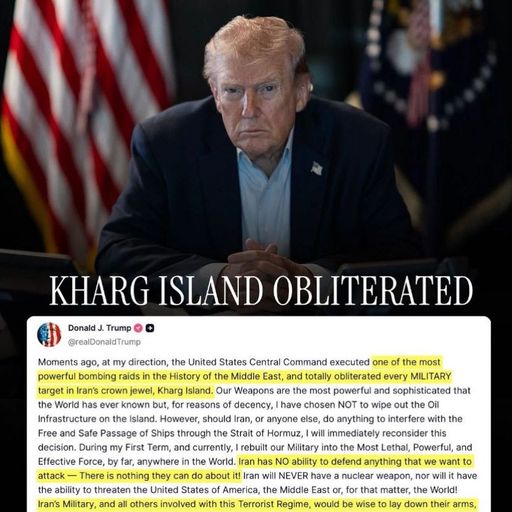




Global Aluminum Earthquake! World's Largest Single Aluminum Smelter Cuts Production, Indian Aluminum Giant Declares Force Majeure
Cailian Press, March 16 (Editor: Xiaoxiang) Under ongoing conflict in the Middle East, the global aluminum market is experiencing a “big shakeup”…
Aluminum Bahrain, which operates the world’s largest single aluminum smelter, announced over the weekend that it has begun phased shutdowns. The company stated that, as maritime transport through the Strait of Hormuz is affected, this shutdown will allow it to preserve raw material inventories and maintain operations in other parts of the plant.
It is reported that Aluminum Bahrain has initiated shutdown procedures for three production lines—these lines account for 19% of its annual capacity (1.6 million tons), roughly 2.2% of global aluminum production.
Aluminum Bahrain’s production cuts are the latest event amid global upheaval in the aluminum industry. Currently, manufacturers worldwide are facing soaring aluminum prices, and traders anticipate broader supply disruptions. The London aluminum price has risen to its highest level since 2022.
Due to shipping disruptions in the Strait of Hormuz, Bahrain’s state-owned company, like other Middle Eastern aluminum smelters, has been facing interruptions in metal export transportation and alumina raw material imports.
Earlier this month, Aluminum Bahrain announced a suspension of sales to customers, and Qatar has recently been forced to halt some aluminum production due to natural gas shortages.
The well-known financial blog ZeroHedge pointed out that, according to the International Aluminum Association, by 2025, the Gulf Cooperation Council (GCC) countries will produce about 6.16 million tons of aluminum, accounting for approximately 8.35% of global supply. Aluminum Bahrain’s production cuts, combined with potential wider chaos in the Gulf region’s aluminum market, could further push up aluminum prices in the London market.
Indian Aluminum Giant Declares Force Majeure
In addition to the direct impact of the conflict on Middle Eastern aluminum companies, aluminum plants in other parts of the world are also currently facing operational challenges due to rising energy costs.
Sources reveal that, due to natural gas supply disruptions in the Middle East leading to shortages, Hindalco Industries, an Indian aluminum producer, has halted the production of high-value aluminum products—extruded aluminum.
An announcement showed that this metal manufacturer under the Aditya Birla Group informed all its extruded aluminum customers of a force majeure on March 11.
However, Hindalco Industries denied in a statement that its extruded aluminum operations had stopped. The company also stated that after some natural gas suppliers declared force majeure, it issued a notice to extruded aluminum customers, describing it as a “routine business notice regarding potential supply disruptions in the extrusion sector.”
The company added that extruded aluminum accounts for only a small part of its capacity, and the potential impact currently affects less than 0.1% of its overall operations. “Supported by self-generated power and alternative energy arrangements, all other downstream and upstream businesses, including electrolytic aluminum, continue to operate normally,” the company said.
Extruded aluminum is widely used in construction, electric vehicles, electronics, and solar panels.
Currently, due to the war between the US, Israel, and Iran, India is embroiled in its worst natural gas crisis in decades, with the government cutting industrial supplies to protect households from cooking gas shortages. Hindalco Industries stated in its announcement, “The company has taken and will continue to take all reasonable measures to mitigate the impact of force majeure events.”
Aluminum is the second most widely used industrial metal after steel, but in recent years, the market has cyclically been affected by supply shocks.
This undoubtedly exposes the fragility of the complex aluminum supply network composed of bauxite mines, alumina refineries, and smelters, which often exist in highly specialized forms that are difficult to replace easily.