


Futures
Access hundreds of perpetual contracts
TradFi
Gold
One platform for global traditional assets
Options
Hot
Trade European-style vanilla options
Unified Account
Maximize your capital efficiency
Demo Trading
Introduction to Futures Trading
Learn the basics of futures trading
Futures Events
Join events to earn rewards
Demo Trading
Use virtual funds to practice risk-free trading
Launch
CandyDrop
Collect candies to earn airdrops
Launchpool
Quick staking, earn potential new tokens
HODLer Airdrop
Hold GT and get massive airdrops for free
Launchpad
Be early to the next big token project
Alpha Points
Trade on-chain assets and earn airdrops
Futures Points
Earn futures points and claim airdrop rewards


More





Why are public funds "rushing to plant seeds"? From livestock to grain, why has the agricultural product track suddenly become "hot and spicy"?
After oil, gas, and chemicals, the agricultural products (000061) sector suddenly heats up. Since March, many fund companies such as Huaxia, Guotai, Jianxin, Taikang, Bosera, Ping An, and others have consecutively filed for related new products. Products under Huatai-PineBridge and Invesco Great Wall have also been launched one after another. From livestock to grains, this comprehensive layout by funds is driven by multiple factors such as geopolitical conflicts and cyclical lows.
Funds Rush into the Agricultural Products Sector
Since March, public funds have sparked a wave of deployment in agricultural-themed ETFs. From product filings to issuance and establishment, all stages are accelerating, with several leading institutions competing on the same stage.
According to the official website of the China Securities Regulatory Commission, fund companies are expanding their focus from livestock to a broader grain industry. On March 11, Taikang Fund filed for the Taikang China Securities Grain Industry ETF, and Bosera Fund also filed for the Bosera China Securities Grain Industry ETF, both on the same day, broadening their scope to grains. On March 13, Huaxia Fund and Guotai Fund also filed for corresponding China Securities Grain Industry ETFs. On the same day, Huaan Fund filed a fund tracking the CSI Agricultural Theme Index.
On March 12, Ping An Fund filed for the Ping An CSI Livestock and Breeding ETF Launch-Linked Fund, further enriching its product line along the breeding industry chain. From livestock to grains, fund companies are gradually expanding their layouts, covering multiple key segments of the agricultural industry chain.
The issuance and establishment phase is equally lively. On March 11, Huaxinfu’s CSI Livestock and Breeding Industry ETF was established, raising 426 million yuan with 5,442 effective subscriptions; on the same day, Invesco Great Wall’s Agriculture, Fishery, and Livestock ETF was also announced, raising 781 million yuan with 13,534 effective subscriptions.
This week, three agricultural-themed funds competed simultaneously: Huatai-PineBridge’s CSI Livestock and Breeding Industry ETF was launched from March 13 to March 26; Southern Fund’s CSI All-Index Agriculture, Livestock, and Fishery ETF was issued from March 9 to March 20; and GF Fund’s CSI Livestock and Breeding Industry ETF also started sales on March 9.
Multiple Factors Resonating in the Agricultural Sector
Several researchers interviewed believe that the current wave of fund companies densely deploying agricultural-themed ETFs is driven by multiple factors resonating together. The escalation of geopolitical conflicts pushing up crude oil prices, the bottom of the breeding cycle leading to capacity reduction, and other factors collectively form the core logic behind institutional optimism for the sector.
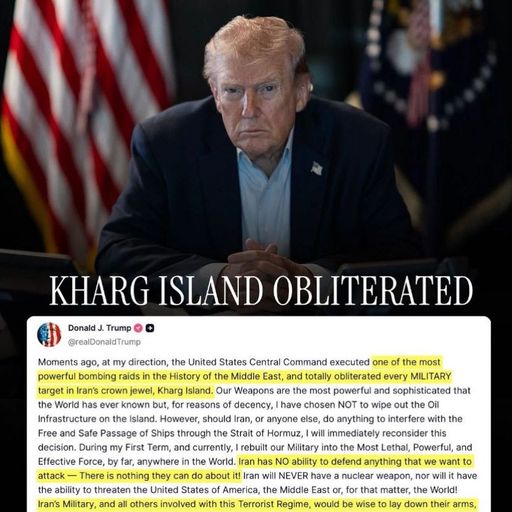
Jianghai Securities analyst Zhang Jing believes that the escalation of US-Iran conflicts has led to a sharp rise in oil prices, which in turn drives up agricultural product prices.
In her view, the impact of oil prices on agricultural products mainly manifests in three aspects: First, substitution demand. Since 2014, over 40% of ethanol in the US has been used for fuel ethanol production, and Brazil’s gasoline-ethanol blending ratio has reached 30%. Rising oil prices directly boost demand for fuel ethanol and related oils, lifting prices of crops like corn and sugarcane; second, increased agricultural input costs. Iran is a major exporter of methanol and urea globally, and instability there can push up prices of nitrogen, potassium fertilizers, and glyphosate, with higher input costs passing through to agricultural product prices; third, increased logistics costs. Blockages in shipping through the Strait of Hormuz raise transportation costs, which can also lead to higher product prices.
Meanwhile, the cyclical bottom of the breeding industry chain also provides a safety margin for institutional deployment. The Jiangsu Securities Agriculture, Forestry, Animal Husbandry, and Fishery Research Team pointed out that recent pig prices have remained low, with the industry suffering losses for over five months, and market-driven capacity reduction in breeding is likely to officially begin. Capacity reduction is a continuous process; high-cost breeders will be the first to exit, and during the downturn, cost competitiveness will become the core advantage for companies. This cycle may lead to ongoing optimization of the competitive landscape in the breeding industry, with companies that have cost advantages and sufficient cash flow potentially experiencing longer profit cycles.
Additionally, ongoing geopolitical issues continue to ferment. On one hand, sustained high oil prices increase planting costs in major agricultural regions such as the US, Brazil, and Europe; on the other hand, persistent shipping disruptions in the Strait of Hormuz could not only affect crude oil supply but also disrupt grain trade routes, especially impacting grain imports in the Middle East and Asia. Under the combined influence of rising planting costs and supply chain risks, prices of major crops like soybeans, corn, and wheat may increase.
Bosera Oil & Gas ETF fund manager Wang Xiang told the Daily Economic News that rising oil prices increase costs for fertilizers, pesticides, fuels, and transportation, thereby raising planting and landed costs. Historically, there have been three instances since 2000 where oil prices and agricultural products moved in tandem, with correlations between corn, oils, beans, and crude oil exceeding 75%. Therefore, the current rise in oil prices is expected to improve profitability at the planting end and transmit upstream to seeds and land resources. Coupled with the advancement of biological breeding industrialization, the grain sector may see a “valuation + performance” resonance.