


Futures
Access hundreds of perpetual contracts
TradFi
Gold
One platform for global traditional assets
Options
Hot
Trade European-style vanilla options
Unified Account
Maximize your capital efficiency
Demo Trading
Introduction to Futures Trading
Learn the basics of futures trading
Futures Events
Join events to earn rewards
Demo Trading
Use virtual funds to practice risk-free trading
Launch
CandyDrop
Collect candies to earn airdrops
Launchpool
Quick staking, earn potential new tokens
HODLer Airdrop
Hold GT and get massive airdrops for free
Launchpad
Be early to the next big token project
Alpha Points
Trade on-chain assets and earn airdrops
Futures Points
Earn futures points and claim airdrop rewards


More





Iran's Supreme Leader Speaks Out Late Night! Iran's Foreign Minister: Never Requested U.S. Ceasefire, Will Continue Self-Defense Until Trump Realizes War Cannot Be Won!
According to Xinhua News Agency, Iran’s Supreme Leader Khamenei posted a message late on the 15th on his social media account “Telegram,” reaffirming that Iran will “seek compensation from the enemy no matter what.” If the enemy refuses to pay, Iran will seize assets of equivalent value; if it cannot seize assets, Iran will destroy assets of equal value.
Early morning on March 16, local time, explosions were reported in Tehran, the capital of Iran, and Karaj.
At the same time, the Israeli military announced that it detected missiles launched by Iran and was intercepting them. Air raid alerts sounded in multiple locations in central Israel.
The Iranian Islamic Revolutionary Guard Corps issued a statement on the evening of the 15th, stating that the IRGC Navy carried out precise and destructive strikes against four U.S. air bases early that morning.
The statement said that during the operation, the IRGC Navy’s missile and drone units used various ballistic missiles, cruise missiles, and attack drones equipped with new warheads to attack U.S. military bases in the UAE (Zafar Air Force Base), Kuwait (Udairi Helicopter Base), Ali Salim Air Force Base, and in Bahrain (Sheikh Eisa Air Force Base), targeting command and control centers, air traffic control towers, hangars, warehouses, and logistics facilities.
According to recent satellite images, Iran’s armed forces have destroyed over 80% of the strategic radars and critical facilities at U.S. bases.
Iranian Foreign Minister Emphasizes Never Request Ceasefire
Iranian Foreign Minister Amir Abdollahian told CBS on the 15th that Iran has never requested a ceasefire from the U.S., nor has it requested negotiations. Iran will continue to defend itself “for as long as it takes,” until U.S. President Trump recognizes that this is an “illegal war that cannot be won.”
Abdollahian pointed out that the U.S. and Israel provoked this war, and Iran is only defending itself. He emphasized that previous negotiations with the U.S. have been unsuccessful, and returning to the negotiating table is of limited significance. “We see no reason to negotiate with the Americans because when they decided to attack us, we were already negotiating with them—this is the second time.”
This statement was a response to Trump’s remarks. On the 14th, Trump told NBC that Iran was ready to negotiate a ceasefire, but he was not yet prepared to reach an agreement “because the terms are not good enough.”
According to the Iranian Ministry of Foreign Affairs, Abdollahian also said in the interview that Iran only targets U.S. objectives, while the U.S. uses neighboring countries’ territories to attack Iran, which Iran cannot ignore.
Regarding navigation through the Strait of Hormuz, Abdollahian disclosed that some countries have contacted Iran, hoping their ships can pass safely through the strait. Iran is willing to negotiate with these countries, but the final decision will be made by the Iranian military.
On Iran’s nuclear program, Abdollahian stated that before the U.S. and Israel launched the war, Iran had already made significant concessions in indirect nuclear negotiations with the U.S., offering to dilute uranium to 60% enrichment to demonstrate that Iran has no intention of seeking nuclear weapons.
He said that Iran’s nuclear materials are currently buried beneath nuclear facility ruins, and Iran has no plans to retrieve them for now. If needed in the future, retrieval will be conducted under IAEA supervision.
Israeli Foreign Minister States U.S. and Israel Are Committed to Fight Until “Goals Are Achieved”
CCTV News reported that on March 15, Israeli Defense Forces spokesperson Efi Duvlin said that Israel’s military operations against Iran will last at least another three weeks.
Israeli Foreign Minister Yair Lapid said on the 15th that Israel and the U.S. share a common resolve “to continue fighting Iran until our goals are achieved.”
On the evening of March 15, the Israeli Defense Forces issued a statement saying that within the past 24 hours, the Israeli Air Force attacked over 200 targets in western and central Iran, including military command centers, air defense systems, and weapons production and storage facilities.
According to the Israeli Times website on the 15th, the IDF denied reports that Israeli missile interceptors are “seriously insufficient” and that stockpiles are running low.
The report quoted an anonymous officer saying that the Israeli military had planned the operation against Iran months in advance. They had prepared enough interceptors and were ready for a “long-term war” lasting several weeks. Currently, the number of interceptors actually used in the operation is “less than expected.”
Earlier, the Israeli Times reported that after the conflict erupted on February 28, Iran launched approximately 300 ballistic missiles at Israel over about two weeks, fewer than the 500 missiles launched during the “12th War” in June 2025.
Iran and French President Reconnect in Call on Middle East Situation
Iranian President Ebrahim Raisi spoke again with French President Emmanuel Macron on the 15th, emphasizing that insecurity and instability in the Middle East stem from hostile actions by Israel and the U.S. Macron called for restoring navigation through the Strait of Hormuz.
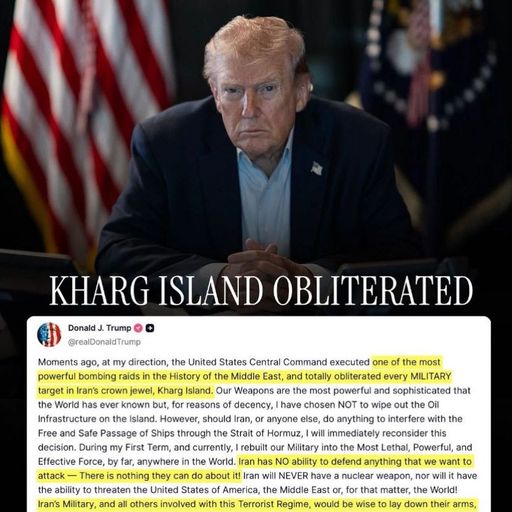
According to Iran’s Tasnim News Agency, Raisi stated during the call that U.S. forces recently, with the help of some Gulf countries, attacked Iran’s oil export hubs on Kharg Island and Abu Musa Island. The Iranian people, government, and armed forces have never sought tension or conflict, but they will take decisive and legitimate defensive actions to respond to aggression and defend national sovereignty and security.
The report said Macron expressed the need to end the current conflict and reduce regional tensions.
On social media, Macron posted about the call, saying that the current uncontrolled escalation is dragging the entire Middle East into chaos and will have long-term consequences. The Iranian people and all regional peoples are victims.
Macron told Raisi that France’s military actions in the Middle East follow “defensive principles,” aimed at protecting its interests, regional partners, and freedom of navigation. Attacks on France are “unacceptable.”
On the 13th, Macron also posted on social media that a French soldier was killed in an attack in Erbil, the capital of the Kurdistan Region in northern Iraq, and several others were injured.
(Original source: Daily Economic News)