


Futures
Access hundreds of perpetual contracts
TradFi
Gold
One platform for global traditional assets
Options
Hot
Trade European-style vanilla options
Unified Account
Maximize your capital efficiency
Demo Trading
Introduction to Futures Trading
Learn the basics of futures trading
Futures Events
Join events to earn rewards
Demo Trading
Use virtual funds to practice risk-free trading
Launch
CandyDrop
Collect candies to earn airdrops
Launchpool
Quick staking, earn potential new tokens
HODLer Airdrop
Hold GT and get massive airdrops for free
Launchpad
Be early to the next big token project
Alpha Points
Trade on-chain assets and earn airdrops
Futures Points
Earn futures points and claim airdrop rewards


More

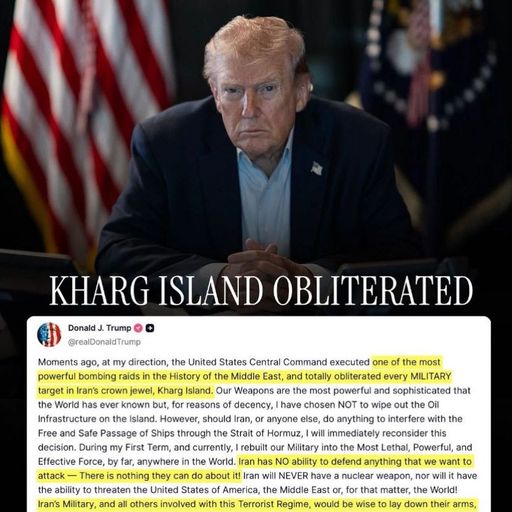




Crude Oil Trading Alert: Middle East Conflict Escalation Triggers Global Supply Concerns, Oil Prices Strengthen Again
Reuters Finance APP News — The Middle East situation has significantly escalated over the weekend, drawing intense global energy market attention. The U.S. launched strikes on key Iranian oil export facilities, rapidly increasing the risk to crude oil supplies. International oil prices surged sharply in early trading. WTI crude oil opened up about 3%, then retreated, with current market trading prices near $98 per barrel, approaching the closely watched $100 psychological level.
One of the core issues of this conflict is Iran’s oil export hub on Khark Island. This region is one of Iran’s most important energy export bases, and it is widely believed that about 90% of Iran’s crude oil exports are transported through this area. Following the strikes, the market immediately began reassessing the risks to Middle Eastern oil supplies.
In response, Iran has launched counterattacks in surrounding areas, stating that these actions target U.S. military presence in the region. This rapidly intensifies market uncertainty, prompting investors to reprice geopolitical risk premiums.
Meanwhile, the most closely watched issue remains the Strait of Hormuz. This vital shipping lane connects the Persian Gulf with the Oman Gulf and is one of the world’s most critical energy transportation routes. Market estimates suggest that the Strait handles about 20% of global seaborne crude oil transportation. Any disruption here could cause significant tension in global energy supplies.
U.S. President Donald Trump has recently called on allied nations to assist in protecting the shipping safety of the Strait of Hormuz. Market reports indicate that the White House may announce related security plans in the coming days, further heightening investor concern over energy transportation risks.
Despite rising fears, some energy officials remain relatively optimistic about the situation. According to market surveys, U.S. Energy Secretary Chris Wight expects the conflict to gradually ease “within the next few weeks.” If tensions subside, global energy supplies could recover, and prices may gradually decline.
However, current market trading suggests investors are more focused on short-term supply shocks. As tensions in the Middle East persist, the market generally believes the risk of supply disruptions remains, and oil prices may continue to fluctuate at high levels in the near term.
From a technical perspective, WTI crude oil remains in a clear upward trend on the daily chart. After breaking through the $90 resistance level, bullish momentum has continued to strengthen. Currently, prices are approaching the $100 key level, which is not only a psychological milestone but also a significant resistance zone. If oil prices can break through and stabilize above $100, there could be further upside potential toward $110 to $120.
On the 4-hour chart, WTI is trading around $98.89, with the overall technical structure still favoring bulls. Prices are clearly above the 20-period, 100-period, and 200-period simple moving averages, indicating a strong short-term trend.
Specifically, the 20-period moving average is near $91.55 and has already crossed above the longer-term averages, forming a bullish alignment. The 100-period is around $77.45, and the 200-period is near $70.54, with all three indicating a typical bullish trend.
Momentum indicators also support this view. The Momentum indicator remains above the midline and continues to rise, showing increasing bullish momentum. Meanwhile, the RSI is around 62, still within a healthy range, suggesting buying strength remains dominant and further upside is possible.
Key support levels include the short-term support at $91.55, corresponding to the 20-period moving average and an important support zone for the current rally. As long as prices stay above this level, the bullish structure remains intact. If a deeper correction occurs, next support levels are around $77.45 and $70.54.
Overall, as long as oil prices stay above $91, the market could challenge the $100 mark again. A successful break and stabilization above this level could lead to further testing of the $120 high area.
Summary
The current rise in international oil prices is driven not by demand growth but by the return of geopolitical risk premiums. The escalation in the Middle East has increased global supply uncertainty, with key shipping routes becoming focal points. In the short term, the $100 level will serve as a critical threshold. If geopolitical risks persist, the likelihood of breaking through this level increases, potentially pushing prices toward $110 to $120. Conversely, signs of easing could trigger a phase of correction. Overall, the oil market has entered a high-volatility phase, and investors should monitor geopolitical developments, global supply conditions, and macroeconomic factors affecting demand.
FAQs
Why is the Strait of Hormuz so important to global oil prices?
The Strait of Hormuz is one of the world’s most vital energy transit routes, connecting the Persian Gulf with the Oman Gulf. It is a key passage for Middle Eastern oil exports entering international markets. Market data shows that about 20% of global seaborne crude oil is transported through this strait, which is also crucial for liquefied natural gas shipments. Major oil-producing countries like Saudi Arabia, Iraq, the UAE, and Kuwait rely on this route for exports. Due to the large volume of traffic, any disruption or security risk in the strait can quickly impact global energy supplies. Markets tend to price in this risk in advance, creating what is known as geopolitical risk premiums. Historically, tensions in the Middle East have often led to sharp increases in oil prices. Limited alternative routes further emphasize the importance of the strait. Although some countries have pipelines, their capacity is insufficient to replace maritime transport entirely. Therefore, any threat to the strait’s security can cause immediate supply concerns and push prices higher.
How do Middle Eastern conflicts typically affect international oil prices?
The Middle East is a major oil-producing region, holding a significant portion of the world’s reserves. When conflicts or tensions escalate, markets worry about potential disruptions to oil supplies, leading to price increases. This impact occurs through two main channels: actual supply risks—if conflicts affect oil fields, refineries, or export ports, supply may decrease; and market expectations—anticipating possible disruptions can lead to risk premiums even if no actual supply loss occurs. Financial flows also play a role; during heightened risk sentiment, funds often flow into energy commodities as a hedge against inflation and geopolitical risks, further supporting higher prices. During tense periods, oil prices tend to be highly volatile, with markets closely monitoring political and military developments.
What does it mean when WTI oil approaches $100?
When WTI approaches $100, it holds significant market implications. First, $100 is a psychological threshold, often viewed as a key technical and sentiment level. Crossing or approaching this point can trigger notable market reactions. Second, prices above $100 generally indicate tight global energy markets, often associated with geopolitical risks, supply disruptions, or strong demand. Historically, reaching this level has coincided with increased geopolitical tensions and supply concerns. High oil prices can also impact the global economy by raising inflation and increasing costs for businesses and consumers, influencing economic growth expectations. For investors, approaching $100 suggests increased volatility and trading opportunities, but risk management remains crucial.
What factors could influence short-term crude oil price movements?
Short-term oil prices are affected by multiple factors, including geopolitical risks—such as Middle East tensions, policy changes by major producers, or security issues in key transit routes. Global supply and demand dynamics also matter; strong economic growth boosts demand, pushing prices higher, while slowdown reduces demand. Inventory data, especially U.S. crude stock levels, influence market perceptions of supply-demand balance. Falling inventories often signal strong demand, supporting prices. Financial factors like dollar exchange rates, capital flows, and investor risk appetite also impact prices. Investors need to consider geopolitical developments, supply-demand fundamentals, and financial market conditions when analyzing short-term trends.
Could oil prices rise again to $120?
Whether oil prices can reach $120 depends on several key factors. Continued escalation of geopolitical tensions, especially in the Middle East, with actual impacts on supply or transportation, could push prices higher. Sustained global demand growth with limited supply increases also raises the likelihood. Low inventories make markets more vulnerable to shocks. Capital flows into commodities can further support upward movement. However, high prices often incentivize increased production from oil-exporting countries and may dampen demand, leading to corrections. Overall, if geopolitical risks persist and supply remains constrained, there is a real possibility of prices approaching or surpassing $120.