


Futures
Access hundreds of perpetual contracts
TradFi
Gold
One platform for global traditional assets
Options
Hot
Trade European-style vanilla options
Unified Account
Maximize your capital efficiency
Demo Trading
Introduction to Futures Trading
Learn the basics of futures trading
Futures Events
Join events to earn rewards
Demo Trading
Use virtual funds to practice risk-free trading
Launch
CandyDrop
Collect candies to earn airdrops
Launchpool
Quick staking, earn potential new tokens
HODLer Airdrop
Hold GT and get massive airdrops for free
Launchpad
Be early to the next big token project
Alpha Points
Trade on-chain assets and earn airdrops
Futures Points
Earn futures points and claim airdrop rewards


More




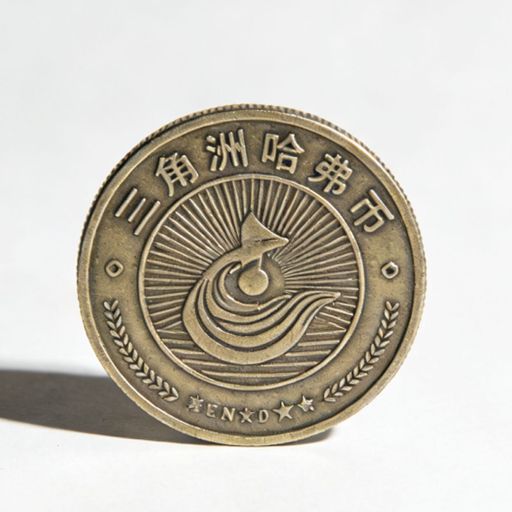

Dual Flag Currency Market: Tale of Two Extremes - Some Selling for 7.2 Million, Others Worth Only 50 Yuan - Don't Get Fooled Anymore
Today, I will analyze the current market performance of the Double Flag Coins using the latest market data and auction cases from 2025 to now. The explanation will be straightforward, without obscure terminology, so that ordinary people can easily understand. Whether you want to sell your Double Flag Coins or are just starting to collect them, after reading this article, you won’t be fooled again. You’ll clearly understand the true market situation, avoid traps, and seize opportunities!
First, I’ll share a core conclusion reflecting the most authentic state of the current Double Flag Coin market: extreme polarization, a tale of two extremes. Simply put, it’s “top-tier rare collectibles selling for millions, while common circulation versions are only worth dozens or hundreds”—highly scarce, valuable items are fiercely sought after by collectors and can fetch hundreds of thousands or even millions; ordinary circulation coins are worth little more than pocket change, serving as entry-level collectibles with almost no investment potential.
Many collectors may wonder: why does the value of Double Flag Coins vary by over ten thousand times? The answer is simple: it all comes down to rarity of the version. As the first series of circulating copper coins issued during the Republic of China, these coins were minted independently by various provinces after the Xinhai Revolution, with no unified standard. This led to a wide variety of versions and vastly different survival quantities. Some versions have over 100 million coins, while others have fewer than 10. Rarity drives value—obviously, the fewer the coins, the higher the worth.
With 12 years of experience, I’ve seen many collectors’ joys and sorrows: some accidentally sold a Henan-made Five Hundred Wen Double Flag Coin for 500 yuan, unaware of its value, only to learn in 2024 it sold for 4.28 million yuan at auction, causing shock; others were lured by online “million-yuan buyback” scams, paid 20,000 yuan for “authentication,” only to be told their ordinary coin is worth just 30 yuan—wasted effort; some hold genuine rare versions but, out of fear of being scammed, keep them tucked away, missing the best selling opportunity.
Today, I will analyze the current market performance of Double Flag Coins in four aspects: Top-tier collectibles, Ordinary versions, Market logic, and Avoiding pitfalls. Each section will include real auction data, specific cases, and practical tips, making it easy to understand and learn, so you won’t go astray or pay tuition fees in the market.
Additionally, a reminder: the current Double Flag Coin market is chaotic, with counterfeits, hype, and scams everywhere—especially for high-priced rarities, where fakes are rampant. Even experienced collectors can be deceived. Therefore, understanding market trends is crucial, but equally important is learning how to verify authenticity and avoid traps—collect rationally and act wisely.
Part 1: Top-tier collectibles—million-yuan threshold firmly established, collectors fiercely competing, annual growth over 25%
Many collectors see news of Double Flag Coins selling for millions and think it’s hype, believing “they’re not that valuable.” But I can tell you clearly: top-tier rare coins selling for millions is real market behavior. The million-yuan threshold is now very stable, and many collectibles continue to rise in price, with annual increases generally exceeding 25%. They have become the core targets of high-end collections.
According to auction data from 2025 to now, just in the first half of this year, over a dozen top-quality Double Flag Coins sold for high prices, with the highest reaching 7.2 million yuan and the lowest surpassing 1 million yuan. The reason for these sky-high prices is simple: scarcity.
Here’s some shocking data: the survival quantity of common Double Flag Coins exceeds 100 million, while top rare versions are fewer than 100. The ratio is about 1 in 1 million. That is, only 1 in 1 million coins is a top collectible—such extreme rarity naturally commands sky-high prices.
You might ask: what makes a Double Flag Coin a “top collectible”? The answer is straightforward: mainly two types—either uncirculated trial strikes or special versions from provinces like Henan and Sichuan. Let me introduce some representative top collectibles based on recent auction cases, so you can see their market value and key features, helping you avoid buying fakes.
Representative Top Collectible 1: Sichuan-made Plum Blossom Pattern Five-Text Brass Double Flag Coin (highest sale 7.2 million, market ceiling)
When talking about top-tier Double Flag Coins, this Sichuan-made Plum Blossom Pattern Five-Text Brass Coin must be mentioned. It’s currently the “market ceiling.” In fall 2024, this trial strike coin sold for 7.2 million yuan, a record that remains unbroken, making it a legend in auction history.
Many collectors wonder: why is this coin so expensive? The reasons are threefold and indispensable:
Extremely limited mintage: only about 3 known specimens, truly “one-of-a-kind.” It’s a trial strike from Sichuan Mint, never circulated officially, used only for testing equipment and processes. Due to frequent wars in early Republic China, most trial coins were destroyed. Only two are privately owned, with one missing; encountering one is nearly impossible for ordinary collectors.
Special material and craftsmanship: made of pure brass, with exquisite craftsmanship. Brass was rare in early Republic China, mostly used for trial strikes; regular circulation coins mostly used red copper. The coin’s manufacturing quality surpasses ordinary coins—fine texture, smooth edges, no burrs or sand holes, flat surface, detailed and clear patterns, every detail meticulously polished.
Unique design and high historical value: the obverse features a crossed double-flag pattern with a blooming plum blossom above, petals and lines are detailed and lifelike, differing from common double-flag coins with rice ear patterns, possessing high artistic value. It also reflects early Republic Sichuan minting techniques and history, serving as an important physical record for research. Its historical significance is irreplaceable.
Since 2025, the market interest in this coin has continued to rise. Collectors privately offer over 6.8 million yuan, still below auction price but confirming its rarity and market recognition. Such top-tier collectibles can appreciate over 30% annually, with great potential for future value.
Important reminder: this coin has many counterfeit versions. Many fakes use red copper with a yellowish coating to imitate the plum blossom pattern, fooling beginners. Here are two key identification tips:
Material check: genuine coins are made of pure brass, with a warm, natural metallic luster, heavy in hand, non-magnetic. Fakes are often red copper with a dull, plated surface, lightweight, and some may be slightly magnetic.
Pattern inspection: genuine coins have clear, detailed petals and lines with a sense of depth; fakes have stiff, blurry lines, with missing petals or deformed patterns.
Representative Top Collectible 2: Henan-made Five-Hundred-Wen Double Flag Coin (highest sale 4.28 million, military treasure)
This Henan-made Five-Hundred-Wen Double Flag Coin is also a top-tier collectible, known as the “Republican military treasure.” In 2024, it sold for 4.28 million yuan. In the first half of 2025, a medium-condition specimen sold for 2.54 million at Shanghai Hongsheng Spring Auction, proving its market value.
Its rarity mainly stems from historical background and survival quantity: early in the Republic, Henan Mint produced a small number of Five-Hundred-Wen double-flag coins to fund military expenses. Due to frequent wars, most were damaged or lost, with fewer than five known specimens—truly scarce.
Key features to compare with your own coins:
Unique denomination: “伍百文” (Five Hundred Wen). Most coins from that era had denominations like 10, 20, or 50 Wen. The 500 Wen denomination is extremely rare, especially from Henan.
Design details: obverse shows crossed flags—one with the “Iron-Blooded Eighteen Stars” flag, the other with the “Five-Color Flag.” The pattern is detailed, with clear star points and lines, no blurring or smudging. The reverse bears “伍百文” with a surrounding嘉禾 (grain ear) pattern, with visible grains and textured lines.
Hidden mark: as a trial strike, it has a tiny “样” (sample) mark below the crossing of the flags, very subtle and hard to see without careful inspection. This distinguishes it from regular circulation coins.
Patina and condition: genuine coins have a natural light golden patina, smooth and aged, with no artificial corrosion or repairs. Due to rarity, most authentic specimens are uncirculated or near uncirculated, with pristine surfaces.
Many collectors ask: “I also have a Henan Five-Hundred-Wen double-flag coin. Can it sell for millions?” Serious warning: 99% of such coins on the market are counterfeit! Because of its high value, counterfeiters produce many fake versions with sophisticated craftsmanship, even mimicking the hidden mark. Careful observation reveals flaws.
Additional identification tip: Compare the denomination’s proportions. Genuine coins have well-proportioned, clear, and neat “伍百文” characters. Fakes often have sloppy, blurred fonts, uneven sizes, or even misspelled characters.
Representative Top Collectible 3: Hunan Double-Flag Ten-Text Error Coin (highest sale 2.2 million, a rare error coin)
Error coins are also top-tier collectibles. Since 2025, several error Double Flag Coins have sold for high prices. The most notable is the Hunan Double-Flag Ten-Text Error Coin, which sold for 2.2 million yuan at Poly Auction’s first coin session in 2025, becoming a “star” error coin.
Many collectors misunderstand: “Any error makes it a rare coin and worth a lot.” Not quite. Error coins result from manufacturing mistakes—imperfect molds, misaligned patterns, inverted images, missing details—that are rare and irreversible. Only such “rare and unrepeatable” errors have value.
This Hunan error coin’s value comes from two extremely rare features: first, the double-flag is upside down—normally, the “Iron-Blooded Eighteen Stars” flag is on the left, the “Five-Color Flag” on the right; in this coin, both are reversed. Second, the嘉禾 pattern on the reverse is missing three grains, caused by severe die wear, with a survival rate less than one in ten thousand.
Additionally, the coin’s condition is excellent—graded XF45 (extremely fine)—no circulation wear, natural patina, no corrosion or repairs. This pristine condition is key to its high price.
Important tip: many “error coins” on the market are fakes. Fake error coins are artificially altered—scratched, inverted, or with manipulated patterns—to imitate genuine errors. The core identification method is to check whether the error is “natural and unintentional”—genuine errors are formed during casting, with smooth edges and no signs of artificial modification. Fakes often have rough edges and obvious tampering.
Market commonalities and collection advice for top-tier collectibles
From these three examples, we can summarize the common features of top-tier Double Flag Coins:
Extremely limited survival: often fewer than 10 known specimens; some versions fewer than 5, truly “one-of-a-kind.”
Special versions: either uncirculated trial strikes, or versions with unique denominations or errors, different from common circulation coins.
Exquisite craftsmanship: superior minting quality, detailed patterns, smooth edges, no burrs or sand holes.
Excellent condition: mostly uncirculated or near, with natural patina, no corrosion or repairs.
High market recognition: auction prices generally above 1 million yuan, with annual growth over 25%, fiercely sought after by collectors.
Collection advice: although top-tier coins are extremely valuable, risks are high. Genuine specimens are very rare; most market offerings are fake. Even experienced collectors can be deceived. Beginners should not blindly pursue top collectibles; avoid believing “you can buy a top coin cheaply”—most such claims are scams. If you suspect your coin is genuine, seek authoritative appraisal from trusted institutions or seasoned collectors before buying or selling.
Part 2: Ordinary versions—affordable, entry-level collectibles with no investment value
After seeing the sky-high prices of top-tier coins, many collectors rush to check their own coins, hoping to find a million-yuan treasure. But I must give a reality check: 99.9% of Double Flag Coins are common circulation versions, worth only a few dozen or hundreds of yuan, serving as entry-level collectibles with almost no investment potential.
Market data from 2025 shows that ordinary circulation coins generally sell for 50–500 yuan. Coins in average condition can be bought for a few tens of yuan in antique markets; better-preserved ones with natural patina cost around 150–200 yuan; even the best original uncirculated specimens rarely exceed 1,000 yuan—vastly lower than top collectibles.
The main reason for their low value is simple: mass production and high survival volume. These coins were minted in large quantities by provincial mints during the Republic era, with over 100 million in existence, widely available. Rarity is key to value—more coins, lower the price.
Let me introduce some common ordinary circulation versions, with market prices, so you can assess your own coins and avoid being scammed.
Common Ordinary Version 1: Hunan “Deng Shi” Double Flag Coin (market price 50–200 yuan)
This is the most common Double Flag Coin in the market. Minted extensively by Hunan Mint from 1912, it circulated throughout Hunan and nearby provinces, with an estimated survival of over 30 million.
Its main features: obverse with crossed double flags, “中华民国” (Republic of China) above, “当十” (Deng Shi) denomination below; reverse with嘉禾 (grain ear) pattern, surrounding “铜元” (copper dollar). The craftsmanship is relatively rough, with burrs and sand holes, and patterns are not very clear.
Market prices: average condition coins sell for 50–100 yuan; better-preserved, naturally patinated coins go for 150–200 yuan; even top-quality original coins rarely exceed 1,000 yuan—far from top-tier prices.
Many collectors have such coins, often inherited from elders, thinking they are “old treasures.” But in reality, these common circulation coins have little collection or investment value, suitable for beginners to learn basic features, not for long-term holding.
Common Ordinary Version 2: Sichuan “Er Shi Wen” Double Flag Coin (market price 80–300 yuan)
This is another very common circulation coin, second only to the Hunan Deng Shi version, with an estimated survival of over 20 million. Minted by Sichuan Mint, mainly circulated in Sichuan, with slightly better craftsmanship but still a regular circulation coin.
Features: obverse with crossed flags, “四川” (Sichuan) on sides, “当二十文” (Twenty Wen) below; reverse with嘉禾 pattern, surrounding “中华民国二年” (Second Year of the Republic), patterns are clearer but still have burrs and flaws.
Market prices: average condition coins sell for 80–150 yuan; better ones with natural patina go for 200–300 yuan; top original specimens can reach 800–1,000 yuan, still not investment-grade.
Note: Sichuan “Er Shi Wen” has a rare “straight-tie” version, which can sell for up to 1.85 million yuan. The difference is that the “straight-tie” version’s double-flag tassels are straight and have hidden marks, while the common version’s tassels are curved without hidden marks—don’t confuse them.
Common Ordinary Version 3: Republic of China Central Bureau Deng Shi Double Flag Coin (market price 60–250 yuan)
This is a standard circulation coin minted by the Central Mint, circulated nationwide, with an estimated survival of over 15 million. Its craftsmanship is more regular than provincial issues, with clearer patterns but still a common version.
Features: obverse with crossed flags, “中华民国” above, “当十铜元” (Deng Shi Copper Dollar) below; reverse with嘉禾 pattern, surrounding “THE REPUBLIC OF CHINA,” with neat font and clear lines, but edges with slight burrs.
Market prices: average condition: 60–120 yuan; better condition: 180–250 yuan; top original specimens: 900–1,200 yuan—still far from high-value collectibles.
Common Version Market Summary & Collection Tips
In summary, common circulation Double Flag Coins share these characteristics:
High survival volume: often over 10 million per type, widely available.
Ordinary versions: no special denominations, errors, or trial marks.
Average craftsmanship: rough edges, burrs, unclear patterns.
Affordable prices: generally 50–500 yuan, rarely exceeding 1,200 yuan.
No investment potential: stable market prices, little appreciation, not sought after by high-end collectors.
Collection advice: these coins are suitable for beginners to familiarize themselves with minting features and patterns, gaining experience. They are not suitable for investment. Don’t expect high returns; treat them as historical objects or souvenirs. If you want to sell, do so at reasonable prices—don’t chase unrealistic high prices, as they rarely exist.
Warning: beware of online claims that “ordinary Double Flag Coins are worth hundreds of thousands,” which are scams designed to extract “authentication” or “service” fees. Stay alert.
Part 3: Market logic—understand these 3 points to avoid being fooled
Many collectors still wonder: why does the Double Flag Coin market show such a “tale of two extremes”? Why do some sell for millions while others are only worth dozens? The answer is simple: as long as you understand these three points, you can see the market’s true nature and avoid being deceived.
Logic 1: Core value—rarity of version, not “antique” status
Many collectors mistakenly believe: “Anything old is valuable.” Not true. The value of Double Flag Coins depends not on their age but on version rarity.
After the Xinhai Revolution, provincial mints minted coins independently, with no standardization. This led to a wide variety of versions—some with short minting periods, low quantities, or produced only as trial strikes due to wars or equipment issues. These rare versions have very low survival, making them highly valuable. Conversely, coins from large mints with mass production have huge quantities, so their market value is low.
For example: a Henan trial strike Five Hundred Wen coin has fewer than 5 known specimens and sold for 4.28 million yuan; a common Hunan Deng Shi version has over 30 million in circulation and is worth only 50 yuan. The difference isn’t age but survival quantity—the version’s rarity.
So, if you own a Double Flag Coin, don’t think “I’ll get rich overnight.” First, identify its version and how many are known to survive. Don’t blindly believe “old equals valuable.”
Logic 2: Price support—condition determines value difference within the same version
Besides rarity, condition is crucial. It can cause the value of the same version to differ by dozens or hundreds of times.
For example, a high-grade XF45 Hunan error coin can sell for 2.2 million yuan, while a worn, corroded one might only be worth 500,000. Similarly, a genuine uncirculated Henan Five-Hundred-Wen can fetch 4.28 million, but a repaired or circulated one might only be 1 million. The difference is huge.
This explains why collectors prioritize well-preserved coins: better condition means higher market recognition and price.
For ordinary collectors, preserving your coins—avoiding rust, scratches, and damage—is essential to maximize value.
Logic 3: Market trend—high-end collectibles rising, common versions stable
The current market trend is clear: high-end rare coins continue to appreciate, while common versions remain stable.
Rare, high-quality coins are extremely scarce, and over time, some are lost or damaged, increasing their rarity. Demand from collectors pushes prices up, with annual growth over 25%. They are the main focus of high-end markets with great appreciation potential.
Common circulation coins have huge quantities, with supply far exceeding demand. They lack rarity, so prices stay stable—around 50–500 yuan—without significant fluctuations.
If you’re an investor, focus on high-end collectibles, but be cautious to verify authenticity and avoid scams. For beginners, ordinary coins are suitable for casual collection and learning, not for investment.
Part 4: Market pitfalls—3 scams 90% of collectors have fallen for
The Double Flag Coin market is chaotic, with fake coins, hype, and scams everywhere. As high-priced rarities attract more scammers, many collectors, eager and inexperienced, fall into traps, losing money and paying tuition.
With 12 years of experience, I’ve seen many cases: some lost tens of thousands, others hundreds of thousands, even over a million yuan. Here are the three most common scams—remember them to avoid being deceived.
Scam 1: “Million-yuan buyback” hype—诱导交“鉴定费”“服务费”
This is the most common and covert scam. Scammers post online or on short video platforms claiming “buying for millions,” “high-price buyback,” regardless of condition or version.
They ask you to send photos, then claim: “Your coin is a top collectible, worth 1–2 million, but you need to pay ‘authentication’ and ‘service’ fees first. We’ll find a buyer and handle procedures, then pay you.”
Many eager to sell quickly pay thousands or tens of thousands, or even more. After paying, scammers delay or make excuses—“buyer dissatisfied,” “condition not good,” or “procedures incomplete”—then disappear or say your coin is ordinary, leaving you empty-handed.
Warning: genuine buyers won’t ask for fees upfront. They will authenticate first, then quote prices, and only exchange money upon delivery. Any request for advance payment is a scam.
Scam 2: Fake fakes posing as genuine collectibles—骗新手高价买入
As high-end prices rise, counterfeiters produce increasingly sophisticated fakes, often nearly indistinguishable from real coins. Even experienced collectors can be fooled, let alone beginners.
They sell fakes in markets or online, claiming “rare top collectible,” offering hundreds of thousands or millions. They persuade: “This is a rare top-tier coin, very limited, buy now, it will appreciate, guaranteed profit.”
Beginners, unfamiliar with identification, may buy at high prices, only to find later it’s a fake worth only a few dozen yuan—regret and loss.
Warning: don’t blindly buy high-end coins early on. Avoid believing “you can buy a top coin cheaply”—most are fakes. Always seek professional authentication from trusted experts before purchasing.
Scam 3: Exaggerating ordinary versions—“upgrading” or “packaging” to inflate value
This scam targets owners of common circulation coins. Scammers contact you, claiming: “Your coin is ordinary, but with our ‘upgrade’ or ‘packaging,’ it can become a top collectible, worth hundreds of thousands or millions. Just pay a small ‘packaging fee’ or ‘upgrade fee.’”
Many owners, hoping to get rich quick, pay these fees, trusting scammers to “enhance” their coins. But in reality, no matter how you “upgrade” or “package,” the coin remains a common version with low value. The scammer then disappears with your money.
Warning: a coin’s value depends on its version and rarity, not on “packaging” or “upgrading.” Ordinary circulation coins cannot become top collectibles through superficial methods. Don’t be fooled.
Summary of pitfalls—3 principles to avoid market traps
Don’t chase low prices: no free lunch—low prices usually mean fake or scam.
Never pay upfront: any request for “authentication,” “service,” or “packaging” fees before transaction is a scam.
Stay rational: don’t expect to get rich overnight. Ordinary coins have little appreciation potential; high-end rarities are extremely scarce and risky.
Conclusion: Collect wisely, act prudently, see the market clearly
After reading all this, I believe you now have a clearer understanding of the current Double Flag Coin market. You won’t be fooled by online hype or “million-yuan scams,” and you’ll know the true value of your coins, how to collect, and how to sell.
Finally, a heartfelt message: collecting Double Flag Coins is a niche game. Top-tier rarities are valuable for preservation and appreciation but are extremely scarce and risky. Ordinary circulation coins have low value and no investment space but serve as good entry-level collectibles, carrying the history of the Republic era.
Many collectors have gone astray or paid tuition because they lack market knowledge—confusing rare collectibles with common versions, or chasing quick riches out of impatience, falling prey to scams.
If you have coins but don’t know their version, value, authenticity, or how to sell, send me photos—I’ll provide free professional identification and advice. Help you avoid pitfalls, seize opportunities, and prevent your coins from wasting away.
Also, experienced collectors are welcome to share in comments your experiences, tips, and market insights. Let’s promote rational collecting, joyful appreciation, and avoid detours.
Remember: the value of Double Flag Coins lies not in “age,” but in “rarity”; not in “price,” but in “authenticity.” Rationally view the market, stay true to your heart, and enjoy the journey of collecting.