According to recent reports, Nubank is strategically pursuing the acquisition of a small bank in Brazil, driven by new regulatory restrictions that prohibit fintech companies from using banking-related names without an official banking license. As an alternative approach, the company could also pursue obtaining a direct banking license to comply with these regulatory requirements.
Nubank Mulls Bank Purchase Amidst Pressuring Regulations
The Facts
Nubank, one of the largest fintech companies in Latam, considers purchasing a small bank to comply with recent Brazilian regulations.
According to reports made public last week, the company, which has reached over 110 million customers in Latam, would be facing increased oversight from regulators because of its name.
New regulations approved in November ban fintech companies from having names hinting at the possibility of being actual banks, a move that affects Nubank, which does not possess a banking license.
The company is already seeking to acquire a small bank to absorb its banking license, and acquiring one with debt might benefit the company’s tax standing. Nonetheless, Nubank could also embark on obtaining a banking license, a process that could be costly and long for the company.
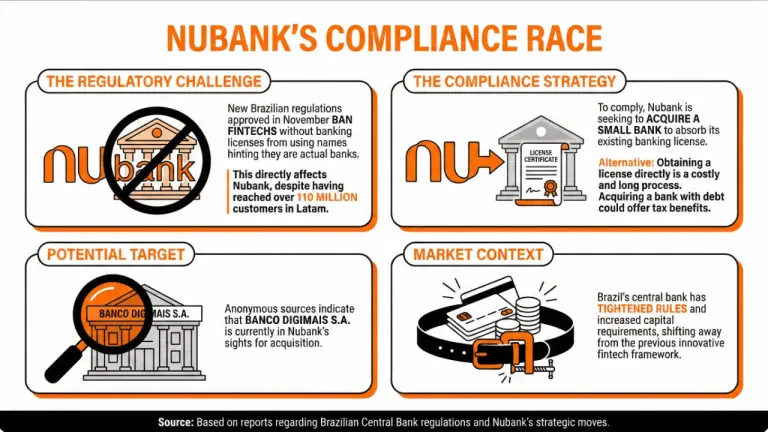
Banco Digimais S.A., a financial institution, would be in the sights of Nubank, according to anonymous sources.
Like similar companies operating in Brazil, Nubank took advantage of Brazil’s innovative fintech regulatory framework, allowing it to issue credit and debit cards. Nonetheless, the central bank has now tightened its rules, increasing capital requirements for similar companies.
Read more: Nubank Announces New Nucoin Loyalty Program
Why It Is Relevant
The measure could affect similar fintechs in Brazil, leaving them with no option but to acquire a banking license or change their public names to comply with regulations.
This could lead to consolidation in the Brazilian fintech ecosystem, given that many of these companies would be unable to comply as they lack the resources that giants such as Nubank have.
Looking Forward
As Brazil moves to close regulatory loopholes and protect its citizens from confusion in the financial services industry, it might also affect its composition, forcing consolidation as only large companies such as Nubank can comply with this requirement.
FAQ
- Why is Nubank looking to purchase a small bank?
Nubank is considering this acquisition to obtain a banking license to comply with new Brazilian regulations restricting fintech company names.
- What do the recent regulations in Brazil entail for fintech companies?
The regulations ban fintechs from using names that suggest they offer traditional banking services, impacting companies like Nubank that lack a banking license.
- What potential benefits does Nubank see in acquiring a bank?
Acquiring a bank may allow Nubank to absorb its banking license and potentially improve its tax standing by including acquired debt.
- How might these regulations affect other fintech companies in Brazil?
Smaller fintechs may face pressure to either acquire banking licenses or change their names, potentially leading to consolidation in the industry as many can’t comply without significant resources.
Disclaimer: The information on this page may come from third parties and does not represent the views or opinions of Gate. The content displayed on this page is for reference only and does not constitute any financial, investment, or legal advice. Gate does not guarantee the accuracy or completeness of the information and shall not be liable for any losses arising from the use of this information. Virtual asset investments carry high risks and are subject to significant price volatility. You may lose all of your invested principal. Please fully understand the relevant risks and make prudent decisions based on your own financial situation and risk tolerance. For details, please refer to
Disclaimer.


