
On the eve of Uganda’s general election, the entire nation was forced offline. The current president has been in office for 40 years, and the local government has been criticized for corruption. Meanwhile, the decentralized communication app BitChat surged to the top of Uganda’s download charts thanks to Bluetooth technology.
Uganda cuts off internet during election week, with the incumbent president in power for 40 years
The Uganda government, recognized as corrupt by Transparency International, suspended internet services this Tuesday in response to the presidential election scheduled for Thursday. Authorities justified the nationwide disconnection as a measure to maintain public safety, prevent misinformation, and curb incitement of violence.
The 81-year-old incumbent President Yoweri Museveni, who has been in power for 40 years, will face a strong challenge from 43-year-old opposition leader and former pop singer Bobi Wine.
In the 2021 election, Uganda experienced large-scale protests that ultimately resulted in dozens of deaths, during which the government also cut off internet access for a week.

Image source: Flickr, photographer Jairus Mmutle. The current 81-year-old President of Uganda, Yoweri Museveni, who has been in power for 40 years.
Disconnection doesn’t scare us! BitChat climbs to the top of app downloads
In the context of official internet shutdowns, Ugandan citizens turned to offline communication solutions, leading to a surge in demand for decentralized messaging apps.
According to Cointelegraph, the decentralized communication app “BitChat,” developed with the involvement of Twitter founder Jack Dorsey, quickly gained popularity and is now the top downloaded app on Uganda’s Apple App Store and Google Play.
BitChat’s core technology uses Bluetooth Low Energy (BLE) to establish a mesh network, operating without relying on Wi-Fi or mobile data, with devices acting as both receivers and relays, passing messages via multi-hop technology to distant users.
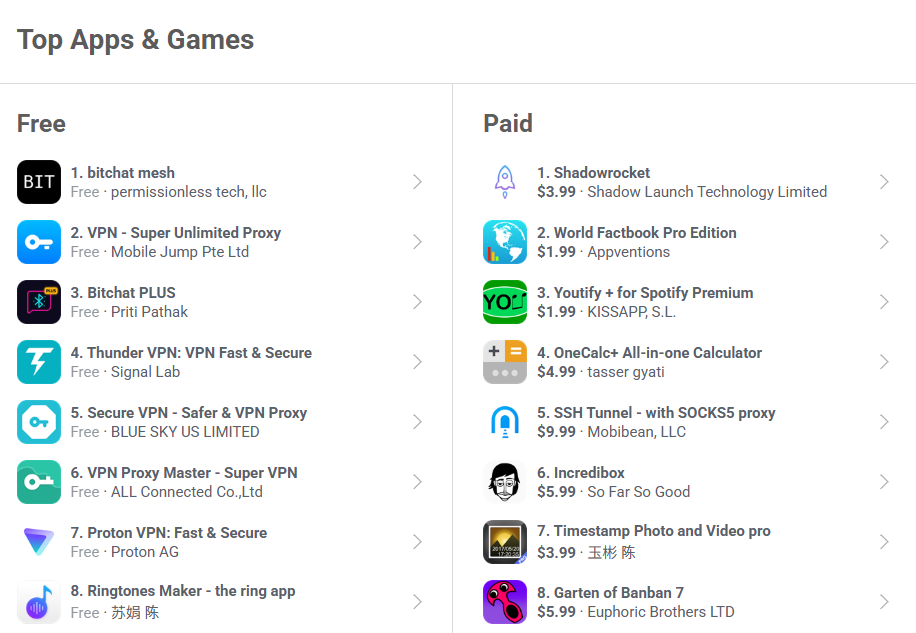
Image source: appfigures. “BitChat” rapidly gained popularity and is now the top app on Uganda’s Apple App Store.
Since BitChat does not require account registration, phone binding, or central servers to store data, all communications are end-to-end encrypted, making it a powerful tool against censorship.
Data shows that on January 5th alone, over 400,000 users in Uganda downloaded the app, and this number is expected to continue rising as the election-related disconnection persists.
From natural disasters to man-made crises, decentralized communication demonstrates resilience
The application of decentralized technologies like BitChat is no longer limited to combating political censorship but also plays a critical role during extreme climate disasters.
In November 2025, Category 5 Hurricane Melissa devastated Jamaica, causing nationwide power and communication outages. In the face of collapsed cell towers and complete network failure, BitChat became the only tool for disaster victims to contact their families, and it rose to become the second most popular app locally.
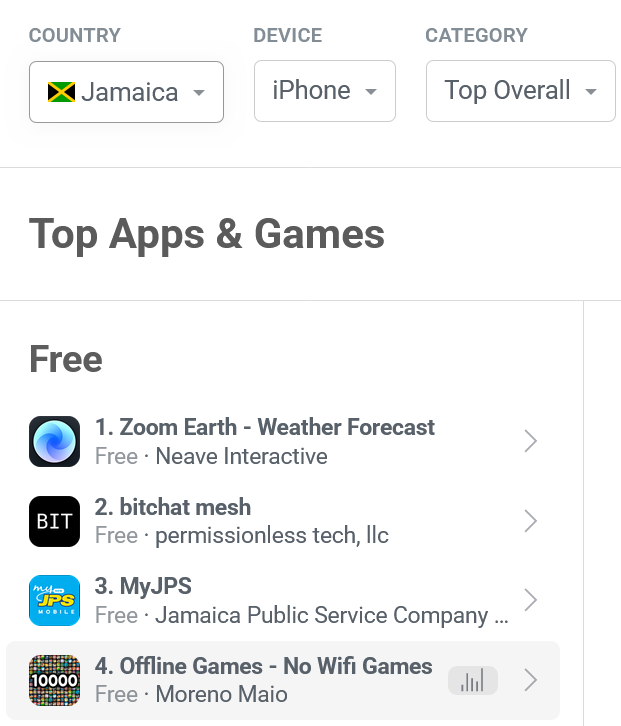
Image source: Cointelegraph. Bitchat surged to become the second most downloaded app on Jamaica’s Apple App Store and Google Play during the crisis.
Whether facing government-imposed internet shutdowns or infrastructure collapse caused by hurricanes, the cases of Jamaica and Uganda highlight that decentralized communication technology possesses resilience against extreme environments.
This may also help investors realize that decentralized technology is not just a symbol of financial speculation but also an essential solution to strengthen public infrastructure and maintain societal functions.
Further reading:
Tether’s password management tool launches! PearPass adopts decentralized design to avoid cloud data leaks
Disclaimer: The information on this page may come from third parties and does not represent the views or opinions of Gate. The content displayed on this page is for reference only and does not constitute any financial, investment, or legal advice. Gate does not guarantee the accuracy or completeness of the information and shall not be liable for any losses arising from the use of this information. Virtual asset investments carry high risks and are subject to significant price volatility. You may lose all of your invested principal. Please fully understand the relevant risks and make prudent decisions based on your own financial situation and risk tolerance. For details, please refer to
Disclaimer.


