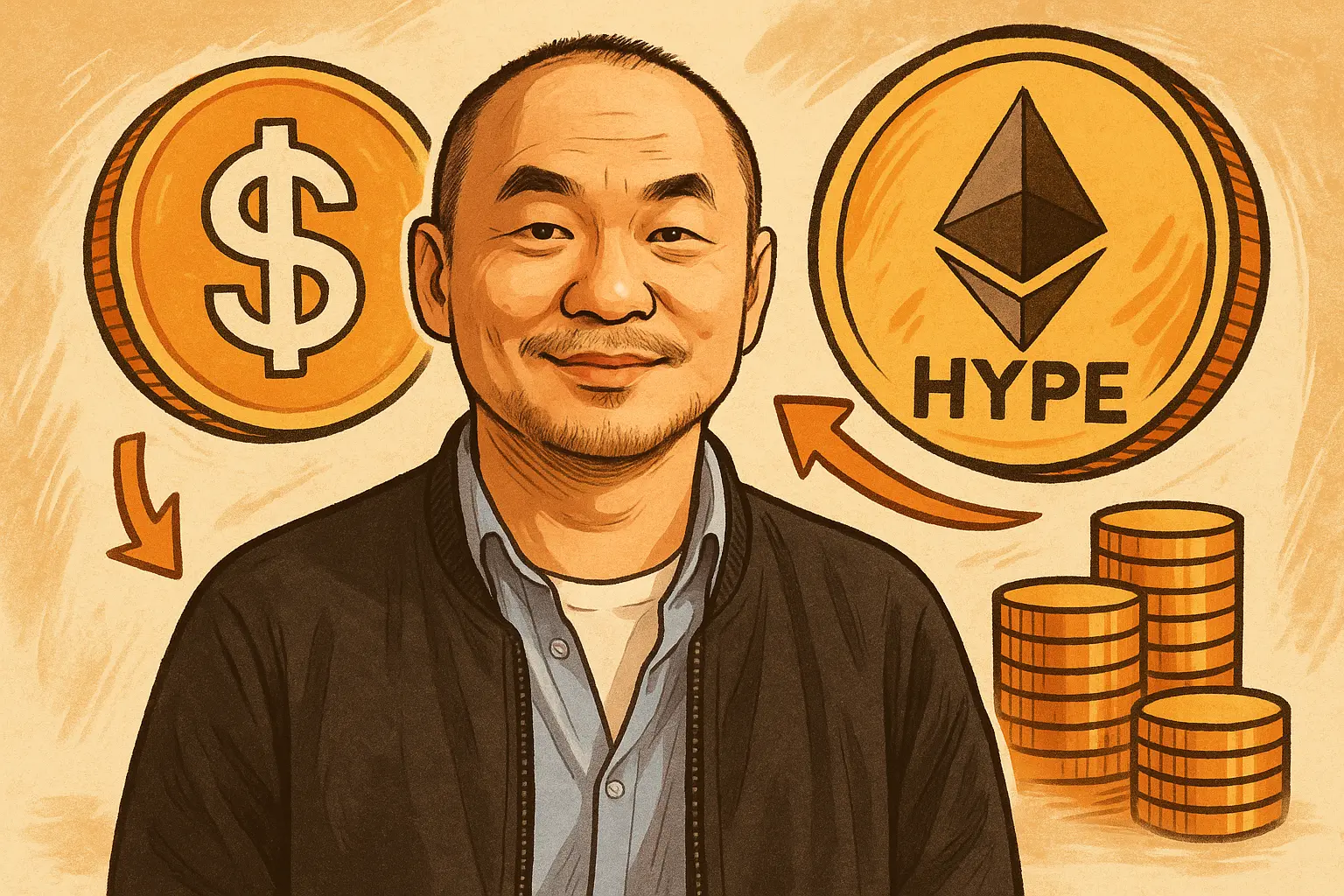
Brother Ma Ji Huang Licheng deposited another 250,000 USDC into Hyperliquid on February 2, opening ETH (25x leverage) and HYPE (10x leverage) long positions. This marks his first large-scale replenishment after being liquidated 241 times at the end of January, with an account balance dropping to just $20,000. His accumulated losses have exceeded $26 million, and his unyielding attitude has sparked polarized discussions within the community.
From 241 Liquidations to Contrarian Reinforcement: The Crazy Trajectory
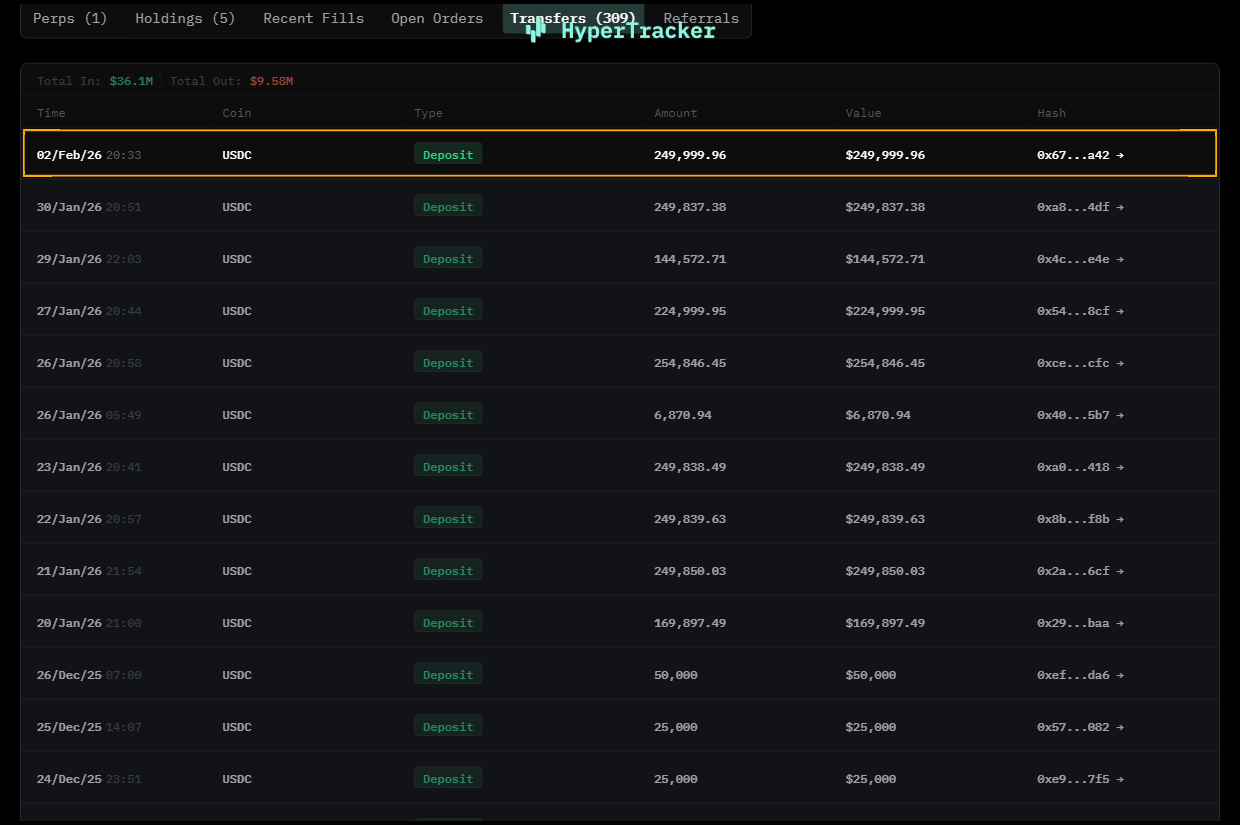
(Source: HyperTracker)
At the end of January, the cryptocurrency market experienced intense volatility. Bitcoin briefly fell below $80,000 between the evening of January 31 and the early morning of February 1, while Ethereum also lost the $2,400 support level, triggering a chain of liquidations across the market. Brother Ma Ji’s Hyperliquid account was hit hardest during this downturn. On-chain analysis team Lookonchain revealed that his account was forcibly liquidated 241 times in a short period, with the balance rapidly shrinking from hundreds of thousands of dollars to just $2,815.
This figure might seem huge to ordinary investors, but for Huang Licheng, whose net worth is in the hundreds of millions of dollars, an account nearly wiped out is nothing short of a crushing failure. However, Brother Ma Ji’s response was not to exit and cut losses, but to inject another 250,000 USDC within 48 hours and open even higher-risk leveraged positions. This operational pattern has market observers exclaiming: “Is this iron will or a gambler’s fallacy?”
Huang Licheng’s Latest Position Configuration
ETH Long (25x leverage): Betting on Ethereum rebound, maximizing capital efficiency but with extremely high liquidation risk
HYPE Long (10x leverage): Hyperliquid’s native token, more volatile but with higher potential returns
This configuration indicates that Huang Licheng is not making random bets but is based on a clear judgment of a short-term market rebound. ETH has repeatedly shown technical support around $2,400, and HYPE, as a new DeFi platform token, often outperforms during market rebounds. But the problem is, 25x leverage means a 4% drop in ETH will liquidate the entire position; 10x leverage on HYPE requires a 10% decline to wipe out. Such extreme risk exposure is taboo for any rational investor.
The High-Leverage Game Behind $26 Million Loss
Brother Ma Ji’s losses in the crypto market did not accumulate overnight. Public data shows that over the past few months, he repeatedly opened high-leverage positions on decentralized derivatives platforms like Hyperliquid and dYdX, mainly focusing on BTC, ETH, and various altcoins long positions. The total loss exceeding $26 million USD is equivalent to about 830 million TWD, enough to buy multiple luxury apartments in Taipei’s prime districts.
Why did Brother Ma Ji suffer such huge losses? The core reason lies in the amplification effect of high leverage. Leverage is a double-edged sword; 10x leverage can magnify a 10% gain into 100% profit, but also turn a 10% decline into total loss of the principal. More dangerously, in the 24/7, highly volatile crypto market, prices often fluctuate over 10% within hours, making highly leveraged positions prone to chain liquidations.
From a technical perspective, Hyperliquid is a fully on-chain perpetual contract exchange, unlike centralized exchanges like Binance or OKX. It requires no KYC and supports higher leverage multiples and more altcoins. This decentralized feature attracts many privacy-conscious and high-risk-reward players but also lacks the risk control mechanisms of traditional exchanges. When market volatility spikes, liquidations happen faster and without room for reversal.
It’s worth noting that the $26 million loss only accounts for realized losses, excluding potential unrealized positions or other accounts. Some community members question whether, given Huang Licheng’s wealth and market experience, he would concentrate all funds in a single traceable account. It’s likely he’s hedging or trading in other accounts, making the true loss difficult for outsiders to assess.
Community Opinions Shift from Sympathy to Skepticism
News of Huang Licheng’s account being liquidated sparked lively discussions on PTT, Twitter, and Telegram groups. But as news of Brother Ma Ji’s multiple replenishments and re-engagements surfaced, public opinion began shifting. PTT’s stock board saw many comments, with polarized views:
“His main job is unaffected,” “Stock board says he’s worth hundreds of billions, so no big deal,” “I wish I could help Ma Ji manage his finances, just take 10%,” “He should buy TSMC stock with his money, just lying around makes money.” Some even questioned: “If he’s been liquidated so many times, I don’t believe he has no other accounts shorting. It’s already unreasonable.”
Such skepticism isn’t unfounded. In crypto markets, some whales deliberately conduct high-risk operations on public accounts to generate buzz, while hedging in anonymous accounts, creating a “left hand loses, right hand profits” scenario. This not only reduces actual risk but also boosts personal influence through community discussion, potentially impacting market sentiment and coin prices.
Another camp interprets it from a “wealth class” perspective: “Rich people are eating noodles, the poor are shouting about burns.” This comment sharply points out that for someone worth hundreds of millions of dollars, a $26 million loss might be just a small part of their total assets, unlikely to affect their lifestyle. But for ordinary investors, even a loss of a million TWD could be their life savings, and their risk tolerance is on a completely different level.
The Risk Tolerance and Market Impact of Wealthy Players
Brother Ma Ji Huang Licheng’s background provides him with the capital to engage in high-risk trading. He is not only a well-known Taiwanese celebrity but also an early participant in NFTs and cryptocurrencies. He founded Machi X Fund, investing in numerous blockchain projects, and holds substantial ETH, Bored Apes, and other blue-chip NFTs. Public data shows that during the crypto bull market peak, his digital assets were valued at over hundreds of millions of dollars. Even after multiple losses, his overall wealth remains far beyond that of ordinary investors.
This financial foundation allows Huang Licheng to withstand consecutive liquidations without exiting the market. For him, crypto trading is more like “high-risk entertainment” or “reputation investment,” rather than a survival necessity. Such mentality is not uncommon among wealthy players. For example, American rapper Drake uses Bitcoin for sports betting, placing bets of tens of thousands of dollars per game; Canadian singer Justin Bieber bought a BAYC NFT for $1.3 million, and even after its value halved, he didn’t panic sell.
However, Brother Ma Ji’s public actions do influence market sentiment. When he makes large purchases, some retail traders follow; when liquidation news surfaces, panic spreads. This “celebrity effect” is especially evident in low-liquidity altcoins and can even be exploited for market manipulation. Therefore, tracking whether Brother Ma Ji’s accounts are active remains a controversial topic within the community.


