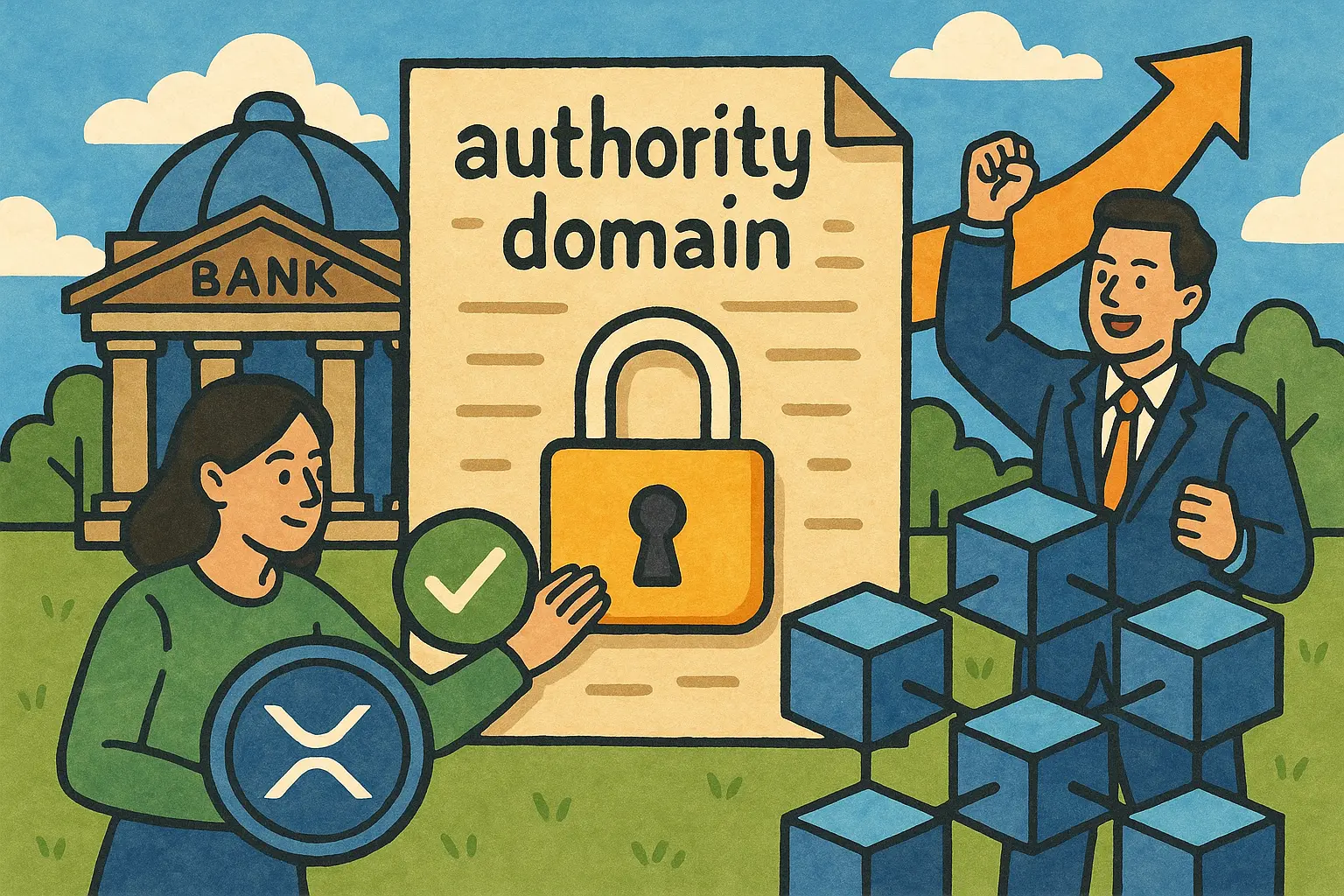
XRPL launches permissioned domains on February 4th, with XLS-80 passing at 91.18%. In a public blockchain environment with certificate control, only KYC/AML verified accounts can participate. It lays the foundation for integrating XLS-70d as a permissioned DEX. Ripple’s 300 partners can securely use the DEX, with on-chain banking transactions limited to participants, offering high speed and low fees without private chains. It provides access control for RWA.
XLS-80 Amendment Establishes Institutional-Grade Compliance Layer
The XRP Ledger activated a new feature called “Permissioned Domains” on February 4th. After over 80% of validators voted in favor, the network approved this change. It went live shortly after UTC 10:00. It introduces a method to establish controlled regions on the public ledger. These regions only allow participation from authenticated accounts. Supporters say this helps banks and large enterprises use the ledger while complying with regulations.
Permissioned domains create special regions on the XRP classification ledger. Within these regions, only approved users can trade or transfer assets. Access rights depend on KYC or AML certificates. A domain owner can set up to 10 approved issuers or trading pairs. This helps restrict which users can send or receive specific tokens. The system is compatible with previous certificate features used to verify and store identity information. Without this, permissioned domains cannot operate properly.
Anyone can create a domain and delete it later. More rule types may be added in the future to match local laws in different regions. In short, the ledger remains public, but certain parts can now follow stricter rules. This allows greater control without migrating to private chains. The design balances decentralization and compliance, enabling XRPL to serve both open users and regulated institutions simultaneously.
This amendment is called XLS-80. Developers added it to the web code earlier this year. To go live, it needs at least 80% validator support for two weeks. Validators reached this threshold in late January. They continued voting in favor until the countdown ended. Ultimately, support exceeded 90%, reaching 91.18%, showing broad consensus across the network. The upgrade builds on the previous certificate upgrade XLS-70d. Together, these two upgrades form the two key components of compliant trading.
Ripple’s 300 Partners’ Compliance Challenges Resolved
Ripple has partnered with over 300 organizations. Many of these partners are concerned about rules and risks. With permissioned domains, they can use the built-in decentralized exchange (DEX) more securely. David Schwartz said this helps lower the entry barrier for large participants. Banks can trade on Ripple’s ledger but restrict who can join their liquidity pools. They don’t need private networks and can still enjoy high-speed transactions and low fees.
These 300 partners include major global banks, payment providers, and financial institutions. Previously, they had two main concerns about using the public XRPL. First, compliance risk—if counterparties aren’t KYC-verified, it could violate anti-money laundering laws. Second, competitive risk—on a fully open public chain, business secrets and trading strategies might be observed by competitors. Permissioned domains address both issues by allowing institutions to create “whitelisted trading circles,” trading only with verified counterparties, while transactions still occur on the public chain, maintaining decentralization, security, and efficiency.
It also aids in managing real-world assets (RWA). Tokenized bonds or funds require strict access controls. Permissioned domains enable this while keeping the public chain operational. For example, a bank could issue tokenized bonds on XRPL, setting only qualified investors (verified via KYC and meeting wealth thresholds) to buy and trade. This precise access control is difficult to achieve on traditional public chains without deploying private or permissioned chains, which are costly and complex.
Schwartz’s comments reveal a deeper strategic significance. XRPL isn’t just competing technically with Ethereum or Solana; it’s pioneering a new business model. It aims to be the first public blockchain to truly achieve “institutional-grade compliance.” This positioning could attract large financial institutions that are currently unable to use traditional public chains due to compliance concerns. If successful, XRPL could capture significant market share in enterprise blockchain and RWA tokenization.
Permissioned DEX Nears Completion
Another change called “Permissioned Decentralized Exchange (Permissioned DEX)” is also close to approval, with validator support just below the 80% threshold. Once approved, the three components (XLS-70d certificates, XLS-80 permissioned domains, and permissioned DEX) will all activate, forming a complete institutional-grade compliant trading infrastructure.
Permissioned DEX will allow domain owners to create decentralized exchanges within their permissioned domains, where only approved accounts can trade. This design is innovative, combining the transparency and efficiency of DEXs with the compliance and control of permission systems. For regulated financial institutions, this is an ideal solution.
What’s next? Over time, more companies may test the system. XRPL is adding rule-based tools aimed at serving both open users and regulated financial sectors. This update is a step in that direction. The permissioned DEX upgrade could be enabled soon, making regulated trading more convenient. Institutions can perform on-chain asset exchanges while complying with local laws.
This doesn’t mean prices will immediately surge; it’s more about laying the groundwork. The value of infrastructure upgrades takes time to materialize. When real-world applications emerge—banks issuing tokenized securities, trading volume and activity increase—the value of XRP will reflect that. For long-term investors, permissioned domains are a strategic milestone, demonstrating XRPL’s systematic approach to overcoming institutional adoption barriers.
Disclaimer: The information on this page may come from third parties and does not represent the views or opinions of Gate. The content displayed on this page is for reference only and does not constitute any financial, investment, or legal advice. Gate does not guarantee the accuracy or completeness of the information and shall not be liable for any losses arising from the use of this information. Virtual asset investments carry high risks and are subject to significant price volatility. You may lose all of your invested principal. Please fully understand the relevant risks and make prudent decisions based on your own financial situation and risk tolerance. For details, please refer to
Disclaimer.


