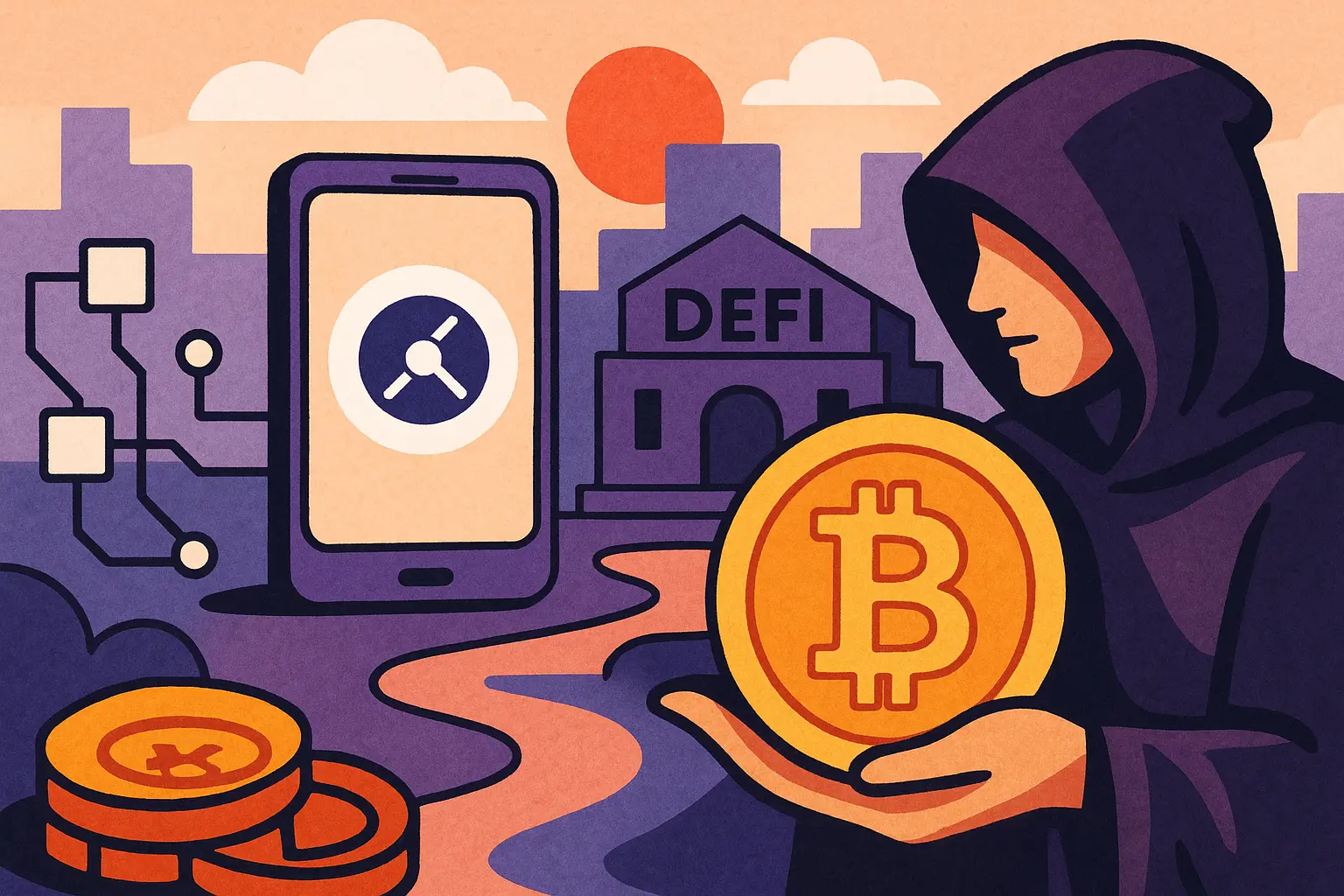
Ethereum Layer 2 network Starknet developed by StarkWare announced the launch of strkBTC on Thursday. This is the first wrapped asset on Starknet that can be exchanged for native Bitcoin, and it introduces an optional privacy feature that allows users to selectively hide transaction amounts, balances, and counterparty information. strkBTC is issued through a verifiable on-chain process, eliminating subjective judgment by custodians.
Core Mechanisms and Technical Design of strkBTC
The technical architecture of strkBTC revolves around two core features: a trust-minimized on-chain issuance mechanism and an optional privacy layer supported by zero-knowledge (ZK) technology.
Trust-Minimized Issuance: After users deposit BTC, they receive an equivalent amount of strkBTC through a deterministic on-chain process. The entire process is transparent and verifiable, not relying on any subjective decisions by custodians. When users choose to redeem, they can exchange back for native BTC through the same on-chain mechanism.
Optional Privacy Features: Starknet’s privacy protection is implemented at the protocol level using zero-knowledge technology, including the following features:
- Transaction amount concealment: Users can choose to hide the specific amount of a single transaction.
- Balance privacy: Account holdings can be optionally hidden from the on-chain ledger.
- Counterparty anonymity: The identities of both parties in a transaction can be selectively concealed to protect trading strategies and business secrets.
- Compliance disclosure mechanism: When using the privacy features, users must generate a “viewing key,” which is encrypted and registered with a third-party auditing agency, balancing privacy with regulatory compliance.
Practical Applications and Industry Significance of Privacy Protection
Starknet states that the goal of strkBTC’s design is “to be used, not just held,” aiming to enable Bitcoin to truly serve as a settlement asset in DeFi. The official description highlights three core application scenarios:
- Institutional collateral management: Institutions can deploy Bitcoin as collateral in DeFi protocols without publicly revealing their balance sheets, avoiding exposure of sensitive holdings. Strategy execution: traders can perform complex DeFi strategies without broadcasting intentions in advance, reducing front-running risks. Settlement and payments: corporate settlement processes can operate without leaving permanent public activity records, protecting business secrets and payment patterns.
One of the main limitations of public blockchains is that transparent ledgers expose holdings, trading strategies, and sensitive competitive information. strkBTC’s privacy features address this issue at the protocol level using ZK technology, allowing DeFi to incorporate institutional-grade privacy infrastructure without isolating funds or compromising overall auditability.
strkBTC is scheduled for a phased rollout soon, with privacy-related features gradually being introduced and expanded.
Frequently Asked Questions
How does strkBTC differ from other wrapped Bitcoin assets like wBTC?
wBTC (Wrapped Bitcoin) uses a centralized custody model, with entities like BitGo holding the underlying BTC, which involves counterparty risk. strkBTC employs a trust-minimized on-chain issuance mechanism, eliminating subjective decisions by custodians through verifiable smart contract processes. Additionally, strkBTC’s unique optional privacy feature is a rare privacy layer among mainstream wrapped Bitcoin assets.
How does Starknet’s zero-knowledge technology achieve privacy without isolating funds?
Traditional privacy coins (like Monero) achieve privacy by fully hiding transaction details but lose public verifiability. Starknet’s ZK technology allows users to encrypt transaction amounts and counterparty info in a “choose to privacy” mode, while the validity of the transaction can still be publicly verified via zero-knowledge proofs. This design preserves the auditability required by DeFi protocols while giving users control over information disclosure.
How does the “viewing key” compliance mechanism for strkBTC work?
When users enable privacy features with strkBTC, the system generates a viewing key for them. This key allows authorized third parties (such as compliance auditors or regulators) to view transaction details of the address with permission. This mechanism aims to balance user privacy with anti-money laundering (AML) and counter-terrorism financing (CTF) regulations, preventing privacy features from becoming a haven for illicit activities.
Disclaimer: The information on this page may come from third parties and does not represent the views or opinions of Gate. The content displayed on this page is for reference only and does not constitute any financial, investment, or legal advice. Gate does not guarantee the accuracy or completeness of the information and shall not be liable for any losses arising from the use of this information. Virtual asset investments carry high risks and are subject to significant price volatility. You may lose all of your invested principal. Please fully understand the relevant risks and make prudent decisions based on your own financial situation and risk tolerance. For details, please refer to
Disclaimer.
Related Articles
XRP Ledger Validators Weigh Two Amendments as Votes Lag
The XRP Ledger is reviewing two proposed amendments that could expand lending functions and strengthen vault infrastructure. Validators have begun voting, yet early participation remains limited. Current results suggest the proposals still face significant hurdles before reaching activation
CryptoBreaking2h ago
Aster API V3 正式上线,V1 延迟将于 3 月 18 日增至 200 毫秒
Gate News 消息,3 月 14 日,Aster 发布公告称,Aster API V3 已正式上线。自 3 月 16 日起,V1 版本的延迟将逐步增加,预计到 3 月 18 日将达到约 200 毫秒。Aster 建议用户立即迁移至 V3 版本。
GateNews4h ago
以太坊基金会发布"EF Mandate"文件,明确生态角色与核心使命
以太坊基金会发布了"EF Mandate"文件,明确其在生态系统中的角色与职责,强调CROPS原则,致力于用户主权、安全与优化体验。该文件为内部行动纲领及社区参考提供指导。
GateNews5h ago
Pump.fun Launches Automated Buybacks for Tokenized AI Agents
Pump.fun enhances the AI-driven crypto economy by automating buybacks for agent tokens, linking success with community holders. Revenue in $SOL or $USDC buys and burns tokens, addressing value accrual issues and encouraging engagement. Developers can adjust buyback rates, ensuring a streamlined process for launching tokenized agents.
CryptoFrontNews5h ago
Vitalik Buterin Calls Ethereum a “Sanctuary Technology”
The Ethereum Foundation's new EF Mandate clarifies its supportive role in the decentralized Ethereum ecosystem, emphasizing principles like censorship resistance and infrastructure support while avoiding direct governance control. Vitalik Buterin highlights Ethereum as a “sanctuary technology” that promotes digital freedom, contributing to positive market responses.
Coinfomania6h ago
Solana Approves SIMD-0266 Upgrade for Faster Transactions
Solana has approved a major network upgrade that could make transactions much faster and cheaper. The upgrade, called SIMD-0266, introduces a new token model known as p-tokens. Developers say this change could make some transactions up to 19 times more efficient.
The proposal was first introduced
Coinfomania7h ago


