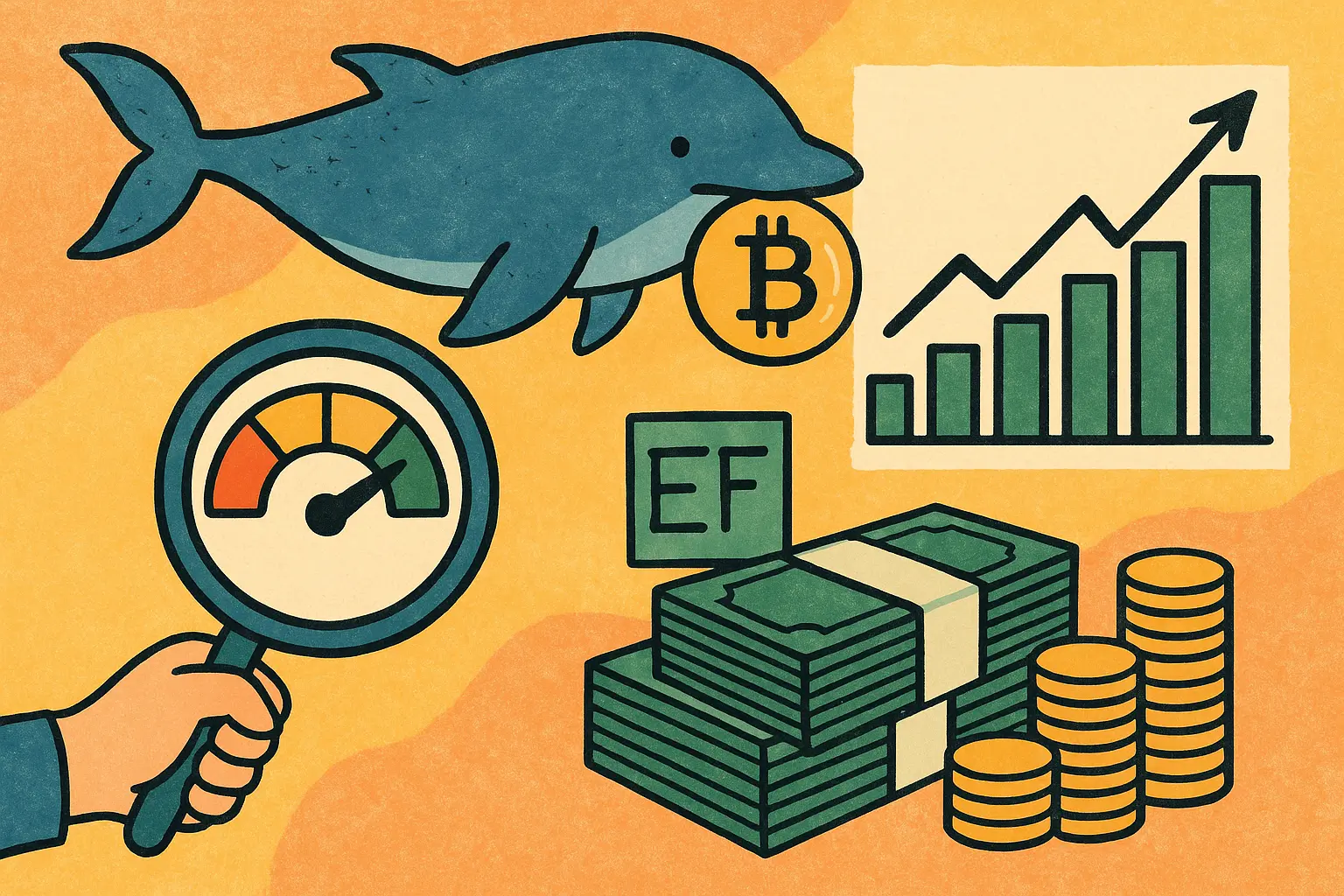
Data from on-chain analytics firm Santiment shows that, as Bitcoin’s price stabilizes around $71,000, these large holding addresses currently control approximately 68.17% of the circulating supply of Bitcoin. Santiment describes this as a “positive reversal” signal, implying that major holders may be preparing for a potential rebound.
Large Wallets Increasing Holdings and Exchange Supply at Historic Lows
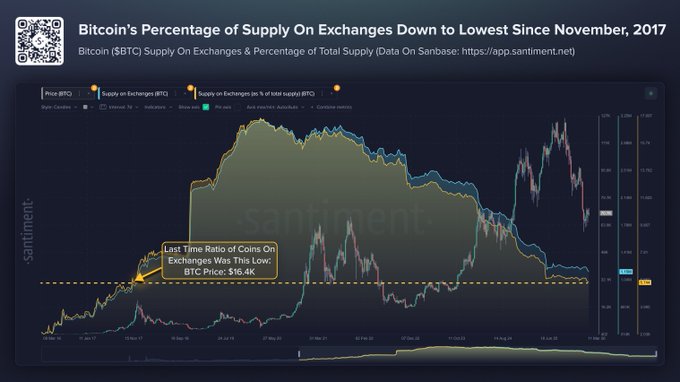 (Source: Santiment)
Santiment’s data records two corroborating on-chain changes. First is the rise in the proportion of large holdings—over the past week, wallets holding between 10 and 10,000 BTC increased their share from 68.07% to 68.17%. Although the numerical change appears minor, it indicates a systemic shift in capital flow: long-term large holders are re-accumulating rather than continuing to distribute.
Second is the historic low in exchange-held Bitcoin—Santiment reports that Bitcoin’s exchange supply ratio has fallen to its lowest level since November 2017, a level not seen in over eight years. The continued decline in exchange reserves typically suggests that holders are transferring Bitcoin to cold wallets for long-term storage rather than selling, providing structural support on the supply side.
Santiment notes in its analysis: “Ideally, we want to see the number of small wallets decrease while large wallets increase.” This indicates a shift of tokens from short-term traders to larger, more patient long-term holders, a typical structural feature of Bitcoin’s bottom formation.
Complete Market Outlook for Bottom Signals
Currently, multiple indicators are signaling a complex, mixed picture, with the overall trend leaning cautiously optimistic:
- Bitcoin Price: approximately $71,350, up about 6% over the past week, with a 7% increase over the past 30 days.
- Fear and Greed Index: 16 (“Extreme Fear”), indicating that despite recent price rebounds, market sentiment remains very cautious.
- US Spot Bitcoin ETF: recorded five consecutive days of net inflows this week—the first such streak since 2026—attracting approximately $767 million in new capital.
- VIX (Volatility Index): suggests the market may shift toward a “risk-on” strategy in the coming weeks.
However, Santiment also highlights a historical condition for confirming bottoms: Bitcoin often bottoms when retail investors shift from optimism to pessimism and start actively selling, rather than when retail enthusiasm remains high. While current fear levels are elevated, they have not yet reached the “retail capitulation” characteristic of past bottoms.
Notably, data from March 6 shows that large Bitcoin holders sold about 66% of their accumulated Bitcoin between February 23 and March 3, during which Bitcoin briefly surged to $74,000. The current re-accumulation occurs after that high-level distribution phase, during a correction and consolidation stage.
On-chain analyst Willy Woo offers a more cautious perspective, viewing Bitcoin’s current position from a long-term liquidity cycle standpoint. He suggests that Bitcoin may still be in a prolonged bear market phase, and that short-term rebound signals are insufficient to confirm a major cycle bottom.
Frequently Asked Questions
Q: What exactly does Santiment mean by “positive reversal”?
A: Santiment describes the “positive reversal” as the increase in the proportion of large Bitcoin holdings in the circulating supply, indicating a shift in capital flow from distribution back toward accumulation. Historically, such re-concentration among large holders often coincides with the formation of Bitcoin’s medium- or long-term bottom, serving as a potential on-chain leading indicator.
Q: What is the significance of Bitcoin exchange reserves dropping to an 8-year low?
A: The decline in exchange reserves means less Bitcoin is available for immediate sale, reducing potential selling pressure. Since November 2017, the crypto market and Bitcoin ecosystem have experienced multiple bull and bear cycles. This historic low suggests that the supply available on exchanges is at its lowest in recent history, creating a supply-side structural support that could be favorable for price stability or recovery.
Q: Why is the Fear and Greed Index still at 16 (Extreme Fear) while ETF capital inflows and whale accumulation are happening?
A: This apparent contradiction is a common structural feature during market bottoms: retail sentiment (reflected in the Fear and Greed Index) remains fearful, while institutional investors and large holders (reflected in ETF inflows and on-chain holdings) are quietly building positions. Santiment’s historical analysis indicates that when retail investors are fearful and large holders are accumulating, it often signals that the bottom is near.
Disclaimer: The information on this page may come from third parties and does not represent the views or opinions of Gate. The content displayed on this page is for reference only and does not constitute any financial, investment, or legal advice. Gate does not guarantee the accuracy or completeness of the information and shall not be liable for any losses arising from the use of this information. Virtual asset investments carry high risks and are subject to significant price volatility. You may lose all of your invested principal. Please fully understand the relevant risks and make prudent decisions based on your own financial situation and risk tolerance. For details, please refer to
Disclaimer.


