Author: Nancy, PANews
The on-chain finance narrative is rapidly heading toward the global market.
In less than a week, multiple mainstream media outlets have turned their attention to Hyperliquid. This Perp DEX, which previously focused on crypto derivatives, is entering its “breakout moment,” with decentralized pricing becoming a hot topic on Wall Street. However, as on-chain trading volume continues to grow, balancing decentralized innovation with regulatory compliance is becoming an unavoidable challenge.
HIP-3 Penetrates Mainstream Finance, Hyperliquid Is a Whale Paradise
As a leading Perp DEX, Hyperliquid is steadily widening its gap from competitors and gradually becoming an emerging infrastructure force in mainstream financial markets.
According to DeFiLlama data, as of March 16, Hyperliquid’s monthly trading volume reached $173.42 billion, far surpassing similar platforms.
Recent growth in Hyperliquid has been driven significantly by RWA (Real-World Asset) trading. Platform data shows that in the past 24 hours alone, perpetual contract trading volume hit $5.4 billion, with HIP-3 segment contributing about 21.3% (around $1.15 billion).
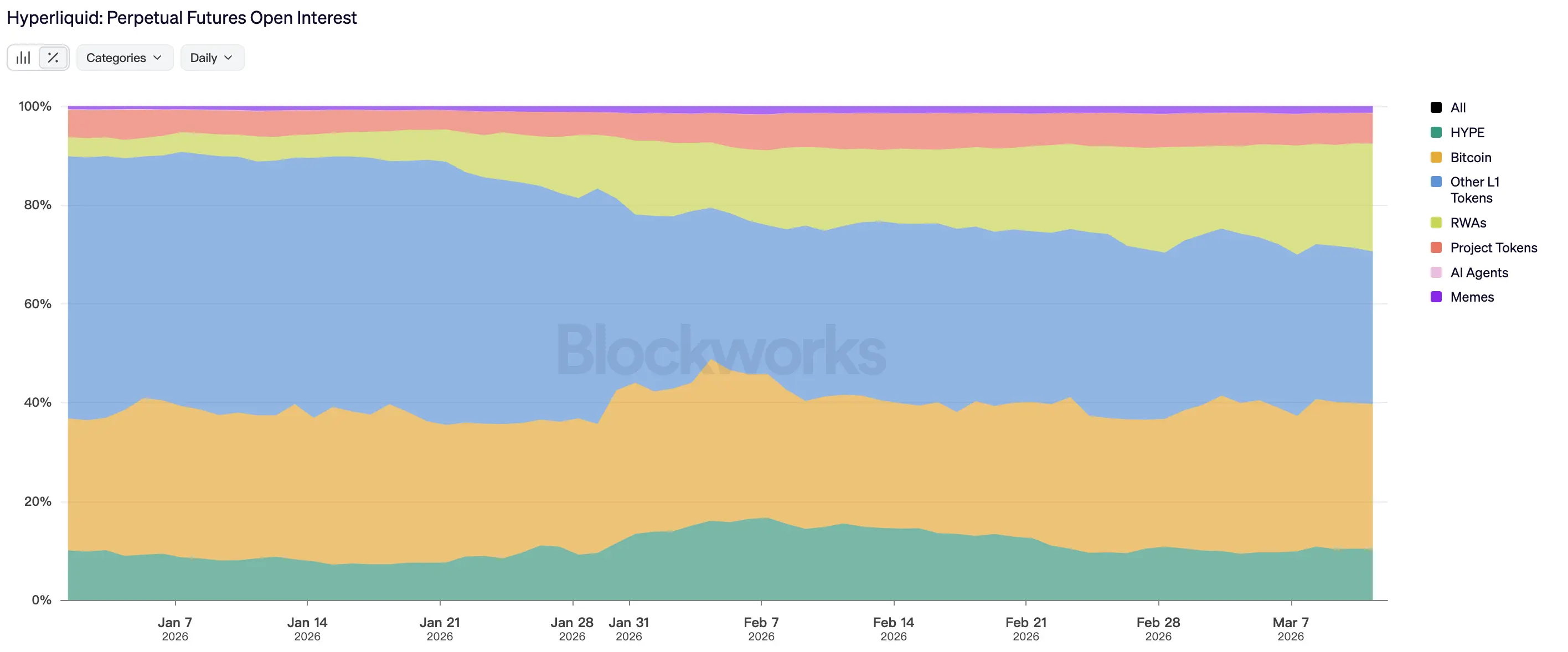
HIP-3 enables perpetual markets for commodities, stock indices, and other asset classes. Among these traditional assets on HIP-3, WTI crude oil, silver, Brent crude, and XYZ100 are the most in demand and active, with WTI crude oil’s daily trading volume accounting for over 35% of the total.
Behind the rapid expansion of trading volume are large whales flooding into Hyperliquid, whose global user count has exceeded 1.729 million. According to further analysis by Hyperliquid Hub, a data service for Hyperliquid’s ecosystem, the total trading volume has reached an astonishing $4.11 trillion, with the top 100 addresses contributing over $3.34 trillion—81.3% of total volume. The top 200 addresses account for nearly 98.81%, leaving only about 1.19% for the remaining addresses.
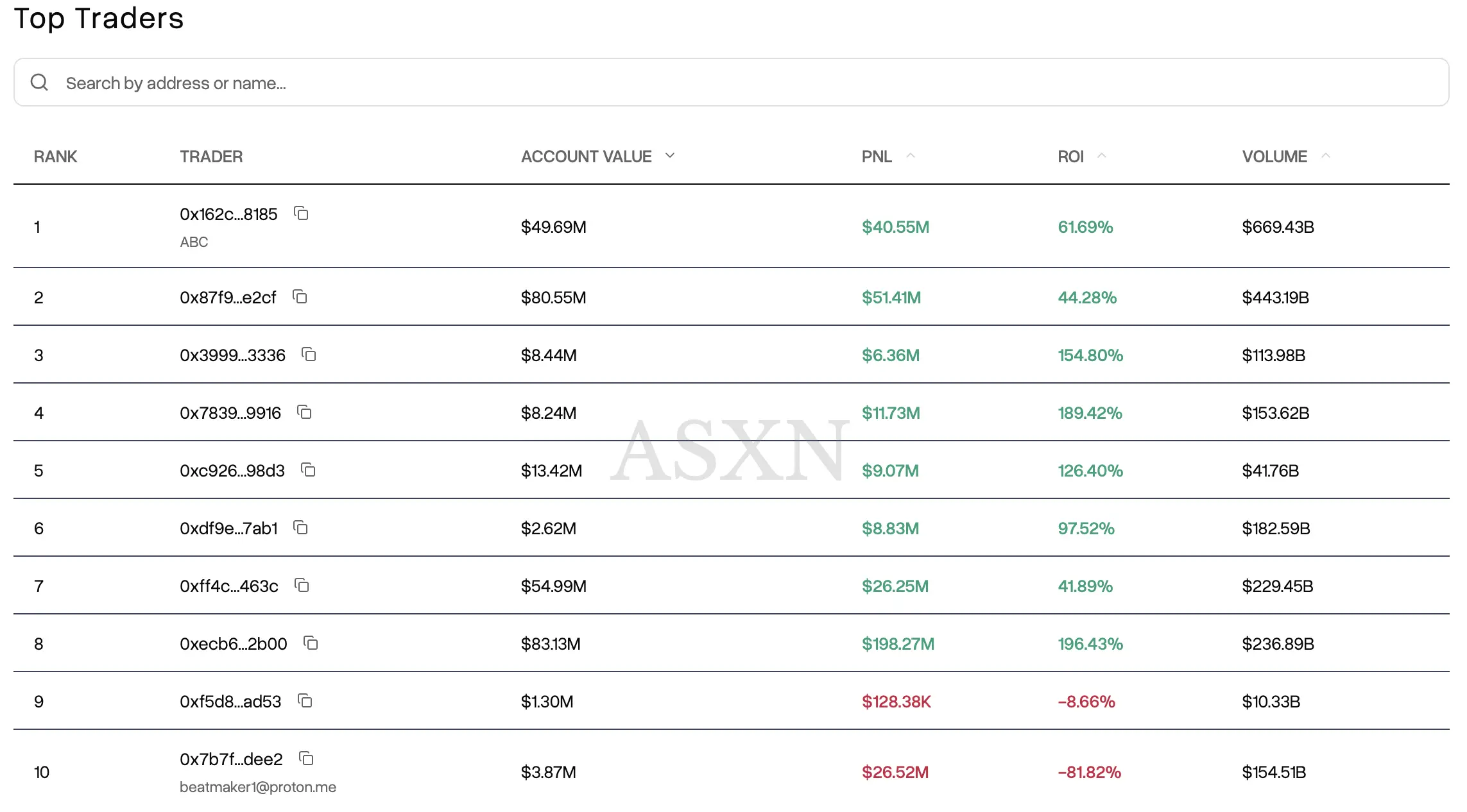
It’s clear that Hyperliquid is not a playground for retail traders but is dominated by a small number of well-funded, highly active traders, including institutions, whales, high-frequency traders, and professional market makers.
Furthermore, the number of independent traders on HIP-3 has exceeded 1.85 million (note: the same wallet connected on different dates is counted separately). In the past month alone, over 810,000 new traders have entered, further confirming the demand for tokenized assets trading.
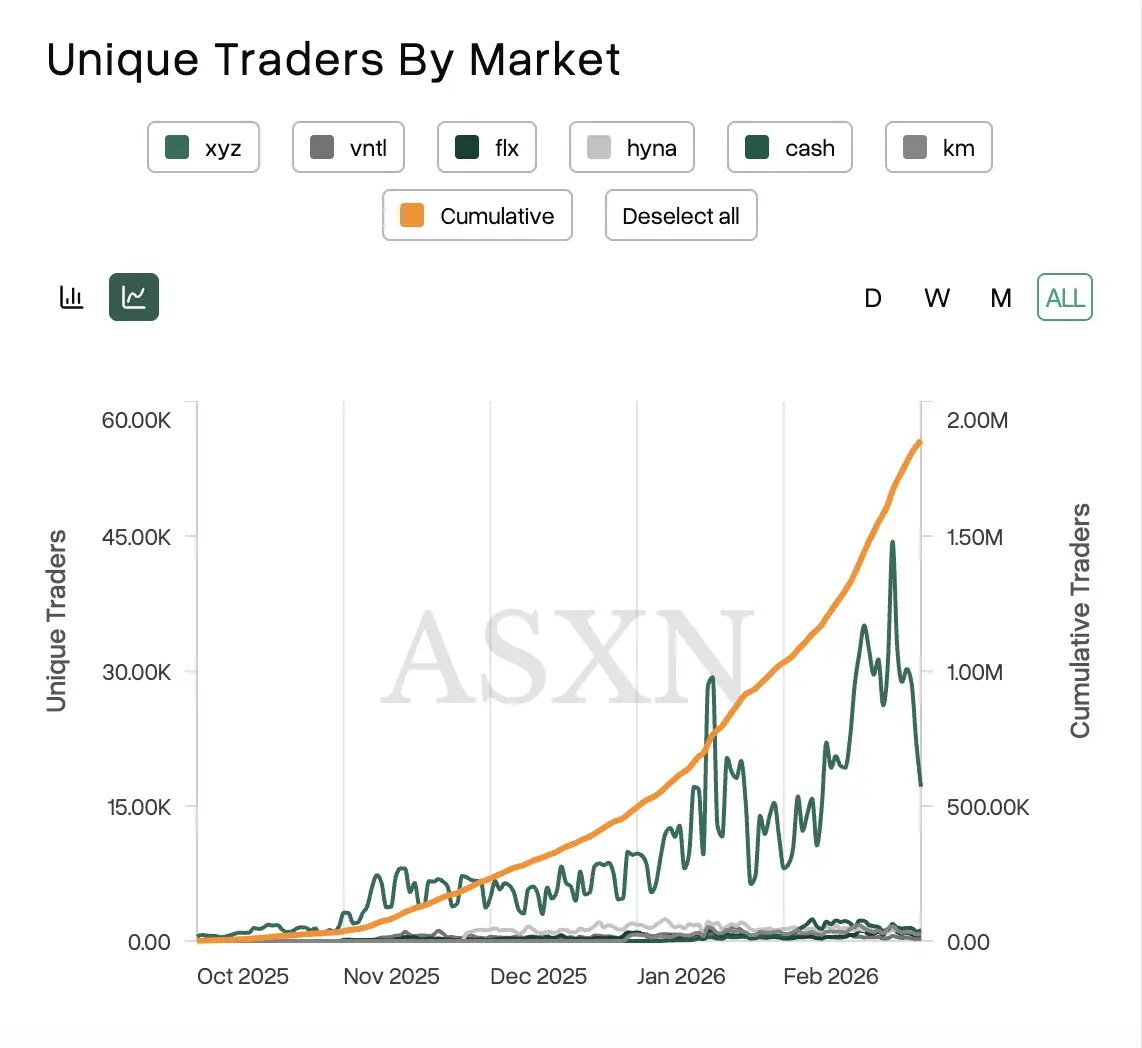
The recent surge in HIP-3 activity is directly linked to the US-Iran conflict, making Hyperliquid a new hub for macro trading globally. Mainstream media outlets like Bloomberg, Wallstreetcn, and Fortune have recently reported on Hyperliquid’s crude oil contracts as a reference for related prices, noting that before CME (Chicago Mercantile Exchange) opened on Monday, Hyperliquid had already completed price discovery over the weekend, becoming a real-time window for global macro assets.
By seizing pricing power over TradFi, filling liquidity gaps, and addressing macro hedging needs, Hyperliquid is truly beginning to “invade” mainstream financial markets.
Bitwise Chief Investment Officer Matt Hougan also stated that the US-Iran incident has made the 24/7 crypto markets a focus of attention. Previously, if a major geopolitical shock occurred on Sunday morning, investors would wait until the US futures market opened at 6 p.m. on Sunday (Eastern Time) to gauge its impact. Now, they can directly turn to around-the-clock on-chain trading platforms to execute trades in real time. The shift of finance onto the blockchain is an irreversible trend—like a ball rolling downhill, unstoppable and faster than expected. However, participating in on-chain markets still involves barriers, including familiarity with wallets, stablecoins, and platforms like Hyperliquid and Uniswap. (Related reading: Beyond Wall Street Time, traditional asset pricing power is shifting onto the chain)
Faced with this rapid growth in on-chain finance, traditional players like Nasdaq and CME are also beginning to deploy tokenized trading businesses to secure future market opportunities.
Crypto Perpetual Futures May Launch in the US Next Month, Hyperliquid Faces Regulatory Challenges
Since last year, the Perp DEX market has experienced a significant liquidity explosion.
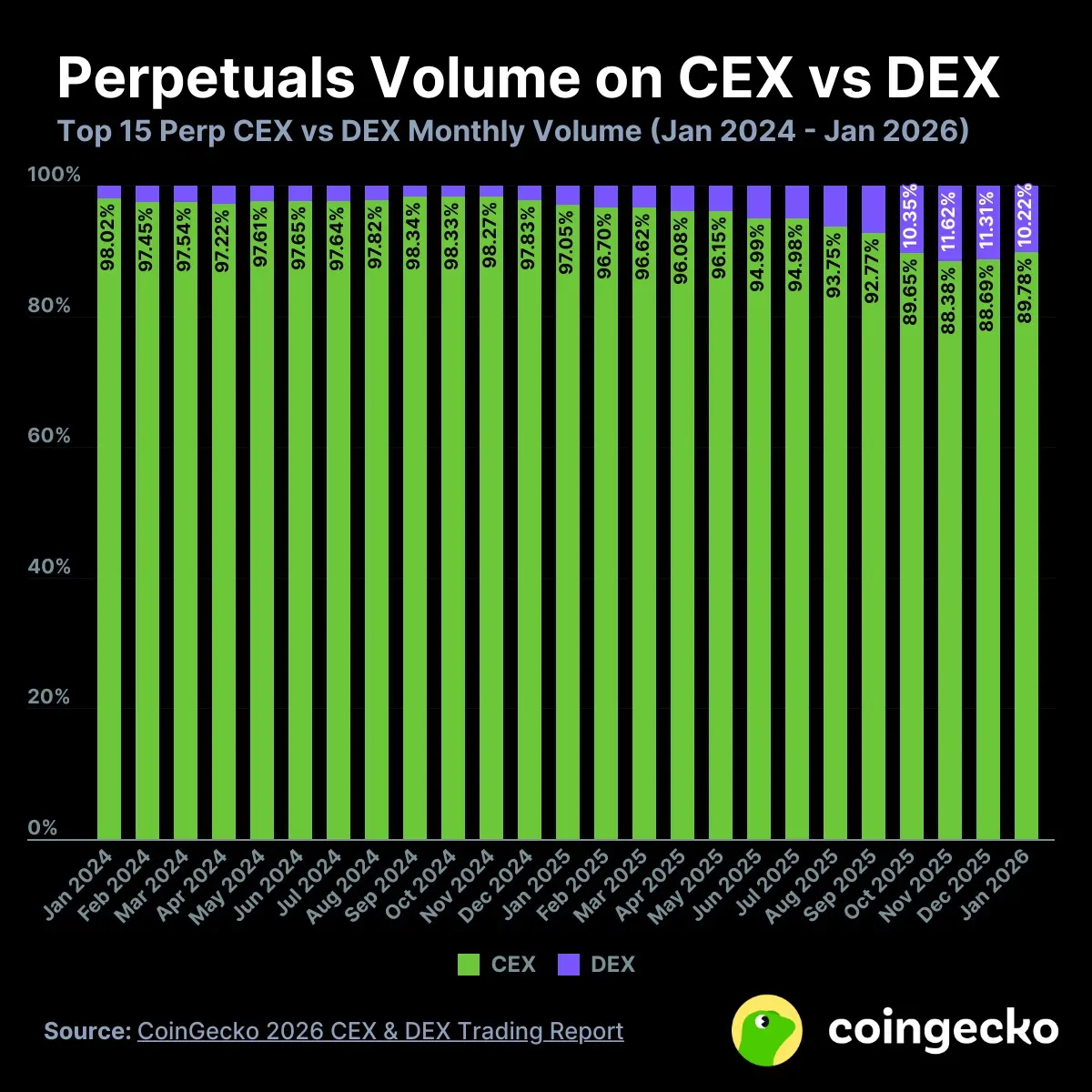
CoinGecko’s recent report indicates that by 2025, DEX perpetual contracts will surge to $6.7 trillion, a 346% increase from the previous year, while CEX holdings have decreased by 20.8%. This trend is driven by the rise of perpetual DEXs like Hyperliquid and Lighter, reflecting a large-scale capital shift from centralized exchanges to decentralized ones.
The gradually clearer regulatory environment is further expanding the development space for perpetual contracts, encouraging more mainstream capital to enter this field. Recently, CFTC Chairman Mike Selig publicly discussed the regulatory progress of crypto perpetual futures and prediction markets. He stated that the CFTC is working to introduce real perpetual futures in the US and expects to announce relevant policies within about a month to attract liquidity back to the US and provide better protections for investors. Selig also pointed out that past regulatory uncertainties caused much liquidity to flow overseas, and the CFTC is collaborating with SEC Chairman Paul Atkins on Project Crypto to coordinate digital asset regulation reforms.
However, clearer regulation could also lead to another outcome. If compliance requirements break the permissionless, intermediary-free nature of on-chain trading, the core appeal of Perp DEXs may be significantly diminished, facing competition from compliant crypto platforms and traditional financial institutions.
In fact, for many users, besides incentives, self-custody, capital efficiency, and hedging needs, the absence of KYC remains a key reason for capital inflow into on-chain trading.
For example, on-chain analyst Eye previously noted that some institutional traders active on Hyperliquid showed obvious discomfort after their wallets were identified, even actively pressuring analysts to stop disclosing information, likely due to concerns over potential losses being exposed.
If Hyperliquid aims to be recognized as a legitimate participant in the new financial system, it may have to accept and comply with relevant regulations. Especially given past controversies involving token manipulation and insider trading, regulatory pressure is likely to increase further.
To address these challenges, Hyperliquid officially established the Hyperliquid Policy Center in Washington, D.C., in February, with veteran crypto lawyer Jake Chervinsky serving as its first CEO. The center aims to create legal pathways for DeFi’s broad adoption in the US, helping Congress and federal agencies understand DeFi’s underlying technology and providing expert support for regulatory rulemaking.
Chervinsky stated that the current regulatory framework was built in a “simulation era,” making it difficult to cover new trading forms like decentralized protocols. One of the center’s primary tasks is to develop a legal framework for perpetual contracts. To support its operations, Hyperliquid’s associated foundation has donated 1 million platform native tokens HYPE (currently worth about $28 million) to fund the center.
Hyperliquid co-founder Jeff Yan emphasized in a recent interview that he hopes the platform “will always be used,” rather than fading away with market hype. He also distinguished Hyperliquid Labs from the Hyperliquid platform and ecosystem, aiming to build Hyperliquid into a neutral financial platform that provides sustainable infrastructure for on-chain perpetuals and decentralized finance.
As DeFi seeks to challenge traditional finance, compliance has become a prerequisite for unlocking larger markets. This is not only a test for Hyperliquid but also a reality that other DEXs and the entire DeFi sector must face.


