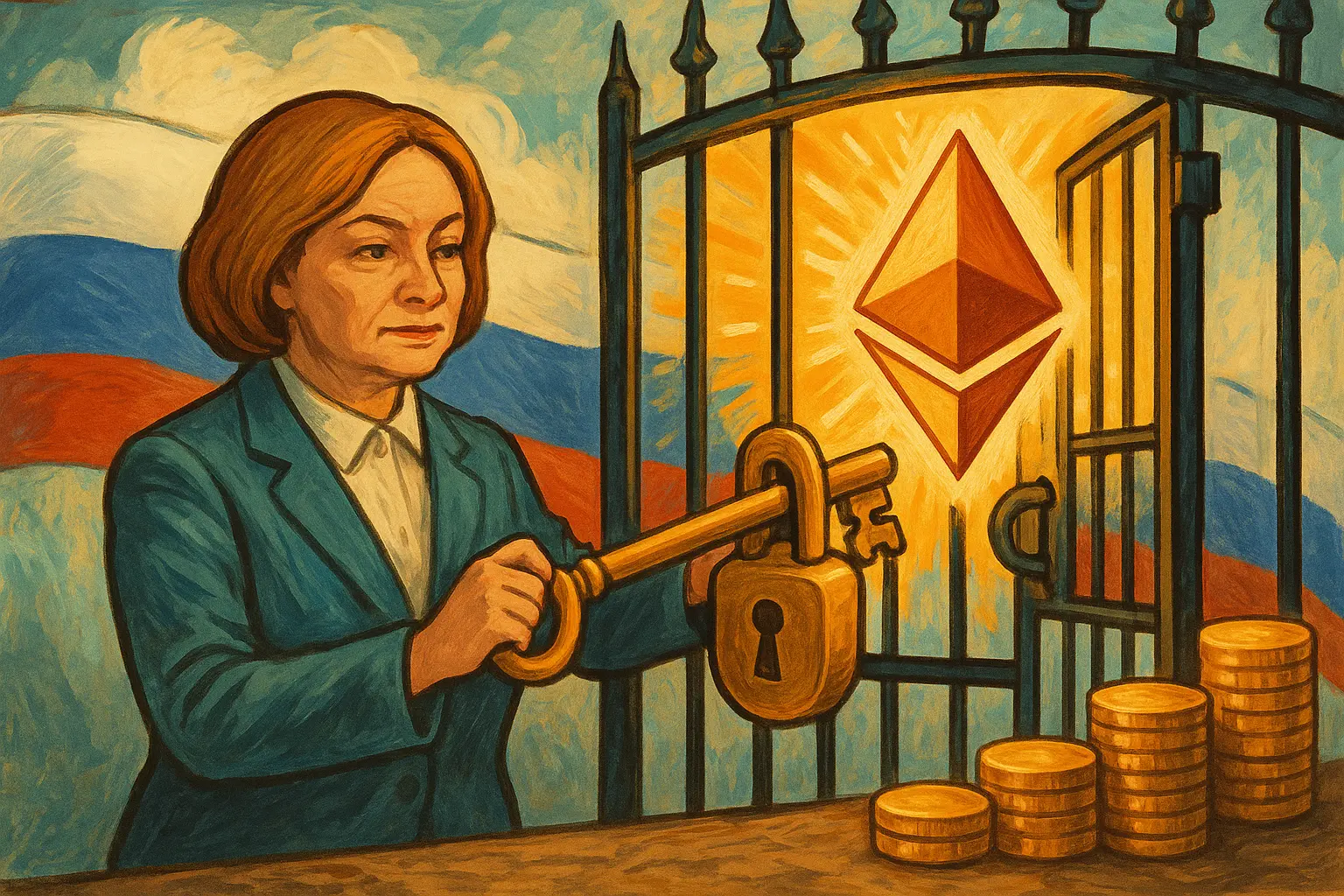
The Russian Central Bank has submitted a proposal to the government to allow digital financial assets (DFA) to circulate on open public blockchains such as Ethereum, aiming to rebuild technical channels connecting to international capital markets amid ongoing Western sanctions. Central Bank Governor Elvira Nabiullina stated that this move is “crucial” for attracting foreign investment and advancing cross-border settlements. According to the plan, the Central Bank intends to submit the relevant draft amendments by summer 2026.
Core of the Proposal: Mechanism Design and Legislative Path for Linking DFA on Ethereum
According to the Central Bank of Russia’s proposal, if the amendments are approved, Russian companies will be able to issue DFA on open public blockchains like Ethereum, rather than being limited to currently closed platforms primarily serving domestic users. These tokenized assets could potentially be traded on mainstream cryptocurrency exchanges and decentralized finance (DeFi) protocols in the future, allowing global crypto market participants to access Russian corporate digital debt instruments through regular channels. Smart contracts will automatically execute payment processes, eliminating intermediaries and reducing transaction costs.
The Gaidar Economic Policy Research Institute noted in its report that this mechanism is similar to the models currently used by financial centers in Hong Kong and the United Arab Emirates, which have successfully attracted Asian and Middle Eastern capital through similar frameworks. If the bill passes in summer 2026, it is expected to accelerate overall market development and create more opportunities for cross-border settlements.
Current Status of the Russian DFA Market: Rapid Growth but Almost Entirely Driven by Domestic Demand
The Russian DFA market has grown significantly in recent years, but with obvious structural issues:
- Market Size: Expanded from 44 billion rubles in 2023 to approximately 1.5 trillion rubles by the end of 2025, an increase of over 30 times.
- Heavy Reliance on Domestic Demand: External financing is almost nonexistent; this proposal addresses that gap.
- Short-term Instruments Dominant: About 60% of issuances are debt instruments with maturities of no more than one month, similar to corporate promissory notes.
- Relatively Small Market Size: DFA accounts for about 2% of the Russian corporate bond market, which is approximately 33 trillion rubles.
- Issuance Efficiency Advantage: DFA can typically be issued in just a few days, whereas traditional bonds take weeks or even months.
SharesPro fund manager Denis Astafyev estimates that connecting to global infrastructure could reduce the current DFA issuance premium (about 0.4 to 1.1 percentage points above similar bonds), further lowering the financing costs for Russian companies.
Potential Investors and Market Outlook
If the proposal is implemented, the main target investor groups will come from Asia, the Middle East, and Latin America. Natalia Mirchakova, Chief Analyst at Freedom Finance Global, predicts that if key technological and legal issues are resolved within the next one to two years, the DFA market could reach 12 to 13 trillion rubles by 2030.
Technical and Legal Barriers: Major Challenges in Implementation
Despite clear strategic direction, multiple obstacles remain at the execution level. Technical integration of different digital systems and cybersecurity risk management need to be addressed. More critically, questions remain about how foreign investors will extract profits, the legal status of DFA in their home countries, and the compliance framework for cross-border transactions under sanctions. Currently, there are no definitive answers.
In 2025, the Russian DFA market experienced its first default event, with the largest case involving Forte Home GmbH failing to pay investors about 500 million rubles. This case highlights significant gaps in current mechanisms regarding information disclosure and investor protection, increasing future difficulties in attracting foreign capital.
Frequently Asked Questions
Q: What exactly is the Russian Central Bank’s proposal to open up DFA?
The Russian Central Bank plans to submit legislative amendments allowing digital financial assets (DFA) to circulate on open public blockchains like Ethereum, enabling Russian companies to issue digital debt instruments to global crypto investors. This aims to establish new channels for foreign capital inflows amid sanctions. The draft amendments are scheduled for submission in summer 2026.
Q: How does DFA differ from traditional bonds?
DFA is a digital form of financial rights on the blockchain, typically issued within days, whereas traditional bonds take weeks or months. DFA uses smart contracts to automate payments, reducing transaction costs, but currently has lower pricing transparency and less developed investor protection mechanisms.
Q: What impact could this proposal have on the global crypto market?
If approved, DFA issued by Russian companies could be traded on mainstream crypto exchanges and DeFi protocols, introducing new tokenized debt instruments to these platforms. It would also provide crypto investors in Asia, the Middle East, and other regions with new access to Russian corporate financing tools.
Disclaimer: The information on this page may come from third parties and does not represent the views or opinions of Gate. The content displayed on this page is for reference only and does not constitute any financial, investment, or legal advice. Gate does not guarantee the accuracy or completeness of the information and shall not be liable for any losses arising from the use of this information. Virtual asset investments carry high risks and are subject to significant price volatility. You may lose all of your invested principal. Please fully understand the relevant risks and make prudent decisions based on your own financial situation and risk tolerance. For details, please refer to
Disclaimer.


