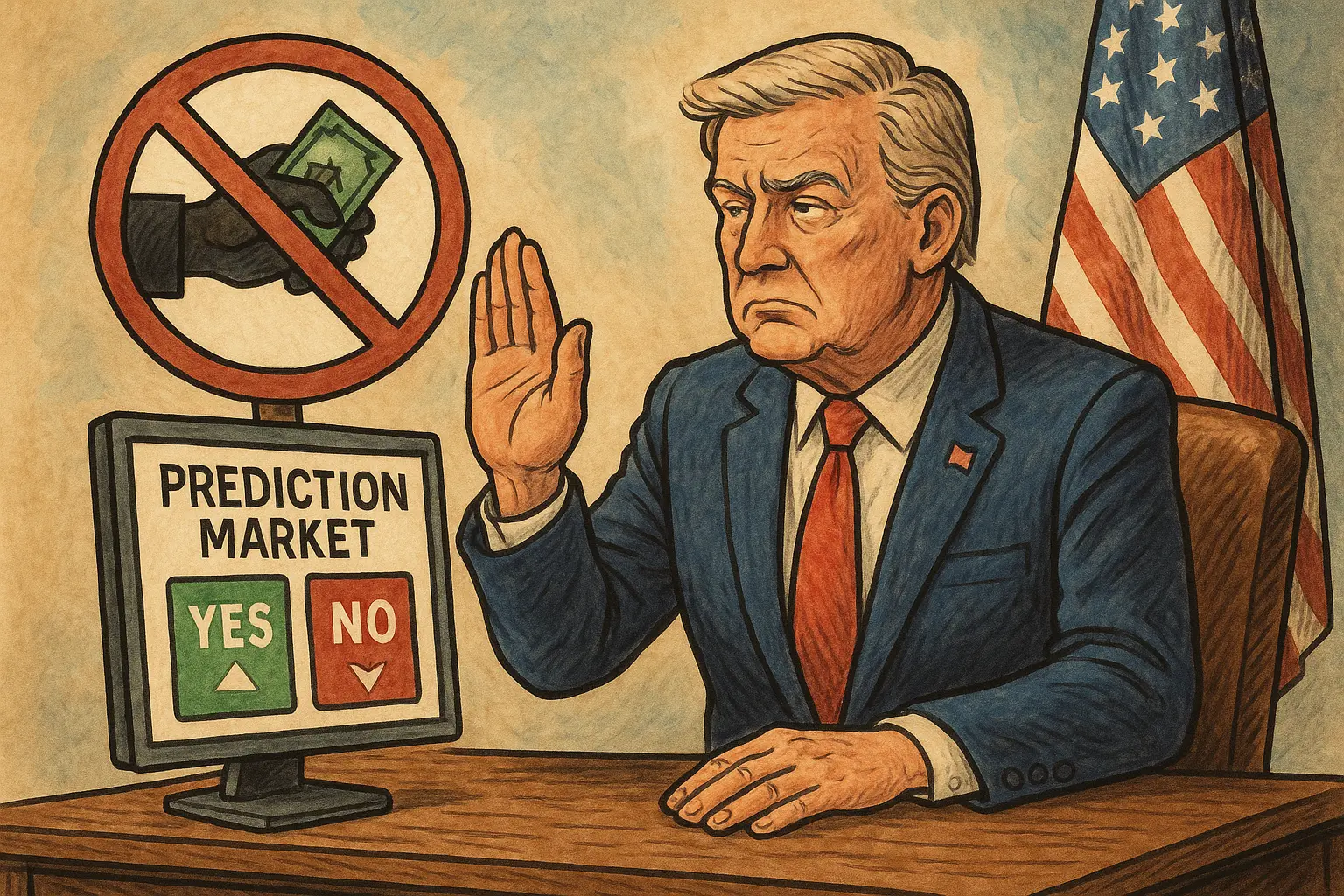
U.S. House Representatives Adrian Smith and Nikki Budzinski jointly introduced the “Preventing Real-time Exploitation and Deceptive Insider Trading Act” (PREDICT Act) on March 25, aiming to prohibit U.S. presidents, vice presidents, members of Congress, and political appointees from betting on political events, policy decisions, and other government-related contracts in prediction markets.
PREDICT Act: Regulatory Content and Legislative Background
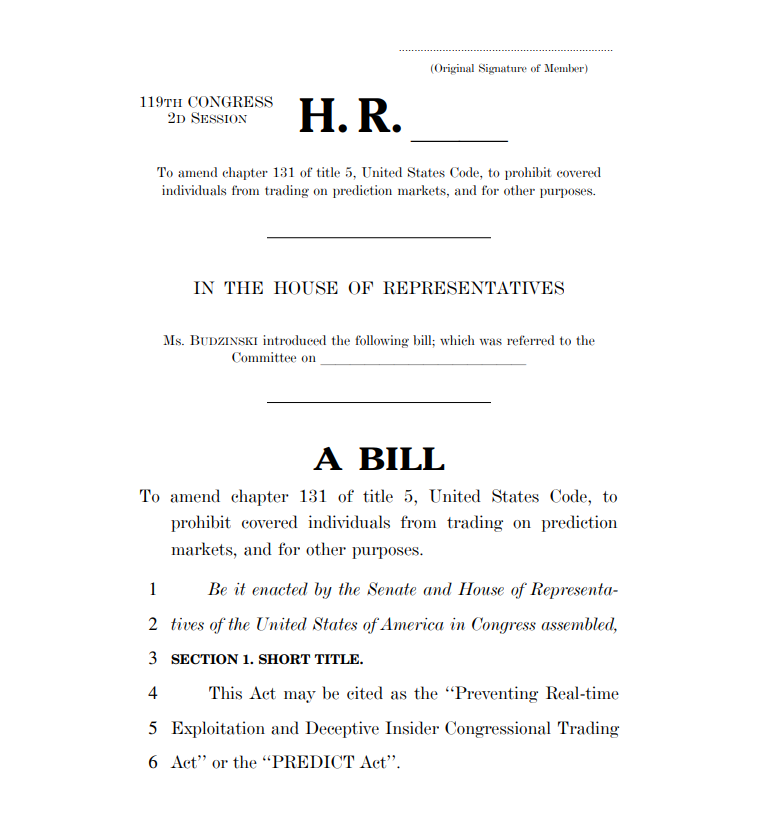 (Source: U.S. Congress)
The introduction of the PREDICT Act directly responds to recent prediction market trading incidents that have raised public concerns. Budzinski stated that in recent months, traders have profited significantly from highly political-sensitive events such as the Iran war trajectory and government shutdown durations, with their precise bets raising reasonable questions about the use of insider information.
The core regulation of the bill bans restricted officials and their families from betting on “political events, policy decisions, or other government actions,” with violators facing fines of 10% of the total contract value and required to surrender all profits. Budzinski emphasized the need to close regulatory loopholes that allow insiders to “profit from” information.
Earlier that month, two Democratic senators separately proposed the “Stop Event Trading on Sensitive Operations and Federal Functions Act” (BETS OFF Act). Senator Chris Murphy publicly claimed that someone might be using insider information to bet on U.S. President Trump’s involvement in Iran military actions, which has accelerated legislative momentum.
Multi-layered Regulatory Wave: Federal Legislation, State Actions, and Platform Self-Regulation Moving Simultaneously
The PREDICT Act is part of a larger legislative wave, not an isolated event:
11 states have taken legal action: Two more states are preparing lawsuits, indicating a critical point in state-level opposition to prediction markets.
Federal Sports Contract Bill: Senators John Curtis and Adam Schiff introduced legislation on Monday to prohibit listing prediction market contracts that resemble “sports betting or casino-style games” on entities registered with the Commodity Futures Trading Commission (CFTC).
CFTC Policy Shift Sparks Controversy: Lawmakers criticized the CFTC for suddenly tightening enforcement, which runs counter to its 15-year ban on listing gambling-like contracts, and actively intervened in ongoing lawsuits.
In response to mounting legislative pressure, major prediction market platforms have also taken self-regulatory actions. Kalshi and Polymarket have begun tightening internal rules to prohibit professional athletes and political candidates from betting on their platforms, demonstrating proactive compliance.
Frequently Asked Questions
Who does the PREDICT Act specifically prohibit?
The PREDICT Act aims to ban U.S. presidents, vice presidents, members of Congress, political appointees, and their spouses and dependents from betting on political events, policy decisions, or other government actions in prediction markets. Violators face fines of 10% of the total contract value and must turn over all profits to the U.S. Treasury.
Why do lawmakers believe existing prediction markets pose insider trading concerns?
Lawmakers point out that some traders have established highly accurate positions and gained huge profits before politically sensitive events like the Iran war or government shutdown. Senator Chris Murphy directly mentioned that insiders might be using internal information to bet on President Trump’s involvement in Iran military actions, with blockchain records of related wallets on Polymarket providing important context.
What is the current legislative progress of the PREDICT Act?
The PREDICT Act was formally introduced in March 2026 and is still in the early stages of the legislative process, requiring committee review and votes in both houses of Congress, with final passage uncertain. Simultaneously, the BETS OFF Act and legislation related to sports contracts contribute to the overall legislative pressure on prediction markets.
Disclaimer: The information on this page may come from third parties and does not represent the views or opinions of Gate. The content displayed on this page is for reference only and does not constitute any financial, investment, or legal advice. Gate does not guarantee the accuracy or completeness of the information and shall not be liable for any losses arising from the use of this information. Virtual asset investments carry high risks and are subject to significant price volatility. You may lose all of your invested principal. Please fully understand the relevant risks and make prudent decisions based on your own financial situation and risk tolerance. For details, please refer to
Disclaimer.


