By Ordinals World, author on Twitter @OrdzWorld
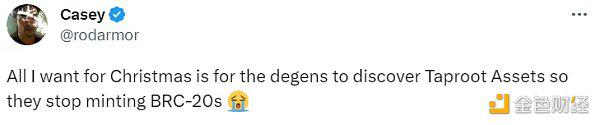
how you said that? I will only talk about one fact here. Ordinals was established at the end of 2022 and has not been out of the circle until the emergence of BRC20 (founder domo @domo) Ordi Ten Thousand Times Myth has brought huge liquidity to the Ordinals ecology, NFT, and Inscription, and subsequently the NFT price has also increased. There are sky-high prices.
I personally like the simplicity and elegance of BRC20. You only need a set of decentralized index clients, and you can put the contract rules and execution under the chain that is mutually verifiable with the information on the chain. direction of advancement.
So what is the Taproot Assets that Casey mentioned?
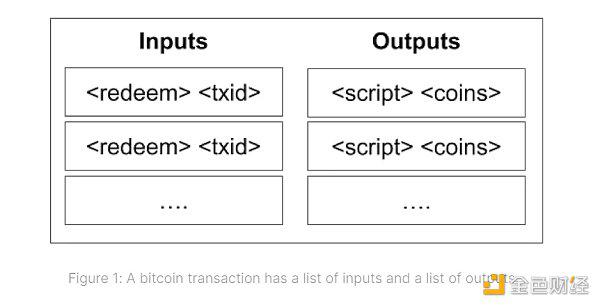
There are 3 basic concepts to understand here:
UTXO Hash Hash Function Merkle Tree
Btc’s UXTO model: Half are outputs, including coin information and associated coins and scripts; half are inputs, including providing evidence that conforms to script control expenditures.
**Hash hash function:**Convert an input value of any size into a fixed-size value
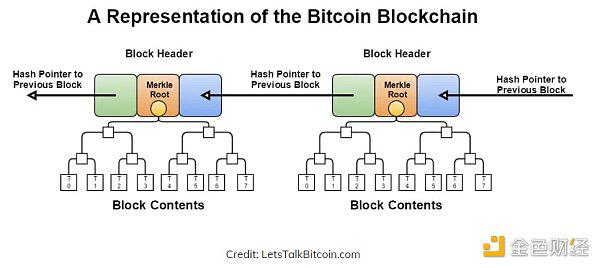
Merkle tree: In the Merkel tree structure of Bitcoin, as shown below, you only need to link all transactions with the tree structure, and finally produce a Merkel tree root. You only need to write the root information into the block. On-chain, not all transactions. (This part is key to the design of Taproot Aseets).
Taproot Assets is developed by Lightning Network Lighting Lab @lightning, which is an upgraded version of the previous taro.
The technical features of Taproot Assets can be summarized in one sentence:
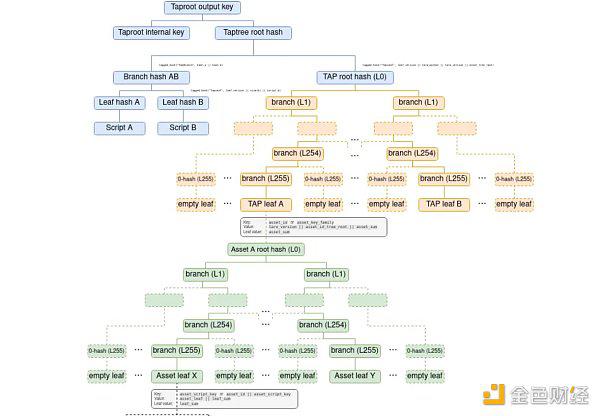
By using hash functions and Merkle tree proofs, move all the scripts associated with the coin off-chain, or retain only the execution part to create a main root asset (which can be different types of main root assets, and they can all be transferred internally, Split), the verification of assets only requires unilateral verification by the receiver/holder, and does not require full node broadcast (as shown below).
The advantage of this is: implement more complex class contracts, and achieve no gas and no block status in some scenarios, but the assets are safe and can be quickly verified.
We have seen that both BRC20 and Taproot Assets seem to be following the same path, that is, a decentralized index or verification client. It’s just that one uses the UTXO native structure, and the other creates a new paradigm by itself.
So, regarding Casey’s remarks, it goes without saying. So what is your opinion?
Disclaimer: The information on this page may come from third parties and does not represent the views or opinions of Gate. The content displayed on this page is for reference only and does not constitute any financial, investment, or legal advice. Gate does not guarantee the accuracy or completeness of the information and shall not be liable for any losses arising from the use of this information. Virtual asset investments carry high risks and are subject to significant price volatility. You may lose all of your invested principal. Please fully understand the relevant risks and make prudent decisions based on your own financial situation and risk tolerance. For details, please refer to
Disclaimer.


