The competition between Cosmos and Layer 3 mainly focuses on how to balance the relationship between flexibility and performance.
Written by Kyle Liu, Investment Manager at Bing Ventures
*Introduction: When choosing a technical route, it needs to be evaluated based on specific needs such as application scenarios and market conditions. Layer3 has more advantages in terms of technology maturity, security, ecological traffic and native token empowerment. However, as Cosmos continues to develop and the ecosystem grows, it is expected to become a more competitive option in the future. *
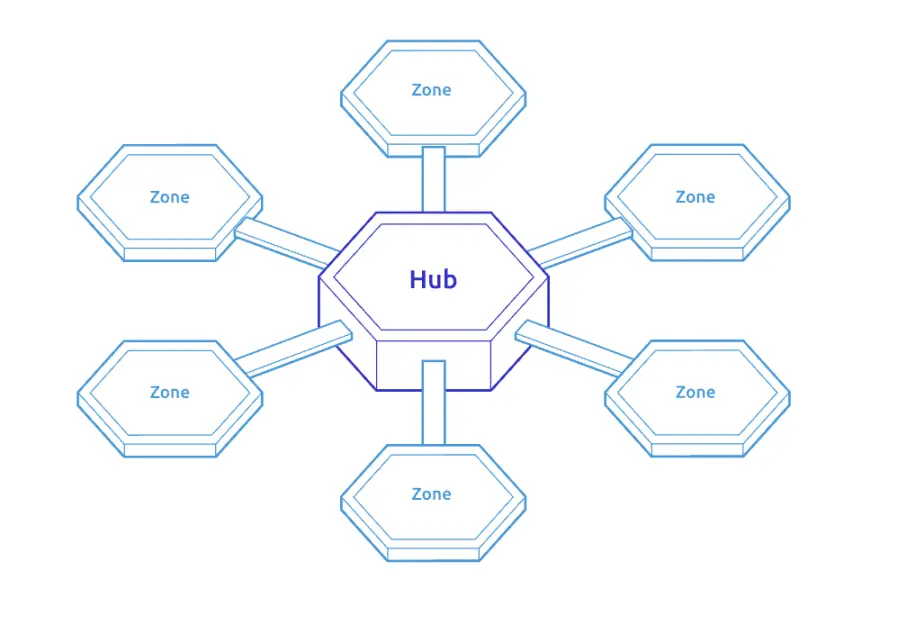
The competition between Cosmos and Layer 3 mainly focuses on how to balance the relationship between flexibility and performance. Cosmos achieves a high degree of flexibility and interoperability through the Hub-and-Zone model, while Layer 3 focuses on improving scalability. However, flexibility may sacrifice some performance, and excessive pursuit of performance may limit the flexibility and plasticity of the ecosystem. Our research will attempt to explore a better balance between the two.
Decentralized Application Selection
Cosmos’ strength lies in its cross-chain interoperability. Cosmos provides a scalable architecture that allows developers to build and deploy customized blockchain applications while achieving interoperability with other blockchains. This provides more flexibility for solutions to specific needs and helps build multi-chain ecosystems.
In contrast, the competitiveness of Layer 3 (based on Ethereum) lies in its mature ecosystem and wide range of application scenarios. As the earliest smart contract platform, Ethereum already has a large number of developers and users, and has a wealth of development tools available. This makes it easier to build DApps on Ethereum to gain user adoption and ecological traffic.
However, the success of DApps does not solely depend on the underlying technology, but also requires factors such as user acceptance, security, and practical application feasibility. From the perspective of application layer ecological construction and DApp development, both Cosmos and Layer3 technology routes have their own advantages and competitiveness. They are not an either/or choice but depend on specific needs and goals.
Greater Risk and Innovation
From a future perspective, both Cosmos and Layer3, as key explorations in the field of blockchain technology, will play an important role in future development. However, there are some differences between them in terms of solution customization, application extensibility, and security assumptions, which will affect the choice of application developers.
First, as a solution focused on ecosystem interoperability, Cosmos will facilitate connections and asset flows across different blockchain networks. This will provide more possibilities for cross-industry collaboration and innovation and promote the development of the entire blockchain industry. However, Cosmos has relatively few functional customizations and may be limited in deep expansion in specific areas.
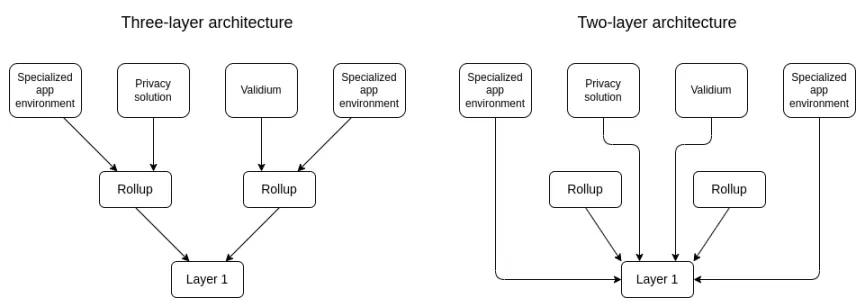
In contrast, the outstanding feature of Layer3 is its highly customizable solution and custom scalability. This allows developers to create execution environments and applications based on specific needs, providing greater flexibility and innovation space for application development in specific industries or fields. However, the applicability of Layer 3 may be limited, especially in terms of cross-chain interoperability that still needs to be explored and developed.
We also noticed that the high degree of customizability of Layer 3 may cause developers to distract themselves and pursue personalized solutions, limiting the unified collaboration of the ecosystem. If each developer pursues their own unique solution, it may lead to ecosystem fragmentation and reduce interoperability between different applications. Even high-frequency interactions between chains will increase network congestion and security risks, which means frequent Inter-chain interactions can make the entire system complex and vulnerable to malicious behavior.
The path forward depends on the first principles of application developers, namely which solutions they rely on to achieve greater innovation. Before making the best conclusion, multiple factors such as industry needs, technological developments, and market trends need to be considered comprehensively. In this evolving field, application developers need to make wise choices based on their own needs and goals to promote the innovation and application of blockchain technology.
Future competitive landscape
Cosmos and Ethereum are both leaders in the blockchain space, but they compete in different ways and with different goals. The goal of Cosmos is to establish a multi-chain ecosystem and achieve cross-chain interconnection through the IBC protocol, which allows different blockchains to communicate with each other and exchange value. Ethereum, on the other hand, mainly focuses on building a distributed application platform to support more smart contracts and dApp development.
Both target different application scenarios. Cosmos is more suitable for application scenarios that require cross-chain interaction, while Ethereum is more suitable for application scenarios that support smart contracts. Although both Cosmos Appchain and Ethereum Layer 3 currently have certain competitiveness in their respective ecosystems, the author believes that a more unified integrated solution may emerge in the future. This solution may be based on the further development of cross-chain technology and interoperability, and can integrate multiple blockchain networks to provide more efficient and flexible application development and interactive experiences.
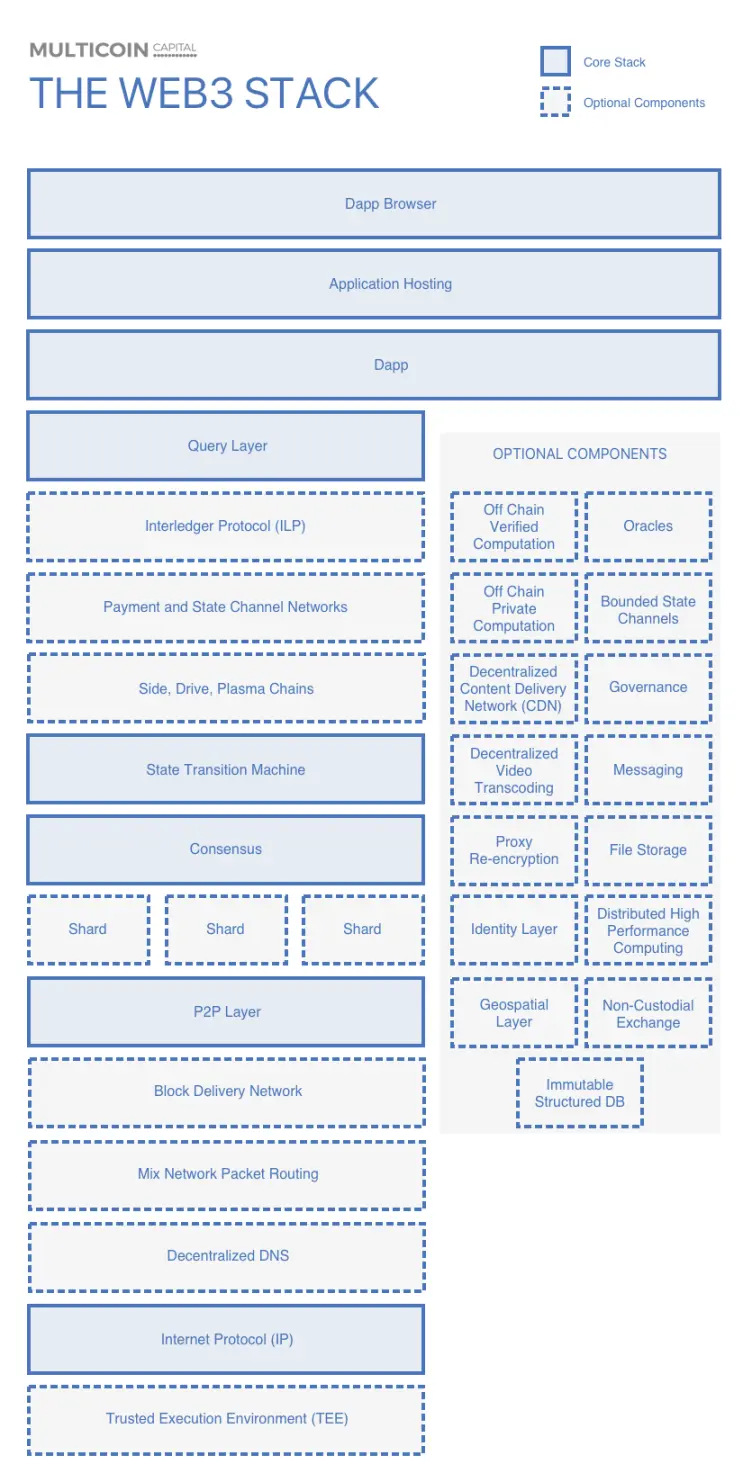
Since the nature of blockchain is distributed and open, there may be more cross-chain cooperation, cross-ecosystem applications and asset flows in the future to achieve better interconnection and user experience. We believe that the following are the core areas where the two communities will compete in the future:
- Future cross-chain interoperability: Although both Cosmos and Layer3 are committed to solving the scalability problem of blockchain, more powerful and flexible cross-chain interoperability solutions may emerge in the future. These solutions will be able to seamlessly connect multiple blockchain networks and enable the free flow of assets and data, thereby breaking down the barriers of the current ecosystem and promoting broader application innovation and user experience.
- Blockchain governance challenges: Both Cosmos and Layer 3 projects face the challenge of effective governance. As these projects grow and become more adopted, issues such as decision-making authority, consensus mechanisms, and community governance will become more important and complex. Innovative governance models and mechanisms may be needed in the future to ensure the sustainable development of projects and the synergy of the ecosystem.
- Balance of privacy and transparency: Blockchain technology has outstanding advantages in providing transparency, but the protection of personal privacy remains an ongoing challenge. In the future, Cosmos and Layer 3 are likely to face increasing demands for privacy protection and anonymity while maintaining sufficient transparency to meet regulatory and compliance requirements. How to find a balance between privacy and transparency will be a key issue.
- Long-term storage and sustainability: As blockchain data continues to grow, long-term storage and sustainability have become an important issue. Cosmos and Layer 3 projects may need to explore more efficient data storage and management solutions to ensure data security, accessibility, and sustainability. This may involve the application of technologies such as distributed storage.
Summary and Outlook
Cosmos excels in solving public chain scaling and interoperability issues. Its unique multi-chain interconnection characteristics provide seamless connection capabilities for data transmission and value exchange between different blockchain networks. This ecological integration capability helps promote cross-chain cooperation and data interoperability, thereby providing application developers with greater room for innovation. Its open ecosystem and multi-chain interconnection characteristics provide opportunities for returns in fields such as DeFi, identity verification, games and the Internet of Things. The possible returns from investing in Cosmos projects are closely tied to the development and adoption of the entire ecosystem.
- In terms of elasticity and scalability, due to the modular architecture and horizontal expansion capabilities of Cosmos, DApp can add or remove different modules as needed to meet the specific needs of the application. This flexibility allows DApps to better adapt to changes in the market and user needs.
- In terms of time and technical difficulty, it is true that the development of Layer 3 and even sharding needs to solve many technical details and takes time to research and implement. The challenges of designing Layer 3 mechanisms, provers, data availability, and sequencer decentralization require careful thought and resolution. In addition, designing an easy-to-use Layer 3 SDK is also an important consideration.
- In terms of autonomy and autonomy, Cosmos provides a higher degree of autonomy and autonomy. DApp teams can develop their own consensus algorithms and governance mechanisms based on their own needs and rules. In contrast, Layer 3 based on Rollup may need to rely on the consensus algorithm and governance rules of the underlying Layer 1, limiting the autonomy of the DApp team.
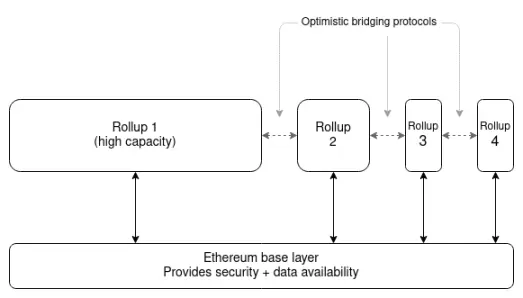
In contrast, Layer3 is a solution that focuses on customizability and specific application development. It provides custom functions and application extensibility for specific purposes, allowing developers to conduct more in-depth innovation and application development in specific fields. This protocol customization capability brings huge innovation potential to the development of specific industries and application scenarios. In particular, Rollup technology retains the availability of transaction data on the chain, while ensuring the security of transactions through mechanisms such as ZK Rollups or Optimistic Rollups. Further evolution and improvement of these technologies may lead to higher performance and stronger data availability, providing better user experience and functionality for DApps. Cosmos may face data consistency challenges during cross-chain communication.
The author believes that the development of Cosmos and Layer3 will further promote the evolution of cross-chain governance models. Traditionally, each blockchain network is relatively independent, and cross-chain technology enables seamless connections and asset flows between different blockchains. However, cross-chain governance faces the challenge of how to coordinate and manage multiple application chains and DApps, involving consensus mechanisms, decision-making, and resource allocation. Future research will explore innovative cross-chain governance models to promote the development and collaboration of cross-chain ecosystems.
Generally speaking, the author firmly believes that the future belongs to the era of “multi-chain interconnection” rather than “multi-chain co-layer”. If you are a long-term investor looking to invest in a more ecologically scalable developer system, Cosmos Appchain is a more practical option. Although Layer 3 has its own advantages, the challenges faced by its ecosystem are also severe, such as “innate deficiencies” such as congestion, high fees, and scalability. Compared with this, Cosmos’ native architecture design is more flexible and scalable, so its potential for future development is greater.


