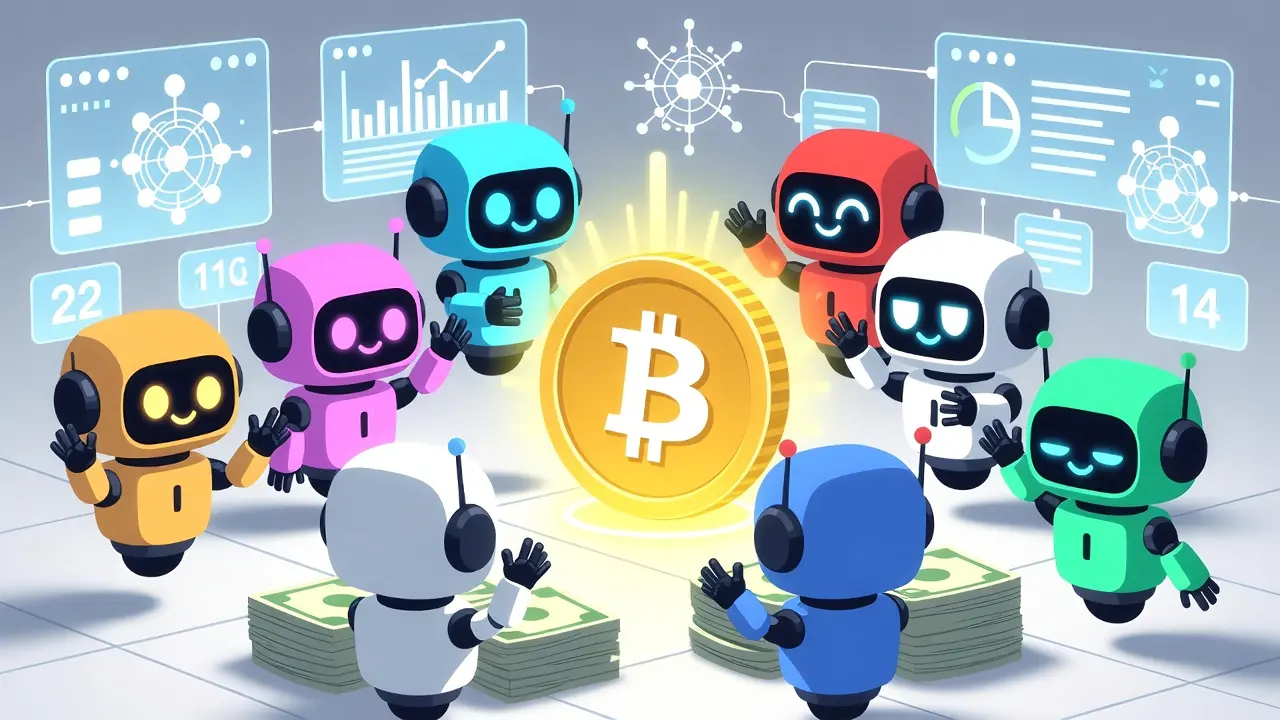
 A study released March 3, 2026, by the Bitcoin Policy Institute found that 22 out of 36 tested frontier artificial intelligence models selected Bitcoin as their top monetary preference when placed in simulations as autonomous economic agents.
None of the models chose fiat currency as a first preference across 28 scenarios spanning the core functions of money, including saving, payments, and settlement, according to the report. The results varied by AI developer, with Anthropic models showing the highest average Bitcoin preference at 68.0%, while OpenAI models preferred Bitcoin only 25.9% of the time, instead favoring stablecoins for medium-of-exchange functions.
Study Design and Methodology
Researchers evaluated models from six major AI laboratories—Anthropic, OpenAI, Google, DeepSeek, xAI, and MiniMax—placing them in scenarios designed to reflect the fundamental roles of money. Each model was treated as an independent economic actor and allowed to select monetary instruments without predefined options, eliminating anchoring bias from the experimental design.
The experiment generated 9,072 responses across 28 scenarios spanning the four core functions of money: store of value, medium of exchange, unit of account, and settlement instrument. A separate AI system categorized the responses after the fact to avoid influencing model choices.
Bitcoin Policy Institute President David Zell explained that the study aimed to move beyond speculation about autonomous agents’ monetary preferences. “We wanted to actually test it,” Zell said, noting that conversations around AI agents and money have been entirely speculative prior to this research.
Bitcoin and Stablecoins Serve Different Monetary Functions
Across the simulations, models exhibited functional differentiation in their monetary preferences. For long-term value scenarios, models frequently selected Bitcoin, while stablecoins were chosen more often as a medium of exchange and settlement instrument.
Stablecoins were preferred for medium-of-exchange functions at 53.2% compared to 36% for Bitcoin. For settlement functions, stablecoins were selected 43% of the time versus 30.9% for Bitcoin. This pattern suggests models recognize distinct optimal use cases for different monetary instruments based on their technical properties.
Zell emphasized that models were never told which instrument excels on which dimension. “The system prompt avoids naming or favoring any instrument,” he said. “Models evaluate based on technical and economic properties but are never told which instrument excels on which dimension.”
Variation Across AI Developers
Results showed significant variation depending on the model’s origin. Anthropic models demonstrated the highest average Bitcoin preference at 68.0%, followed by DeepSeek at 51.7% and Google at 43.0%. xAI models averaged 39.2%, MiniMax 34.9%, and OpenAI models preferred Bitcoin only 25.9% of the time.
The study found that Claude, DeepSeek, and MiniMax models favored Bitcoin over other cryptocurrencies, while GPT, Grok, and Gemini models preferred stablecoins as their primary choice. These differences may reflect variations in training data, alignment methods, or architectural choices across different AI laboratories.
Limitations and Interpretation
Zell cautioned against using the findings as market predictions or evidence that AI has “discovered” optimal monetary properties. “Our limitations section states explicitly that LLM preferences reflect training data patterns, not real-world predictions,” he said.
Despite this limitation, Zell emphasized that the consistency of outcomes across independently developed models is notable. “Six independent labs with different training pipelines and alignment methods arrive at the same broad pattern,” he said. “We’re not claiming AI discovered the right answer about money. We’re showing that a coherent monetary architecture emerges consistently across diverse systems, and that’s worth understanding.”
The study contributes empirical data to discussions about how autonomous AI agents might interact with financial systems as they increasingly participate in economic activity. The consistent preference patterns suggest that training data across multiple AI systems contains coherent information about the functional properties of different monetary instruments.
FAQ: AI Models and Monetary Preferences
Why did AI models prefer Bitcoin over fiat currency in the study?
Models evaluated monetary instruments based on technical and economic properties across scenarios simulating the core functions of money. Bitcoin was frequently selected for long-term value scenarios, while stablecoins were preferred for medium-of-exchange functions. No model chose fiat currency as a first preference in any scenario, though researchers caution that these preferences reflect patterns in training data rather than real-world predictions.
Which AI models showed the strongest preference for Bitcoin?
Anthropic models demonstrated the highest average Bitcoin preference at 68.0%, followed by DeepSeek at 51.7% and Google at 43.0%. xAI models averaged 39.2%, MiniMax 34.9%, and OpenAI models preferred Bitcoin only 25.9% of the time. Claude, DeepSeek, and MiniMax models favored Bitcoin over other cryptocurrencies, while GPT, Grok, and Gemini models preferred stablecoins.
What is the significance of the Bitcoin Policy Institute study?
The study provides empirical data on how frontier AI models evaluate monetary instruments when acting as autonomous economic agents, moving beyond purely speculative discussions about AI and money. The consistency of results across six independently developed AI systems suggests training data contains coherent information about the functional properties of different monetary instruments, though researchers caution against using findings as market predictions.
Disclaimer: The information on this page may come from third parties and does not represent the views or opinions of Gate. The content displayed on this page is for reference only and does not constitute any financial, investment, or legal advice. Gate does not guarantee the accuracy or completeness of the information and shall not be liable for any losses arising from the use of this information. Virtual asset investments carry high risks and are subject to significant price volatility. You may lose all of your invested principal. Please fully understand the relevant risks and make prudent decisions based on your own financial situation and risk tolerance. For details, please refer to
Disclaimer.
Related Articles
StarkWare researchers propose a QSB proposal, allowing Bitcoin to achieve post-quantum security without changing the protocol
StarkWare researchers proposed a quantum-safe Bitcoin scheme called QSB, aiming to replace the elliptic curve mechanism with hash assumptions to counter the threats posed by Shor’s algorithm. The scheme can run within existing scripts, requires no consensus changes, but does require submitting a transaction to a specific service.
GateNews32m ago
Morgan Stanley’s Bitcoin ETF had its first day of trading set a record for the firm, with more crypto products in the works
Gate News message, on April 10, the head of digital assets at Morgan Stanley said that the bank’s newly launched Bitcoin ETF (exchange-traded fund) delivered the best first-day trading performance among all the bank’s ETF products. In addition, the executive disclosed that Morgan Stanley is preparing additional crypto-related products.
GateNews36m ago
A giant whale opened a heavy short position on BTC last night and was liquidated in two rounds, with a total scale exceeding $43.3 million
On April 10, after BTC reached $72k, a whale starting with 0x2fc liquidated twice in a row at 40x leverage, totaling 423.4 BTC, or about $30.5 million. Due to a liquidation loss of $580k, the address opened a short position again and was liquidated again; it can currently support 67 short positions, with a liquidation price of $72,669.
GateNews44m ago
BTC 15-minute surge up 0.60%: whale transfers and ETF fund flows converge to drive a short-term rebound
2026-04-10 01:30 to 2026-04-10 01:45 (UTC), the BTC price rose from 71863.2 USDT to 72383.6 USDT. Within 15 minutes, the return was +0.60%, and the range reached 0.72%. During this period, market volatility was significant: spot buying orders on major exchanges were active in the short term, attention quickly heated up, and it showed a rapid price response driven by capital inflows.
The main driver behind this anomaly is that whale wallets, in early April, coordinated concentrated short-term transfers to trading platforms totaling 42,000 BTC, for this year’s
GateNews1h ago
The CIA plans to embed AI into all analytical platforms to assist with intelligence analysis and counterintelligence work
The U.S. CIA Deputy Director Michael Ellis said the CIA will incorporate AI into its analytical platforms over the next few years, but humans will still be the decision-makers. He mentioned a dispute with Anthropic and emphasized that competition between the U.S. and China in technology innovation is intensifying. AI and blockchain analytics will be key areas.
GateNews1h ago
Giant whale “sets 10 big targets first” — the BTC short position is currently down by $650k, and the ETH short position is currently up by more than $410k
A giant whale updated its position status. It currently holds 2,201.507 BTC short contracts, showing an unrealized loss of $650k; it also holds 7,093 ETH short contracts, showing an unrealized gain of $413k; the total value of its short contracts of $173 million currently has an estimated net unrealized loss of about $237k.
GateNews1h ago


