Ceasefire Extension Meets Crypto Twist: Iran’s BTC Toll Plan Adds a New Layer to Geopolitics
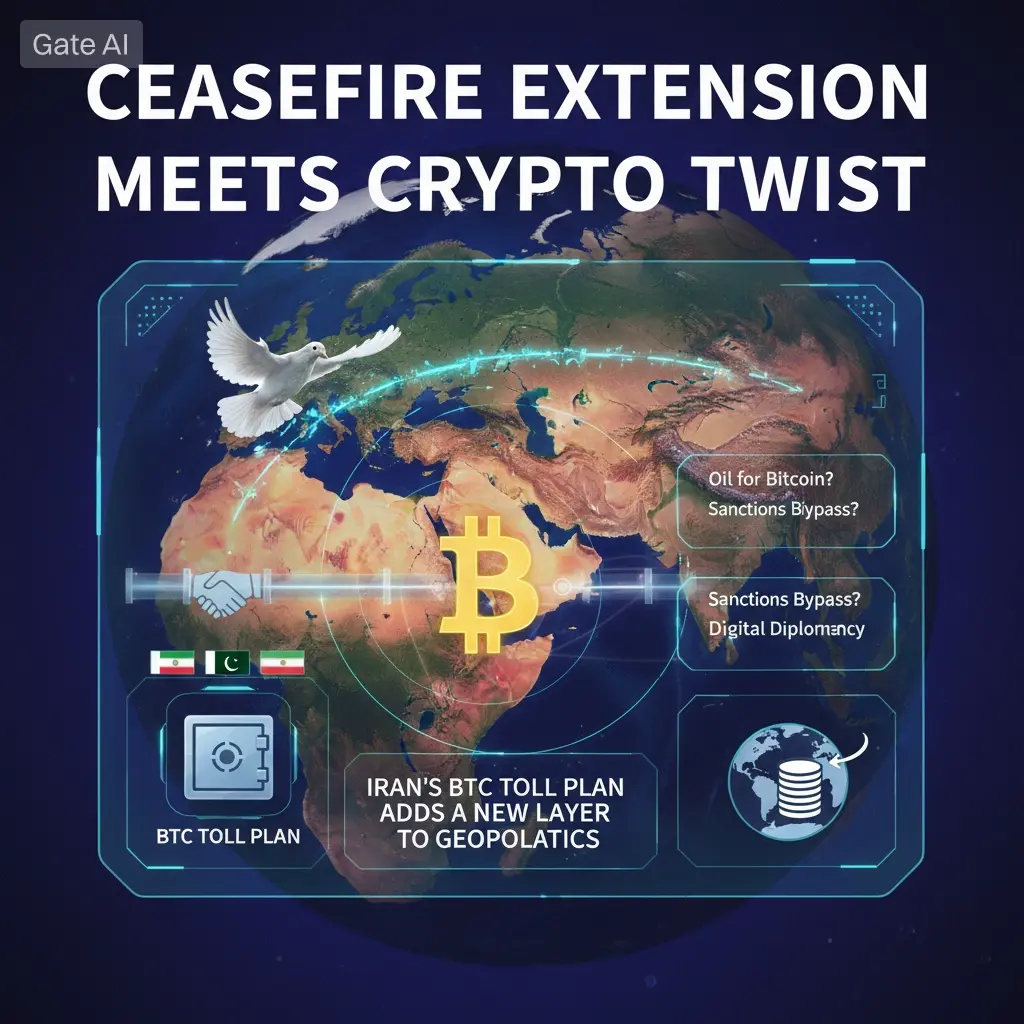
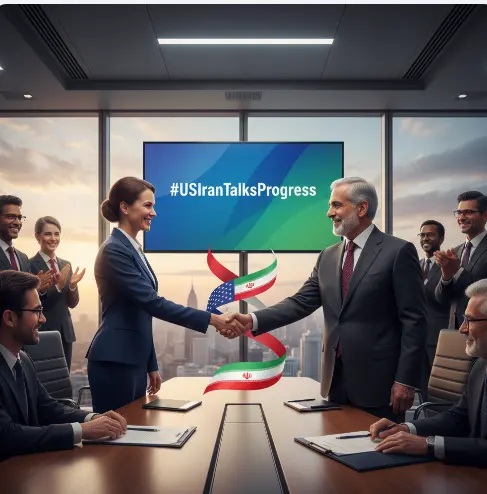
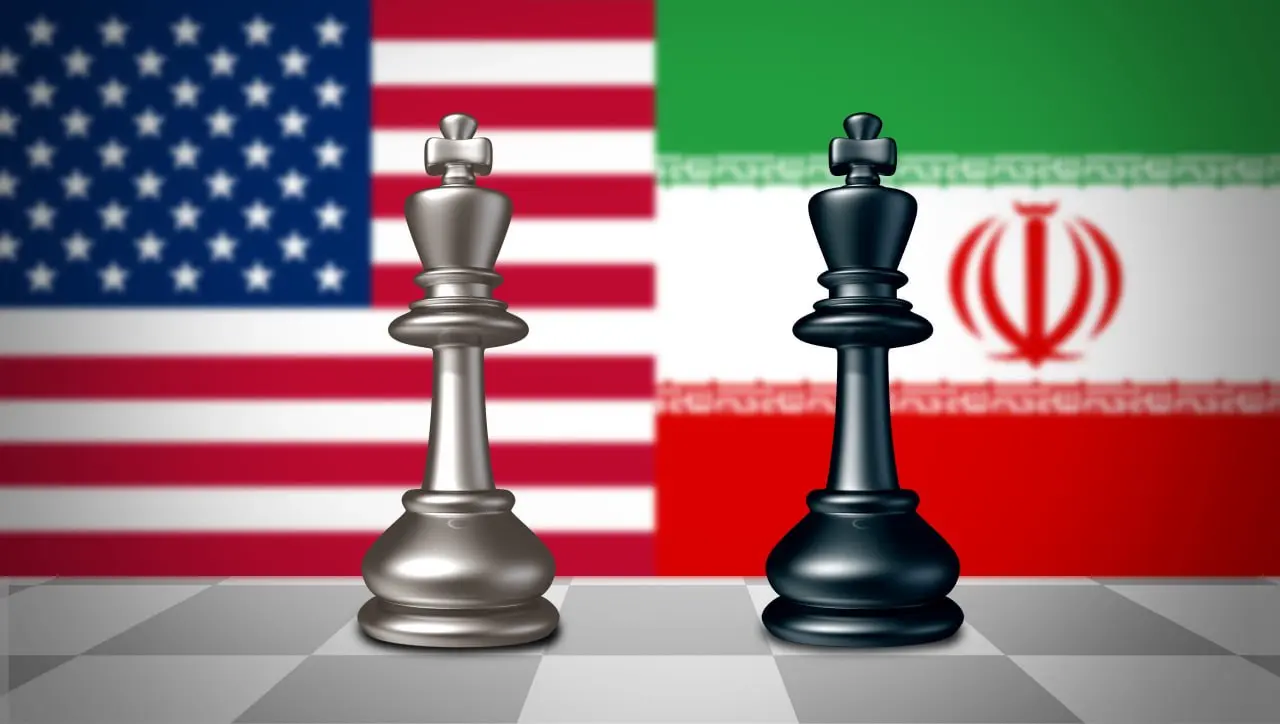
The latest development in the U.S.–Iran narrative introduces a mix of de-escalation and unexpected innovation at the same time. An extended ceasefire, reportedly influenced by diplomatic efforts through Pakistan, suggests that immediate geopolitical pressure may be easing. But almost simultaneously, a far more unconventional move emerges—Iran beginning to charge Bitcoin-based tolls on oil tankers passing through the Strait.
At first glance, these two developments seem to pull in opposite directions. A ceasefire extension typically signals stability, reduced risk, and a cooling of tensions. But the introduction of BTC-denominated tolls introduces a new dimension entirely—one that blends geopolitics with digital finance in a way that markets are not fully accustomed to pricing.
What makes this particularly interesting is the signal it sends. Charging tolls in Bitcoin is not just a technical choice; it reflects a strategic direction. In an environment shaped by sanctions and restricted access to global financial systems, alternative settlement methods become more than optional—they become necessary. Bitcoin, in this context, is not being used as a speculative asset, but as a functional tool.
This creates a layered narrative. On one side, the ceasefire reduces immediate escalation risk, which typically supports broader market stability. On the other, the BTC toll mechanism highlights that structural tensions remain unresolved. It suggests adaptation rather than resolution.
The Strait itself remains one of the most critical energy chokepoints globally. Any development tied to its operation—whether military, diplomatic, or now financial—carries implications that extend far beyond the region. Introducing crypto into that equation adds complexity, because it brings a decentralized element into a traditionally state-controlled system.
From a market perspective, this kind of development doesn’t create a simple directional reaction. Instead, it introduces new variables. Reduced conflict risk can support risk assets, while the normalization of Bitcoin in geopolitical transactions can influence long-term perception and adoption narratives.
But there’s also a psychological element. When Bitcoin begins to appear in real-world, state-influenced processes, it subtly shifts how the asset is viewed. It moves further away from being purely speculative and closer to being part of the global financial toolkit—even if in unconventional ways.
At the same time, this is not a clean transition. It raises questions about regulation, enforcement, and global response. If such mechanisms expand, they could trigger reactions from international regulators or reshape how digital assets are treated in geopolitical contexts.
For now, what stands out is the contrast. A ceasefire suggests calm, while the BTC toll initiative suggests adaptation under pressure. Together, they create a narrative that is not about resolution, but evolution.
And markets are now being asked to price both at once.
#GateSquare #CreatorCarnival #ContentMining #USIranTalksProgress #TopCopyTradingScout
The latest development in the U.S.–Iran narrative introduces a mix of de-escalation and unexpected innovation at the same time. An extended ceasefire, reportedly influenced by diplomatic efforts through Pakistan, suggests that immediate geopolitical pressure may be easing. But almost simultaneously, a far more unconventional move emerges—Iran beginning to charge Bitcoin-based tolls on oil tankers passing through the Strait.
At first glance, these two developments seem to pull in opposite directions. A ceasefire extension typically signals stability, reduced risk, and a cooling of tensions. But the introduction of BTC-denominated tolls introduces a new dimension entirely—one that blends geopolitics with digital finance in a way that markets are not fully accustomed to pricing.
What makes this particularly interesting is the signal it sends. Charging tolls in Bitcoin is not just a technical choice; it reflects a strategic direction. In an environment shaped by sanctions and restricted access to global financial systems, alternative settlement methods become more than optional—they become necessary. Bitcoin, in this context, is not being used as a speculative asset, but as a functional tool.
This creates a layered narrative. On one side, the ceasefire reduces immediate escalation risk, which typically supports broader market stability. On the other, the BTC toll mechanism highlights that structural tensions remain unresolved. It suggests adaptation rather than resolution.
The Strait itself remains one of the most critical energy chokepoints globally. Any development tied to its operation—whether military, diplomatic, or now financial—carries implications that extend far beyond the region. Introducing crypto into that equation adds complexity, because it brings a decentralized element into a traditionally state-controlled system.
From a market perspective, this kind of development doesn’t create a simple directional reaction. Instead, it introduces new variables. Reduced conflict risk can support risk assets, while the normalization of Bitcoin in geopolitical transactions can influence long-term perception and adoption narratives.
But there’s also a psychological element. When Bitcoin begins to appear in real-world, state-influenced processes, it subtly shifts how the asset is viewed. It moves further away from being purely speculative and closer to being part of the global financial toolkit—even if in unconventional ways.
At the same time, this is not a clean transition. It raises questions about regulation, enforcement, and global response. If such mechanisms expand, they could trigger reactions from international regulators or reshape how digital assets are treated in geopolitical contexts.
For now, what stands out is the contrast. A ceasefire suggests calm, while the BTC toll initiative suggests adaptation under pressure. Together, they create a narrative that is not about resolution, but evolution.
And markets are now being asked to price both at once.
#GateSquare #CreatorCarnival #ContentMining #USIranTalksProgress #TopCopyTradingScout