Alimadao

vip
Age 1 Yıl
Peak Tier 0
No content yet
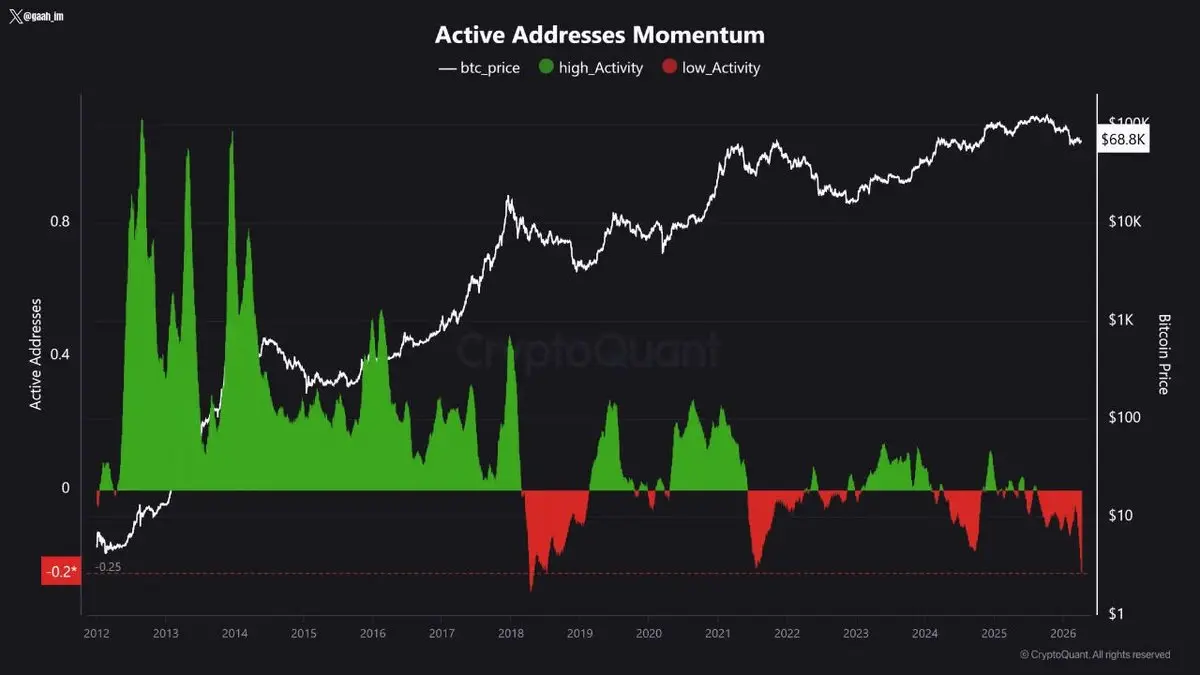
$BTC network activity is flashing a major signal.
Active addresses have dropped to their lowest level since 2018 an 8 year low heading into 2026.
Despite $BTC holding strong near $68K, on chain participation continues to decline, showing weak retail involvement and fading momentum under the surface.
Historically, such low activity phases either signal market exhaustion or quiet accumulation before a big move.
The divergence between price and network usage is growing.
Smart money watches this closely.
Is this the calm before a breakout or an early warning sign of a deeper correction?
BTC-0,9%
post-image
  • Reward
  • Comment
  • Repost
  • Share
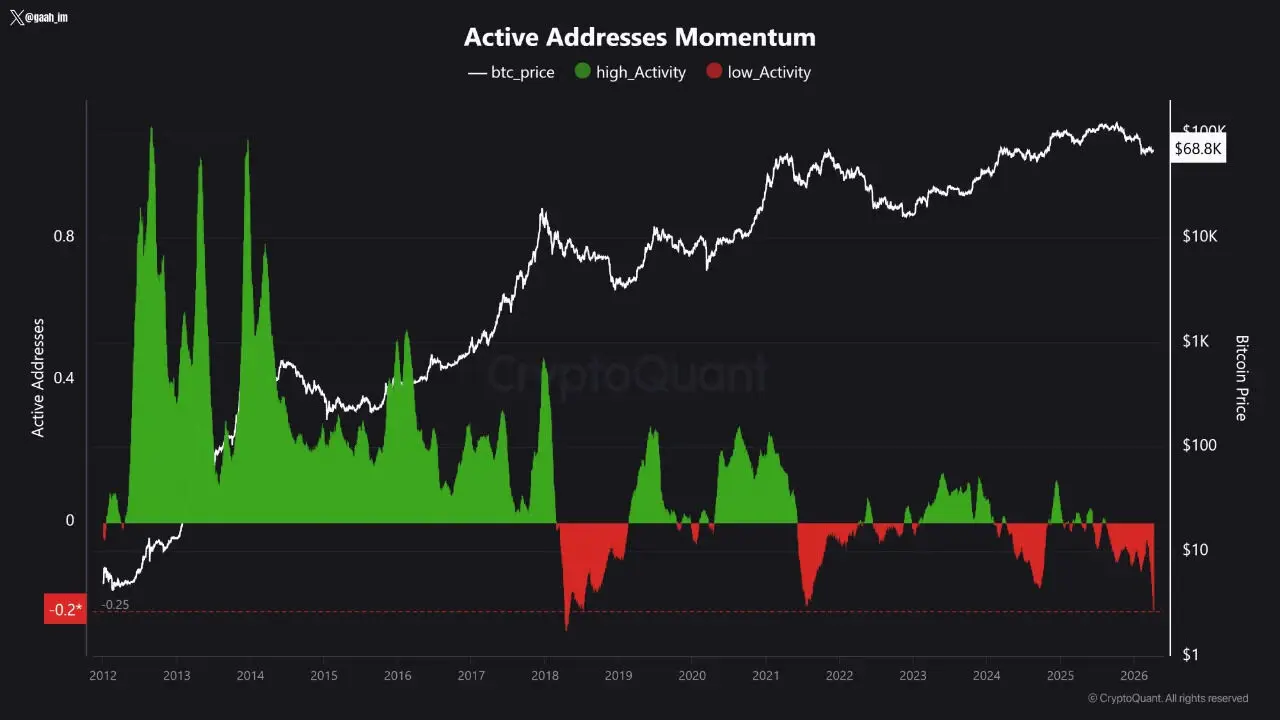
Bitcoin network activity is flashing a major signal. Active addresses have dropped to their lowest level since 2018 an 8 year low heading into 2026.
Despite $BTC holding strong near $68K, on chain participation continues to decline, showing weak retail involvement and fading momentum under the surface.
Historically, such low activity phases either signal market exhaustion or quiet accumulation before a big move.
The divergence between price and network usage is growing.
Smart money watches this closely.
Is this the calm before a breakout or an early warning sign of a deeper correction?
#Btc$B
BTC-0,9%
post-image
  • Reward
  • Comment
  • Repost
  • Share
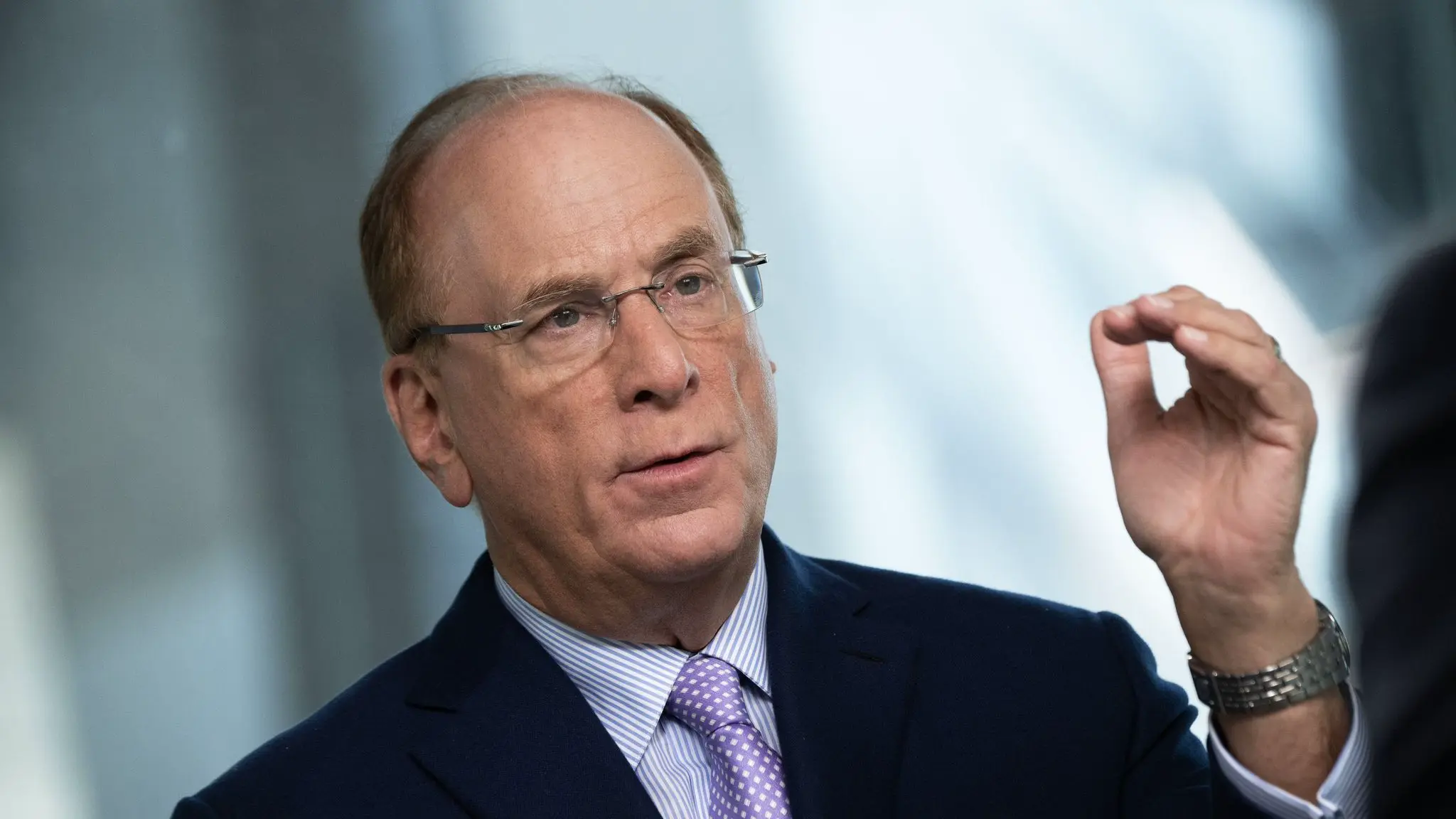
Changpeng Zhao just dropped a wild story in his new memoir.
Before the Mt. Gox collapse in 2014, he was offered the CEO role for its China unit with a 10% stake. He turned it down but still had 100 BTC stuck on the platform when withdrawals froze.
That’s a brutal reminder: even insiders weren’t safe. One decision saved him from a bigger disaster but he still took a hit. In crypto, timing and custody matter more than anything.
Not your keys, not your coins still hits hard.
#GateSquareAprilPostingChallenge #FDICReleasesStablecoinGuidanceDraft
BTC-0,9%
post-image
post-image
  • Reward
  • Comment
  • Repost
  • Share
BREAKING 🚨
The Ethereum Foundation is set to offload $11M worth of $ETH today and the market is watching closely. Moves like this often spark short term volatility, shaking out weak hands before the next direction is clear. Will this trigger a dip or get absorbed quickly by buyers?
Smart money doesn’t panic, it plans. Keep an eye on liquidity zones and key support levels. This could either be a buying opportunity or the start of a deeper pullback.
Stay sharp, manage risk and don’t trade emotionally. The market rewards patience, not panic.
#GateSquareAprilPostingChallenge #CreatorLeaderboard
ETH-2,86%
post-image
post-image
  • Reward
  • 1
  • Repost
  • Share
GateUser-df2e8be3vip:
坚定HODL💎
Big news: Spot Bitcoin ETF trading volume just crossed $2.4 billion today.
#ETF #GateSquareAprilPostingChallenge #AreYouBullishOrBearishToday?
BTC-0,9%
post-image
  • Reward
  • Comment
  • Repost
  • Share
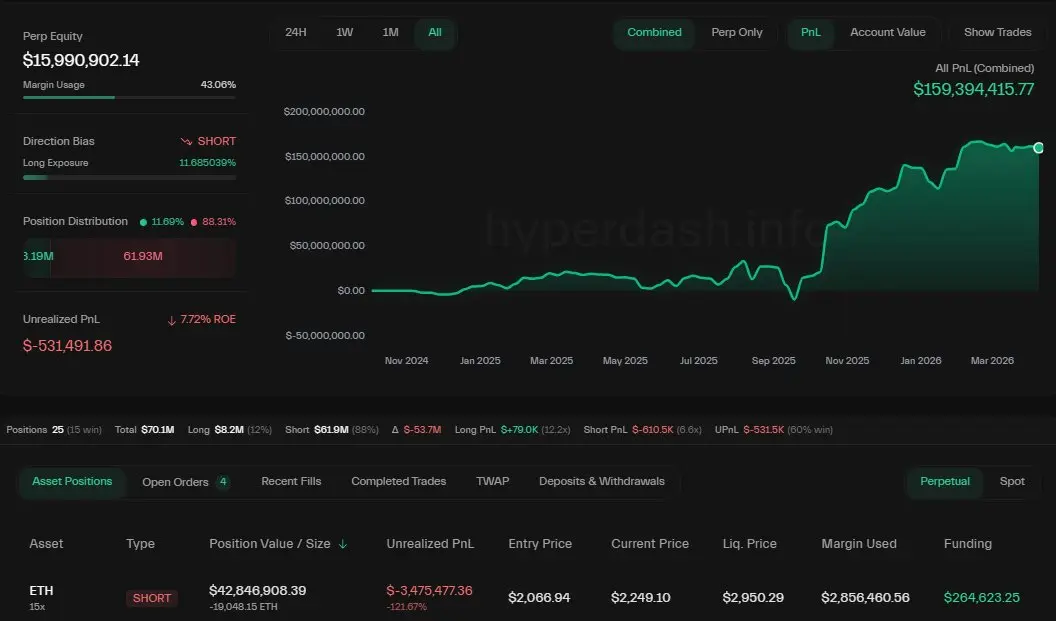
Someone just placed a $42.8M short on ETH using 15x leverage, with liquidation at $2,950.
After this recent move up, a small pullback could happen.
Now the real question is , will this big short play out, or get wiped?
#eth #GateSquareAprilPostingChallenge
#SeamlessProtocolShutsDown $ETH
ETH-2,86%
post-image
  • Reward
  • Comment
  • Repost
  • Share
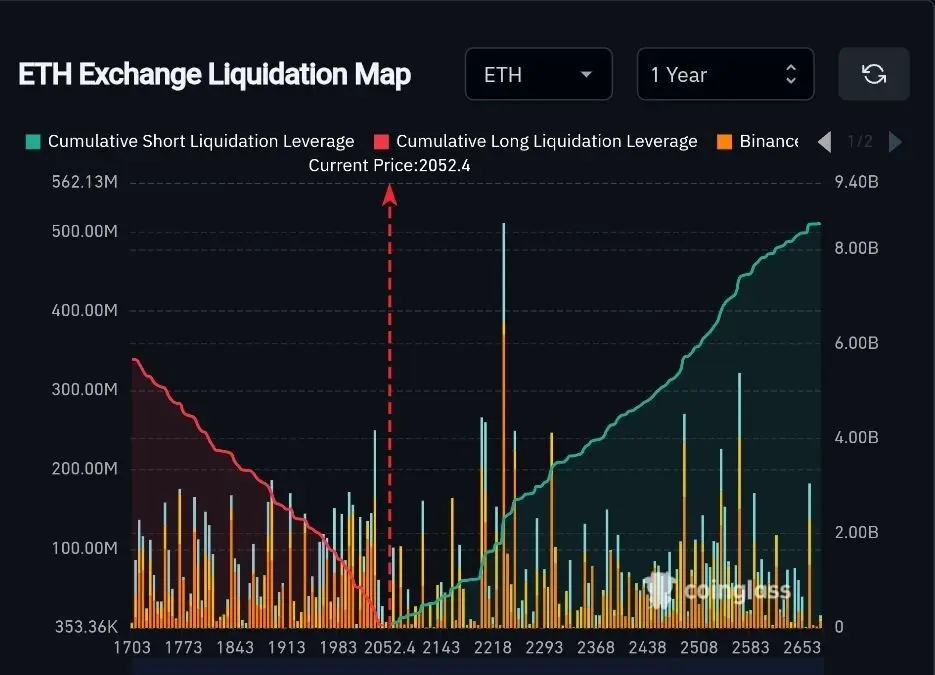
If $ETH falls by $52, about $1B worth of long positions could get wiped out.
ETH-2,86%
post-image
  • Reward
  • 1
  • Repost
  • Share
SULEMAN_Coinvip:
To The Moon 🌕
Market Signal You Shouldn’t Ignore
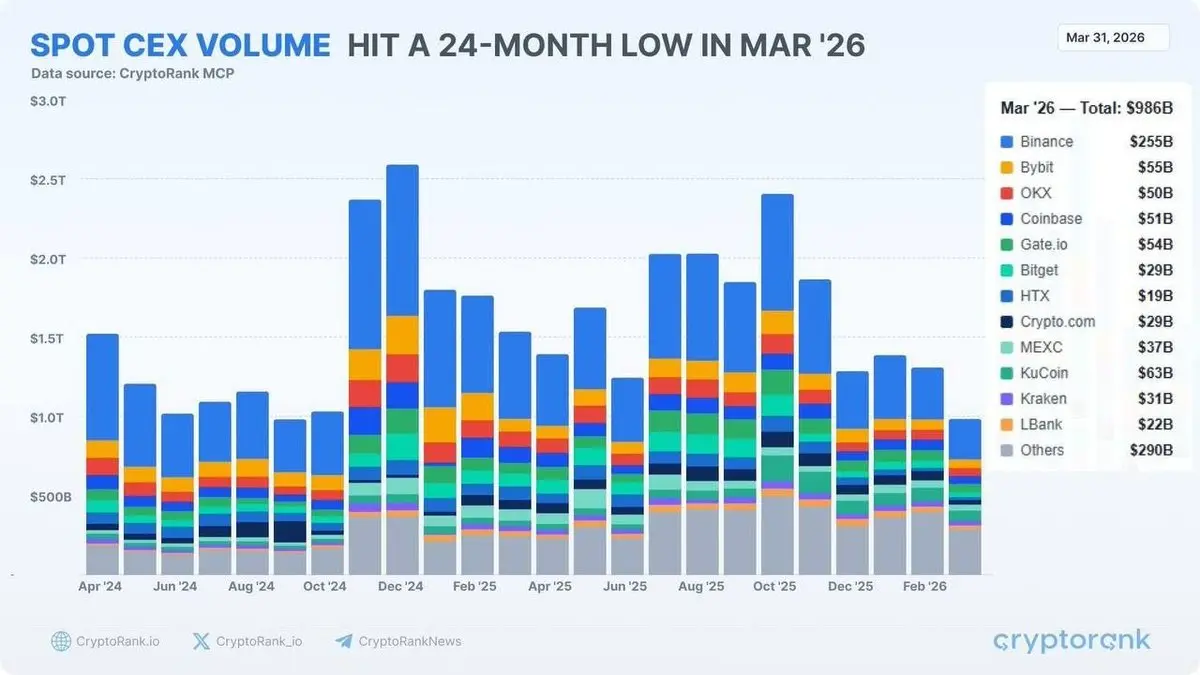
Spot CEX volume dropped to $986B in March, the lowest level in the past 2 years.
This isn’t just a number… it reflects a clear slowdown in market activity.
Lower volume usually means:
• Less participation
• Weaker momentum
• Choppy price action
Right now, the market feels quiet but quiet phases often come before big moves.
Smart money isn’t chasing, it’s watching
The real question is:
Is this the calm before the next expansion?
post-image
  • Reward
  • Comment
  • Repost
  • Share
At first I missed it, but @Sign actually reshapes how mistakes are treated. Instead of deleting errors, it lets them exist as part of a transparent history. What matters is that proof remains intact and verifiable.
The approach is simple: only a small verification layer is stored on chain, while larger data lives on systems like IPFS or Arweave. Both pieces stay linked, creating a clean and efficient structure.
This way, you don’t overload the blockchain, yet you still keep strong, portable proof. By combining identity validation with token distribution, Sign builds a system where trust is lig
FIL-2,89%
AR-4,65%
  • Reward
  • Comment
  • Repost
  • Share
SIGN isn’t just another crypto idea it’s trying to solve a real human problem.
In places like Sierra Leone, most people are recorded in the system, but very few can actually prove who they are.
That means no bank account, no payments, no access just because there’s no usable identity.
That part really stuck with me.
With SignPass, $SIGN is turning identity into something you can carry anywhere, not restart everywhere. One proof, usable across systems.
It makes you think… if this works, it’s bigger than charts or airdrops.
It’s about giving people access they were never truly given.
@Sign #Sig
  • Reward
  • Comment
  • Repost
  • Share
I didn’t realize this before but @Sign changes how we deal with mistakes.
Instead of hiding or deleting errors, it keeps them visible as part of the process. That actually builds more trust because everything can be verified, not rewritten.
What stands out is how Sign connects proof with logic and incentives, so actions are clearer and more accountable.
It also shows that governance isn’t something you add later it needs to exist from the start. Without structure, things fall apart quickly.
With $SIGN , systems feel more organized, transparent and reliable, where real execution matters more t
  • Reward
  • Comment
  • Repost
  • Share
I used to assume governance only becomes important once a system grows big.
But real on chain activity proves the opposite without clear structure, roles and accountability, participation starts to scatter.
What @Sign is doing differently is embedding governance from the beginning. It doesn’t treat data as something static but as dynamic proof that evolves with usage and interaction.
That shift matters. Because systems don’t fail from lack of ideas they fail from lack of coordination.
When structure is built early, execution becomes consistent and the network can scale with clarity instead of
  • Reward
  • Comment
  • Repost
  • Share
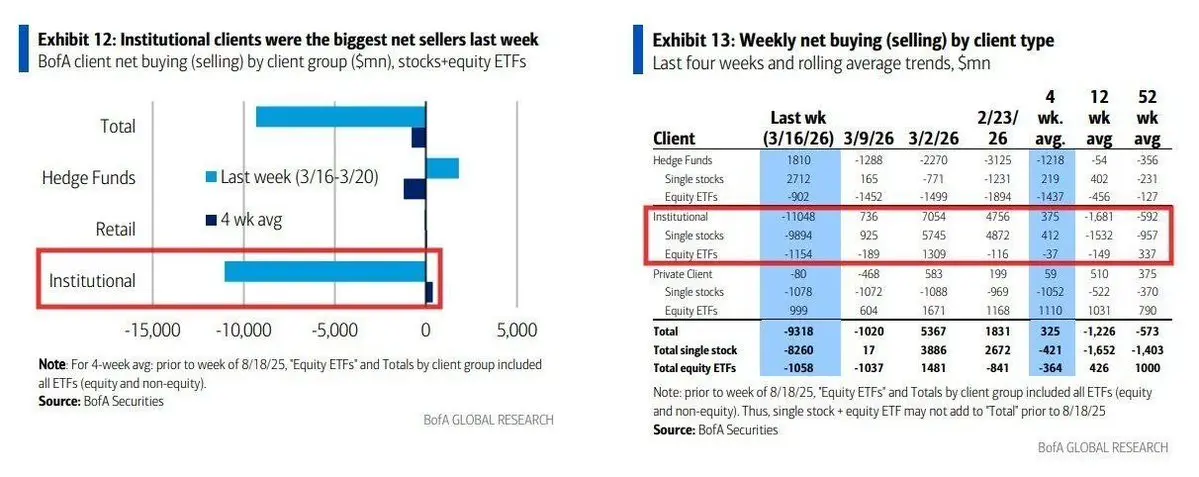
A massive $9.3 billion has flowed out of US stocks in just one week marking one of the biggest withdrawals in recent years.
Institutional investors are ramping up their selling.
post-image
  • Reward
  • Comment
  • Repost
  • Share
I didn’t take $SIGN seriously at first.
It looked like just another quiet project in a loud space. But then I started paying attention to what they were actually doing, not what they were saying.
A buyback that size, fully visible on-chain, isn’t normal behavior here. It made me pause.
Since then, I’ve been watching more than price I’ve been watching consistency. The way rewards, ownership and participation connect feels intentional.
Still, it hasn’t moved much, and that tests patience.
But sometimes the real question isn’t speed… it’s whether something keeps working even when no one’s watch
  • Reward
  • Comment
  • Repost
  • Share
I didn’t go looking for $SIGN , it just showed up while I was trying to understand an airdrop late at night.
But the deeper I looked, the more it made sense. Instead of repeating the same wallet checks again and again, it turns actions into reusable proofs. That alone fixes a lot of friction.
What stood out is the real usage millions of users, billions distributed, and actual revenue. This isn’t just hype, it feels like real infrastructure.
Still, risks are there. Token unlocks and slow adoption could impact growth.
For now, I’m watching closely this could be early, or just another lesson.
@Si
  • Reward
  • Comment
  • Repost
  • Share
I’ve been thinking about how much time we waste reproving things online. With Sign Protocol, that loop finally breaks. Once something is verified, it stays verified no need to repeat it across every platform. That alone removes a lot of friction.
What really stood out to me is the shift from blind trust to actual proof. It’s not just “this happened,” it’s something you can check anytime. Even updates don’t erase history they build on it. Every change leaves a trace.
At first it feels small but honestly, this is the direction digital systems are moving toward.
$SIGN @Sign
#SignDigitalSovereign
  • Reward
  • Comment
  • Repost
  • Share
I never thought @Sign would play such a critical role across the full lifecycle, but it clearly does.
What stands out is how attestations aren’t permanent by default. They can expire or be revoked, which changes how validation works entirely.
Instead of relying on something that was once verified, the system continuously evaluates whether it still holds true in the present moment.
That subtle shift makes a huge difference. It brings a more dynamic and reliable layer to verification, where trust isn’t static but constantly maintained.
It may seem like a small design choice but it fundamentally
  • Reward
  • Comment
  • Repost
  • Share
Sign keeps old schemas resolving while the real shift is that new policy logic is already live.
I’ve rebuilt eligibility rules more times than I can count different chains, same problem: who qualifies. It’s repetitive, fragile and drains momentum.
What stands out with Sign Protocol is a cleaner approach. Rules move outside the app defined once, verified anywhere. Apps stop operating like isolated systems and start sharing meaningful signals instead of raw data.
Less repetition. Less patchwork logic.
Still early but if this model holds, rebuilding the same rules again won’t make much sense anym
  • Reward
  • Comment
  • Repost
  • Share
I’ve been looking into what $SIGN is doing and it feels like it’s trying to fix something real the way data is unreliable and hard to verify today.
The idea of attaching proof to information makes sense and could clean up systems like identity or aid distribution. But it also raises concerns.
If wrong data gets verified, it could become harder to correct. And if transparency depends on who controls access, old problems might still exist. Web3 talks about trustless systems, yet much of it still runs on messy processes.
@Sign is trying to bring structure, but whether it truly solves these deep
  • Reward
  • Comment
  • Repost
  • Share
I used to think digital identity was just logins until I saw what Bhutan did.
750K+ people now control their own identity through SSI. No middleman. No dependency.
That’s when it clicked this is exactly where SIGN makes sense.
Not another platform.
A shift in ownership.
We’ve been “using” identity for years But never actually owning it.
Maybe the future isn’t more access.
Maybe it’s finally control.
#SignDigitalSovereignInfra
$SIGN @Sign
  • Reward
  • Comment
  • Repost
  • Share
  • Pin