
















CryptoDiscovery

vip
Age 0.8 Year
Peak Tier 5
Flow, everyone, and you might be wondering who I am. Let me tell you, I’m a streamer, and I’m here to bring you real market vibes, live analysis, and honest energy. Stick with me, follow the journey, and let’s grow together. Join me as we explore the latest trends, share insights, and build a community of passionate traders and enthusiasts. Together, we’ll navigate the ups and downs of the market and achieve our goals.
Pin
#TopCopyTradingScout Copy trading has evolved from a simple “mirror strategy” tool into a structured approach for accessing professional execution in highly volatile crypto markets. But what most retail participants still misunderstand is this: copy trading is not passive investing—it is delegated risk management with active exposure control.
In today’s market environment, especially with Bitcoin, Ethereum, and altcoin liquidity rotating rapidly, copy trading performance is no longer just about selecting a profitable trader. It is about understanding how that trader behaves under different liq
BTC1.28%
ETH1.84%
post-image
post-image
post-image
post-image
post-image
  • Reward
  • 22
  • Repost
  • Share
ybaser:
2026 GOGOGO 👊
View More
#DailyPolymarketHotspot
In today’s hyper-connected digital world, platforms like Polymarket have become more than prediction tools—they are now real-time sentiment engines where global expectations, capital flows, and psychological reactions are instantly converted into probability and price signals 📊🔥. Every single hotspot you see is not just a trend—it is a live battlefield of narratives, where traders are constantly pricing what they think will happen next before the world even confirms it.
Right now, with major assets like Bitcoin hovering around key psychological zones near $77K–$78K,
BTC1.28%
post-image
post-image
  • Reward
  • 3
  • Repost
  • Share
HighAmbition:
2026 GOGOGO 👊
View More
#DailyPolymarketHotspot
In today’s hyper-connected digital world, platforms like Polymarket have become more than prediction tools—they are now real-time sentiment engines where global expectations, capital flows, and psychological reactions are instantly converted into probability and price signals 📊🔥. Every single hotspot you see is not just a trend—it is a live battlefield of narratives, where traders are constantly pricing what they think will happen next before the world even confirms it.
Right now, with major assets like Bitcoin hovering around key psychological zones near $77K–$78K,
BTC1.28%
post-image
post-image
  • Reward
  • 2
  • Repost
  • Share
HighAmbition:
good 👍
View More
#TopCopyTradingScout
In today’s hyper-competitive crypto and forex environment, copy trading has evolved far beyond a simple “mirror strategy.” It has become a structured capital allocation system, where success depends not on copying trades blindly, but on understanding trader behavior, market regimes, and dynamic risk exposure. A true Top Copy Trading Scout is not a follower—they are a filter, a strategist who decides who to follow, when to follow, and how much to allocate based on real market conditions.
The Illusion Most Beginners Fall Into
At first glance, copy trading appears simple:
Fi
post-image
post-image
post-image
post-image
post-image
  • Reward
  • 4
  • Repost
  • Share
ybaser:
2026 GOGOGO 👊
View More
The U.S. cracks down on crypto channels! Iran reportedly loses b
893 views
2026-04-29 08:19
  • Reward
  • 3
  • Repost
  • Share
ybaser:
To The Moon 🌕
View More
#TopCopyTradingScout In modern crypto markets, copy trading is no longer just a “follow and earn” shortcut—it has evolved into a structured exposure strategy to professional execution systems, where the real edge is not in copying trades, but in understanding who is worth following, under what conditions, and with what risk constraints.
The idea of a Top Copy Trading Scout is therefore not about chasing the highest ROI leaderboard. It is about building a selection framework that survives different market regimes: bull runs, corrections, sideways volatility, and liquidity shocks.
The New Realit
post-image
post-image
post-image
  • Reward
  • 11
  • Repost
  • Share
ybaser:
2026 GOGOGO 👊
View More
#AaveLaunchesrsETHRecoveryPlan
The launch of an rsETH recovery framework by Aave is not just another governance or risk parameter update—it represents a critical stress-response mechanism inside one of DeFi’s most systemically important lending ecosystems. In modern decentralized finance, where leverage, staking derivatives, and rehypothecated collateral are deeply interconnected, any instability in a single high-utility asset like rsETH can ripple across the entire liquidity layer, affecting borrowing markets, liquidation engines, and yield strategies simultaneously.
At its core, this recove
AAVE-0.68%
ETH1.84%
post-image
  • Reward
  • 10
  • Repost
  • Share
ybaser:
Buy To Earn 💰️
View More
#EthereumFoundationUnstakes$48.9METH
The reported unstaking of $48.9M worth of ETH by the Ethereum Foundation is not just a routine on-chain movement—it is the kind of event that the market immediately interprets through multiple layers: liquidity positioning, governance optics, staking dynamics, and broader sentiment around Ethereum’s long-term supply behavior.
On the surface, unstaking is a technical action. ETH that was previously locked in staking contracts becomes liquid again. But in crypto markets, especially at scale, liquidity events are always interpreted as signals, even when no ex
ETH1.84%
post-image
  • Reward
  • 9
  • Repost
  • Share
ybaser:
To The Moon 🌕
View More
#CrudeOilPriceRose
Crude oil pushing higher again is not just an energy story—it is a macro signal with direct consequences for liquidity, inflation expectations, and risk asset behavior, especially in crypto markets. When oil rises sharply, it doesn’t just reflect supply-demand imbalance; it reflects geopolitical tension, transport risk, and capital repricing across global markets.
Right now, the move above key psychological levels is not being driven by classic inventory data. It is being driven by risk premium expansion—a situation where traders price in uncertainty rather than actual shor
BTC1.28%
post-image
  • Reward
  • 8
  • Repost
  • Share
ybaser:
To The Moon 🌕
View More
#TapAndPayWithGateCard
The evolution of crypto payments has reached a point where convenience is no longer the headline—the real story is infrastructure maturity, and Tap & Pay with Gate Card is a direct reflection of that shift. What we are witnessing is not just a feature upgrade, but the gradual transformation of crypto from a speculative asset class into a functional financial layer integrated with everyday economic activity. For years, the biggest gap in the crypto ecosystem was usability. Users could generate returns, participate in DeFi, and trade across markets, but when it came to re
post-image
  • Reward
  • 8
  • Repost
  • Share
ybaser:
2026 GOGOGO 👊
View More
#SolanaReleasesQuantumRoadmap
The moment Solana announced its quantum roadmap, the conversation in crypto quietly shifted from speed, scalability, and fees… to something much deeper:
Survival.
Because for the first time, a major high-performance blockchain is not just optimizing for today’s market—but preparing for a future where quantum computing could break the foundation of current cryptography.
This Is Not Hype — This Is Strategic Preparation
Most people misunderstand this announcement.
Quantum computers are not breaking crypto today.
But when they eventually reach scale, they could:
- Br
SOL1%
post-image
  • Reward
  • 8
  • Repost
  • Share
ybaser:
2026 GOGOGO 👊
View More
#DailyPolymarketHotspot
In the evolving landscape of global markets, prediction platforms like Polymarket have transformed into something far more powerful than simple forecasting tools. They now function as real-time probability engines, where the collective intelligence, biases, fears, and expectations of thousands of participants are continuously translated into price.
A Daily Polymarket Hotspot is not just a trending contract—it is a live signal of where the world’s attention, capital, and uncertainty are colliding at maximum intensity.
The Deeper Layer: Markets Before Markets
Traditional
  • Reward
  • 5
  • Repost
  • Share
ybaser:
To The Moon 🌕
View More
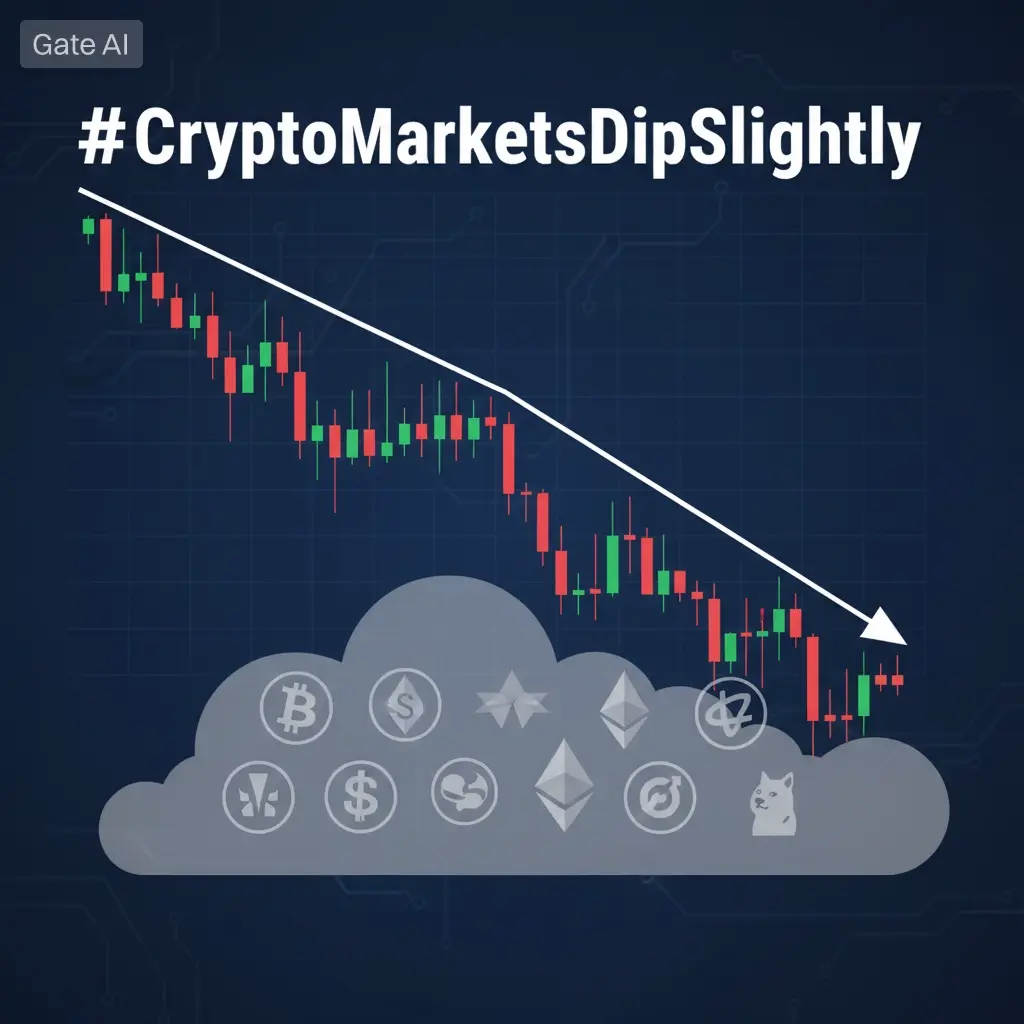
#CryptoMarketsDipSlightly The latest pullback across crypto markets may look minor on the surface, but beneath that small dip lies a much deeper shift in liquidity behavior, positioning dynamics, and short-term sentiment reset. In 2026, even a slight dip is rarely “just a dip”—it is usually a signal of capital repositioning rather than panic selling.
Bitcoin, Ethereum, and major altcoins showing mild downside movement is not necessarily weakness. In many cases, it reflects cooling momentum after aggressive positioning, especially when markets have recently approached key resistance zones.
The
BTC1.28%
ETH1.84%
post-image
  • Reward
  • 4
  • Repost
  • Share
ybaser:
2026 GOGOGO 👊
View More
#WCTCTradingKingPK
In today’s competitive crypto environment, trading is no longer just about charts and indicators—it has become a performance battlefield where every decision is tested in real time under pressure. Competitions like WCTC are not simply events; they are live stress labs where strategy, discipline, and emotional control are exposed without filters.
Most people look at WCTC leaderboards and see profit percentages.
Professionals look at them and see risk behavior under pressure.
Because in a competition, everyone has access to the same market.
The difference is not opportunity—i
post-image
  • Reward
  • 3
  • Repost
  • Share
ybaser:
To The Moon 🌕
View More
#AaveLaunchesrsETHRecoveryPlan
The rsETH exploit incident in April 2026 has quickly become one of the most important stress tests in decentralized finance history, not because of the size of the attack alone, but because of the coordinated response it triggered across multiple protocols. The issue originated in the Kelp DAO ecosystem, where a vulnerability in the rsETH bridge allowed an attacker to mint unbacked assets and inject them into lending markets. Those assets were then used across platforms like Aave, turning a bridge-level exploit into a system-wide liquidity concern. What followed
AAVE-0.68%
ETH1.84%
MNT0.52%
ARB3.02%
MrFlower_XingChen
#AaveLaunchesrsETHRecoveryPlan
The rsETH exploit incident in April 2026 has quickly become one of the most important stress tests in decentralized finance history, not because of the size of the attack alone, but because of the coordinated response it triggered across multiple protocols. The issue originated in the Kelp DAO ecosystem, where a vulnerability in the rsETH bridge allowed an attacker to mint unbacked assets and inject them into lending markets. Those assets were then used across platforms like Aave, turning a bridge-level exploit into a system-wide liquidity concern. What followed was not a collapse of confidence, but an unusually coordinated attempt to contain and repair the damage.
At the center of the crisis was a fundamental DeFi risk pattern: composability turning a localized exploit into a systemic exposure event. The attacker was able to leverage inflated rsETH positions as collateral and extract real value in ETH-denominated assets, creating a shortfall that exceeded hundreds of millions of dollars across lending positions. Importantly, the core lending protocol itself was not compromised at the smart contract level. Instead, the weakness emerged from external collateral integrity assumptions — a reminder that in DeFi, security is not only about code, but also about dependencies between protocols.
What makes this incident stand out is the response framework that emerged almost immediately. Instead of fragmented reactions, the ecosystem began forming what has been referred to as a “DeFi United” recovery structure. This was not a formal organization, but a coordinated alignment of incentives among major participants in the decentralized finance space. The goal was straightforward but ambitious: restore rsETH collateral integrity, stabilize affected markets, and prevent cascading losses for users who had deposited assets into lending pools.
The response quickly expanded beyond any single entity. Multiple protocols and organizations contributed capital, credit facilities, and technical coordination. Among the most significant commitments was a proposal from Aave DAO, suggesting the allocation of a substantial portion of its treasury — approximately 25,000 ETH — to the recovery effort. This alone represents one of the largest coordinated treasury interventions in DeFi history, signaling a shift in how decentralized protocols approach crisis management.
Alongside this, other ecosystem participants contributed in different ways. Liquid staking and infrastructure players such as Lido Finance participated with staked ETH contributions, while Mantle provided a large credit facility to help bridge liquidity gaps during recovery. Additional contributions from smaller protocols, infrastructure providers, and security-focused organizations created a multi-layered support structure designed to stabilize the system while governance processes unfolded.
A particularly important element of the recovery effort involved frozen assets and cross-chain coordination. Security mechanisms on networks such as Arbitrum allowed a significant amount of ETH tied to exploiter-controlled addresses to be frozen, preventing further extraction of value. These assets were then proposed to be redirected into a controlled multisignature structure, jointly overseen by participating entities and security auditors. This introduces a hybrid model of decentralized governance and emergency centralized coordination — a controversial but increasingly practical approach during crisis scenarios.
From a financial structure perspective, the numbers highlight both the scale of the problem and the progress of mitigation. Initial shortfalls were reduced significantly through a combination of frozen funds, partial liquidations, and external commitments. However, a remaining gap still requires bridging liquidity solutions and coordinated governance approval. The mechanism being proposed includes temporary liquidity bridging while long-term collateral restoration is finalized through governance votes across multiple layers of decision-making.
The broader significance of this event lies not in the exploit itself, but in what it reveals about DeFi’s evolving risk architecture. Historically, similar incidents would often result in fragmented responses, liquidity withdrawal, and long-term trust erosion. In this case, however, the ecosystem response demonstrates a shift toward collective risk absorption mechanisms, where protocols increasingly recognize that isolated failures can threaten shared liquidity infrastructure.
This introduces a new concept in decentralized finance: proto-insurance through governance coordination. Rather than relying solely on external insurance products or centralized bailout mechanisms, DeFi protocols are beginning to use their own treasuries, liquidity reserves, and governance frameworks to stabilize system-wide shocks. While still experimental and not without controversy, this approach suggests a maturation phase where protocols act less like isolated platforms and more like interconnected financial institutions with shared systemic responsibility.
From a market perspective, the incident also reinforces an important truth about DeFi capital flows. Liquidity is not static; it is highly sensitive to perceived structural risk. When collateral integrity is questioned, capital tends to withdraw or reposition rapidly. However, when recovery mechanisms are visible and credible, confidence can stabilize just as quickly. This dynamic creates a feedback loop where trust becomes a tradable variable in decentralized markets.
Ultimately, the rsETH recovery plan is not just about closing a financial gap — it is about defining how decentralized systems respond under stress. The collaboration between Aave, Lido Finance, Mantle, and others shows that DeFi is beginning to develop its own internal crisis-response infrastructure. That infrastructure is still evolving, but it represents a critical step toward long-term resilience.
In the broader context of crypto markets, this event highlights a key transition: decentralized finance is no longer just an experimental financial layer. It is becoming a system capable of coordinated defense, collective governance action, and rapid liquidity stabilization under stress. That evolution marks an important milestone in the journey from fragmented protocols to a more integrated financial ecosystem.
#GateSquare
#ContentMining
#CreaterCarnival

repost-content-media
  • Reward
  • 10
  • Repost
  • Share
ybaser:
2026 GOGOGO 👊
View More
#DailyPolymarketHotspot
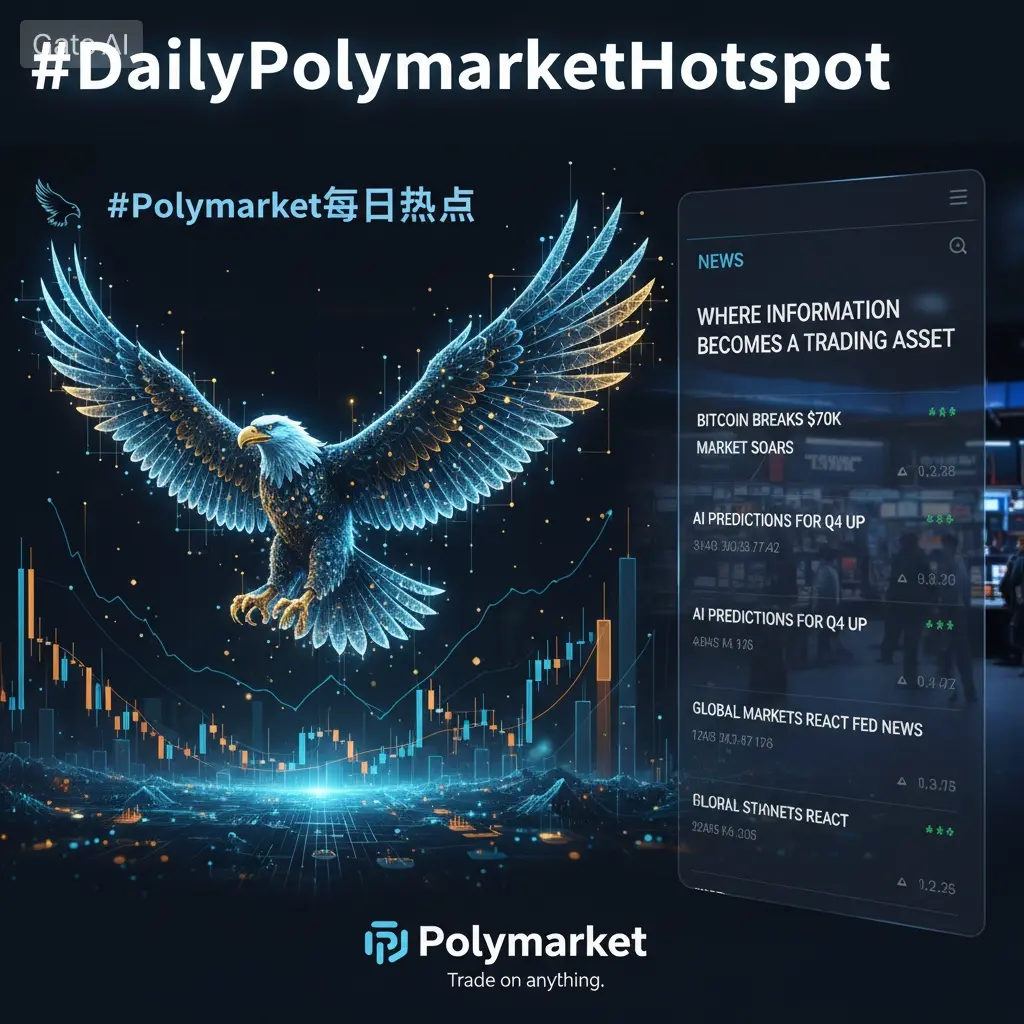
🦅 #Polymarket每日热点 — Where Information Becomes a Trading Asset
In today’s fast-moving digital financial landscape, prediction is no longer just about opinions or speculation—it has become a market in itself. Platforms like Polymarket are redefining how people interpret future events by turning them into tradable contracts. Instead of waiting for news to unfold, users are actively positioning themselves before outcomes happen, effectively pricing reality in real time. Every political shift, economic update, sports result, or crypto movement can now be expressed as a sim
UMA3.07%
MrFlower_XingChen
#DailyPolymarketHotspot
🦅 #Polymarket每日热点 — Where Information Becomes a Trading Asset
In today’s fast-moving digital financial landscape, prediction is no longer just about opinions or speculation—it has become a market in itself. Platforms like Polymarket are redefining how people interpret future events by turning them into tradable contracts. Instead of waiting for news to unfold, users are actively positioning themselves before outcomes happen, effectively pricing reality in real time. Every political shift, economic update, sports result, or crypto movement can now be expressed as a simple but powerful structure: “Yes” or “No,” with the market deciding the probability through price action.
What makes this system powerful is its simplicity combined with financial depth. Each event is represented as a binary contract, where “Yes” and “No” shares trade between $0 and $1. These prices are not random—they represent the collective belief of the market. If “Yes” is priced at $0.72, the market is effectively saying there is a 72% probability of that outcome occurring. This transforms scattered global opinions into a live probability engine, constantly updating as new information flows in. Unlike traditional polls or expert forecasts, this system is continuously corrected by money, which forces accuracy through economic incentive.
Behind this structure lies a highly efficient trading and settlement mechanism. Participants can freely buy or sell positions before the event is resolved, allowing real-time speculation and hedging strategies. Once the outcome is officially confirmed, the winning side settles at $1 per share, while the losing side becomes worthless. This creates a pure risk-reward environment where timing, information advantage, and sentiment reading become critical. It is not just betting—it behaves like a financial derivatives market built around real-world events.
The infrastructure supporting this system is equally important. Polymarket operates on Polygon, a scalable blockchain solution that allows fast, low-cost transactions while maintaining transparency. To ensure price stability and avoid volatility unrelated to predictions, trading is conducted using USD Coin. The combination of speed, stability, and decentralization creates a smooth trading environment where users can focus purely on forecasting outcomes rather than dealing with technical friction or network delays.
A critical layer in this ecosystem is the oracle system, which is responsible for verifying real-world outcomes. Polymarket relies on decentralized verification protocols such as UMA, where results can be proposed, challenged, and resolved through a structured consensus process. This removes reliance on a single authority and ensures that truth is determined through a decentralized mechanism rather than centralized control. It also introduces a layer of game theory, where incorrect or manipulated claims can be economically challenged.
From a regulatory perspective, the platform has also gone through significant evolution. It previously faced scrutiny from the Commodity Futures Trading Commission due to compliance concerns surrounding prediction-based trading. However, instead of disappearing, the platform adapted and moved toward a more structured regulatory framework. This shift reflects a broader trend in the financial world where decentralized systems are gradually integrating with traditional oversight rather than operating entirely outside it.
What makes Polymarket particularly powerful is its ability to aggregate global information into price signals. Political elections, macroeconomic indicators, corporate events, and even crypto market sentiment can be tracked through probability curves that update in real time. In many cases, these markets respond faster than traditional media because they are driven by capital incentives rather than reporting delays. Traders with better information or faster interpretation can position early, turning knowledge into direct financial advantage.
However, this system is not without risk. Low liquidity markets can be easily distorted, emotional trading can lead to irrational decisions, and information asymmetry can heavily favor insiders or experienced participants. The simplicity of the “Yes/No” structure can also mislead newcomers into thinking outcomes are easier to predict than they actually are. In reality, success requires disciplined probability thinking, not emotional conviction.
Ultimately, Polymarket represents a major shift in how modern information systems function. It transforms belief into price, opinion into liquidity, and uncertainty into a tradable asset class. Instead of waiting for truth to be revealed, the market actively estimates it in advance. As adoption grows, platforms like this could become essential tools for understanding global sentiment, forecasting major events, and even guiding investment decisions across traditional and digital markets.
#GateSquare
#ContentMining
#CreaterCarnival
repost-content-media
  • Reward
  • 8
  • Repost
  • Share
ybaser:
To The Moon 🌕
View More
#TopCopyTradingScout
— Copy Trading Evolution (April 2026 Perspective)
In today’s crypto ecosystem, copy trading has officially moved beyond its original “follow a trader and earn profits” concept. What started as a simple mirror-trading feature on platforms like Gate.io has now evolved into a structured system of market intelligence, behavioral analysis, and risk-managed capital allocation. Campaigns such as #TopCopyTradingScout reflect this shift clearly — where the focus is no longer just copying trades, but understanding the logic behind every execution.
🧠 From Copying Trades to Understa
MrFlower_XingChen
#TopCopyTradingScout
— Copy Trading Evolution (April 2026 Perspective)
In today’s crypto ecosystem, copy trading has officially moved beyond its original “follow a trader and earn profits” concept. What started as a simple mirror-trading feature on platforms like Gate.io has now evolved into a structured system of market intelligence, behavioral analysis, and risk-managed capital allocation. Campaigns such as #TopCopyTradingScout reflect this shift clearly — where the focus is no longer just copying trades, but understanding the logic behind every execution.
🧠 From Copying Trades to Understanding Market Intelligence
Modern copy trading is no longer passive participation. It is becoming a decision intelligence layer between retail users and professional trading behavior. Instead of blindly following signals, users are now exposed to real execution logic — how professional traders size positions, manage risk, and react to volatility in real time.
This transformation is important because it changes the mindset of participants. Copy trading is no longer treated as a shortcut to profit, but as a live environment where users can observe how strategies behave under pressure. Every trade becomes a data point, and every decision becomes a lesson in market structure.
📈 What Defines a Skilled Trader Today
In this new environment, success is no longer defined by isolated profit spikes or short-term gains. Instead, it is measured by consistency and risk behavior over time. A strong trader is not the one who makes the highest return in a week, but the one who survives multiple market cycles without destroying capital structure.
Key indicators of real trading quality include controlled drawdowns, stable position sizing, and the ability to remain disciplined during both trending and sideways markets. In highly volatile crypto conditions, capital preservation has become more important than aggressive growth. A trader who avoids large losses is often more valuable than one who occasionally produces extreme gains.
🔍 Learning Through Trade Behavior Analysis
One of the most powerful aspects of copy trading is hidden in observation. When users actively analyze trade behavior instead of simply copying positions, they begin to develop real market understanding. Questions such as why a position was entered, how risk was defined, and when exits are triggered create a deeper learning loop.
Over time, this process builds an internal model of how professional traders think. It reveals patterns that are not visible in charts alone — such as emotional discipline, liquidity awareness, and reaction to sudden volatility. This is where copy trading becomes a form of practical education rather than passive income generation.
⚖️ Risk Architecture as the Core System
In 2026 market conditions, where liquidity shifts quickly and algorithmic trading dominates, risk management is no longer just a tool — it is the foundation of the entire system. Copy trading success depends heavily on how capital is distributed across multiple strategies rather than concentrated in a single trader.
Sustainable systems focus on exposure control, drawdown monitoring, and avoiding emotional reallocations after short-term losses. The goal is not to eliminate risk entirely, but to structure it in a way that remains predictable and mathematically manageable. Without this layer, even profitable strategies can become unstable over time.
🔄 Market Cycles and Trader Selection Strategy
Different market environments require different trading styles. Trend-driven markets favor momentum traders, while sideways conditions reward mean-reversion strategies. During high volatility phases, short-term scalping and rapid execution models tend to perform better.
Advanced participants in copy trading ecosystems learn to rotate between traders based on market conditions rather than emotional attachment or recent performance. This adaptability is what separates stable portfolios from inconsistent ones, especially in rapidly changing crypto environments.
👥 Active vs Passive Copy Trading Models
Copy trading strategies generally fall into two categories: passive and active approaches. Passive systems focus on long-term allocation stability with minimal adjustments, making them suitable for users who prefer low maintenance and capital preservation. Active systems, on the other hand, involve continuous monitoring, reallocation, and strategy switching based on performance and market conditions.
In current market environments, hybrid models are becoming more common. These combine the stability of passive allocation with selective active adjustments, offering a balance between efficiency and control.
🌐 Community Intelligence as a Hidden Edge
One of the most underestimated advantages of modern copy trading ecosystems is community-driven intelligence. Collective observation allows users to detect patterns such as strategy degradation, hidden risk exposure, and changes in trader behavior before they become visible in performance charts.
This creates a distributed analytical network where insights are shared across participants, making the entire ecosystem more adaptive. Over time, this shared intelligence becomes as valuable as the trades themselves.
⚠️ Common Mistakes That Limit Growth
Despite the sophistication of modern copy trading systems, many participants still fail due to behavioral mistakes. Over-allocating capital to high-return traders without analyzing risk, frequently switching strategies based on short-term performance, and reacting emotionally to temporary drawdowns are among the most common errors.
The core issue is treating copy trading as guaranteed income rather than probabilistic exposure. Without discipline and structured thinking, even strong systems can lead to unstable outcomes.
🚀 Long-Term Evolution: From Copier to Independent Trader
The ultimate purpose of copy trading is not dependency, but progression. Users typically move through stages: observation, pattern recognition, risk understanding, strategy adaptation, and finally independent trading capability. At the highest level, some users evolve from copying trades to designing their own strategies — and even becoming traders that others choose to follow.
🧩 Final Perspective
The #TopCopyTradingScout ecosystem reflects a broader shift in crypto markets: trading is no longer just execution, but a combination of analytics, psychology, and structured risk control. In this new environment, sustainable success depends on three pillars — strategic trader selection, disciplined risk exposure, and continuous behavioral learning.
Rewards may bring users into the system, but long-term consistency is built through understanding how markets actually behave beneath the surface.
repost-content-media
  • Reward
  • 9
  • Repost
  • Share
ybaser:
2026 GOGOGO 👊
View More
#CryptoMarketsDipSlightly
The global crypto market is showing a mild pullback today, reflecting a pause in bullish momentum rather than a complete trend reversal. After recent upward movement, prices are now cooling off as traders take profits and wait for clearer direction. This phase is often seen as healthy consolidation, where the market resets before its next major move.
Bitcoin is currently trading in a broad range between approximately $69,000 and $78,000. The recent rejection near the $78K–$80K zone highlights strong resistance, where selling pressure from large players is becoming vi
BTC1.28%
ETH1.84%
DOGE8.83%
MrFlower_XingChen
#CryptoMarketsDipSlightly
The global crypto market is showing a mild pullback today, reflecting a pause in bullish momentum rather than a complete trend reversal. After recent upward movement, prices are now cooling off as traders take profits and wait for clearer direction. This phase is often seen as healthy consolidation, where the market resets before its next major move.
Bitcoin is currently trading in a broad range between approximately $69,000 and $78,000. The recent rejection near the $78K–$80K zone highlights strong resistance, where selling pressure from large players is becoming visible. At the same time, the $66K–$69K region is acting as a key support zone. As long as Bitcoin holds above this level, the overall structure remains intact and slightly bullish. However, if support breaks, the market could see a deeper correction toward lower levels. Right now, BTC is in a consolidation phase, balancing between buyers and sellers.
Ethereum is trading around the $2,000 to $2,100 range, showing weaker momentum compared to Bitcoin. This suggests that altcoin strength is currently limited, as Ethereum often depends on BTC’s direction. The key support lies near $1,950–$2,000, while resistance is forming around $2,150–$2,200. The trend remains sideways with slight bearish pressure in the short term, indicating that traders are hesitant to make aggressive moves until Bitcoin confirms its next direction.
Dogecoin is hovering near $0.09, struggling to gain upward momentum. It is currently sitting close to an important support zone between $0.087 and $0.090. If this level holds, a bounce toward $0.10 is possible, but failure to maintain support could push the price lower. Dogecoin’s trend appears weak in the short term, although underlying interest in meme coins remains present in the market.
Overall, the slight dip across these major cryptocurrencies is mainly driven by profit-taking after recent gains, combined with low trading volume and cautious sentiment among investors. The absence of strong buying pressure means even small sell-offs can push prices downward. However, there are no strong signs of panic in the market, which suggests that long-term investors are still confident.
In conclusion, this dip is more of a temporary cooling phase than a bearish breakdown. The market is stabilizing and preparing for its next move. If Bitcoin manages to break above the $80K level, a strong bullish continuation could follow. On the other hand, losing key support zones may lead to a deeper correction. For now, the market remains in a waiting phase, with traders closely watching critical levels for confirmation of the next trend.
#GateSquare
#ContentMining
#CreaterCarnival

repost-content-media
  • Reward
  • 7
  • Repost
  • Share
ybaser:
To The Moon 🌕
View More
#TapAndPayWithGateCard
The rise of tap-to-pay technology marks a major shift in how people interact with money, and Gate is positioning itself right at the center of this transformation. What this hashtag represents is more than just a feature—it reflects a global movement toward faster, simpler, and frictionless payments where a single tap replaces multiple steps.
Between 2025 and 2026, contactless payment systems have rapidly become the norm across major cities and economies. Public transit networks and retail environments are leading this change, allowing users to move seamlessly without r
ORCA-6.55%
MrFlower_XingChen
#TapAndPayWithGateCard
The rise of tap-to-pay technology marks a major shift in how people interact with money, and Gate is positioning itself right at the center of this transformation. What this hashtag represents is more than just a feature—it reflects a global movement toward faster, simpler, and frictionless payments where a single tap replaces multiple steps.
Between 2025 and 2026, contactless payment systems have rapidly become the norm across major cities and economies. Public transit networks and retail environments are leading this change, allowing users to move seamlessly without relying on physical tickets or QR codes. Systems like BART introduced “Tap and Ride,” enabling passengers to pay directly at gates using cards or mobile wallets. Similarly, ORCA expanded contactless functionality, while Washington Metro adopted similar tap-based solutions. These developments highlight a clear trend: users now expect instant, one-tap access without extra steps.
This is where GateCard enters the picture. #TapAndPayWithGateCard represents Gate’s move to combine crypto and traditional finance into a single, seamless payment experience. Instead of switching between wallets, apps, and cards, users can rely on one unified system that supports both fiat and digital assets. The goal is simple—bring crypto into everyday life without complexity.
The underlying technology behind this system is NFC (Near Field Communication), the same technology used by mobile payment platforms like Apple Pay and Google Pay. With GateCard, users can add their card to a mobile wallet and simply tap their phone or card on a compatible terminal. The transaction is completed almost instantly, often within a second, creating a smooth and efficient payment flow.
The user experience is designed to be straightforward. First, the GateCard is added to a mobile wallet. Once set up, payments become effortless—just tap the phone or card near an NFC reader, whether at a store or a transit gate. After the transaction, users receive instant updates, allowing them to track spending in both fiat currencies and crypto equivalents directly within the Gate app.
One of the biggest advantages of this system is speed. Traditional QR-based payments require multiple steps—opening an app, generating a code, and scanning it. Tap-to-pay removes all of that friction. It also offers global usability, as Gate aims to integrate with international payment networks, allowing users to pay across different countries without worrying about compatibility.
Travel convenience is another major benefit. With tap-to-pay systems becoming standard in airports and metro networks, users can move freely without needing to purchase separate transit cards. This aligns perfectly with modern travel expectations, where speed and simplicity are essential.
Security remains a key part of the system. Contactless payments rely on tokenization, meaning actual card details are not shared during transactions. Additionally, many tap payments are limited in value, reducing risk while maintaining convenience. The balance between security and ease of use is what makes this technology widely accepted.
However, there are still challenges to consider. Privacy concerns are one of the main topics being discussed, especially in transit systems where users worry about tracking. There are also occasional issues with failed transactions or delays in refunds, which highlight the need for strong backend systems. Accessibility is another factor, as not all users may be comfortable with or have access to mobile wallets.
Looking ahead, the future of tap-to-pay is expanding beyond everyday purchases. From public transportation to concerts and large-scale events, the idea of a “single tap” ecosystem is becoming reality. Gate’s strategy suggests that GateCard could eventually replace not just payment methods, but also tickets, passes, and even event access systems.
In conclusion, #TapAndPayWithGateCard reflects a broader shift toward a faster, smarter financial world. As users move away from complicated payment processes, the demand for instant, one-tap solutions continues to grow. Gate’s approach of combining crypto with contactless infrastructure positions it well to be part of this next phase of digital finance.
#GateSquare #CreatorCarnival #ContentMining
repost-content-media
  • Reward
  • 5
  • Repost
  • Share
ybaser:
2026 GOGOGO 👊
View More
#TopCopyTradingScout
💎 The Art of Consistency: Why Risk Management Trumps Hype 📈
In crypto, everyone is chasing massive gains—but real professionals focus on one thing: consistency. The difference between gamblers and skilled traders is not profit size, it’s risk control, drawdown stability, and disciplined execution.
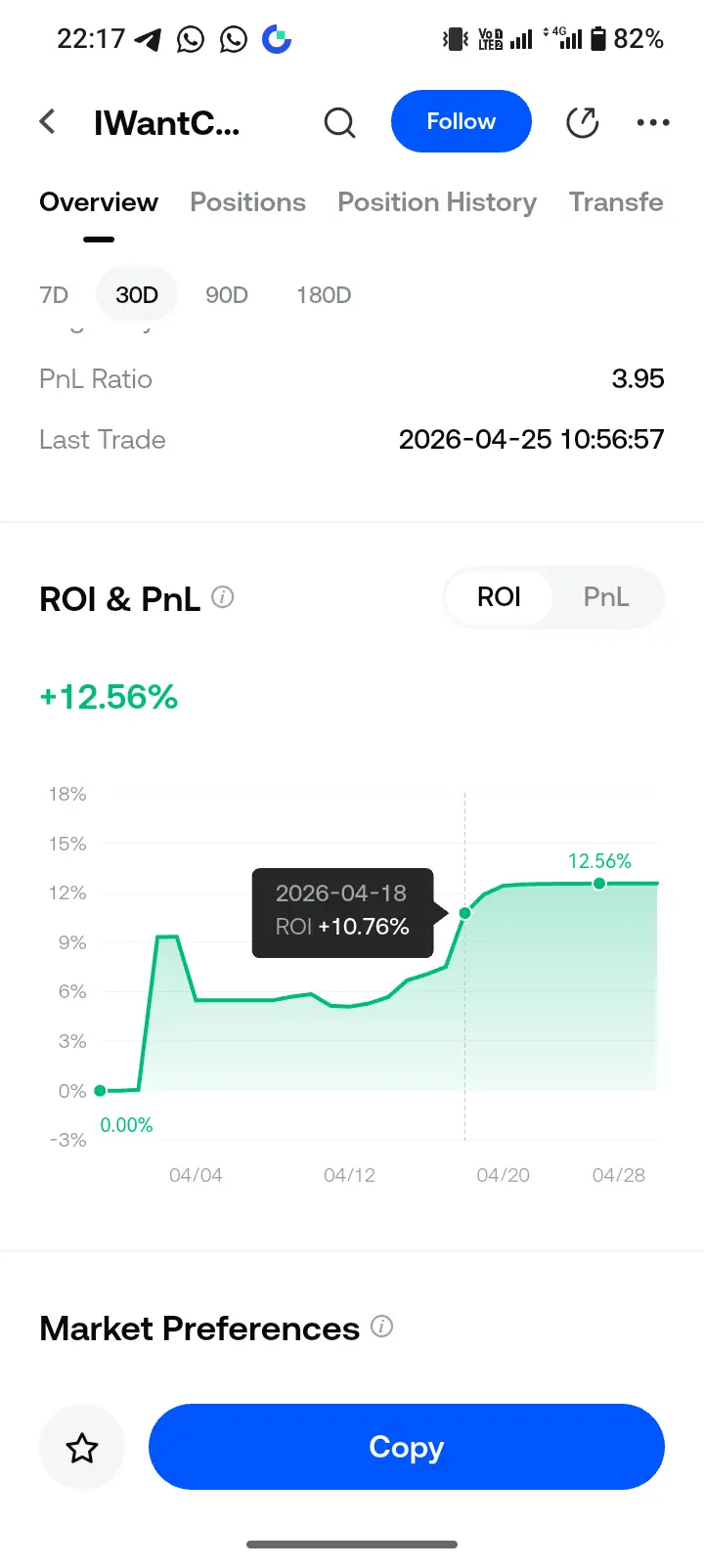
For the #TopCopyTradingScout spotlight, let’s break down a high-level performer: IWantCoinHoardingpro. This is not hype—it’s structured, data-driven performance.
🔍 Key Performance Stats
Win Rate: 86.00% (300 trades)
ROI (30 Days): 12.56%
Max Drawdown: 3.87%
Sharpe Ratio: 1.24
BTC1.28%
ETH1.84%
MrFlower_XingChen
#TopCopyTradingScout
💎 The Art of Consistency: Why Risk Management Trumps Hype 📈
In crypto, everyone is chasing massive gains—but real professionals focus on one thing: consistency. The difference between gamblers and skilled traders is not profit size, it’s risk control, drawdown stability, and disciplined execution.
For the #TopCopyTradingScout spotlight, let’s break down a high-level performer: IWantCoinHoardingpro. This is not hype—it’s structured, data-driven performance.
🔍 Key Performance Stats
Win Rate: 86.00% (300 trades)
ROI (30 Days): 12.56%
Max Drawdown: 3.87%
Sharpe Ratio: 1.24
Copier PnL: $51,721+
📊 What These Numbers Really Mean
An 86% win rate across 300 trades shows precision and strong filtering of entries. This is not random success—it reflects a system focused on high-probability setups.
A 12.56% ROI with only 3.87% drawdown is the real highlight. This tells us one thing clearly:
👉 Losses are controlled
👉 Capital is protected
👉 Risk is managed professionally
The Sharpe ratio above 1.0 confirms returns are efficient—not driven by reckless leverage.
🛡️ Strategy Strength
Consistent Execution: ~10 trades per day
Experience: 576+ days active
Market Time: 20,000+ hours
AUM: ~$196K (strong trust signal)
Volume: 120M+ traded
This is not a short-term “lucky trader.” This is structured behavior built over time.
📈 Trading Style Insight
The equity curve shows steady growth, not spikes and crashes.
That means:
✔ Controlled compounding
✔ No emotional overtrading
✔ No risky leverage jumps
Works well even in volatile assets like Bitcoin and Ethereum.
⚠️ Why This Matters in Copy Trading
You are NOT copying trades.
You are copying:
Risk behavior
Emotional discipline
Decision timing
Loss management
This trader shows:
✔ Fast loss cutting
✔ Stable position sizing
✔ No revenge trading
🎯 Final Take
On platforms like Gate.io, the real edge is not finding the highest ROI—it’s finding low drawdown + high consistency traders.
This profile is a perfect example of:
💡 Protect first
💡 Grow steadily
💡 Survive long-term
Because in crypto:
👉 Anyone can win big once
👉 Very few can stay consistent
Consistency is the real alpha.
repost-content-media
  • Reward
  • 4
  • Repost
  • Share
ybaser:
To The Moon 🌕
View More
#WCTCTradingKingPK
The Trading King PK segment is one of the most intense and competitive highlights of the World Championship of Trading Competition (WCTC) Season 8, hosted by Gate.io. This event transforms trading into a direct battlefield where individual traders compete head-to-head, testing not only their strategies but also their discipline, speed, and psychological strength under pressure.
WCTC Season 8 runs across a multi-week timeline, with Trading King PK positioned as a high-impact showdown phase within the broader competition. During this period, traders from around the world regi
MrFlower_XingChen
#WCTCTradingKingPK
The Trading King PK segment is one of the most intense and competitive highlights of the World Championship of Trading Competition (WCTC) Season 8, hosted by Gate.io. This event transforms trading into a direct battlefield where individual traders compete head-to-head, testing not only their strategies but also their discipline, speed, and psychological strength under pressure.
WCTC Season 8 runs across a multi-week timeline, with Trading King PK positioned as a high-impact showdown phase within the broader competition. During this period, traders from around the world register, verify their accounts, and enter the arena to compete in one-on-one matchups. Unlike traditional trading competitions that rely solely on rankings, this format introduces direct competition, making every trade part of a tactical duel against another participant.
One of the biggest attractions of the event is its massive and dynamic prize pool. The total rewards for WCTC Season 8 can reach up to millions of USDT, with a significant portion allocated specifically to the Champions Showdown, including Trading King PK. The prize pool grows as more participants join, which not only increases competition but also creates a global sense of momentum. This scaling structure motivates traders at all levels to participate, knowing that their involvement contributes to unlocking higher rewards.
Participation in Trading King PK is open to both new and existing users. Traders need to register through the event page and complete identity verification before the deadline. Once enrolled, they can begin competing using a wide range of eligible trading pairs. These include spot markets, USDT-margined futures, ETF products, and other supported instruments. This multi-market access allows traders to deploy diverse strategies, from short-term scalping to longer-term trend trading.
Performance in the competition is not judged solely on profit, but on Return on Investment (ROI). This means traders must balance profitability with capital efficiency. High-risk strategies may generate quick gains but can also lead to sharp drawdowns, while controlled strategies often produce more consistent results. This structure rewards disciplined trading rather than reckless behavior, making risk management a key factor in success.
Another important metric is trading volume, which includes activity across spot, futures, ETFs, and other supported markets. Different asset classes are weighted differently, encouraging participants to diversify their trading activity. This creates a more comprehensive competition environment where traders must think strategically about where and how they deploy their capital.
Beyond trading performance, the event strongly integrates social engagement. Participants are encouraged to share their progress, strategies, and results across platforms. This adds a community-driven layer to the competition, where visibility and interaction can lead to additional rewards. It also helps traders build their personal brand and gain recognition within the global crypto community.
The benefits of participating in Trading King PK extend far beyond financial rewards. First, it offers real-world trading experience under competitive conditions. Traders are exposed to high-pressure environments that sharpen decision-making and improve execution skills. This kind of experience is difficult to replicate outside of such events.
Second, it provides an opportunity for global recognition. Performing well in a competition of this scale can significantly boost a trader’s reputation. Many participants use this platform to showcase their abilities, attract followers, or even build a career in trading or content creation.
Third, the event encourages learning and strategy development. By observing competitors and analyzing different approaches, traders can gain insights into market behavior and improve their own systems. The diversity of participants means exposure to a wide range of trading styles and techniques.
Fourth, there are additional rewards beyond the main prize pool. These include trial funds, platform tokens, and exclusive merchandise. Social participation, daily engagement, and content creation all provide extra earning opportunities, making the event accessible even to those who may not rank at the top.
Risk management and fair play are strictly enforced throughout the competition. The platform monitors for activities such as wash trading, manipulation, or use of multiple accounts. This ensures that the competition remains fair and that rewards are distributed based on genuine performance. Participants must also meet minimum trading volume requirements to qualify for rewards, ensuring active and meaningful participation.
However, it’s important to understand that this is a high-risk environment. The competitive nature of Trading King PK can encourage aggressive strategies, which may not suit every trader. Participants should approach the event with a clear plan, proper risk control, and realistic expectations. Success is not only about winning but also about maintaining discipline and protecting capital.
In a broader sense, Trading King PK reflects the evolution of crypto trading into a competitive global activity. It combines elements of finance, technology, and performance, creating an environment similar to esports but focused on market skill. Traders are no longer just participants in markets—they are competitors on a global stage.
In conclusion, Trading King PK is more than just a trading contest. It is a platform for growth, recognition, and opportunity. It challenges traders to perform at their best, rewards discipline and strategy, and provides multiple pathways to benefit from participation. Whether aiming for top prizes or personal development, this event offers a unique and powerful experience in the world of crypto trading.
#GateSquare
#ContentMining
#CreaterCarnival
repost-content-media
  • Reward
  • 4
  • Repost
  • Share
ybaser:
2026 GOGOGO 👊
View More