
MicroStrategy holds 671,268 Bitcoins with a market value of $45 billion but owns $60 billion in BTC assets, resulting in a $15 billion valuation discount. Carrying $8.2 billion in debt and $7.5 billion in preferred stock, with annual fixed expenses of $779 million. If Bitcoin falls below $13,000, the company will go bankrupt, and the selling pressure from 67 million BTC could trigger a black swan event more severe than FTX.
The Triple Ensnarement of MicroStrategy’s Debt Spiral
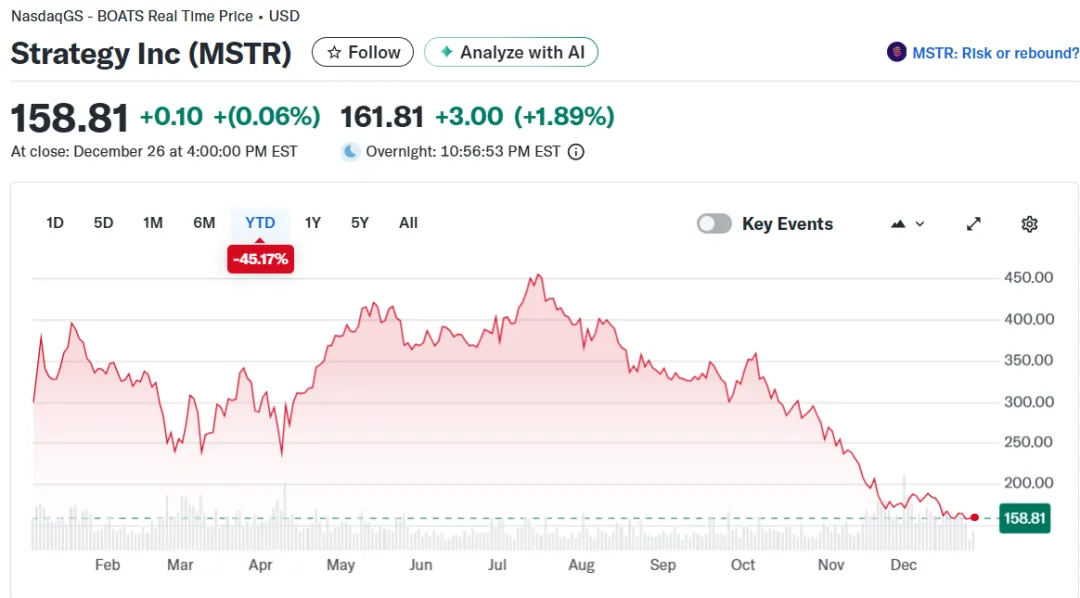
MicroStrategy’s business model has completely diverged from its core software business. The company earns only $460 million annually from software, yet spends over $50 billion to buy Bitcoin, with over 95% of its valuation dependent on Bitcoin prices. This extreme reliance creates a deadly debt spiral structure; if Bitcoin prices plummet, the company will face a triple squeeze.
The first trap is rigid financing costs. MicroStrategy bears over $8.2 billion in debt and $7.5 billion in preferred stock, with annual interest and dividend payments totaling $779 million. This fixed expense far exceeds its software revenue, meaning the company must continuously issue new shares or take on debt to maintain cash flow. If Bitcoin prices drop and cause its stock to collapse, financing channels will be cut off, leading to a liquidity crisis.
The second trap is accelerated equity dilution. By the end of 2025, MicroStrategy holds $2.2 billion in reserves, theoretically enough to cover two years of fixed income. However, if Bitcoin prices remain depressed, capital markets may refuse new financing, rapidly depleting this buffer. Worse, the company’s average Bitcoin cost basis is about $74,972, with most purchases made near the peak in Q4 2025. If Bitcoin remains below cost long-term, unrealized losses will erode shareholder equity, triggering a confidence collapse.
The third trap is passive capital outflows. MicroStrategy’s stock has already plunged 50% this year, with a P/E ratio below 0.8, far below its Bitcoin asset net worth. Institutional investors are shifting en masse to cheaper, more liquid Bitcoin ETFs. Due to valuation discounts and structural risks, index funds may be forced to delist MSTR, causing billions of dollars in passive selling pressure. Since October 10, Bitcoin has fallen 20%, but MSTR’s decline exceeds 40%, indicating the market is punishing its leveraged structure.
The Domino Effect at Bitcoin’s Critical Price Point
From technical analysis, Bitcoin in the 2022 bear market once dropped to $15,500, just a step away from $13,000. If in 2026, liquidity tightening, ETF-driven volatility amplification, or macroeconomic recession occur, such extreme declines could recur. MicroStrategy has committed never to sell Bitcoin, but this relies on its ability to continue financing. Once cash flows break, this promise becomes meaningless.
Three Price Collapse Scenarios
Scenario 1: Falling below $50,000 triggers liquidity exhaustion: If Bitcoin drops below $50,000 and remains depressed, MicroStrategy’s market value could fall below its debt level. At that point, rational investors would refuse to buy its stock or bonds, and financing ability would be fully cut off. The company would be forced to sell Bitcoin or file for bankruptcy reorganization.
Scenario 2: Falling below $30,000 sparks panic selling: If Bitcoin drops below $30,000, the $60 billion assets held by MicroStrategy would shrink to $20 billion, far below the total debt and preferred stock of $15.7 billion. Creditors might initiate forced liquidation, and the sale of 670 million BTC into the market could cause a waterfall crash.
Scenario 3: Falling below $13,000 causes technical bankruptcy: This is MicroStrategy’s death line. At this price, Bitcoin assets are worth about $8.7 billion, unable to cover $15.7 billion in liabilities. Although unlikely in the short term, Bitcoin has historically experienced 70% to 80% declines, making this extreme scenario possible.
Why the Black Swan Effect Is More Deadly Than FTX?
Many compare MicroStrategy to the 2022 FTX collapse, but their destructive impacts are entirely different. FTX was a centralized exchange, and its collapse mainly affected platform users and creditors, with losses around $8 billion. MicroStrategy is a key holder of Bitcoin supply; its collapse would directly impact Bitcoin prices and trigger a chain reaction across the entire market.
Holding 671,268 Bitcoins, second only to some ETFs and government institutions, if the company goes bankrupt and triggers forced liquidation, this BTC sale would destroy market confidence. If liquidation occurs in batches, selling 50,000 BTC weekly, the market would face 13 consecutive weeks of selling pressure. Under current liquidity conditions, Bitcoin prices could plummet over 60% during this period, causing leveraged traders to face cascading liquidations.
More critically, the psychological impact. MicroStrategy and its Chairman Michael Saylor are seen as symbols of Bitcoin faith; their collapse would shake the entire crypto community’s confidence. Investors might question: “If even the most steadfast believers are bankrupt, does Bitcoin still have a future?” This narrative collapse could lead to a deeper trust crisis beyond just falling prices.
From a systemic risk perspective, MicroStrategy’s collapse would trigger a feedback loop. Bitcoin price drops → MicroStrategy’s market value shrinks → financing ability diminishes → forced Bitcoin sales → further price declines. Once this spiral starts, it could destroy trillions of dollars in crypto market value within weeks. In contrast, the FTX collapse, while severe, mainly impacted exchange users and related lending platforms, without directly affecting Bitcoin supply.
2026 Crash Probability: A 10% to 20% Doomsday Bet
Based on current asset-liability risk, market behavior, and Bitcoin volatility, the estimated probability of MicroStrategy’s total collapse in 2026 is roughly between 10% and 20%. This is not alarmist but based on probabilistic reasoning of three key variables.
Variable one is Bitcoin’s price trajectory. If Bitcoin remains above $70,000 in 2026, MicroStrategy can continue financing through stock issuance, with manageable risk. If it drops to $40,000–$50,000 and stays there for months, financing becomes difficult but not fatal. If it falls below $30,000, the collapse probability exceeds 50%. Historical data shows Bitcoin has about a 15% chance of dropping more than 70% from its previous high during bear markets.
Variable two is market sentiment. Currently, institutional investors are abandoning MSTR for ETFs. If this trend accelerates, MicroStrategy’s financing lifeline will be cut. If an economic recession or credit tightening occurs in 2026, financing costs for high-risk assets will soar, and MicroStrategy may be unable to raise funds at reasonable costs. The probability of this scenario is about 20%.
Variable three is index exclusion risk. If major indices like S&P or MSCI exclude MSTR due to valuation discounts or risk considerations, it could trigger billions of dollars in passive selling. This mechanical sell-off could halve the stock price within days, completely destroying its financing capacity.


