Pi coin $0.15 defense line in urgent danger, Bitcoin drops to $75,000 dragging altcoins down. Pi coin unlocks 189 million tokens in February, creating the largest supply pressure in history, with CEX net inflow of 1.76 million indicating selling intent. RSI at 42 leans bearish, MACD near signal line may cross. Breaking below $0.15 tests $0.1450, daily close below that level drops to support at $0.14.
Bitcoin crash drags Pi coin under pressure
On Wednesday, Pi coin price stayed above $0.15, still trying to rebound after a sharp sell-off. As Bitcoin faces strong risk of falling below $80,000, currently hovering around $75,000, Pi coin’s price is also under pressure. Mainstream cryptocurrencies like Ethereum (ETH), Solana (SOL), Dogecoin (DOGE), and Ripple (XRP) also declined. Over the past 24 hours, the overall crypto market fell 2.29%, with total market cap dropping to $2.56 trillion.
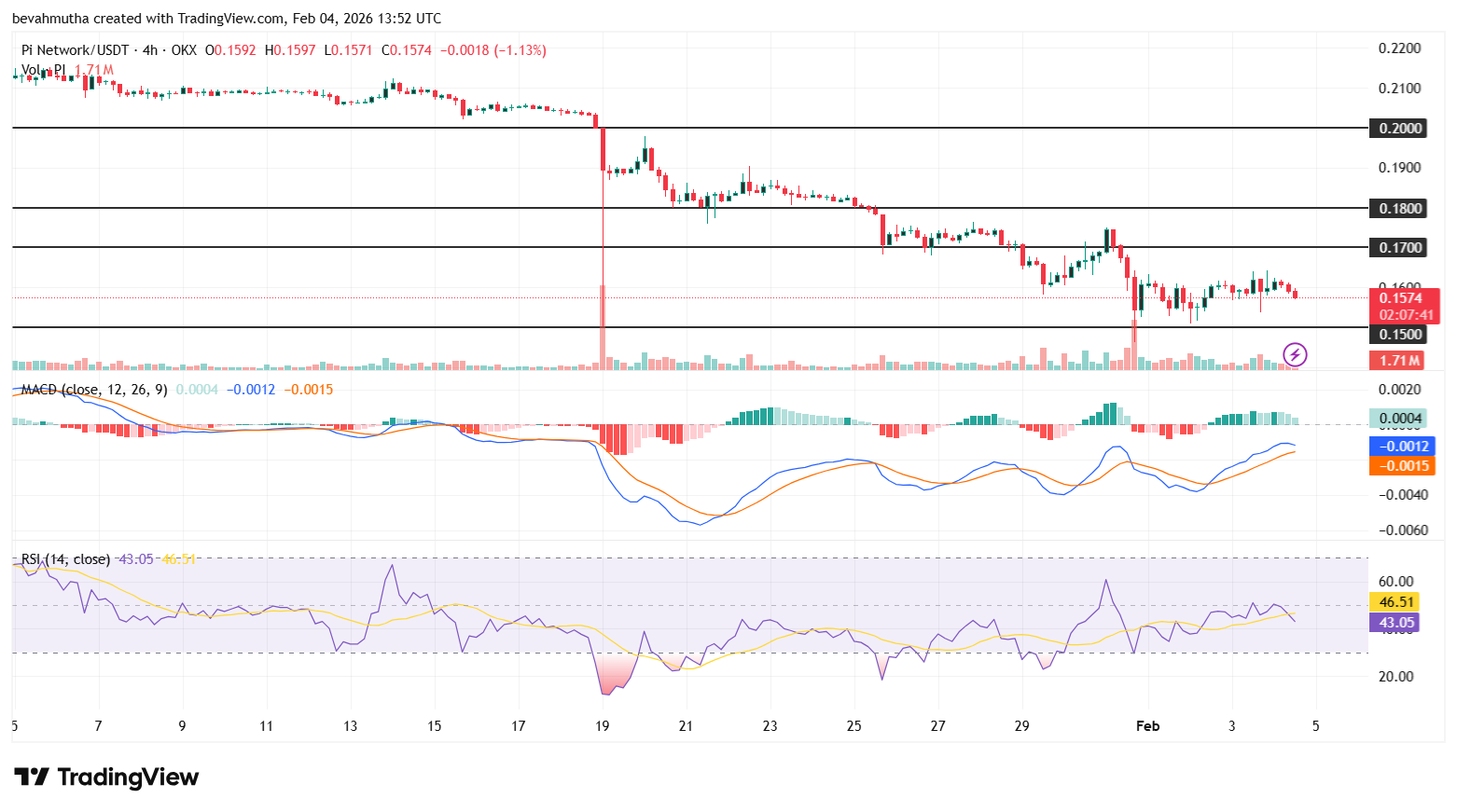
Pi coin price plummeted to $0.1588, slightly lower than previous levels. Pi’s price has been hovering above the $0.15 support level, considered a key price point for the token. This level has been tested multiple times in recent weeks, each touch triggering varying degrees of buying support, indicating that $0.15 is an important psychological and technical threshold.
As the crypto market’s barometer, Bitcoin’s price trend has systemic effects on all altcoins. When Bitcoin crashes from $126,000 to the current $75,000, a decline of over 40%, the entire market’s risk appetite sharply diminishes. Investors reduce or liquidate risk assets, with less liquid small-cap coins like Pi bearing the brunt. This “market drag” effect is common in crypto markets; even if a coin’s fundamentals remain unchanged, it can be indiscriminately sold off due to overall market sentiment.
For Pi coin, continued weakness in Bitcoin means short-term prospects are bleak. Only when Bitcoin stabilizes and begins to rebound will funds flow back into altcoins. Currently, with Bitcoin still searching for a bottom, any rebound in Pi coin may be a short-lived technical correction rather than a trend reversal. Investors should closely watch whether Bitcoin can hold the critical psychological level of $70,000, which will determine the short-term market direction.
189 million tokens unlocking in February creates historic supply pressure
Pi Network is undergoing its largest token unlock this year, currently testing palm print verification in its “Know Your Customer” (KYC) system. As more users prepare to join the mainnet, this move focuses on strengthening identity verification. The network will release about 189 million PI tokens in February, exerting pressure on supply and price.
The 189 million unlock is unprecedented in Pi Network’s history. This figure represents a significant proportion of the current circulating supply, and without a corresponding increase in demand, it will inevitably put downward pressure on price. The unlocked tokens mainly come from mainnet migration; these tokens were previously locked in testnet and untradeable. Once migrated to mainnet and transferred to exchanges, holders can choose to sell for cash. For early miners holding Pi for years, mainnet migration is their first opportunity to convert “mining rewards” into real fiat currency, creating strong sell-off impulses.
In the past 24 hours, PI tokens saw a net inflow of 1.76 million tokens on centralized exchanges (CEX). This indicates a decline in risk appetite among mainnet participants. Net inflow means more Pi coins moved from personal wallets into exchanges, often a precursor to selling. When users transfer tokens into exchanges, it usually signals an intention to sell, as long-term holders tend to keep tokens in personal wallets for security. The 1.76 million net inflow in a single day is a notable portion of Pi’s daily trading volume, showing accumulating selling pressure.
Pi coin faces triple selling pressure
Unlock wave: 189 million tokens released in February, creating largest supply shock
Exchange inflow: 1.76 million net inflow in 24 hours indicates selling intent
Market drag: Bitcoin falling below $80,000 drags overall risk appetite down
While palm print KYC testing is a technological advancement, it is unlikely to change the price trend in the short term. This technology aims to enhance identity verification, prevent Sybil attacks with multiple accounts, and long-term improve Pi Network’s fairness and credibility. However, for current prices, increased supply and insufficient demand are decisive factors; technological upgrades cannot immediately generate buying interest.
Technical outlook neutral to bearish but with rebound potential
(Source: Trading View)
Despite attempts at a rebound, short-term upward momentum has not sustained, and Pi 幣 price may further decline to $0.1450. If the daily close falls below this level, it could drop to support at $0.14. The $0.1450 level is a key short-term observation point; holding above may maintain consolidation, breaking below opens further downside.
The Relative Strength Index (RSI) is at 42, indicating a neutral to slightly bearish market. An RSI of 42 is neither oversold (below 30) nor overbought (above 70), placing it in a delicate balance. This middle ground suggests selling pressure exists but is not extreme, and buying interest is lacking. If RSI further drops below 30 into oversold territory, a technical rebound could be triggered.
The Moving Average Convergence Divergence (MACD) is approaching the signal line, indicating a potential bullish crossover. MACD is a lagging indicator, but when the fast line crosses above the slow line, it often signals waning downward momentum and the start of buying. If this crossover occurs with increased volume, Pi coin could see a short-term rebound. However, given the current overall environment, such a rebound’s sustainability is doubtful; it’s more likely a technical correction rather than a trend reversal.
From a longer-term perspective, Pi coin has fallen over 94% from its high since listing, reflecting fundamental issues: extreme illiquidity (daily volume only $20 million), ongoing unlock pressures, whale exits, and high centralization of the team. These structural problems won’t disappear with short-term technical improvements.
For investors considering Pi coin, the current $0.15 may seem “cheap,” but it’s more likely a mid-downtrend level rather than a true bottom. Waiting for clearer reversal signals (such as Bitcoin stabilizing and rebounding, Pi breaking key moving averages, volume increasing) before building positions is safer. Existing holders might see technical rebounds as an opportunity to reduce holdings rather than add more.
Disclaimer: The information on this page may come from third parties and does not represent the views or opinions of Gate. The content displayed on this page is for reference only and does not constitute any financial, investment, or legal advice. Gate does not guarantee the accuracy or completeness of the information and shall not be liable for any losses arising from the use of this information. Virtual asset investments carry high risks and are subject to significant price volatility. You may lose all of your invested principal. Please fully understand the relevant risks and make prudent decisions based on your own financial situation and risk tolerance. For details, please refer to
Disclaimer.


