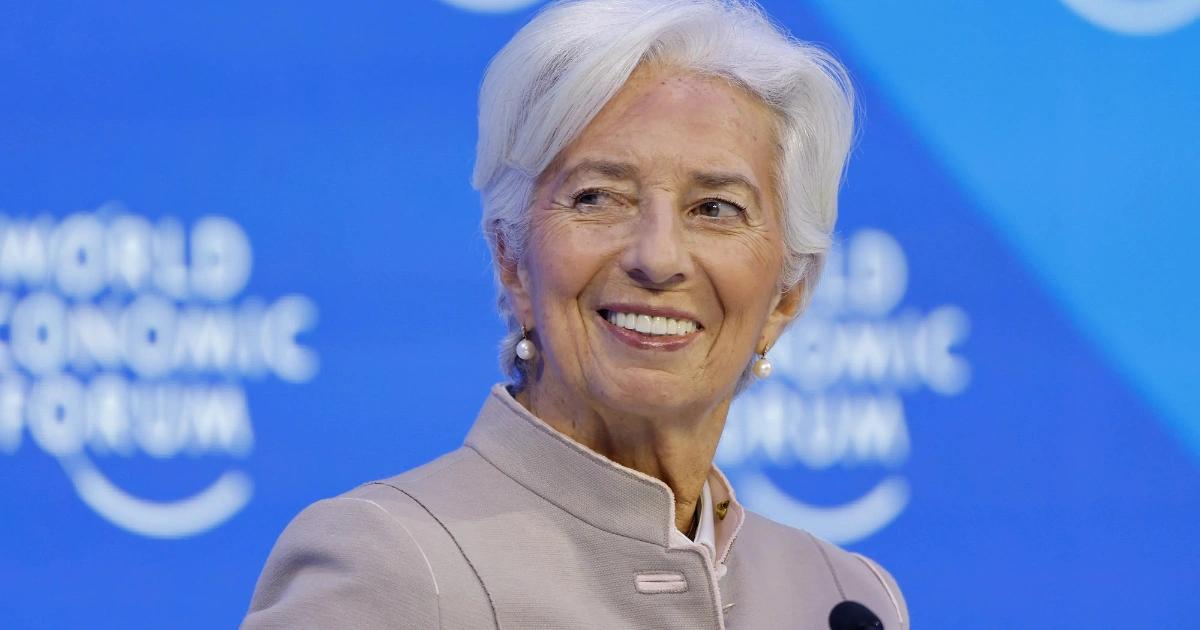
Foreign media reports suggest Lagarde is considering an early resignation, potentially loosening the European Central Bank’s tough stance on cryptocurrencies, with the digital euro and MiCA II becoming key factors.
Lagarde’s Rumored Early Departure: The ECB’s “Defense Great Wall” Faces Change
According to reports from The Financial Times and Reuters, the current President of the European Central Bank (ECB), Christine Lagarde, is contemplating stepping down before her term officially ends in October 2027. This potential major personnel change is said to be coordinated with the political arrangements of French President Emmanuel Macron and German Chancellor Merkel’s successor, Friedrich Merz, to finalize her successor before the 2027 French elections. Although ECB spokespersons deny these reports and emphasize that Lagarde remains fully focused on her current duties, market speculation about when this long-standing “Iron Lady” of a hardline stance on cryptocurrencies will leave has sparked widespread discussion.
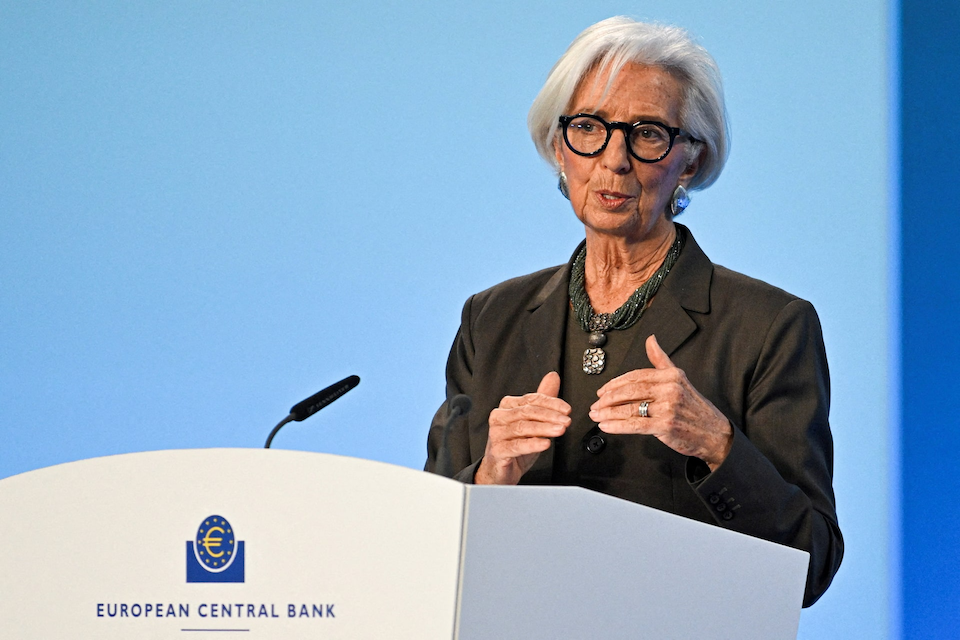
Image source: Reuters European Central Bank (ECB) President Christine Lagarde
During her seven years in power, Lagarde has been seen as Europe’s “Great Wall” against private cryptocurrencies. She has repeatedly issued stern comments on Bitcoin ($BTC), even in November 2025 when Bitcoin approached its all-time high, maintaining her view that it is “worthless.”
For Lagarde, crypto assets are merely speculative tools and cannot compare to traditional fiat currencies. Her core policy focus has always been on protecting the sovereignty of the euro, channeling resources into official digital euro projects as a moat against private digital currencies. If she departs early, the ECB’s previously almost stubborn “defensive posture” may soften, leaving a glimmer of hope for Web3 development in Europe.
Digital Euro Progress Enters Critical Phase: Can MiCA II Prevent Talent Drain?
At the same time as Lagarde’s departure rumors, Europe is at a crucial turning point in digital currency development. Piero Cipollone, a member of the ECB Executive Board, confirmed that the EU legislation is expected to pass regulations for the digital euro by 2026. If on schedule, a 12-month technical testing phase will begin in late 2027, with the first digital euro issuance planned for 2029. This means the next ECB president will inherit this highly controversial and large-scale project. Meanwhile, the EU’s Markets in Crypto-Assets Regulation (MiCA) is fully operational, but regulatory focus has shifted toward the more challenging “MiCA II.”
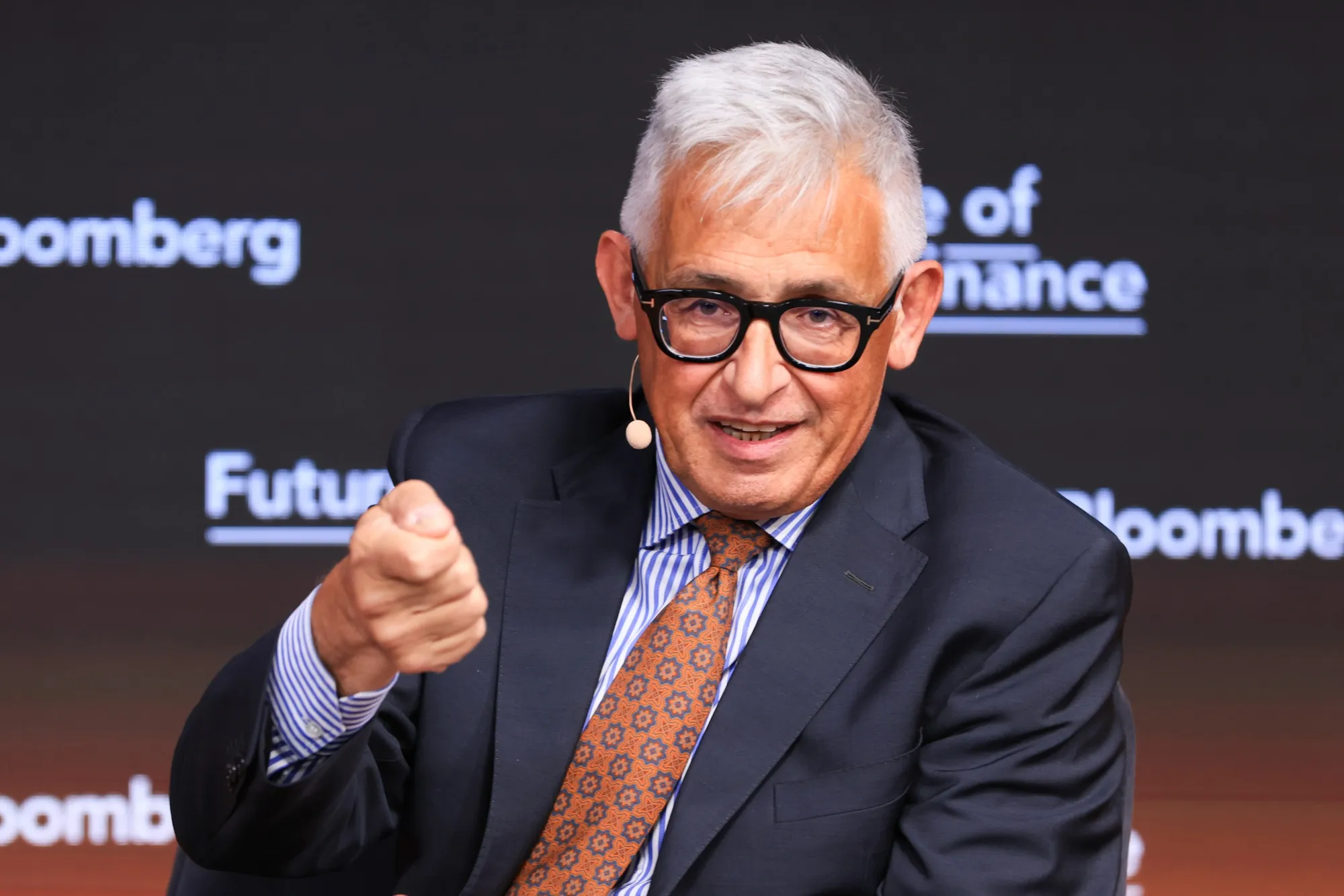
Image source: Bloomberg ECB Executive Board Member Piero Cipollone
The core conflict of MiCA II revolves around how to regulate decentralized finance (DeFi) and staking, key pillars of the Web3 economy. Lagarde’s past stance favored closing all potential regulatory loopholes, bringing these decentralized activities under strict oversight. However, such an overly tough regulatory approach has led to a significant brain drain in Europe’s Web3 industry.
Data shows that while crypto investments have surged in Dubai, Singapore, and other regions, Europe’s fundraising has stagnated. Many European startups are fleeing to the US or Middle East seeking clearer rules and more friendly tax environments. Industry observers worry that if her successor continues Lagarde’s heavy-handed approach, Europe risks becoming a “digital museum,” falling behind in the global digital economy race.
Four Potential Successors Emerge: Who Will Be the New Ally for Web3 Industry?
The market is currently focused on four potential candidates, each with a different attitude toward cryptocurrencies.
- Klaas Knot, former Dutch Central Bank Governor — categorized as a “Pragmatic Hawk.” While emphasizing risk control, he advocates for “same activity, same risk” principles rather than outright bans.
- Pablo Hernández de Cos, current BIS General Manager and former Spanish Central Bank President — seen as a “tech-oriented innovator,” with deep research into distributed ledger technology (DLT), likely to push for integrating DLT into traditional banking systems.
- Joachim Nagel, President of the German Bundesbank — regarded as a “Sovereignty Guardian,” despite sarcastically calling Bitcoin a “digital tulip,” he is enthusiastic about developing euro-pegged stablecoins to counter US dollar dominance.
- Isabel Schnabel, member of the ECB Executive Board — representing the academic camp, she values market efficiency and competitiveness. If she takes the helm, she might adopt a more open stance to foster a Web3-friendly environment to maintain the EU’s global standing.
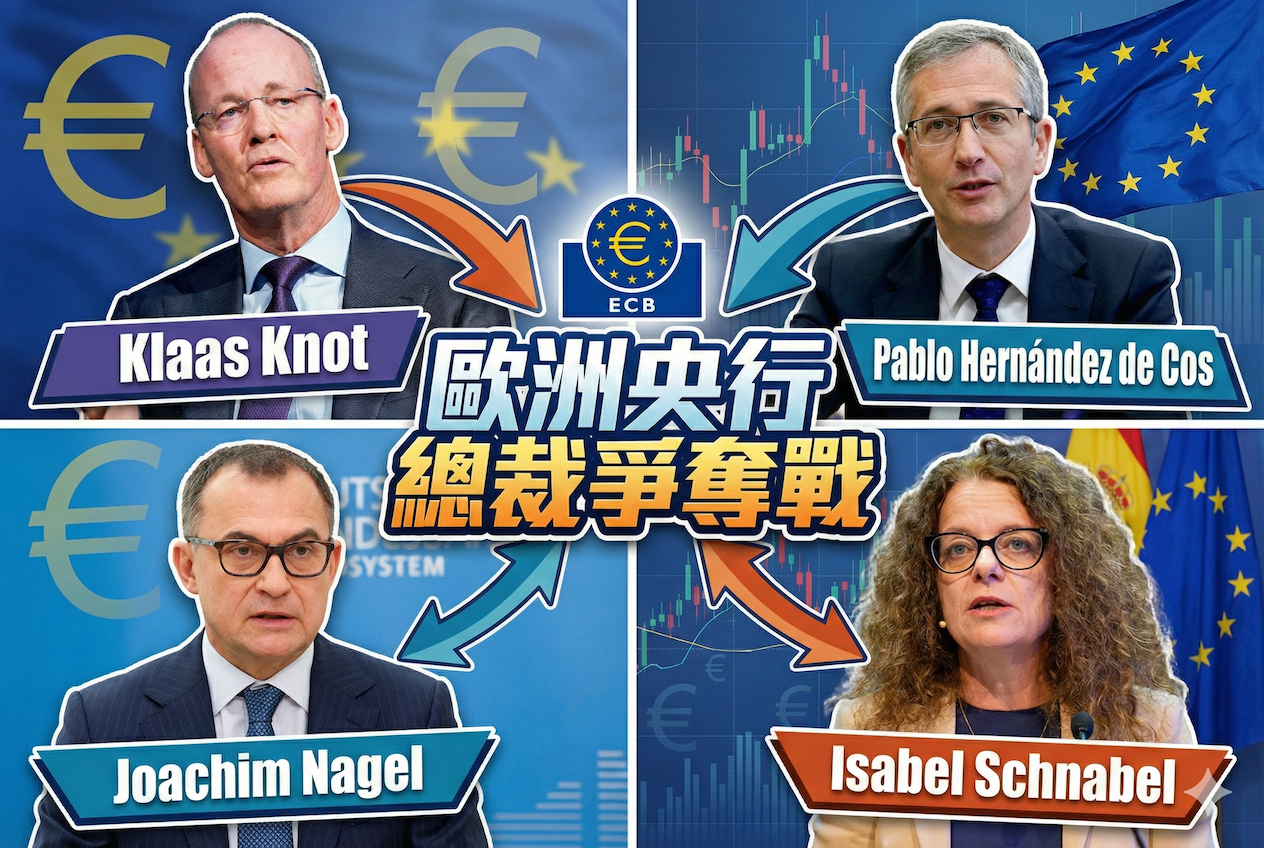
Image source: Crypto City The four candidates for ECB President: Klaas Knot, Pablo Hernández de Cos, Joachim Nagel, Isabel Schnabel
The policy inclinations of these four candidates will directly influence Europe’s crypto regulations’ “rigidity” or “resilience” over the next decade.
| Candidate |
Current/Previous Position |
Possible Stance on Crypto/Web3 |
| Klaas Knot |
Former Dutch Central Bank (DNB) President |
Pragmatic Hawk: Likely to maintain strict stability rules but increasingly favoring “same activity, same risk” principles over outright bans. |
| Pablo Hernández de Cos |
BIS General Manager |
Innovative Technologist: Known for deep technical expertise, may support “pro-technology” regulation and push for integrating DLT into traditional banking. |
| Joachim Nagel |
Bundesbank President |
Sovereignty Defender: Highly skeptical of Bitcoin (“digital tulip”), but strongly supports euro-stablecoins to challenge dollar hegemony. |
| Isabel Schnabel |
ECB Executive Board Member |
Balanced Academic: Focused on market efficiency; likely to adopt a more Web3-friendly approach to boost EU competitiveness. |
Geopolitical Stability Coin Wars: ECB’s Strategic Shift?
Beyond internal personnel changes, external geopolitical pressures are prompting the ECB to reconsider its strategy. The US passed the GENIUS Act in 2025, providing a clear regulatory framework for US dollar stablecoins, delivering a heavy blow to the euro. Lagarde has historically been hostile toward private stablecoins, believing only central bank digital currencies (CBDCs) like the digital euro are the right path.
However, recent signals from Nagel suggest that regulated private euro-stablecoins could be an important tool for maintaining Europe’s “monetary independence.” This indicates that the ECB may be shifting from a “CBDC-only” stance toward a more diversified digital currency ecosystem.
Under Lagarde, cryptocurrencies were seen as speculative nuisances; but under her successor, regulation should evolve from mere defense to a bridge for innovation. Europe already has a comprehensive MiCA legal framework but lacks the momentum to advance the industry. Future policies may shift from simply “protecting consumers” to “enhancing industry competitiveness.”
If the new leader embraces a public-private hybrid model of digital assets, allowing euro-stablecoins and digital euros to operate in a controlled environment, Europe could regain its leadership in digital finance. Lagarde’s departure is not just a personnel change but a pivotal moment determining whether Europe’s digital economy will open up or close down.
Disclaimer: The information on this page may come from third parties and does not represent the views or opinions of Gate. The content displayed on this page is for reference only and does not constitute any financial, investment, or legal advice. Gate does not guarantee the accuracy or completeness of the information and shall not be liable for any losses arising from the use of this information. Virtual asset investments carry high risks and are subject to significant price volatility. You may lose all of your invested principal. Please fully understand the relevant risks and make prudent decisions based on your own financial situation and risk tolerance. For details, please refer to
Disclaimer.
Related Articles
Fed March rate cut 25 basis points probability at 1.9%, probability of maintaining interest rates unchanged reaches 98.1%
Gate News: On March 15, according to CME "FedWatch" data, the Federal Reserve will announce its interest rate decision next Thursday at 02:00. The data shows that the probability of the Federal Reserve cutting rates by 25 basis points in March is 1.9%, while the probability of maintaining rates unchanged is 98.1%.
Looking ahead to April, the probability of the Federal Reserve cumulatively cutting rates by 50 basis points is 0.1%, the probability of cumulatively cutting rates by 25 basis points is 5.8%, and the probability of maintaining rates unchanged is 94.1%.
GateNews29m ago
Uncertainty in stablecoin regulation causes traditional banks to delay infrastructure investments, while crypto companies offering 4%-5% returns may accelerate capital migration.
Unclear stablecoin regulations create operational difficulties for traditional banks, while crypto companies continue to develop in gray areas. Banks are hesitant to make large-scale investments in stablecoin infrastructure due to advice from legal counsel, resulting in limited deployment. While large-scale deposit outflows have not yet occurred, competitive pressure is increasing.
GateNews1h ago
US Senate Bans CBDC: What Happens to Its Wholesale Version?
The US Senate’s newly passed Housing Act does not clearly distinguish between retail and wholesale versions of a CBDC.
The definition of the act, though, implies that the CBDC prohibition applies only to the retail version, which is designed to be widely available to the public.
The US Senate
Blockzeit5h ago
美联储预计下周维持利率在 3.50%-3.75% 不变,伊朗战争推高通胀压力
美联储将在下周会议上预计维持利率不变,利率范围为3.50%-3.75%。伊朗战争导致油价飙升和通胀压力增加,经济不确定性加大。市场普遍预期美联储按兵不动,以观察局势对通胀和就业的影响。
GateNews7h ago
Thay đổi quy tắc Basel III có thể mở đường cho dòng tiền “khổng lồ” vào Bitcoin, nhà phân tích
Basel III regulations on bank capital requirements may be updated in 2026, potentially lowering Bitcoin's risk classification. If so, it could unlock significant liquidity in the BTC market. Current rules impose a high risk factor, hindering banks from engaging with cryptocurrencies, prompting calls for regulatory reform to encourage traditional banking integration of BTC.
TapChiBitcoin9h ago
联邦法院叫停司法部对鲍威尔传票调查,沃伦支持沃什担任美联储主席概率升至28%
预测市场显示,伊丽莎白·沃伦支持凯文·沃什担任美联储主席的概率上升至28%。联邦法院叫停针对现任主席鲍威尔的调查,沃伦称其为“政治迫害”,呼吁放弃调查。随着调查受挫,沃什的提名阻力减小,尽管两人的政策立场存在明显对立。
GateNews03-14 10:30


