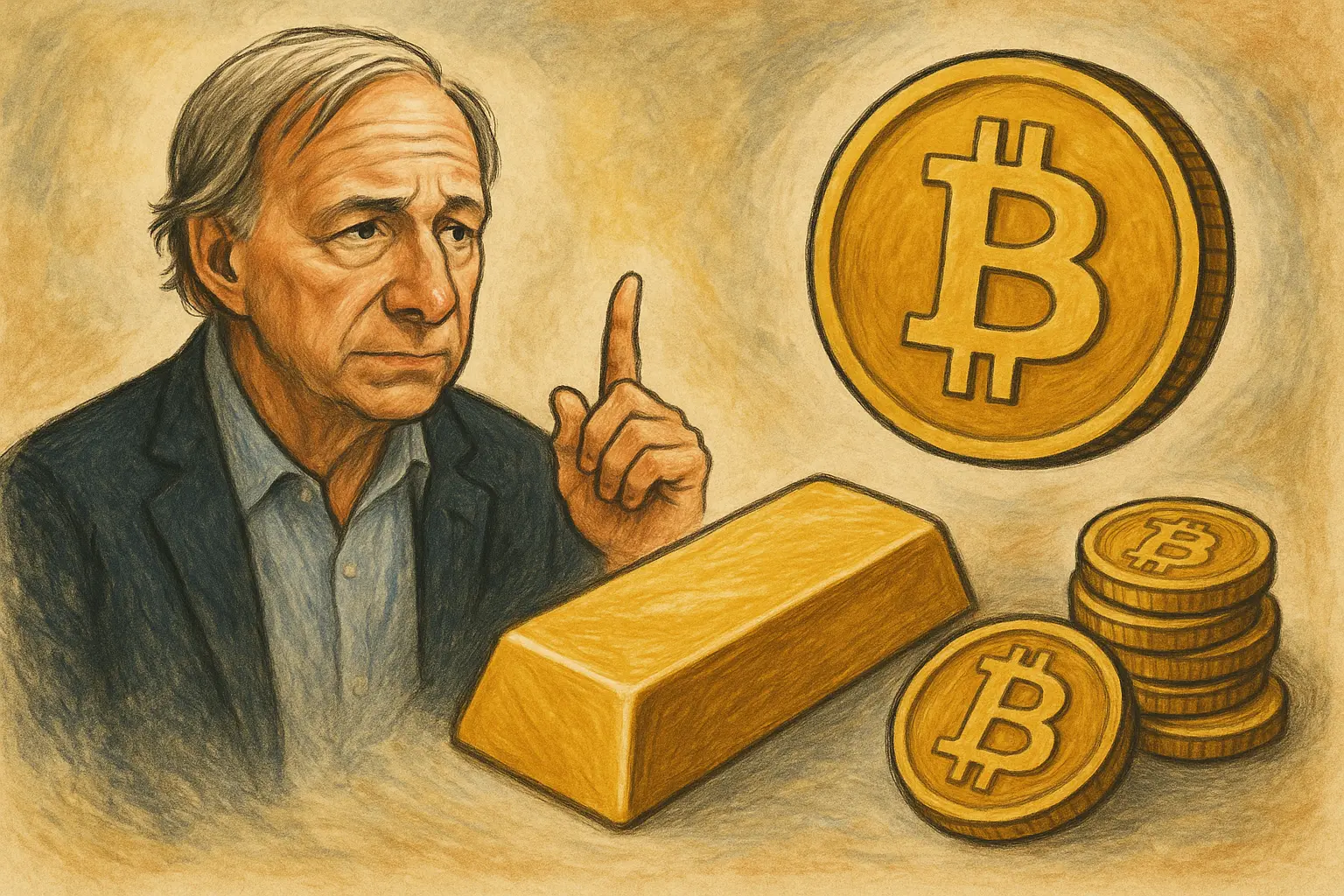
Bridgewater founder Ray Dalio clearly stated on the All-In podcast on Tuesday that he criticizes the idea of viewing Bitcoin as “digital gold.” He emphasized “there is only one gold” and pointed out that gold is the most mature currency and the second-largest reserve currency held by central banks worldwide. Dalio also raised three specific concerns about Bitcoin: lack of central bank support, lack of privacy protections, and potential threats from quantum computing.
Dalio’s Core Argument: The Fundamental Difference Between Gold and Bitcoin

(Source: YouTube)
Dalio explicitly stated in the podcast that gold “is not a speculative precious metal,” but the most mature currency globally. Its status as a reserve asset is the result of a thousand years of accumulation, not market speculation. He said he doesn’t understand why central banks would want to buy and hold Bitcoin long-term.
Dalio raised three specific concerns about Bitcoin: lack of privacy—“any transaction can be monitored,” which is a major limitation for institutions seeking true wealth protection; the threat of quantum computing—future quantum calculations could fundamentally threaten Bitcoin network security; and a high beta coefficient—Bitcoin’s correlation with tech stocks remains high, so when tech stocks are under pressure, Bitcoin holders may be forced to sell simultaneously, breaking its “hedge” characteristic.
It’s worth noting that in July, Dalio suggested allocating 15% of a portfolio to Bitcoin or gold to address the severe debt issues in the U.S. His recent criticism is not a complete rejection of Bitcoin but questions whether it can serve as a true crisis hedge.
Dalio’s Three Major Concerns About Bitcoin
- Lack of Central Bank Support: He doesn’t understand why central banks would hold Bitcoin long-term; gold is the second-largest reserve currency globally.
- Privacy Limitations: Any transaction can be monitored, limiting its function as a true store of wealth.
- Quantum Computing Threat: Future quantum calculations could fundamentally threaten Bitcoin network security.
- High Beta Coefficient: Its high correlation with tech stocks makes it vulnerable to sell-offs during risk-averse market conditions.
Collapse of the World Order: The Decoupling of Gold and Bitcoin Speaks Volumes
Dalio’s warnings are not isolated but part of his broader macro perspective. Last month, he warned investors that the “world order” led by the U.S. for nearly a century has “collapsed,” and investors must rethink how to protect wealth amid geopolitical conflicts and economic chaos.
His macro views are being confirmed by market data. From July to early October, Bitcoin and gold moved up together; but after October, they began to diverge significantly: Bitcoin has fallen over 45% from its October high to around $68,420, while gold has risen over 30% during the same period, surpassing $5,120 per ounce. This decoupling directly supports Dalio’s core point that “there is only one gold”—in times of intense geopolitical conflict and systemic risk, gold demonstrates an independent safe-haven quality that Bitcoin lacks.
Frequently Asked Questions
Q: Why does Dalio believe gold is a better hedge asset?
Dalio believes gold is the most mature currency recognized by central banks worldwide, with a thousand-year reserve history and institutional backing. Bitcoin lacks central bank support, has transparency issues in transactions that limit its wealth protection function, and faces potential threats from quantum computing. These structural differences prevent Bitcoin from being true “digital gold.”
Q: Why did gold and Bitcoin decouple after October?
Dalio’s framework offers an explanation: Bitcoin’s high correlation with tech stocks makes it behave more like a high-risk asset during geopolitical conflicts and risk-off sentiment. Meanwhile, gold, as a reserve currency recognized by central banks, attracts institutional defensive allocations when systemic risks rise.
Q: Is Dalio completely negative on Bitcoin?
Not entirely. In July, he recommended allocating 15% of a portfolio to Bitcoin or gold. His main concern is whether Bitcoin can serve as a true crisis hedge and long-term store of value, rather than denying its role as a speculative or diversification asset.
Disclaimer: The information on this page may come from third parties and does not represent the views or opinions of Gate. The content displayed on this page is for reference only and does not constitute any financial, investment, or legal advice. Gate does not guarantee the accuracy or completeness of the information and shall not be liable for any losses arising from the use of this information. Virtual asset investments carry high risks and are subject to significant price volatility. You may lose all of your invested principal. Please fully understand the relevant risks and make prudent decisions based on your own financial situation and risk tolerance. For details, please refer to
Disclaimer.
Related Articles
On-chain activity is exploding, but Ethereum can't seem to gain momentum? Experts reveal the "fatal weakness": could drop to $1,500
CryptoQuant reports indicate that Ethereum faces an "adoption paradox," where despite network activity reaching new highs, the token price has declined. If the bear market continues, Ether could potentially fall to $1,500 by the end of the third quarter. Smart contract activity has risen while decoupling from Ether's price, with exchange inflows being a better reflection of price dynamics. Weak investment demand and continuous capital outflows remain the primary concern.
区块客2m ago
Pi Network Lists on Major CEX, Price Surges 30% in a Month Before Pi Day
Pi Network has seen a recent trading price increase of approximately 10%, primarily driven by the upcoming listing of the PI token on a major U.S. centralized exchange and Pi Day, which has boosted retail investor confidence. Technical analysis shows a bullish outlook in the short term, though caution remains warranted for the medium to long term. Community sentiment has warmed, indicating renewed retail interest, which provides support for short-term upside potential.
MarketWhisper32m ago
Ripple Splurges $750 Million on Share Buyback While XRP Continues Declining: Why Is the Company's Strategy Diverging from Token Value?
Ripple announced a $750 million stock buyback, with its company valuation potentially rising to $50 billion, yet the XRP token price continues to decline, exposing a decoupling phenomenon between the company and the token. Market confidence in Ripple and XRP is gradually diverging, requiring investors to clarify whether they are investing in company strength or token value, as they face challenges from regulation, utility, and market patience.
PANews38m ago
XRP Today's News: Rare Bottom Signal Appears, Technical Analysis Suggests Price Reversal Approaching
According to Glassnode data, XRP exhibits two major indicator signals indicating that the price is below its fair value, and the realized profit/loss ratio is approaching 1.0, which historically suggests a possible rebound. Additionally, XRP is consolidating within a symmetrical triangle pattern, with a key resistance at $1.50 and support at $1.30, as the market is about to experience a breakout in a specific direction.
MarketWhisper46m ago
VIA Soars 23.45% in Minutes — Traders React to Whale Activity
VIA's price surged by 23.45% in five minutes, currently trading at $0.002026. The rise is linked to increased whale activity and broader market trends, prompting traders to monitor key resistance and support levels.
Coinfomania55m ago
CryptoQuant: Ethereum Adoption Paradox Deteriorates, Price May Fall to $1500
Ethereum faces an "adoption paradox," where network activity reaches record highs but ETH price has fallen sharply, showing a divergence between the two. Analysis points out that current network activity growth primarily comes from automated contracts like DeFi, rather than genuine user demand, which intensifies selling pressure. If the bear market continues into 2026, ETH could fall to $1,500. Attention should be paid to changes in capital inflows and exchange inflows to determine whether ETH will emerge from the bear market.
MarketWhisper57m ago


