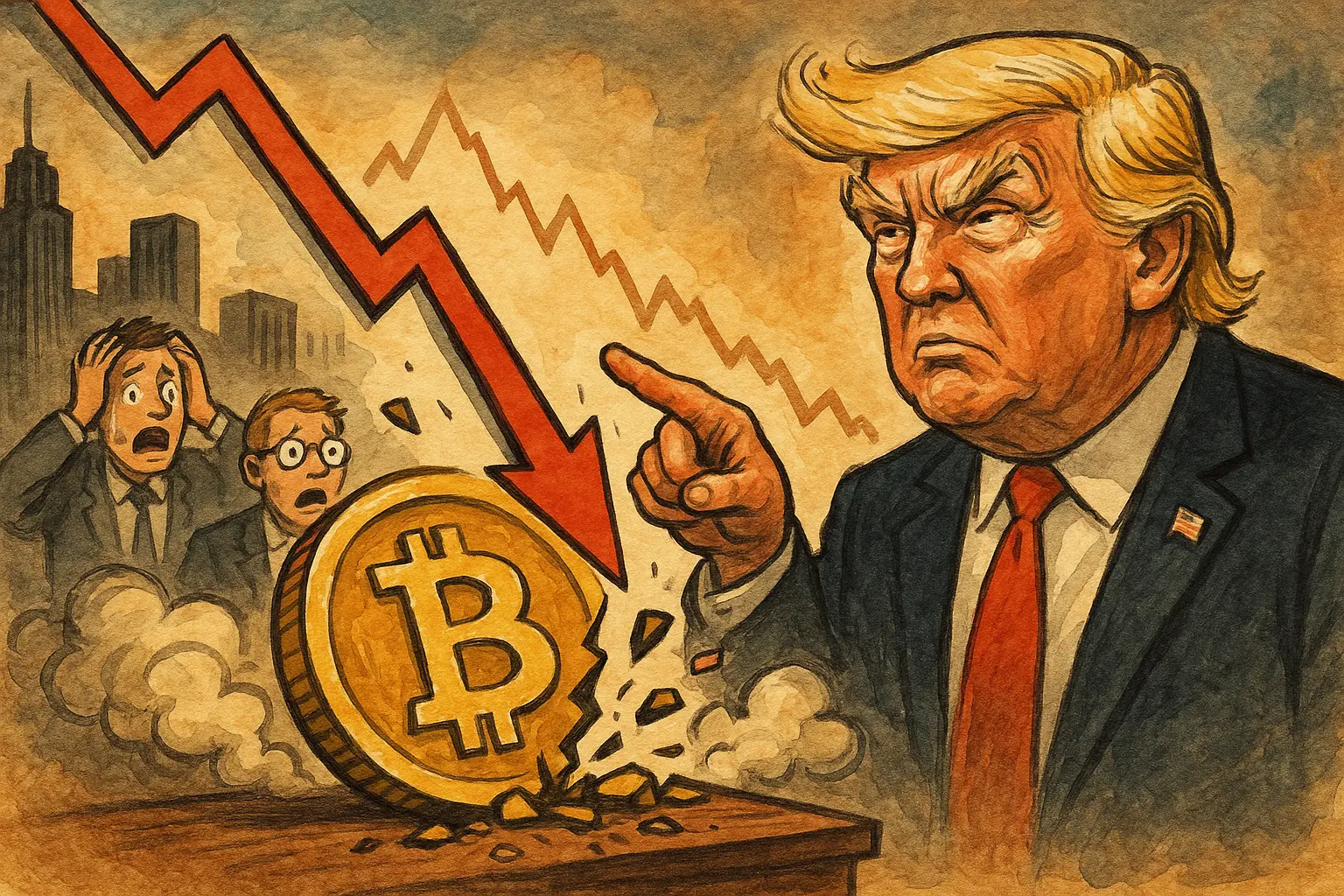
On Monday, March 23, Bitcoin fell to $67,979.57, as the cryptocurrency market continued to weaken amid widespread pressure on global assets. Over the weekend, U.S. President Trump issued a “48-hour ultimatum” to Iran, demanding the reopening of the Strait of Hormuz or else he would strike Iran’s power facilities. This deadline will expire Monday evening New York time and has become the key catalyst triggering risk aversion in global markets.
Hormuz Crisis Countdown: Global Markets Enter High Alert
The US-Iran conflict has entered its fourth week with no signs of easing. The Strait of Hormuz accounts for about one-fifth of global oil and liquefied natural gas shipments and has effectively been at a standstill since the conflict erupted at the end of February. Iran has responded strongly, stating that if energy infrastructure is attacked, it will close the strait indefinitely and retaliate against U.S. and Israeli energy facilities in the Middle East.
This crisis has pushed markets into a rare stagflation scenario of “higher inflation + weaker growth.” Last week, U.S. stocks and bonds declined simultaneously for the first time in a while, with the S&P 500 posting its fourth consecutive weekly decline—the longest weekly losing streak in a year. The 10-year U.S. Treasury yield rose to 4.40%. The MSCI Asia-Pacific index fell 1.2% this week, South Korea’s KOSPI dropped over 5% triggering a circuit breaker, and Japan’s Nikkei 225 fell 4%. WTI crude oil was at $98.62 per barrel, while Brent fluctuated around $112.
Miller Tabak Chief Market Strategist Matt Maley pointed out the core dilemma: “Once there are no buyers, the market creates a vacuum.”
Whale Shorts $169 Million: Smart Capital’s Strategic Positioning
The anonymous whale “Jason” is another key factor in understanding why Bitcoin has fallen today. Previously, he closed long positions near a local high, making a profit of $14.6 million; then he reversed his position, establishing a short position of 2,281 BTC on Binance, with an average entry price of $74,238, a nominal value of over $169 million, which is currently profitable.
Three Macro Foundations for the Short Position
PPI Data Surprises to the Upside: U.S. Producer Price Index (PPI) increased by 0.7% month-over-month, far exceeding the 0.3% market expectation, directly destroying rate cut expectations and removing the liquidity-driven upward support for Bitcoin.
Geopolitical Tensions Boost Inflation Expectations: The ongoing Hormuz Strait crisis continues to push oil prices higher, prompting markets to reassess whether the Federal Reserve and other major central banks might reconsider their rate hike paths, putting pressure on risk assets.
Technical Structure Is Bearish: Since 2025, Bitcoin has formed a pattern of lower highs and lower lows. Jason entered at a key resistance level with precision—timing is not accidental.
BTIG Chief Market Technician Jonathan Krinsky noted that the S&P 500 has clearly broken below the 200-day moving average, and the overall market’s “downside risk outweighs upside reward.”
Technical Outlook: $70,000 Is the Last Line of Defense for Bulls and Bears
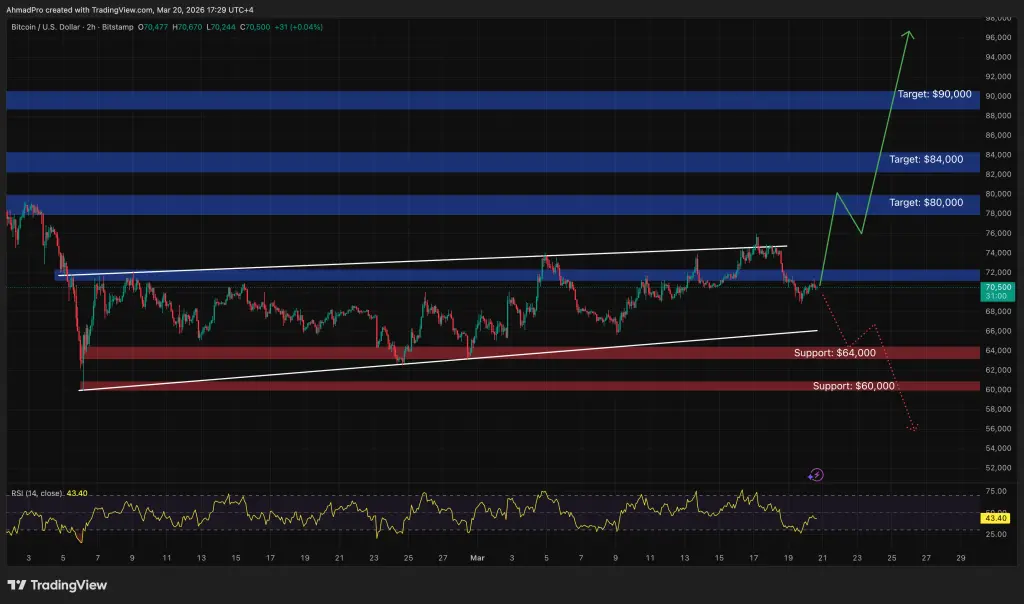
(Source: Trading View)
From the chart structure, $70,000 is the most critical short-term support level for Bitcoin. If this level is broken, it could trigger a forced long liquidation wave, pushing the price down to the $68,000 demand zone. If bears are squeezed, a break above $75,000 would severely pressure Jason’s short positions and could trigger a sharp reversal. Currently, with geopolitical pressures still unresolved, the path of least resistance remains sideways to downward.
Frequently Asked Questions
Why did Bitcoin fall today? What are the main reasons?
Bitcoin’s decline today is due to a combination of three factors: Trump’s 48-hour ultimatum bringing the Hormuz Strait crisis into countdown mode, the global market pricing in stagflation, U.S. PPI data exceeding expectations suppressing rate cut hopes, and the anonymous whale “Jason” holding over $169 million in BTC shorts on Binance, exerting ongoing supply-side pressure.
How does the Hormuz Strait crisis affect Bitcoin?
Disruption of the Strait of Hormuz pushes oil prices higher, raising global inflation expectations and prompting markets to reassess central bank policies. In a stagflation environment of “higher inflation + weaker growth,” risk assets like Bitcoin struggle to attract capital, and traditional safe-havens like gold and U.S. Treasuries are also disrupted, leading to overall market confusion and lack of clear direction.
Can Bitcoin hold the $70,000 support?
$70,000 is the current dividing line between bullish and bearish. Holding this level could allow for a rebound toward $75,000; breaking below could trigger chain liquidations and a move down to $68,000. The specific trend depends on developments in the US-Iran situation after the deadline, as well as whether oil prices and U.S. bond yields show signs of easing.
Disclaimer: The information on this page may come from third parties and does not represent the views or opinions of Gate. The content displayed on this page is for reference only and does not constitute any financial, investment, or legal advice. Gate does not guarantee the accuracy or completeness of the information and shall not be liable for any losses arising from the use of this information. Virtual asset investments carry high risks and are subject to significant price volatility. You may lose all of your invested principal. Please fully understand the relevant risks and make prudent decisions based on your own financial situation and risk tolerance. For details, please refer to
Disclaimer.


