GateUser-505646d6

vip
Age 0.8 Year
Peak Tier 0
No content yet
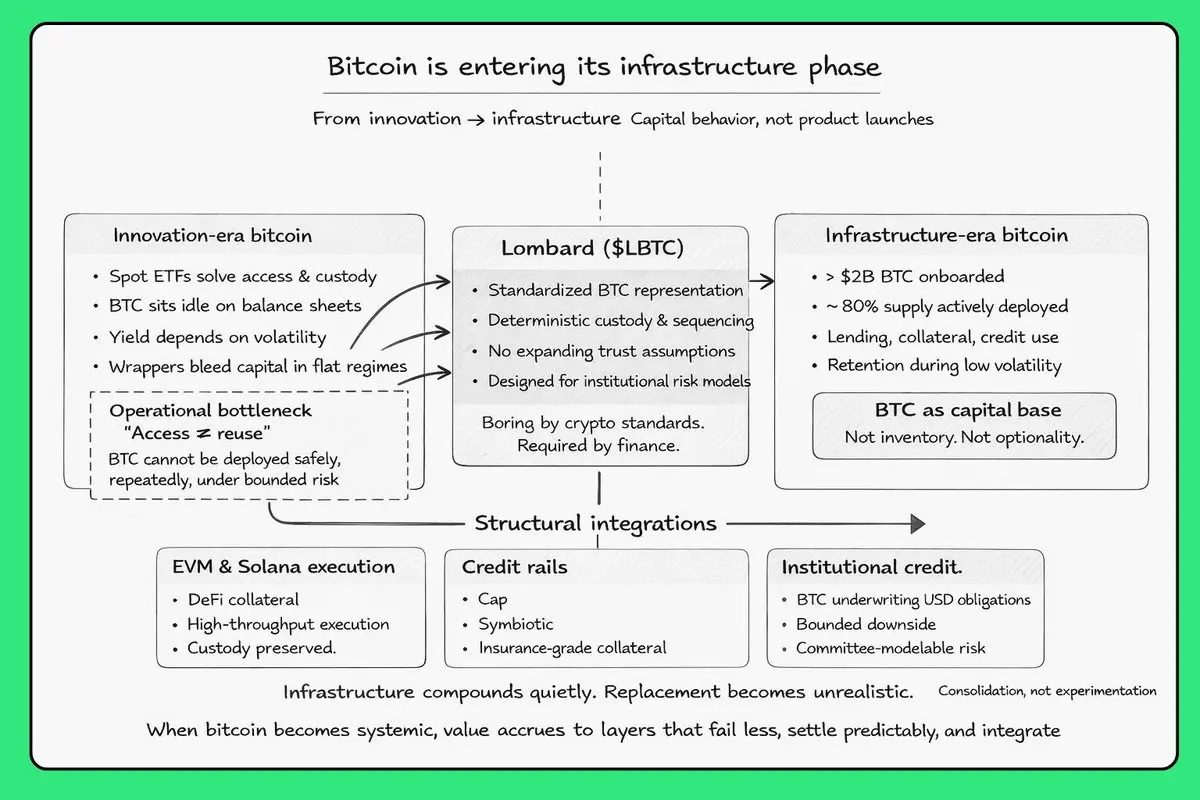
Bitcoin is exiting its innovation phase and entering its infrastructure phase.
This shift is visible in how capital behaves, not in new product launches.
Spot ETFs solved access and custody, but they did not solve reuse. Once $BTC sits on institutional balance sheets, the dominant question becomes operational:
Can this asset be deployed safely, repeatedly, and under bounded risk?
That is an operational backbone @Lombard_Finance was designed around.
————————————————————
➩ The Data
Lombard’s $LBTC crossed $1B TVL in under 100 days, and has since onboarded >$2B of $BTC liquidity across major ecos
BTC-0.84%
post-image
  • Reward
  • Comment
  • Repost
  • Share
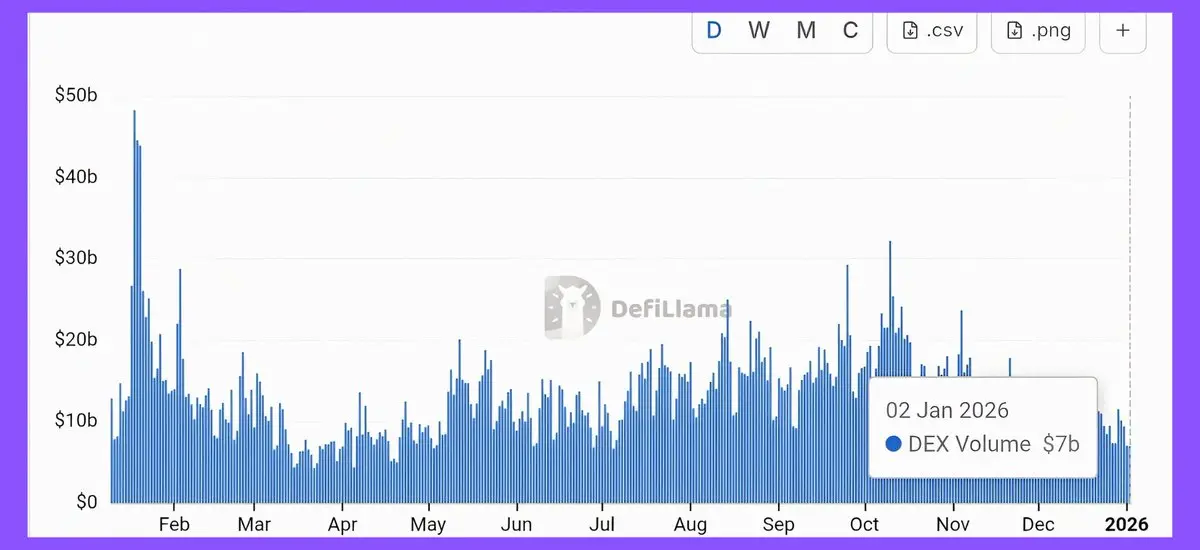
The headline is falling volume.
The signal is where the remaining volume concentrates.
Total spot activity contracted sharply in December. That part is obvious.
What’s less obvious is that DEX share increased at the same time.
That combination is very important.
When volume collapses and share shifts, it’s not enthusiasm rotating. It’s behavior changing.
In low-vol regimes, traders don’t need constant execution. They need clean execution. Fewer trades, more intentional positioning, lower tolerance for hidden costs. That’s when custody, fee leakage, and settlement risk start to matter more than
post-image
  • Reward
  • Comment
  • Repost
  • Share
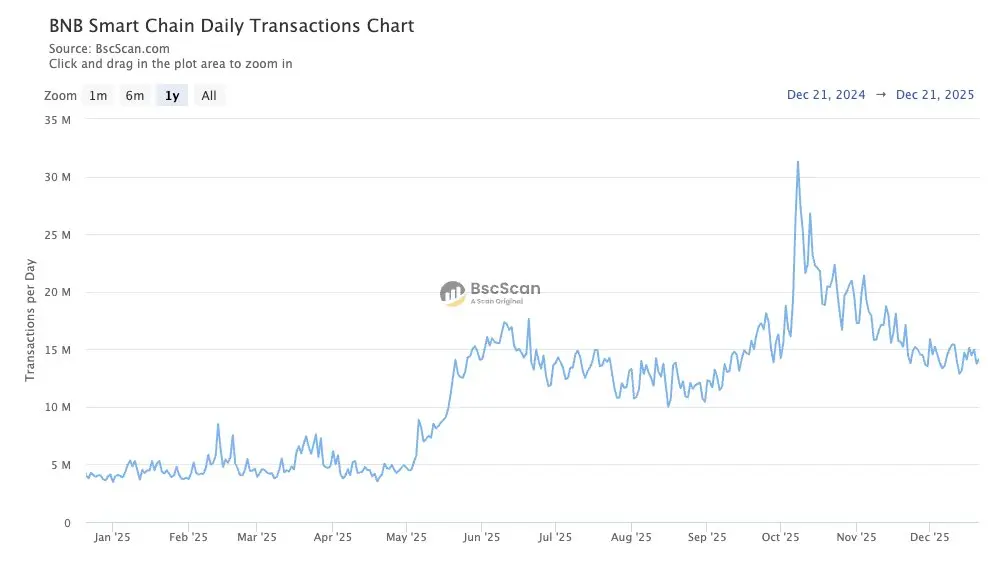
Markets confuse expansion with maturity. #BNB Chain’s 2025 data shows the latter.
• 31M peak daily transactions without downtime
• 4M+ daily users sustaining activity
• Stablecoins at $14B peak
• RWAs past $1.8B with institutional participation
Those metrics matter because they don’t spike independently. They move together.
That’s how systems de-risk.
When users, capital, and throughput scale in sync, behavior shifts:
• Builders stop stress-testing and start depending
• Capital stops rotating and starts parking
• Institutions engage because failure risk compresses
Psychologically, this is the
BNB0.1%
post-image
  • Reward
  • Comment
  • Repost
  • Share
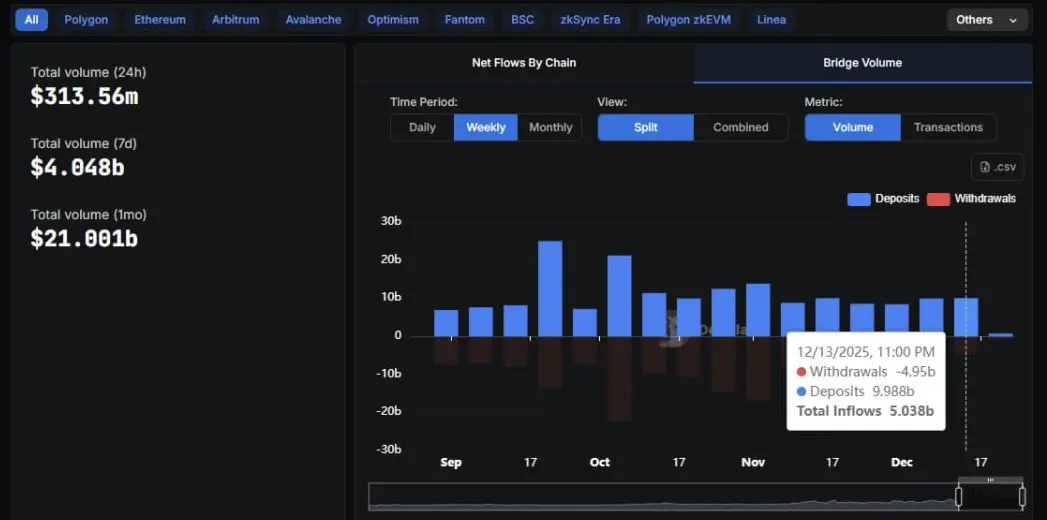
Cross-chain isn’t plumbing. It’s market structure.
Over the past 7 days, bridges moved $5.03B, with $313M in the last 24 hours alone. That kind of flow doesn’t show up in background infrastructure. It shows up where capital is actively reallocating.
When markets soften, activity fragments.
Capital doesn’t disappear. It routes.
Bridge volume is power-law. A small number of routes handle most of the flow, dominated by:
• stablecoin transfers
• L2 -to- L2 rotations
• DeFi yield and perps repositioning
That tells you something important. This isn’t speculative exploration. It’s transactional behav
post-image
  • Reward
  • Comment
  • Repost
  • Share
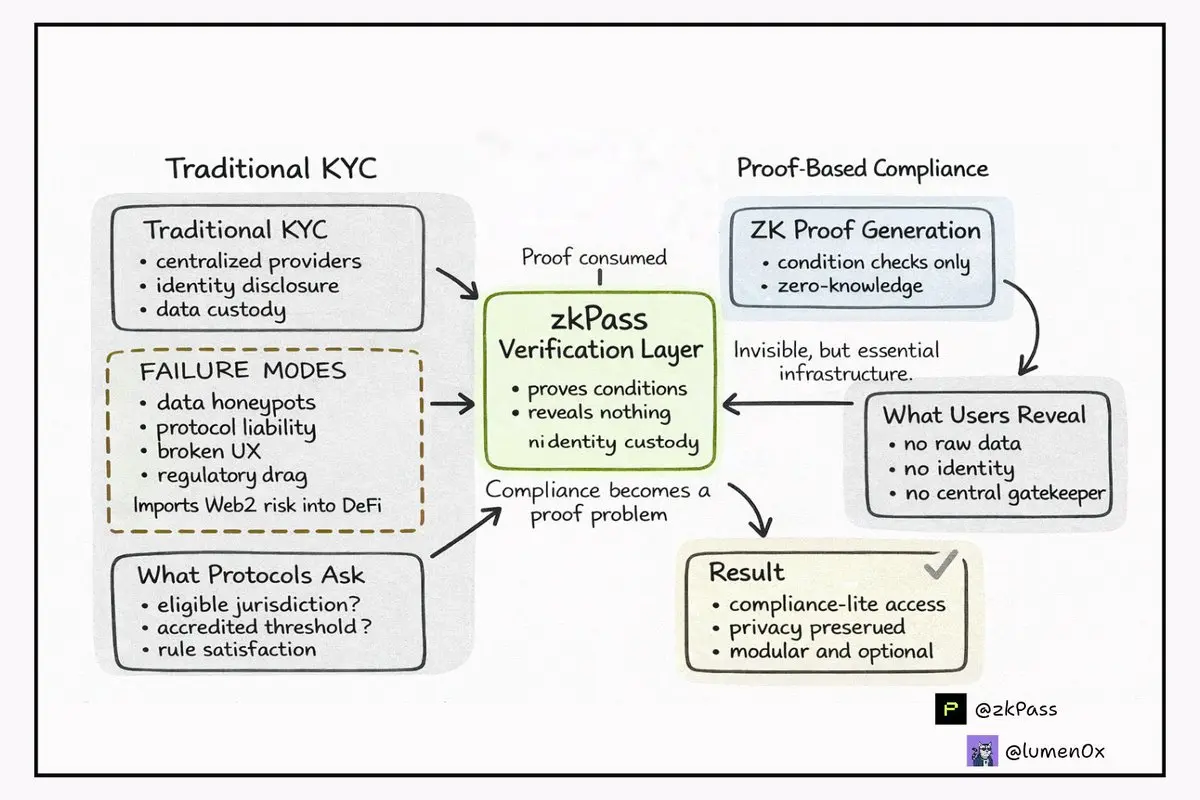
DeFi’s compliance problem was never about regulation.
It was about architecture.
Protocols need to reason about users. Regulators need accountability. Users need privacy. For years, the only way to satisfy all three was to push identity off-chain and pretend it didn’t exist on-chain. That workaround is breaking.
What’s emerging instead is a new category of infrastructure: decentralized verification oracles that can attest to compliance conditions without exposing identity.
@zkPass sits squarely in that shift.
This is not about recreating KYC on-chain. It’s about proving properties without reve
post-image
  • Reward
  • Comment
  • Repost
  • Share
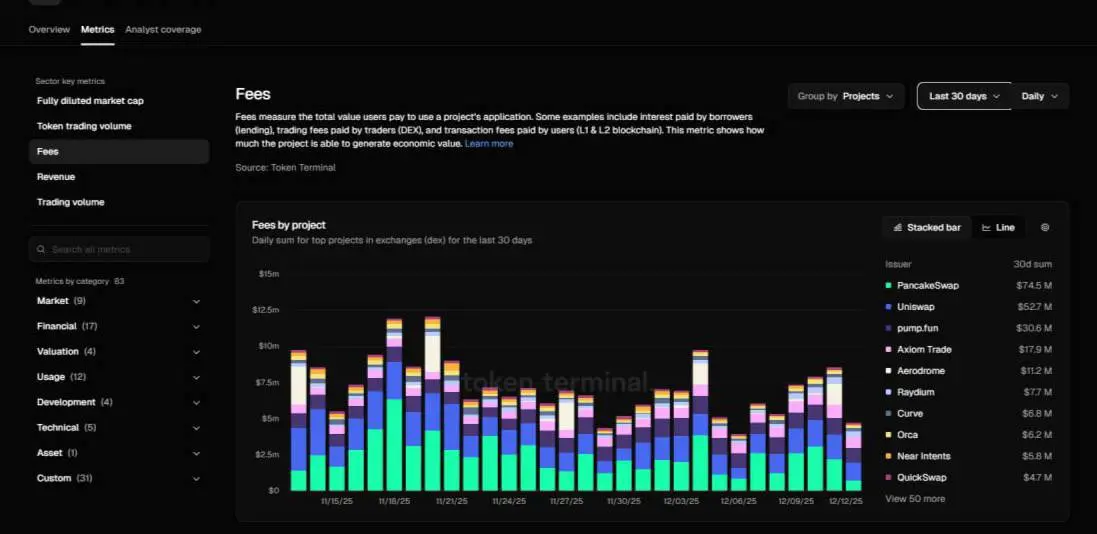
DEXs are often framed as inefficient businesses because protocol revenue looks low relative to gross fees. That framing is wrong.
Over the last 30 days, DEXs generated $220.7M in fees but only $85.5M in protocol revenue.
On the surface, that 39% fee-to-revenue conversion looks weak compared to perps. In reality, it reflects intentional economic design, not leakage.
The missing dollars did not disappear. They were paid out to liquidity providers.
DEXs are built as two-sided markets, not vertically integrated exchanges. Liquidity is externalized. Capital comes from LPs, and LPs must be compensat
post-image
  • Reward
  • 1
  • Repost
  • Share
mejri777vip:
Great information, thank you, Professor.
The real unlock in ZK isn’t cheaper transactions.
It’s that proofs are becoming fast enough to validate any computation, not just block execution.
That shift turns @brevis_zk into a compute-verification layer, not a scaling tool.
Scaling lowers fees.
Verification rewires the stack.
----
Why This Unlocks Real Value
Blockchains can’t run real workloads: portfolio models, agent logs, multi-chain histories, cross-DEX analytics, intent simulations.
Those run off-chain today; inside APIs, scripts, bots, indexers with zero verifiability.
@brevis_zk makes that entire surface area provable:
• compute o
  • Reward
  • Comment
  • Repost
  • Share
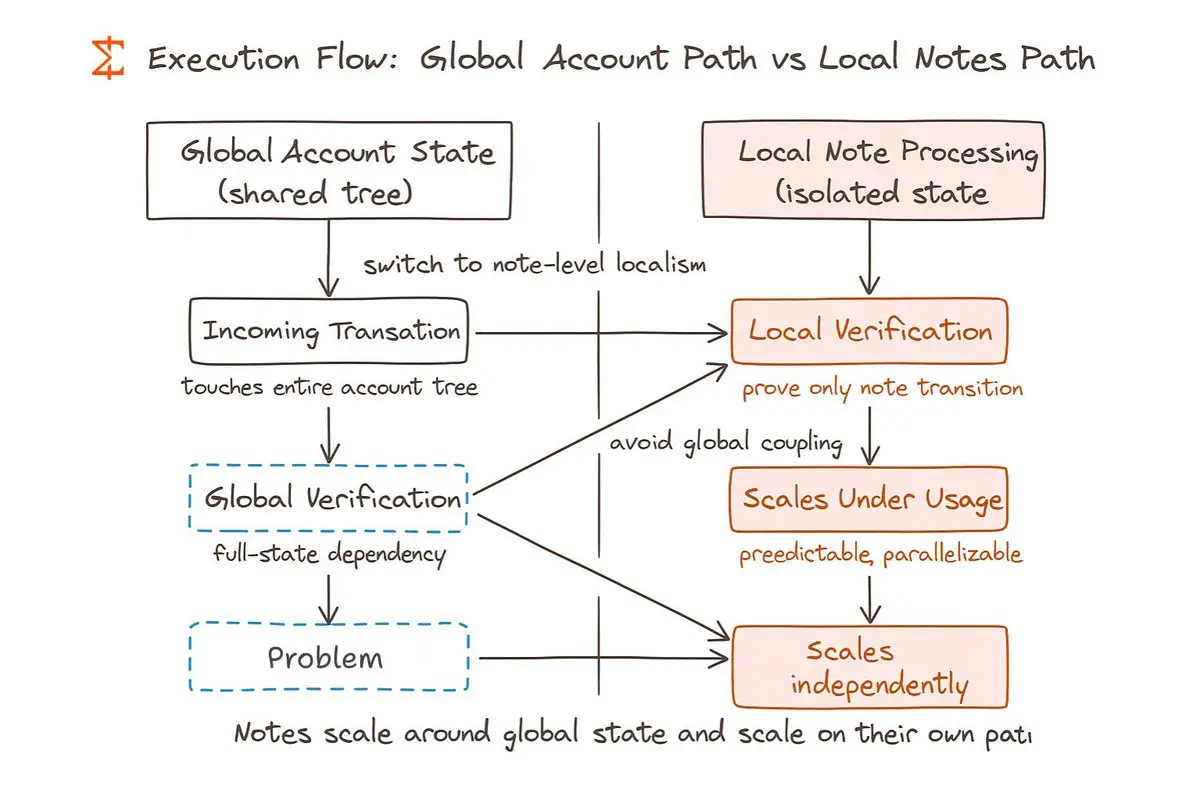
Most chains slow down because every action touches the same shared state.
Update one account, and the whole system has to stay in sync.
That’s why high-traffic apps create lag everywhere else.
@0xMiden's Notes model avoids that completely.
A Note is its own piece of state.
It stands alone.
When it changes, the network only verifies that change; not your entire account, not the global tree, not every variable tied to your history.
That single design choice removes most of the overhead people think is “normal” in smart contract systems.
Here’s the simple version:
• Accounts = one big bucket
• UT
post-image
  • Reward
  • Comment
  • Repost
  • Share
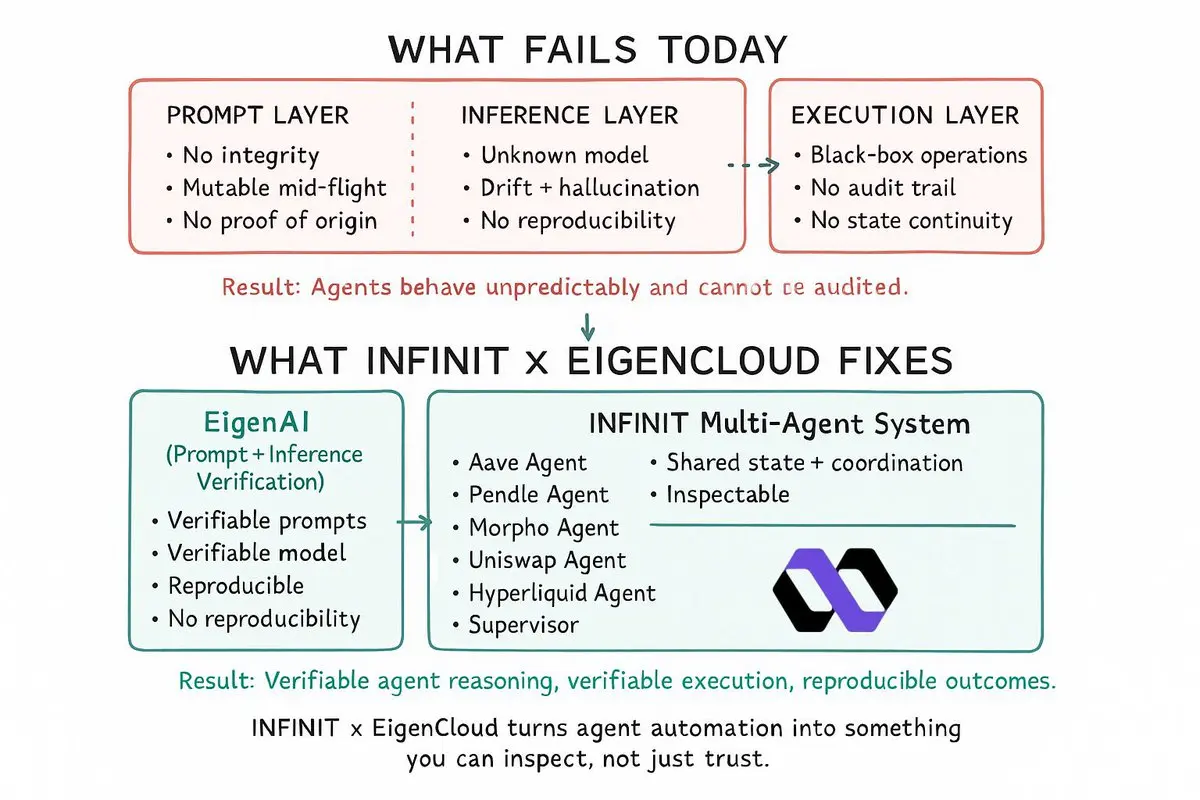
The interesting part of this @Infinit_Labs × @eigencloud move isn’t the branding.
It’s what it fixes.
Right now, “AI agents in DeFi” are mostly latency machines with no guarantees.
- you can’t verify the model
- you can’t verify the prompt
- you can’t verify the execution path
- you’re basically outsourcing decisions to a black box and praying it didn’t hallucinate or drift
From a trader’s perspective, that’s not automation, that’s risk exposure.
What EigenCloud plugs into INFINIT is the first actual audit trail for agentic execution:
1. EigenAI locks in the inference layer so prompts and outp
AAVE1.61%
PENDLE0.47%
UNI-0.09%
MORPHO3.49%
post-image
  • Reward
  • Comment
  • Repost
  • Share
Every identity stack in crypto failed for the same reason:
the verifier wasn’t the origin.
OAuth bridges, data scrapers, custodial APIs all require someone else to hold or inspect the data before attestation.
@zkPass removes the third party entirely.
The browser session becomes the proof surface.
TLS negotiation is captured locally, mirrored by MPC participants, and compressed into a ZK proof that reveals validity without exposing content.
This isn’t an upgrade.
It’s a different model.
It collapses the liability chain, eliminates custodial trust, and replaces “trust the API provider” with “tru
  • Reward
  • Comment
  • Repost
  • Share
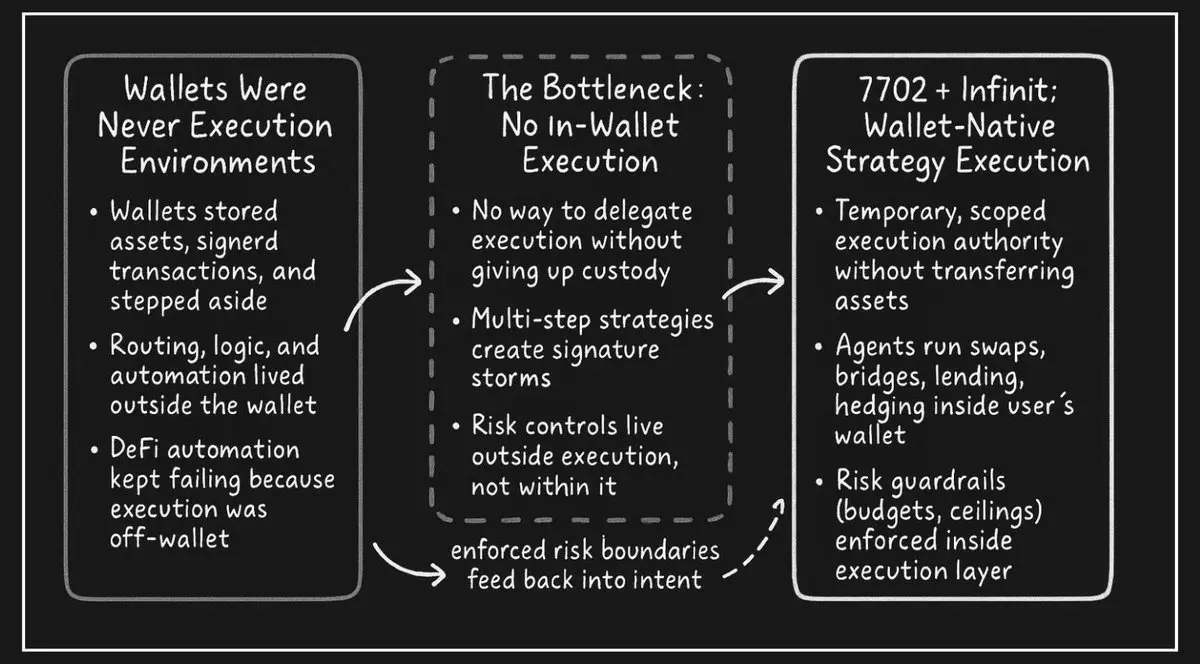
The most important upgrade in DeFi this year isn’t a chain, a bridge, or a yield market.
It’s a change in what a wallet is.
If you think about it, wallets were never designed to do anything.
They were designed to hold things.
Store assets. Sign a transaction. Step aside.
Everything else: routing, logic, automation happened somewhere else.
That’s exactly why DeFi automation kept hitting a wall.
EIP-7702 breaks that ceiling.
It lets users grant temporary, scoped execution authority to agents without giving up ownership. Assets stay in the wallet. Execution becomes programmable. The wallet become
post-image
  • Reward
  • Comment
  • Repost
  • Share
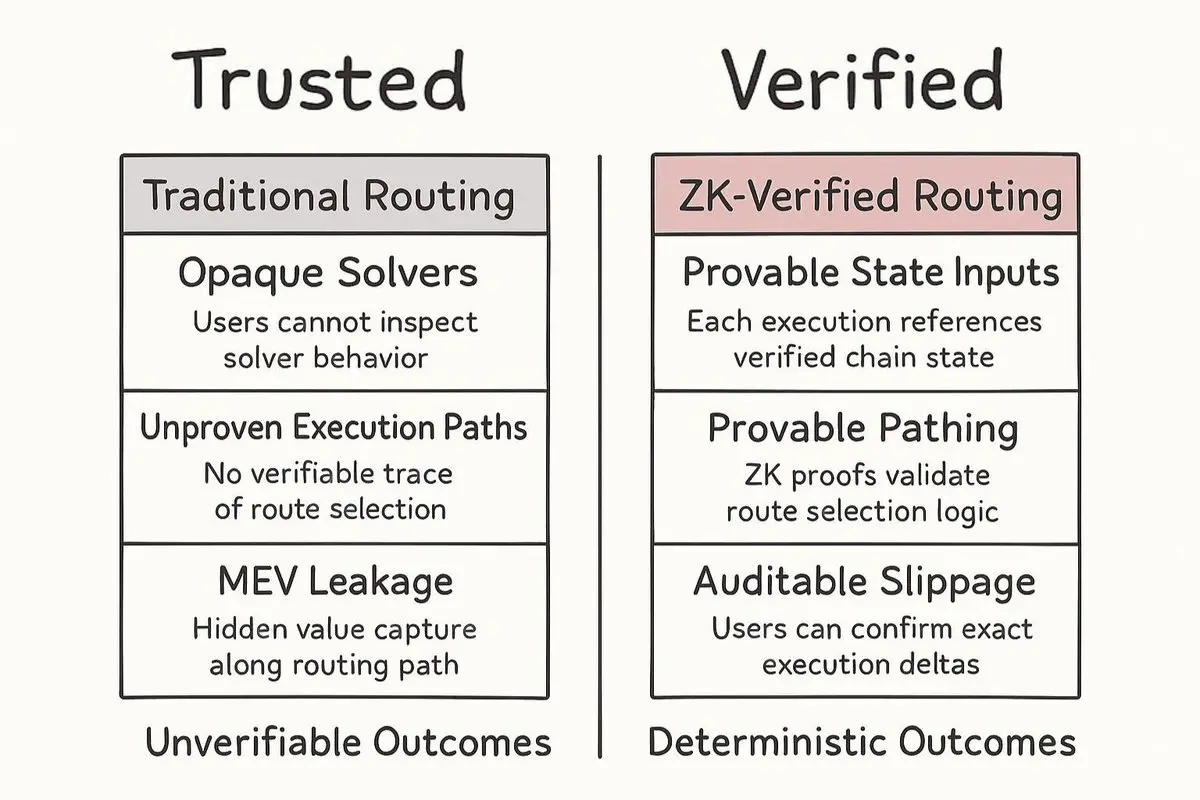
Intent-based execution is becoming the default UX layer across chains.
Users no longer specify paths. They specify outcomes. Everything else is outsourced to routers and solvers competing under the hood.
But the real competition won’t be about speed or aggregation breadth.
It will be about provability.
The winning intent router will be the one that can produce ZK proofs for every execution step:
• the state it evaluated,
• the path it selected,
• the price it secured,
• the slippage it avoided,
• and the net outcome delivered to the user.
This turns execution from a trust-based service into a
post-image
  • Reward
  • Comment
  • Repost
  • Share
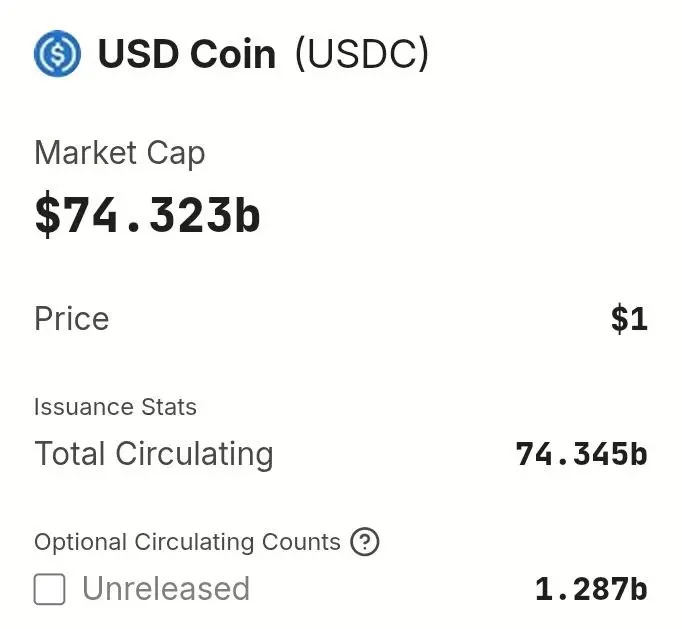
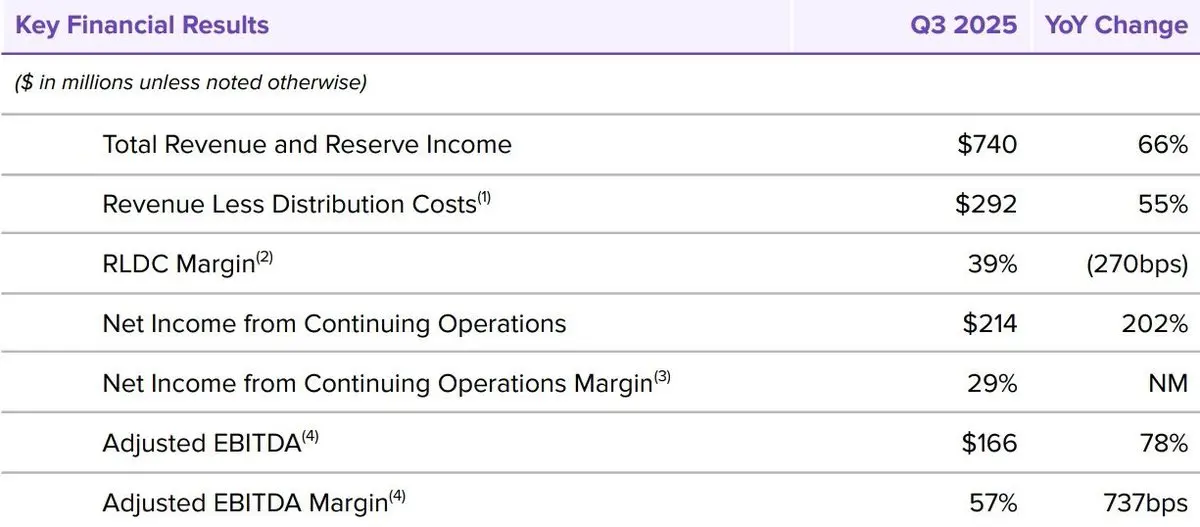
Big one! @circle’s Q3 numbers aren’t company earnings.
They’re a macro data release disguised as a stablecoin report.
The signals are too big to ignore.
$USDC supply: $74.32B (+108% YoY)
⟜ Revenue + reserve income: $740M (+66% YoY)
⟜ Net profit: $214M (+202% YoY)
Those receipts tell you one thing:
Stablecoin demand is now tracking global dollar liquidity, not crypto sentiment.
Here’s what the market is really pricing in:
• Higher Fed rates = higher reserve yield → higher stablecoin profitability
• Tighter global liquidity = more offshore demand for digital dollars
• FX pressure in EM markets
post-image
post-image
  • Reward
  • Comment
  • Repost
  • Share
Rainbow adding Sonic and Linea in the same day isn’t just “more chain support.”
It’s a sign that chains themselves are starting to fade into the background.
Most wallets treat each new chain like a new problem to solve.
Rainbow treated these two (which couldn’t be more different) like simple plug-ins.
That only happens when the heavy lifting is already done under the hood.
For Sonic and Linea to drop in this smoothly, a few things have to be true:
• @rainbowdotme reads every chain through the same indexing system
• Quotes look the same no matter the VM or bridge
• State checks use the same int
S2.1%
LINEA2.41%
  • Reward
  • Comment
  • Repost
  • Share
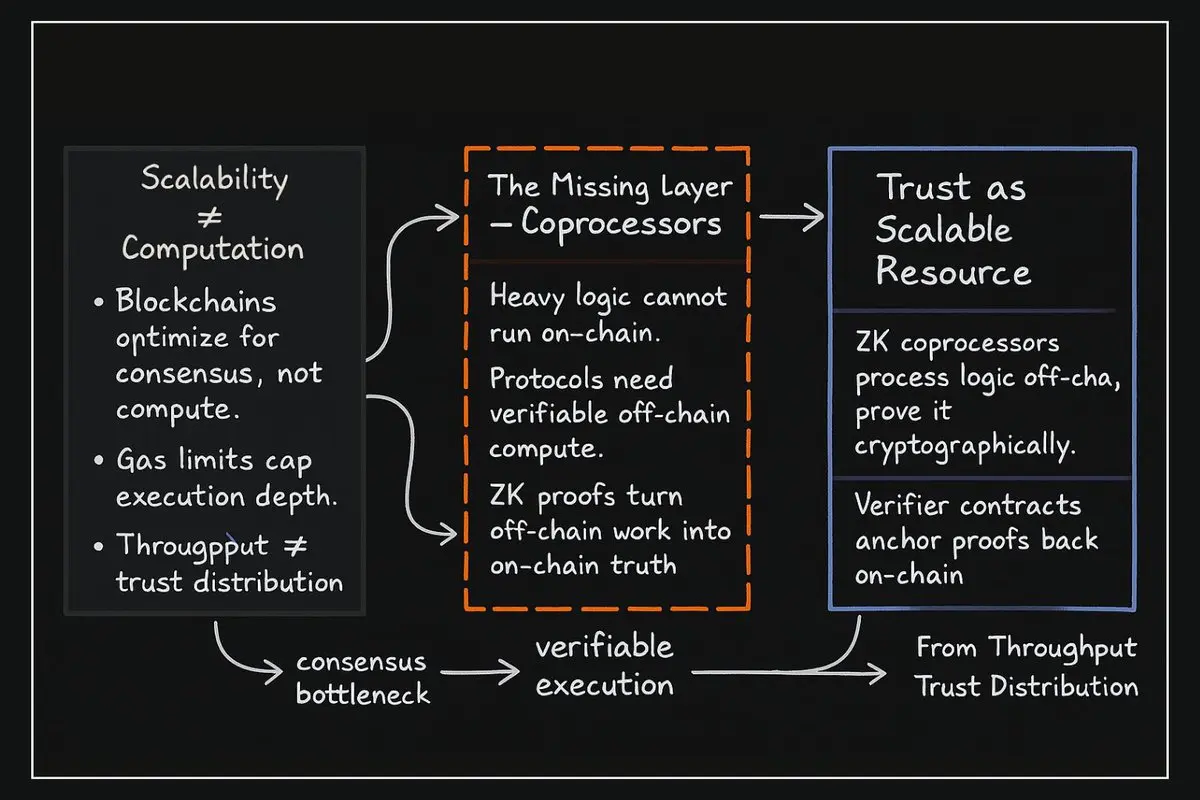
The next phase of scalability isn’t about throughput. It’s about offloading trust.
Zero-knowledge coprocessors are the missing execution laye; designed to process heavy logic off-chain, prove it cryptographically, and anchor the result back on-chain without sacrificing integrity.
————————————————————
➩ The Shift From Throughput to Trust Distribution
Blockchains were never designed to handle compute-heavy workloads. Their job is consensus, not computation.
A zk coprocessor changes that division of labor. It acts as an external execution unit: pulling data, performing logic, generating proofs, a
post-image
  • Reward
  • Comment
  • Repost
  • Share
The $BTC.b acquisition isn’t a bridge move. It’s a protocol consolidation.
@Lombard_Finance didn’t buy liquidity. It bought the rail that liquidity travels on.
$BTC.b was Avalanche’s Bitcoin derivative, a single-chain wrapper with roughly $469M in circulating value at peak. But the limitation was structural: one chain, one custodian logic, one integration scope.
@Lombard_Finance is rebuilding it as infrastructure. Turning a bridge asset into a multi-chain standard for Bitcoin liquidity.
That means $BTC.b holders and issuers now settle through Lombard’s unified mint–redeem layer, not third-par
BTC-0.84%
AVAX0.55%
ETH1.07%
  • Reward
  • Comment
  • Repost
  • Share
Every aggregator cycle ends the same way: whoever owns execution wins.
That truth has now climbed to the interface layer.
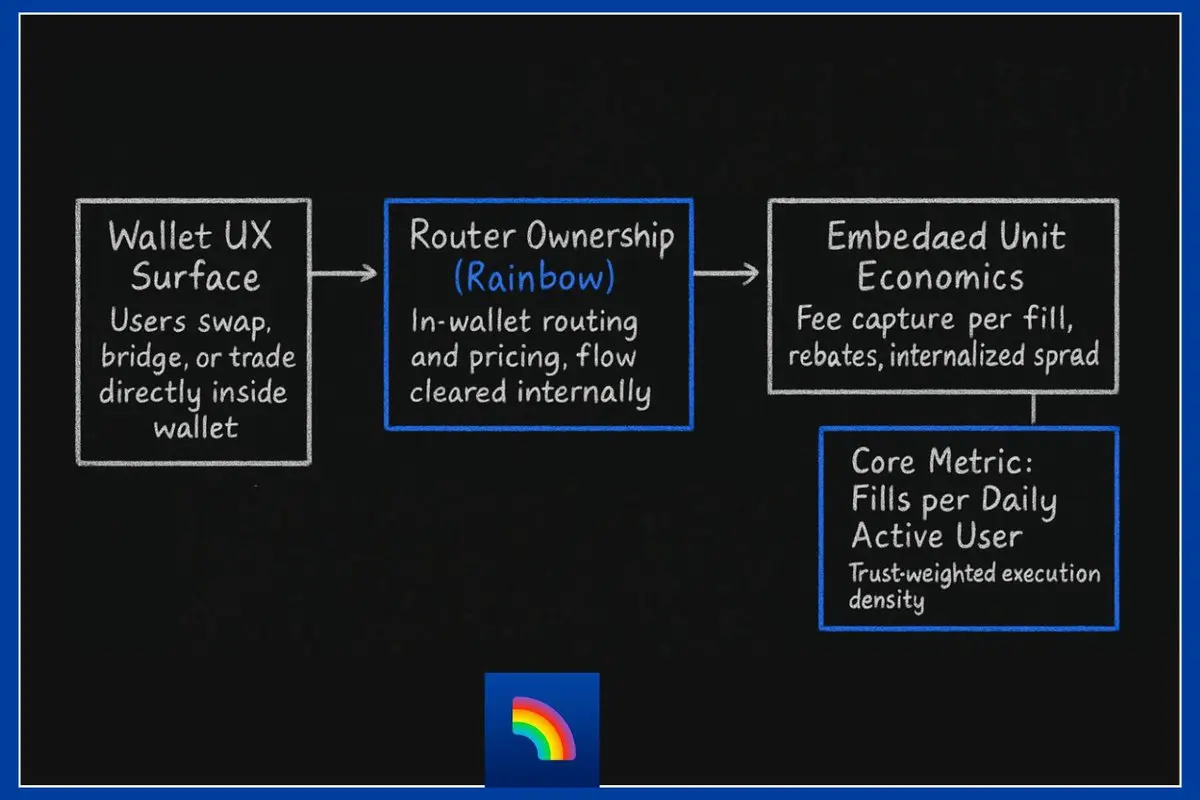
Orderflow doesn’t belong to protocols anymore, it belongs to wallets.
1inch, CowSwap, and Matcha proved that routing creates the moat, not liquidity.
The same logic is about to define wallet economics.
@rainbowdotme is already moving that direction. The Router isn’t a UX upgrade; it’s a monetization engine. Every in-wallet swap, bridge, or perp route is an owned flow; priced, cleared, and settled inside the interface.
This changes what matters.
Downloads are noise. MAUs are
1INCH1.99%
post-image
  • Reward
  • Comment
  • Repost
  • Share
For years, we assumed value comes from execution, from getting things done faster, cheaper, or at scale.
But in the next cycle of the internet, the scarce resource isn’t execution anymore. It’s verification.
AI can generate infinite outputs.
Blockchains can execute infinite transactions.
The bottleneck now lies in proving that those outputs or transactions are real, accurate, and aligned.
Proof (not compute) becomes the new cost center.
And soon, the new market.
————————————————————
➩ The Cost Inversion
For the first time, proving is becoming cheaper than doing.
Zero-knowledge systems can now
ZK8.15%
STRK2.24%
post-image
  • Reward
  • Comment
  • Repost
  • Share
Trade Crypto Anywhere Anytime
qrCode
Scan to download Gate App
Community
English
  • 简体中文
  • English
  • Tiếng Việt
  • 繁體中文
  • Español
  • Русский
  • Français (Afrique)
  • Português (Portugal)
  • Bahasa Indonesia
  • 日本語
  • بالعربية
  • Українська
  • Português (Brasil)