Author: Jon Helgi Egilsson, Source: Forbes, Translated by: AididiaoJP
This Friday marks the seventeenth anniversary of Satoshi Nakamoto's release of the Bitcoin white paper.
The revolution seems to have returned to its starting point: Wall Street now holds the keys.
From BlackRock's Bitcoin ETF to JPMorgan's decision to accept Bitcoin and Ethereum as collateral, the institutions that Bitcoin aimed to bypass have now become its custodians, largest beneficiaries, and advocates, and perhaps its greatest test.
From Economic Rebellion to Regulatory Recognition
This irony reveals a deeper truth about how revolutions evolve and why this moment is crucial.
First they ignore you, then they laugh at you, then they fight you, then you win.
The pattern described by Gandhi is often repeated in technological revolutions, and is now manifesting again. Bankers once mocked it, regulators struggled against it, and now Wall Street embraces what it once dismissed.
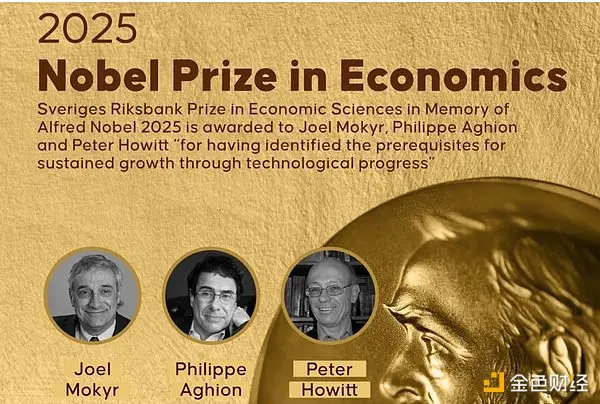
Earlier this month, the Nobel Prize in Economics was awarded to Joel Mokyr, Philippe Aghion, and Peter Howitt for their complementary work on creative destruction and growth culture. Their research explains how progress depends on a society's willingness to allow old institutions, technologies, and habits to be replaced by new and more efficient ones.
The “creative destruction” coined by Joseph Schumpeter is not just about innovation; it is also about the courage to break with conventions. Mokyr connects sustained growth to a culture that celebrates curiosity and experimentation, while Aghion and Howitt demonstrate how innovation advances by constantly replacing the old with the new, which can be destructive in the short term but is crucial for long-term progress.
The Creative Evolution of Bitcoin
The story of Bitcoin and cryptocurrencies almost perfectly fits this pattern. It began as a rebellion against financial institutions and is now being absorbed by them. Jamie Dimon once called Bitcoin a “fraud” with “no intrinsic value,” yet he now leads a bank that accepts it as collateral. The SEC was cracking down on cryptocurrencies last year, but there has since been a historic shift to embrace it, openly considering cryptocurrency standards as a regulatory bridge to a trillion-dollar market.
As these institutions adapt, they are proving Mokyr's point: progress rarely unfolds directly, but rather through resistance, absorption, and ultimately through cultural transformation, which is precisely the process of reshaping governance social systems.
From Crypto Code to Password Punk Culture
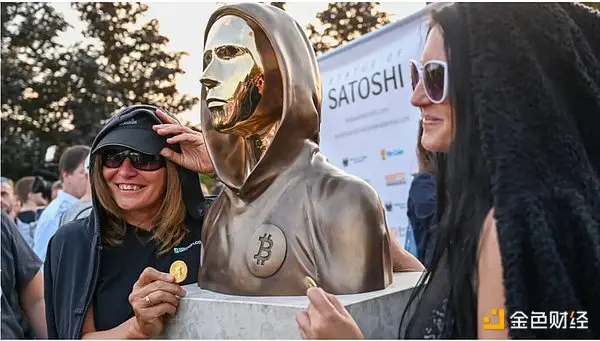
Fans take a photo with the statue of Bitcoin's pseudonymous creator Satoshi Nakamoto. This figure, wearing a hooded coat, symbolizes the mystery behind the origins of Bitcoin and the movement it sparked seventeen years ago. Today, that revolution is no longer happening in code, but in culture. Communities around the world are striving to win hearts, transforming technology into a shared belief. As this year's Nobel Prize winner reminds us, innovation can only reshape its institutions when it becomes part of the social culture.
The milestone is real, but the mission is not yet complete. The acceptance of Bitcoin by institutions marks progress, but its core commitments such as self-custody, open networks, and user sovereignty are still fighting on the cultural front lines. Around the world, Bitcoin's native builders and communities are shaping that culture from the grassroots.
The energy of such gatherings is not just technical; it is cultural and communal. The struggle is no longer solely about code but about protecting individual choices and freedoms in a world filled with intermediaries, increasing centralization, and surveillance. As Mikhail said, the transformation from technology to culture to institutions is still ongoing. The question now is whether society will complete the mission initiated by Satoshi Nakamoto: not by writing new code, but by choosing the values that will define the next era of currency and freedom.
The battle for Bitcoin has begun
At a Bitcoin-themed event in Los Angeles this month, MIT's Christian Catalini suggested that open networks and interoperability are the foundation of the next payment era. Catalini believes that the future of currency relies on shared infrastructure rather than closed gardens, and the fight for openness is ultimately cultural rather than technical. Education and community will determine whether innovation remains free or is captured by vested interests.
A similar pattern emerged in Prague, where Trezor's “Design is Trust” gathering viewed self-custody as a continuation of Europe's long struggle for personal freedom. Speakers drew historical parallels between digital sovereignty and hard-won lessons of self-reliance, reminding participants that freedom is not a product feature; it is a mindset.
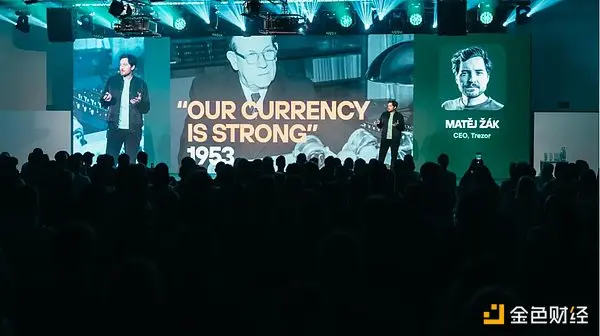
Prague, Czech Republic, October 21, 2025 – At the “Design is Trust” conference in Prague, speakers focused less on technology and more on the culture that sustains a mindset of financial freedom. “Czechs have learned not to trust authority,” said Matěj Žák, capturing a deeper theme of the event: lasting change begins with culture, as institutions rarely change before society does.
In Lugano, Switzerland, the “B Plan Forum” brings together policymakers, entrepreneurs, and technology experts around a shared belief that the fundamental principles of Bitcoin, such as transparency, openness, and individual choice, must extend beyond financial markets to the ways of social self-governance. As one participant said, “What started with the B Plan is quickly becoming the A Plan.”
These are not isolated events. A broader movement to win hearts and minds is underway on podcasts, online communities, and social media, reminding people that a revolution cannot succeed unless individuals believe in its value and act accordingly.
These gatherings are equivalent to a cultural project, a community building for rebels. As Mokeer argues, once a technology is invented, its spread relies on culture: the willingness of people to adopt new norms and abandon their old comfort zones.
The Bitcoin movement is testing this threshold. It has already conquered the balance sheets of global institutions, but it has yet to conquer the habits of individuals. Unless ordinary people feel the need and have the confidence to hold their own keys, support open-source innovation, and trust public networks, this revolution will still be incomplete.
The Revolution in Transition

NASA flight director applauded the safe return of Apollo 13, one of the most dramatic missions in the history of space exploration. It began as a near-catastrophic mission and ultimately concluded in triumph through intelligence, trust, and collaboration. This reminds us that some revolutions succeed through adaptation. Like Apollo 13, the revolution of Bitcoin and cryptocurrencies is in a transitional phase. Its challenge today is not technical but cultural: will society muster the same resolve to return to fundamental principles and complete unfinished business.
Seventeen years have passed, and we no longer debate whether the technology is effective; we are deciding what kind of society we want it to serve, and the choice is in our hands.
The phrase “Houston, we have a problem” from Apollo 13 has become shorthand for a crisis, but the mission it refers to did not fail; it adapted. The astronauts solved their problems through wisdom, trust, and collaboration, turning disaster into discovery.
Similarly, Satoshi Nakamoto's revolution is not in crisis but in transformation. The challenge is not technical; it is cultural. Whether Bitcoin fulfills its founding promise or becomes another layer of financial intermediation will depend on our collective choices. It depends on whether society, like those astronauts, decides to return to fundamental principles and complete the unfinished business.
The freedom to be independent and to break away from financial intermediaries is not granted by those institutions that profit from dependency; it is an act of will, a conscious choice by the users.
Freedom is not given; it is chosen. It is shaped by our culture, rooted in our values, and sustained by our choices.
The struggle continues.


